#web
65 articles found
Latest




 OpenAI and Microsoft are under fire in a class-action lawsuit over alleged web scraping to gather private data for training AI models like ChatGPT. The lawsuit, filed on Sept. 5 in San Francisco, accuses the companies of using stolen private info, including personal data from countless internet users, without consent. The plaintiffs argue that without this data theft, products like ChatGPT and DALL-E wouldn't be the billion-dollar businesses they are today. They seek damages and a halt to the alleged illegal data scraping.
 AI-Powered Botnets Dupe Crypto Users on X
 ChatGPT, known for its diverse technological solutions spanning web search, content creation, office efficiency, and education, has taken a dark turn. This seemingly harmless AI chatbot is now being manipulated by fraudsters on social networks to promote crypto scams.
  According to OpenAI’s blog post, web pages crawled with GPTBot could potentially be utilized to enhance accuracy and expand the capabilities of upcoming iterations of their AI models.
A web crawler (web spider), is a type of bot that indexes website content across the internet.
Popular search engines like Google and Bing employ web crawlers to enable websites to appear in search results.
OpenAI clarified that their web crawler will gather publicly available data from the world wide web while excluding sources with paywalled content, personally identifiable information, or text that violates their policies.
According to OpenAI’s blog post, web pages crawled with GPTBot could potentially be utilized to enhance accuracy and expand the capabilities of upcoming iterations of their AI models.
A web crawler (web spider), is a type of bot that indexes website content across the internet.
Popular search engines like Google and Bing employ web crawlers to enable websites to appear in search results.
OpenAI clarified that their web crawler will gather publicly available data from the world wide web while excluding sources with paywalled content, personally identifiable information, or text that violates their policies. Best Hosting Providers for Crypto Startups
 Web hosting platforms provide a broad range of services for their clients, from creating and maintaining websites to customer support. This allows businesses, legal entities, or startups to operate their websites without needing to hire an IT specialist team.
 100,000 ChatGPT Logins Leaked
 Over the past year, a Singaporean cybersecurity firm has discovered a major data breach involving more than 100,000 login credentials for the popular AI chatbot, ChatGPT. The compromised logins were traded on dark web marketplaces between June 2022 and May 2023, according to a recent blog post by Group-IB.
 DID: A Decentralized Identifier
 The World Wide Web Consortium (W3C) marked 2022 with a decisive push towards enhancing and integrating Decentralized Identification (DID) technology. The adoption of these decentralized identifiers equips companies and individuals with the means to manage their personal information independently.
What is the Ethereum Name Service (ENS)?
 The ENS offers a solution for Ethereum blockchain users, enabling them to link their wallet's complex digital addresses with simple, easily remembered names. Just as domain names have simplified our web browsing experience, the ENS aims to streamline digital identification and improve user recognition.

 Official web portals from various jurisdictions, including India, Nigeria, Egypt, Colombia, Brazil, and Vietnam, are funneling users to a bogus MetaMask website. Visitors receive a phishing warning from Microsoft Defender the moment they access the site. Ignoring this alert and connecting one's MetaMask could result in catastrophic loss of funds.The fraudulent website is depicted beside the authentic one in a screenshot.
  Social media giants, like Facebook, rely on a vast global moderation teams to sift out damaging content, from child pornography materials to severe violence.
The implementation of GPT-4 might be the key to revolutionizing this workflow.
"The process [of content moderation] is inherently slow and can lead to mental stress on human moderators. With this system, the process of developing and customizing content policies is trimmed down from months to hours," assert OpenAI representatives.
Access to the OpenAI API now enables individuals to forge their distinct AI-driven moderation frameworks.
Social media giants, like Facebook, rely on a vast global moderation teams to sift out damaging content, from child pornography materials to severe violence.
The implementation of GPT-4 might be the key to revolutionizing this workflow.
"The process [of content moderation] is inherently slow and can lead to mental stress on human moderators. With this system, the process of developing and customizing content policies is trimmed down from months to hours," assert OpenAI representatives.
Access to the OpenAI API now enables individuals to forge their distinct AI-driven moderation frameworks. 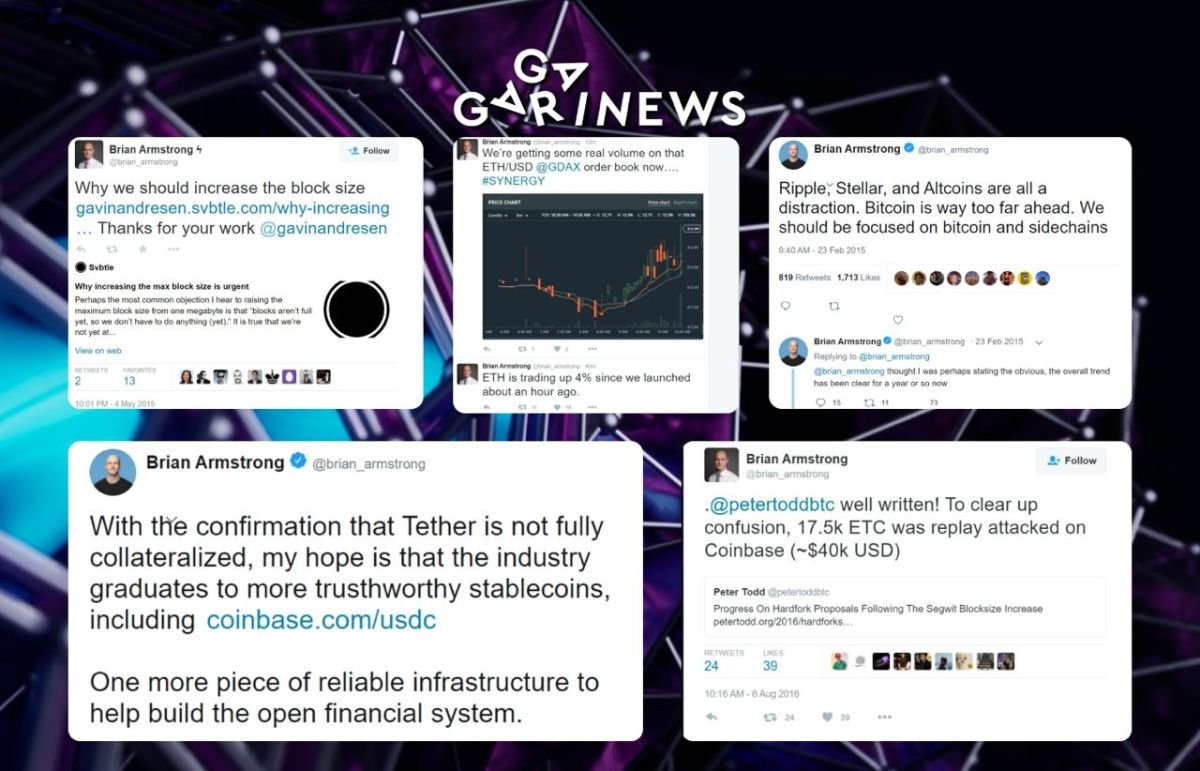 Coinbase CEO Brian Armstrong has recently deleted a substantial number of his tweets from the years 2015 to 2018. Additionally, the digital archive of the World Wide Web, known as the WayBackMachine, has also removed its archive of his tweets.
These tweets from that period covered a range of topics, including Brian expressing his support for increasing Bitcoin’s block size, referring to altcoins as distractions, discussing “replay attacks” on Coinbase, highlighting Ethereum’s price surge after its listing on Coinbase, questioning the full collateralization of Tether, and endorsing USDC, among other things.
As a result of the deletions, these tweets now only exist in the form of screenshots that were captured and shared by others during that time.
Coinbase CEO Brian Armstrong has recently deleted a substantial number of his tweets from the years 2015 to 2018. Additionally, the digital archive of the World Wide Web, known as the WayBackMachine, has also removed its archive of his tweets.
These tweets from that period covered a range of topics, including Brian expressing his support for increasing Bitcoin’s block size, referring to altcoins as distractions, discussing “replay attacks” on Coinbase, highlighting Ethereum’s price surge after its listing on Coinbase, questioning the full collateralization of Tether, and endorsing USDC, among other things.
As a result of the deletions, these tweets now only exist in the form of screenshots that were captured and shared by others during that time. 
What Are Layer 0 and Layer 3 in Blockchain?
 The web is brimming with content about Layer 1 and Layer 2 in the blockchain field. At our Gagarin News portal, we also frequently touch upon these topics. However, certain layers of the blockchain, such as Layer 0 and Layer 3, don't get enough spotlight. We're about to change that.