#hackers
66 articles found
Latest
 The FBI has sounded the alarm bells: Lazarus Group and APT38, North Korean hacker collectives, could potentially sell off stolen cryptocurrency amassing $40 million, potentially affecting Bitcoin's valuation.
Through their investigative work, the agency has identified nearly 1580 BTC across six distinct Bitcoin addresses. The stolen assets are reportedly from Alphapo, CoinsPaid, and Atomic Wallet.
In aiding market monitoring, the FBI has disclosed the associated wallet addresses, urging vigilance on any transactions involving them.
The FBI has sounded the alarm bells: Lazarus Group and APT38, North Korean hacker collectives, could potentially sell off stolen cryptocurrency amassing $40 million, potentially affecting Bitcoin's valuation.
Through their investigative work, the agency has identified nearly 1580 BTC across six distinct Bitcoin addresses. The stolen assets are reportedly from Alphapo, CoinsPaid, and Atomic Wallet.
In aiding market monitoring, the FBI has disclosed the associated wallet addresses, urging vigilance on any transactions involving them.  Ilya Lichtenstein and Heather Morgan, a husband and wife duo of crypto hackers, have pleaded guilty to federal money laundering conspiracy charges related to the 2016 hack of the cryptocurrency exchange Bitfinex.
Their guilty plea comes after a year and a half since their arrest and charges in February 2022 and seven years after the initial hack.
According to the government’s allegations, Lichtenstein hacked into Bitfinex and stole 119,754 bitcoins, which were valued at $72 million at the time and are now worth approximately $3.5 billion, for his personal benefit.
Ilya Lichtenstein and Heather Morgan, a husband and wife duo of crypto hackers, have pleaded guilty to federal money laundering conspiracy charges related to the 2016 hack of the cryptocurrency exchange Bitfinex.
Their guilty plea comes after a year and a half since their arrest and charges in February 2022 and seven years after the initial hack.
According to the government’s allegations, Lichtenstein hacked into Bitfinex and stole 119,754 bitcoins, which were valued at $72 million at the time and are now worth approximately $3.5 billion, for his personal benefit. Immunefi: The Platform for White Hat Hackers
 Immunefi, introduced to the world by Mitchell Amador in 2020, is a high-ranking platform within the realm of cryptocurrency bug-bounty operations. This dynamic initiative brings white hat hackers into play, hosting contests that allow them to unearth flaws in various blockchain projects and their corresponding smart contracts.
 The hacker gained access to the email addresses of users in the metaverse.
After that, emails containing a dangerous virus were sent from the hacked computer on behalf of The Sandbox administration.
If the recipient opened the link in the email, malicious software was automatically installed on their computer. The virus transmitted all personal information stored on the computer to the hackers.
The Sandbox advises users not to open any links and to implement two-factor authentication for their accounts.
The hacker gained access to the email addresses of users in the metaverse.
After that, emails containing a dangerous virus were sent from the hacked computer on behalf of The Sandbox administration.
If the recipient opened the link in the email, malicious software was automatically installed on their computer. The virus transmitted all personal information stored on the computer to the hackers.
The Sandbox advises users not to open any links and to implement two-factor authentication for their accounts.  Russian dev Alexey Pertsev will stay in jail until his hearing scheduled for April 21. This is the third that his lawyers’ request for bail was dismissed. His first appeal was rejected in August, the second – in November.
The Dutch court clings to such a heavy-handed approach due to Pertsev's alleged ties with the FSB and the North Korean hackers Lazarus Group.
This crime is rated as more severe than just tax evasion.
Russian dev Alexey Pertsev will stay in jail until his hearing scheduled for April 21. This is the third that his lawyers’ request for bail was dismissed. His first appeal was rejected in August, the second – in November.
The Dutch court clings to such a heavy-handed approach due to Pertsev's alleged ties with the FSB and the North Korean hackers Lazarus Group.
This crime is rated as more severe than just tax evasion. 
 The russian Solaris platform was hacked by the Kraken trading platform, which also targets the russian-speaking audience. Kraken claims to have taken control of Solaris' infrastructure and Gitlab repository, as well as locking and emptying its crypto wallets.
Both platforms are linked to a Russian operator and both have about 25% market share of the total volume of drugs and weapons sold on the dark web.
It is known for certain that Solaris used the services of pro-Kremlin hackers Killnet, which launched DDoS attacks on Ukrainian and European government servers in 2022.
All Solaris clients are now automatically redirected to the Kraken website because the hackers not only took control of the code and wallets but also set up a redirect.
There are three things you can watch forever: fire burning, water falling, and Russians destroying each other.
It is still unknown what kind of Kraken it is. Maybe it's some of ours
The russian Solaris platform was hacked by the Kraken trading platform, which also targets the russian-speaking audience. Kraken claims to have taken control of Solaris' infrastructure and Gitlab repository, as well as locking and emptying its crypto wallets.
Both platforms are linked to a Russian operator and both have about 25% market share of the total volume of drugs and weapons sold on the dark web.
It is known for certain that Solaris used the services of pro-Kremlin hackers Killnet, which launched DDoS attacks on Ukrainian and European government servers in 2022.
All Solaris clients are now automatically redirected to the Kraken website because the hackers not only took control of the code and wallets but also set up a redirect.
There are three things you can watch forever: fire burning, water falling, and Russians destroying each other.
It is still unknown what kind of Kraken it is. Maybe it's some of ours 
 The Exactly Protocol has suffered a hacking attack. Running on the Optimism blockchain, this lending DeFi platform was targeted by malefactors who stole over 4300 ETH, totaling approximately $7.3 million.
Both BlockSec and Beosin security agencies have corroborated the theft. The hackers reportedly found and exploited a weak point in the platform's smart contracts, although the finer details are still under wraps.
UPD: The team at Exactly Protocol would declare a $700,000 reward for any leads on the hacker, should they not receive a response from the malefactor by the end of August 22nd.
"You can return the funds, minus a 10% fee to you, without worries about us coming after you," the Exactly team conveyed in their message.
The Exactly Protocol has suffered a hacking attack. Running on the Optimism blockchain, this lending DeFi platform was targeted by malefactors who stole over 4300 ETH, totaling approximately $7.3 million.
Both BlockSec and Beosin security agencies have corroborated the theft. The hackers reportedly found and exploited a weak point in the platform's smart contracts, although the finer details are still under wraps.
UPD: The team at Exactly Protocol would declare a $700,000 reward for any leads on the hacker, should they not receive a response from the malefactor by the end of August 22nd.
"You can return the funds, minus a 10% fee to you, without worries about us coming after you," the Exactly team conveyed in their message.  Ukraine's Security Service has successfully dismantled a significant underground network that was carrying out unauthorized financial transfers between Russia and Ukraine, making use of banned Russian payment systems and digital currencies.
Active in four regions, these secretive hubs were handling over $1 million each month. Platforms like Yumoney, Webmoney, and various cryptocurrencies were employed to change Russian rubles into digital currencies and subsequently into Ukrainian hryvnia. The primary customer base was made up of hackers and companies participating in under-the-table transactions with Russia.
Ukraine's Security Service has successfully dismantled a significant underground network that was carrying out unauthorized financial transfers between Russia and Ukraine, making use of banned Russian payment systems and digital currencies.
Active in four regions, these secretive hubs were handling over $1 million each month. Platforms like Yumoney, Webmoney, and various cryptocurrencies were employed to change Russian rubles into digital currencies and subsequently into Ukrainian hryvnia. The primary customer base was made up of hackers and companies participating in under-the-table transactions with Russia. 


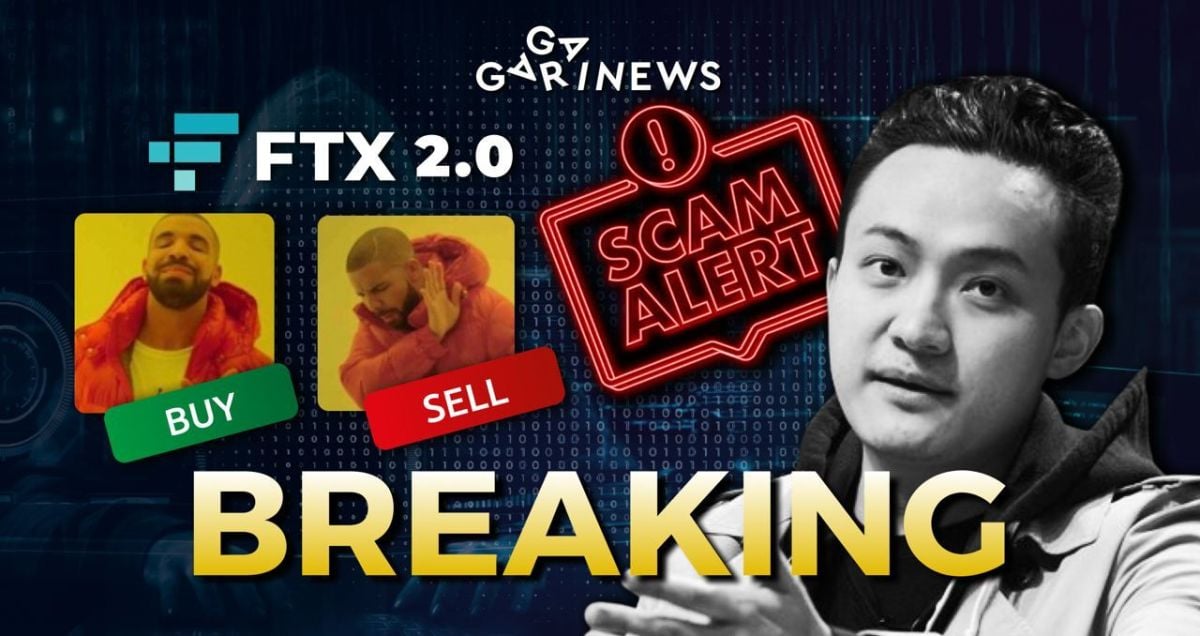 Just 24 hours after FTX's new CEO, John Ray, announced that the platform could be revived, fraudsters created a fake FTX 2.0 token.
The FTX2.0 scam token is being actively spread among the registered users' wallets, including Justin Sun, KuCoin, and Binance.
Security firm PeckShield reported that the smart contract of FTX 2.0 has a backdoor that allows hackers to steal funds from users' accounts. To participate in the "new airdrop" the users are encouraged to click on a phishing link.
But the worst part is that the token's code allows buying the coin, but prohibits it from being sold. That's why its price has quickly rocketed, causing a wave of FOMO among FTX customers.
Just 24 hours after FTX's new CEO, John Ray, announced that the platform could be revived, fraudsters created a fake FTX 2.0 token.
The FTX2.0 scam token is being actively spread among the registered users' wallets, including Justin Sun, KuCoin, and Binance.
Security firm PeckShield reported that the smart contract of FTX 2.0 has a backdoor that allows hackers to steal funds from users' accounts. To participate in the "new airdrop" the users are encouraged to click on a phishing link.
But the worst part is that the token's code allows buying the coin, but prohibits it from being sold. That's why its price has quickly rocketed, causing a wave of FOMO among FTX customers.