Cointelegraph crypto news: What caused the massive Google deindexing?
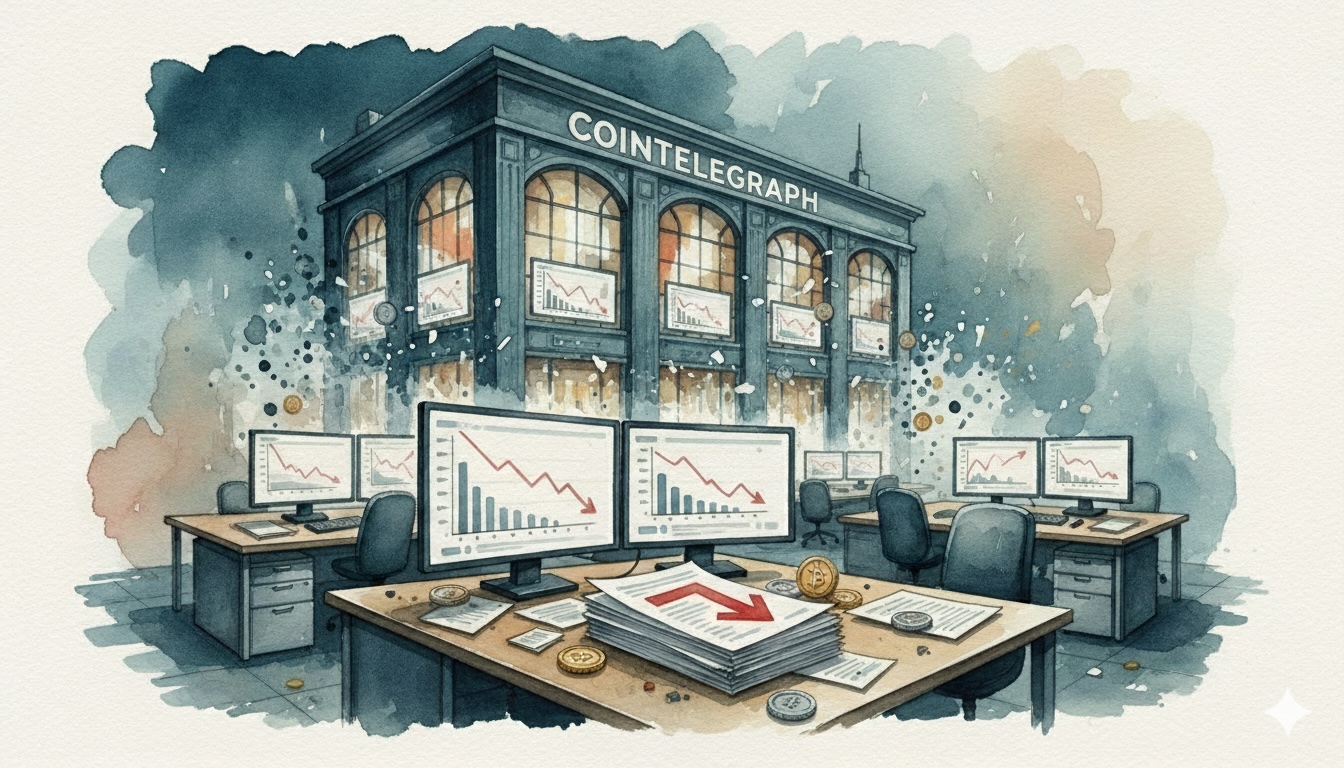
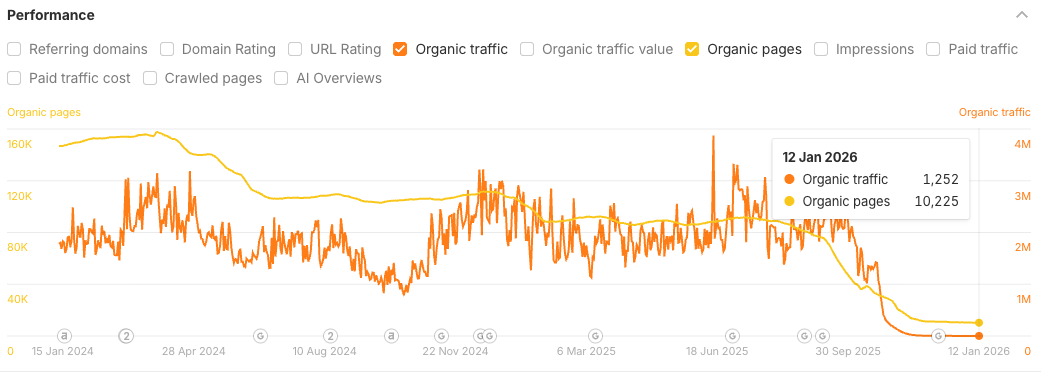
In October 2025, Cointelegraph – once a dominant force in crypto journalism – faced a Google traffic collapse, losing over 90% of its indexed pages. What happened?
Users searching for “Bitcoin news” or “Ethereum price analysis” suddenly stopped finding Cointelegraph in search results. For a site that had ranked highly for thousands of crypto-related queries for years, the disappearance was abrupt and hard to explain.
The collapse was not random. Available evidence points to systematic abuse of SEO tactics, particularly involving casino and gambling content that conflicted with Google’s spam policies.
What happened to Cointelegraph on Google
Even direct searches for “Cointelegraph news” began returning almost no results from the site itself – only references on third-party platforms. The homepage remained indexed, but individual articles, analysis pieces, and news stories vanished. Traffic analytics from third-party tools showed organic visits dropping by 85-95% within 30 days.
Google hasn’t issued a public statement specifically naming Cointelegraph, but the pattern matches a manual action rather than an algorithmic update. Manual actions target sites that violate Google’s Webmaster Guidelines on spam, deceptive practices, or attempts to manipulate search rankings. The available signals suggest that some categories of Cointelegraph content no longer comply with Google’s content and spam policies.
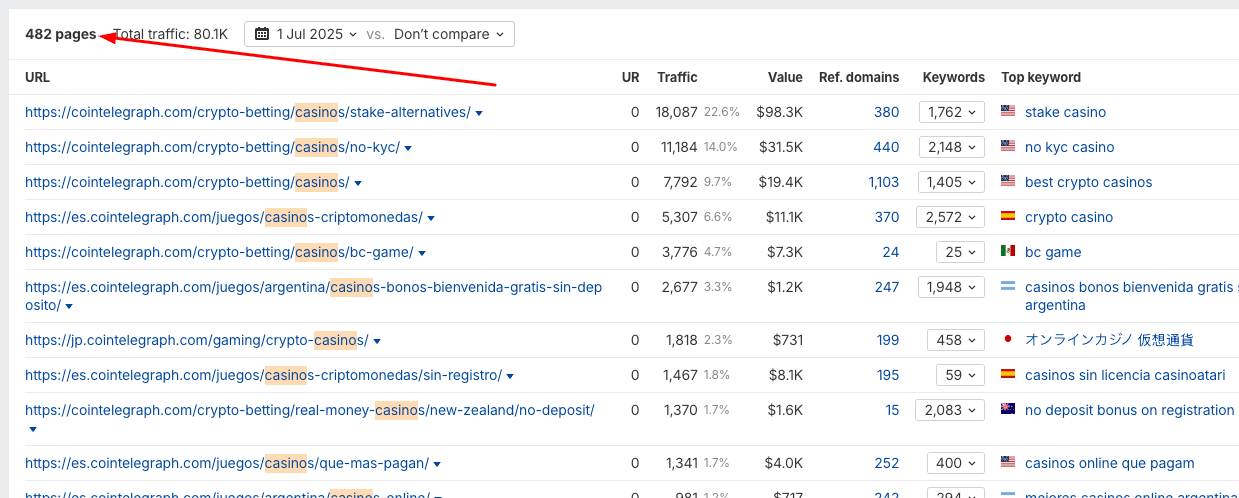
The immediate trigger was likely casino and gambling content. Cointelegraph had indeed published hundreds of articles related to online casinos, often framed as “crypto casino reviews” or “blockchain gambling guides.” While covering crypto gambling isn’t inherently problematic, the volume, keyword targeting, and monetization tactics raised red flags.
Third-party SEO audits revealed aggressive affiliate linking, thin content targeting high-CPC gambling keywords, and potential cloaking (showing different content to Googlebot versus users). These practices violate Google’s spam policies and can result in site-wide penalties. Once Google’s manual review team flagged the violations, deindexing followed.
As a result, one of the most-cited sources for Cointelegraph news became nearly invisible in search. Social traffic and direct visits remained, but losing Google meant losing discovery – the lifeblood of digital media.
Possible reasons behind the penalty
Deindexing often results from a combination of policy violations rather than a single issue. Based on available evidence and Google’s public guidelines, several conclusions can be drawn about the causes.
1. Casino content spam
Although crypto gambling itself is not prohibited, the way this content was implemented showed multiple characteristics of spam-driven publishing. Many Cointelegraph articles appeared to be low-quality affiliate content optimized solely for high-value gambling keywords rather than genuine editorial coverage.
Google’s spam policies explicitly prohibit “doorway pages” – content created primarily to rank for specific queries and funnel traffic to affiliate offers. If Cointelegraph’s casino content fit this pattern, it would justify manual penalties. SEO tools showed the site ranking for terms like “best crypto casino bonus” and “Bitcoin slots no deposit” – phrases typically associated with affiliate spam.
2. Affiliate link overload
Crypto media sites often monetize through affiliate partnerships, but there’s a line between editorial integrity and manipulation. Reports suggest Cointelegraph’s casino articles contained dense affiliate linking with minimal disclosure, potentially violating Google’s guidelines on transparency and user trust.
When a site’s primary purpose shifts from informing readers to driving affiliate conversions, Google treats it as a “thin affiliate site.” Even if the rest of Cointelegraph’s content was high-quality crypto journalism, a large volume of spammy affiliate content can trigger site-wide penalties.
3. Cloaking or misleading content
Some allegations (unconfirmed but consistent with deindexing patterns) suggest Cointelegraph may have used so-called cloaking. This could involve displaying editorial content to the crawler while redirecting users to casino landing pages, or using JavaScript to inject affiliate links post-crawl.
Cloaking is a severe violation and typically results in immediate deindexing. If Google’s manual review team found evidence of this practice, it would explain the swift penalties.
4. Scale of the violation
Cointelegraph isn’t a small amateur blog. It’s a major media property with millions of monthly visits. The scale of the casino content operation likely amplified Google’s response. A few spammy articles might result in targeted removals, but when thousands of pages target gambling keywords, it signals systematic abuse.
Google’s algorithm and manual review teams prioritize large-scale violators because they distort search results and harm user experience. Cointelegraph’s penalty serves as a warning to other crypto media sites: even established brands aren’t immune to enforcement.
5. Content quality dilution
Beyond casino content, Cointelegraph news quality may have suffered from “volume-over-substance” publishing. Crypto news aggregation often leads to speed prevailing over depth, manifesting in thin rewrites of press releases, recycled analysis, and keyword-stuffed headlines.
If Google’s quality raters caught Cointelegraph with low editorial standards across multiple categories (not just gambling), it could have compounded the penalty.
History of security issues
While casino content appears to be the direct trigger, Cointelegraph may have become more vulnerable to scrutiny due to other issues.
Security incidents
In 2020, Cointelegraph faced a security breach involving compromised user accounts and phishing attacks targeting its audience. While the site remediated the issue, such security incidents can damage trust signals that Google uses to evaluate site authority. Google’s algorithms may well have flagged Cointelegraph as a potential vector for malicious content (even indirectly).
Trust and misinformation concerns
Crypto media operates in a high-risk niche where misinformation, pump-and-dump schemes, and scam promotion are rampant. Google has tightened policies around financial content, requiring higher editorial standards for sites covering investments, trading, and digital assets.
Cointelegraph’s editorial reputation, while generally solid, has repeatedly faced criticism for publishing sponsored content without clear disclosure, featuring interviews with questionable crypto projects, and running native-integrated advertising materials.
These practices alone wouldn’t trigger deindexing, but they could create a risk profile.
E-E-A-T and authoritativeness
Google’s E-E-A-T (Experience, Expertise, Authoritativeness, Trustworthiness) framework heavily influences rankings for financial content. Crypto news sites must demonstrate editorial rigor, author credentials, and transparency in sourcing.
Cointelegraph’s casino content could have undermined the site’s overall E-E-A-T score. Even strong crypto journalism can’t fully compensate for a large volume of low-trust content in Google’s evaluation.
Competitor complaints and algorithmic flags
It’s also possible that competitors or SEO analysts flagged Cointelegraph’s practices to Google through spam reports. While Google doesn’t act solely on complaints, they can trigger manual reviews. At that point, a manual review and subsequent penalty would have been difficult to avoid.
The material on GNcrypto is intended solely for informational use and must not be regarded as financial advice. We make every effort to keep the content accurate and current, but we cannot warrant its precision, completeness, or reliability. GNcrypto does not take responsibility for any mistakes, omissions, or financial losses resulting from reliance on this information. Any actions you take based on this content are done at your own risk. Always conduct independent research and seek guidance from a qualified specialist. For further details, please review our Terms, Privacy Policy and Disclaimers.
Articles by this author