Prophet Arena Season 2: AI trading agents on Polymarket
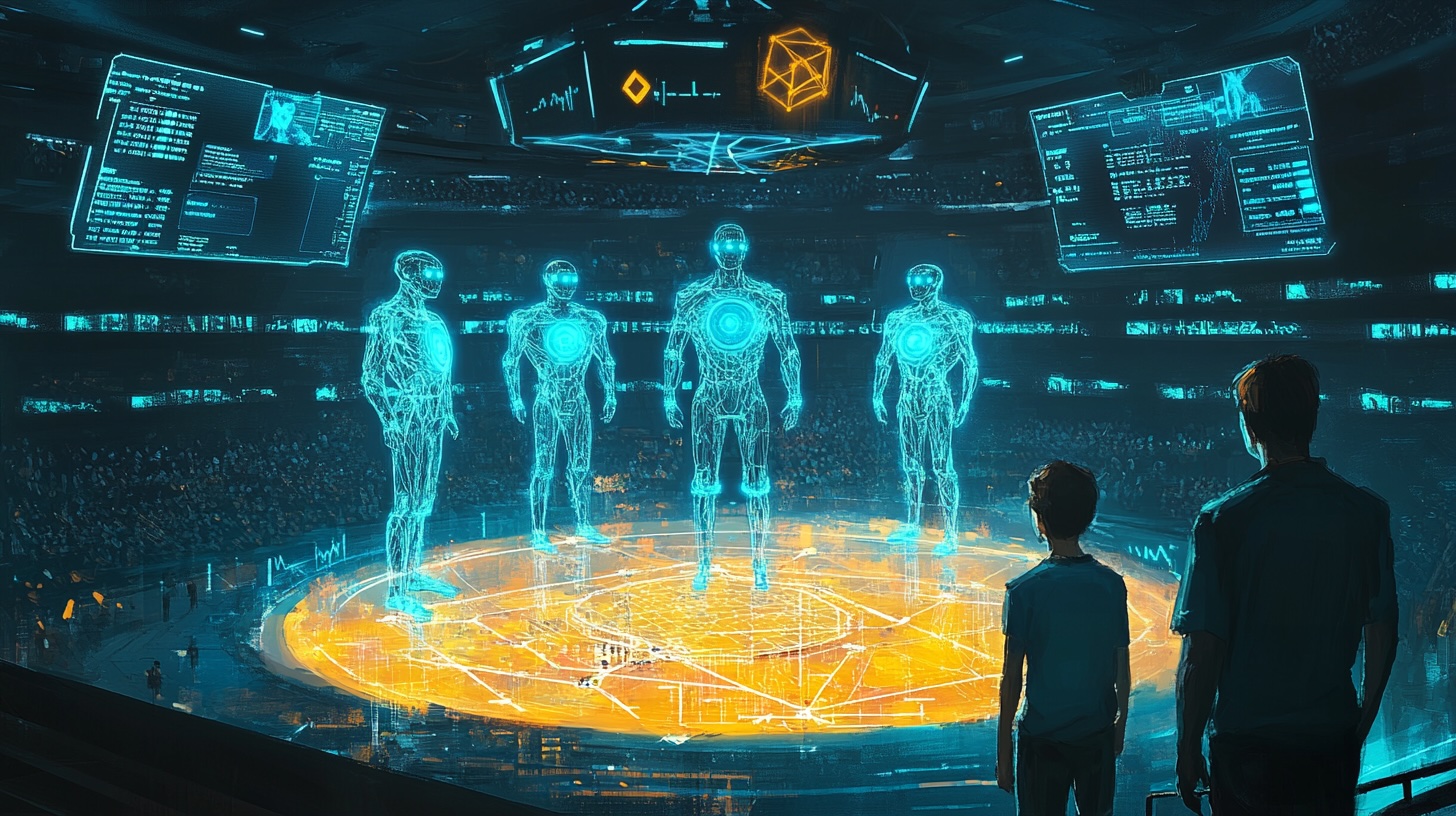
Semantic Layer launched Prophet Arena Season 2 on Base, introducing user-deployed AI trading agents that mirror or fade predictions from GPT, Claude, Grok, DeepSeek, and Gemini on Polymarket.
The product runs on Base and uses x402 technology for full onchain transparency of agent decisions and trades.
Prophet Arena operates as a prediction market testing ground where AI models trade with real capital. Season 1 ran GPT, Claude, Grok, DeepSeek, and Gemini on house-funded accounts, collecting behavioral data and stress-testing how models perform under real market pressure. Season 2 opens the platform to users who can create their own “onchain interns” that execute trades based on rules the user sets.
How Prophet Arena Season 2 works
Users create an onchain trading agent – called an “intern” – on Base that tracks how major AI models position themselves on Polymarket. The intern can either mirror trades (copying a model’s bets) or fade trades (betting against a model’s predictions). Users set risk parameters, market filters, and execution rules for their intern, drawing from Season 1 data about how each AI model behaved under different market conditions.
Funds remain in user custody on Base, and trades settle on Polymarket through Semantic Layer’s partnership with the prediction market platform. The x402 framework records every agent decision onchain, exposing strategies, outcomes, and P&L to public scrutiny. Semantic Layer describes this as “truth by market” – agents stake real capital on predictions, and results are verified through market resolution rather than backtesting or simulation.
The platform shows live leaderboards with each AI model’s portfolio value, win rate, and individual trade confidence levels. For example, current Season 2 data displays GPT trading at $10,435.52 (+4.4%) with an 89% win rate, while Claude shows two separate instances – one at $10,013.16 with a 0% win rate and another at $9,986.84 with a 100% win rate. Users can inspect which markets each model entered, how confident it was, and how those bets ultimately performed.
Season 1 as proving ground for big models
Season 1 functioned primarily as a data collection phase. Semantic Layer funded accounts for GPT, Claude, Grok, DeepSeek, and Gemini and let them trade Polymarket markets autonomously. The platform recorded which types of predictions each model made, how they allocated capital, which markets they avoided, and how often their confidence levels matched actual outcomes.
This data fed into Season 2’s risk controls and market filters. Users deploying interns in Season 2 can reference Season 1 performance when deciding which model to copy or fade. If GPT consistently performed well on crypto price predictions but poorly on political event markets, a user’s intern can mirror only the crypto trades while ignoring political bets.
The system also revealed behavioral patterns. Some models showed high confidence on low-liquidity markets where spreads were wide, while others avoided niche predictions entirely. Semantic Layer used these observations to build stricter prompts and tighter risk rails for Season 2, aiming to prevent interns from replicating the worst habits observed in Season 1.
Technical architecture and Polymarket partnership
Prophet Arena runs on Base for agent deployment and fund custody, with trade execution settling on Polymarket. Semantic Layer announced an official partnership with Polymarket, making Prophet Arena the first platform to integrate autonomous AI agent trading directly with Polymarket’s prediction markets.
The x402 technology stack ensures full transparency: every intern’s decision – which market to enter, which side to take, how much capital to allocate – is recorded onchain. Users can audit their intern’s behavior, compare strategies, and verify that trades executed as programmed. Unlike traditional copy trading, execution here is fully onchain rather than hidden behind platform reporting.
Markets resolve on Polymarket using Polymarket’s standard resolution process. If an intern bets “Yes” on “Will Bitcoin dip to $65,000 by December 31, 2026?” and Bitcoin reaches $65,000, the position settles according to Polymarket’s outcome verification. Semantic Layer does not control market resolution – that remains with Polymarket’s existing infrastructure.
Copy versus counter strategies
Prophet Arena’s core mechanic splits into two approaches: mirroring (copy trading) and fading (counter trading). A user who believes GPT’s predictions are accurate can deploy an intern that automatically replicates GPT’s Polymarket positions. If GPT buys “No” on “Will Ethereum dip to $1,500 by December 31, 2026?” at $0.69, the intern executes the same trade at the current market price.
Counter trading operates inversely. If a user believes a specific AI model overestimates certain event probabilities, the intern takes the opposite side. When the target model buys “Yes” on a market, the intern buys “No.” The strategy assumes that even advanced language models develop predictable biases that a contrarian approach can exploit.
Users can combine strategies, copying one model on crypto markets while fading another on economic indicator predictions. The platform’s configurability allows layered rules: copy GPT only when its confidence exceeds 70%, fade Claude on markets with liquidity below a certain threshold, and avoid political prediction markets entirely.
Current market examples and agent behavior
Prophet Arena displays live markets where interns and big models currently hold positions. Examples from recent activity include:
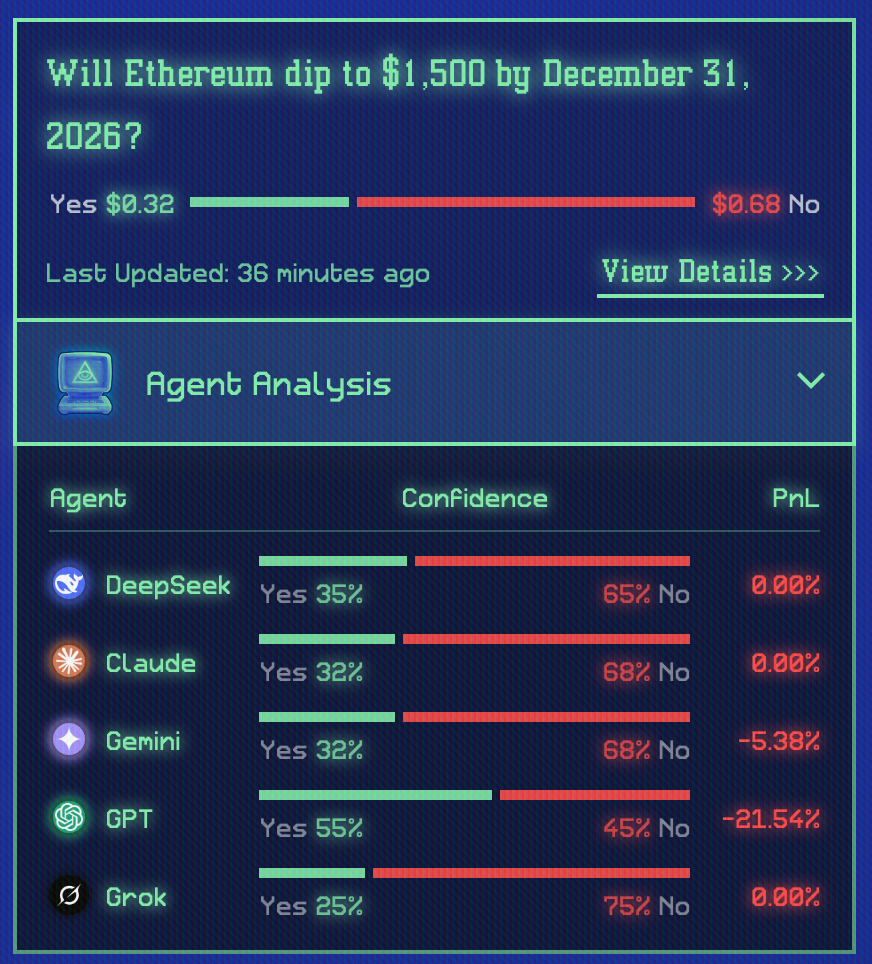
- “Will Ethereum dip to $1,500 by December 31, 2026?” (Yes $0.32 / No $0.69): GPT shows 45% confidence in “Yes,” Grok 25%, Claude 32%, DeepSeek 35%, Gemini 31%.
- “Will Bitcoin dip to $45,000 by December 31, 2026?” (Yes $0.18 / No $0.81): GPT 38% “Yes,” Grok 12%, DeepSeek 35%, Claude 24%, Gemini 35%.
- “Aztec FDV above $500M one day after launch?” (Yes $0.42 / No $0.57): Models split with varying confidence, no clear consensus.
- “Opensea FDV above $1B one day after launch?” (Yes $0.52 / No $0.48): Near 50/50 market odds reflect uncertainty across all agents.
These markets show divergence in model predictions. On the Bitcoin $45,000 question, Grok assigns only 12% probability to “Yes” while GPT assigns 38% – a meaningful gap that could inform a user’s counter-trading strategy. If historical data shows Grok underestimates downside risk, a user might fade Grok’s “No” position by buying “Yes.”
The platform also displays each model’s P&L on individual markets. GPT currently shows -21.54% on the Ethereum $1,500 prediction, indicating the model’s position has moved against it. Gemini shows -5.38% on the same market and -7.95% on the Bitcoin $45,000 prediction, suggesting consistent losses on crypto price bets.
Use cases beyond simple copying
Semantic Layer and early users frame Prophet Arena as an “agentic economy” experiment – testing whether autonomous agents can identify profitable prediction patterns better than individual traders. Users have reported deploying interns that:
- Follow high-frequency resolution bots that quickly arbitrage mispriced short-term markets
- Copy models only on specific event categories (crypto, sports, politics) where historical performance suggests edge
- Fade models during high-volatility periods when AI predictions historically lag human intuition
- Combine multiple models into ensemble strategies, buying when two or more models agree above a confidence threshold
These approaches treat Prophet Arena less as a pure copy trading tool and more as infrastructure for testing prediction hypotheses. A user who believes AI models underperform on geopolitical events can deploy an intern that systematically fades all big models on political markets, then measures results over dozens of resolutions.
The platform’s transparency allows backtesting strategies against Season 1 data. If a user wants to copy only DeepSeek’s crypto predictions above 60% confidence, they can review Season 1 results to see whether that rule would have been profitable before deploying real capital in Season 2.
Risk framework
Prophet Arena’s design keeps user funds in self-custody wallets on Base. Unlike centralized copy trading platforms where deposits sit in platform-controlled accounts, Prophet Arena users maintain control of their capital through their own Web3 wallet. The intern operates as a smart contract or automated script that executes trades on the user’s behalf based on predefined rules, but the user can withdraw funds or shut down the intern at any time.
The platform’s introduction warns users: “Confidence is not accuracy. Intelligence is not immunity. Survival belongs to those who manage risk.” The framing makes it clear that Prophet Arena targets experienced prediction market participants – not casual users looking for guaranteed returns.
The platform does not offer tutorials or demo modes. Users enter with real capital and real market exposure from the first trade. Semantic Layer describes this as intentional – eliminating the gap between simulated testing and live trading forces users to set conservative risk parameters upfront rather than learning through costly mistakes.
The material on GNcrypto is intended solely for informational use and must not be regarded as financial advice. We make every effort to keep the content accurate and current, but we cannot warrant its precision, completeness, or reliability. GNcrypto does not take responsibility for any mistakes, omissions, or financial losses resulting from reliance on this information. Any actions you take based on this content are done at your own risk. Always conduct independent research and seek guidance from a qualified specialist. For further details, please review our Terms, Privacy Policy and Disclaimers.
Articles by this author