tBTC Bridge Restarts; Aave Keeps $120M Reserve Frozen
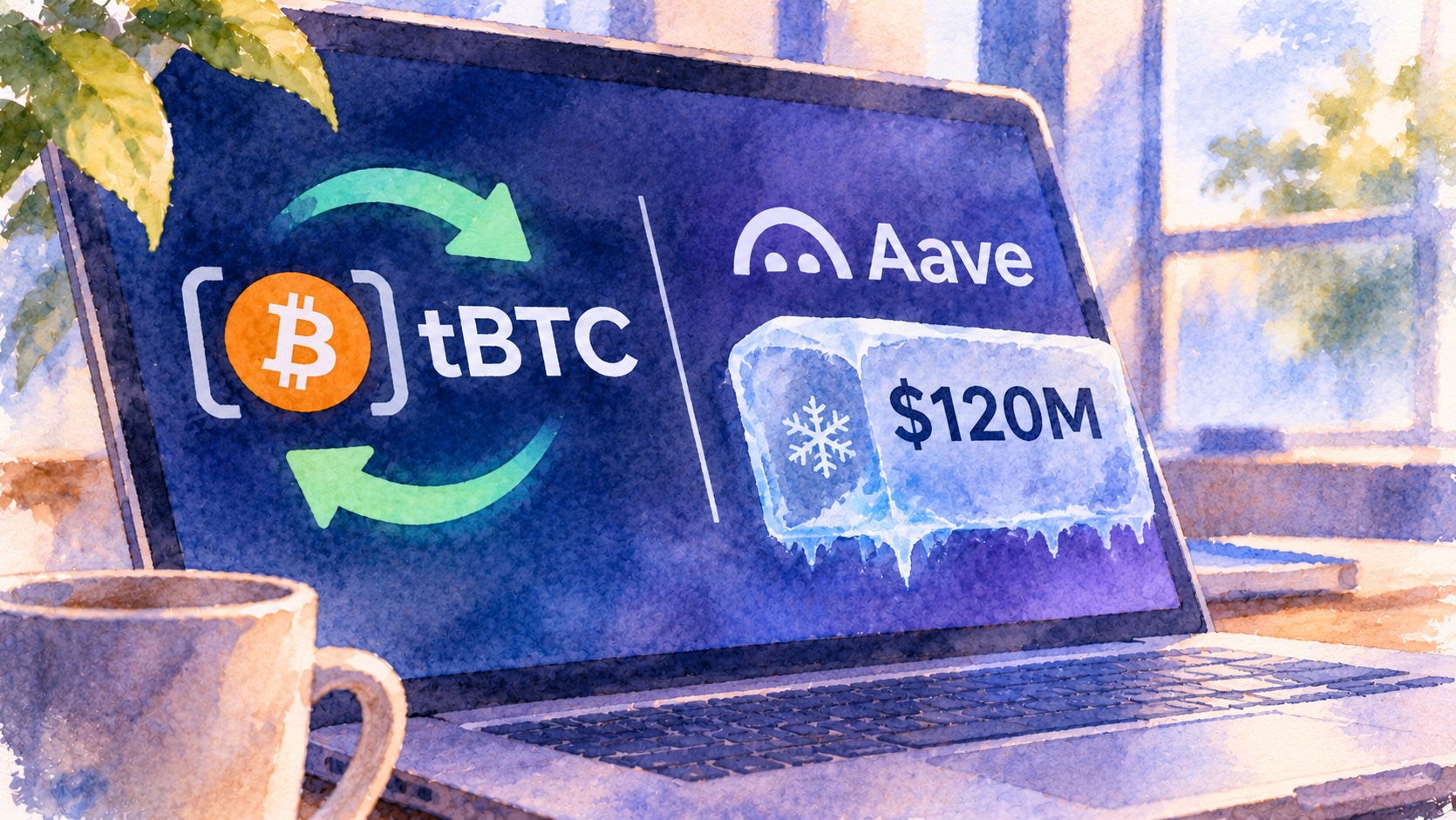
Threshold’s tBTC bridge is restarting after a nine-day security pause, while Aave’s roughly $120 million reserve remains closed to new deposits and borrowing.
Threshold’s tBTC bridge has begun resuming onchain operations after a nine-day pause caused by a critical Linux kernel vulnerability. Aave’s roughly $120 million tBTC reserve on Ethereum Core remains closed to new deposits and borrowing.
In a Sunday, Nov. 8, update, Threshold reported that security-patched operators were reconnecting the network. These independent operators authorize Bitcoin transfers and process tBTC deposits and redemptions.
Requests submitted before the Oct. 30 shutdown are expected to be processed as more operators reconnect. The bridge will not accept new deposits, minting or redemptions until enough nodes are online. Threshold has not provided a date for a full restart.
Threshold halted the bridge on Oct. 30 while operators addressed a critical Linux kernel flaw that could allow remote attackers to execute code on unpatched servers. The project reported no evidence that the vulnerability was exploited against tBTC nodes.
Aave froze its tBTC reserve on Ethereum Core on Oct. 31 to prevent additional exposure while bridge redemptions were unavailable. The restriction blocks new tBTC deposits and prevents the token from increasing users’ borrowing power. Existing users can still withdraw funds and repay loans.
Threshold reported that about 4,320 BTC remained in bridge wallets, compared with approximately 4,185 tBTC in circulation. It reported no unauthorized Bitcoin transfers or unapproved tBTC minting.
LlamaRisk, an Aave risk provider, would propose restoring the reserve after Threshold’s bridge operations return to normal.
Reviewed and fact-checked by Alex Panasenko on November 9.
The material on GNcrypto is intended solely for informational use and must not be regarded as financial advice. We make every effort to keep the content accurate and current, but we cannot warrant its precision, completeness, or reliability. GNcrypto does not take responsibility for any mistakes, omissions, or financial losses resulting from reliance on this information. Any actions you take based on this content are done at your own risk. Always conduct independent research and seek guidance from a qualified specialist. For further details, please review our Terms, Privacy Policy and Disclaimers.
Articles by this author