Hoskinson: BIP 361 Would Leave 1.7M BTC Unrecoverable
Charles Hoskinson warns BIP 361 mislabels a required hard fork and would leave about 1.7 million BTC, including roughly 1.1M linked to Satoshi, unrecoverable despite ZK proof plans.
Cardano founder Charles Hoskinson delivered a critique this week of Bitcoin Improvement Proposal 361, arguing the plan would require changes that amount to a hard fork and would leave about 1.7 million BTC inaccessible. He made the remarks during a livestream and cited on-chain data dated March 1, 2026.
BIP 361, authored by Jameson Lopp, Christian Papathanasiou, Ian Smith, Joe Ross, Steve Vaile and Pierre-Luc Dallaire-Demers, proposes freezing funds that expose public keys and forcing owners to move balances to post-quantum addresses. The proposal includes a zero-knowledge proof system intended to let holders of hierarchical deterministic (HD) wallet seed phrases reclaim frozen funds.
Hoskinson challenged the proposal’s classification as a soft fork. He said the mechanics needed to freeze and migrate funds at scale would require protocol changes that are incompatible with soft-fork constraints and therefore constitute a hard fork. “To actually do this, you need a hard fork,” he warned during the livestream.
Hoskinson also questioned the technical limits of the recovery approach. He argued that the zero-knowledge proofs proposed for HD seed standards cannot recover coins held in wallets created before BIP 32 and BIP 39 became common. Using that criterion, he estimated about 1.7 million BTC would remain unrecoverable, and said roughly 1.1 million of those coins are commonly attributed to Satoshi Nakamoto. “There’s no zero knowledge proof that I can construct for a system like that,” he said.
Hoskinson presented data showing that as of March 1, 2026 more than 34% of all bitcoin supply carries exposed public keys on-chain. He calculated that exposure leaves approximately 8 million BTC vulnerable to a sufficiently powerful quantum computer.
The proposal’s authors would freeze at-risk outputs and require migration to new addresses that use post-quantum cryptography. The zero-knowledge recovery mechanism in the plan would allow seed-based reclamation for wallets that follow modern HD standards, according to the proposal text.
Hoskinson highlighted Bitcoin’s informal governance model as an obstacle to coordinated protocol changes. He contrasted Bitcoin with blockchains that use formal on-chain governance to authorize upgrades, naming Cardano, Polkadot and Tezos as examples. He noted that Cardano, Ethereum and Solana are developing their own post-quantum solutions on independent timelines.
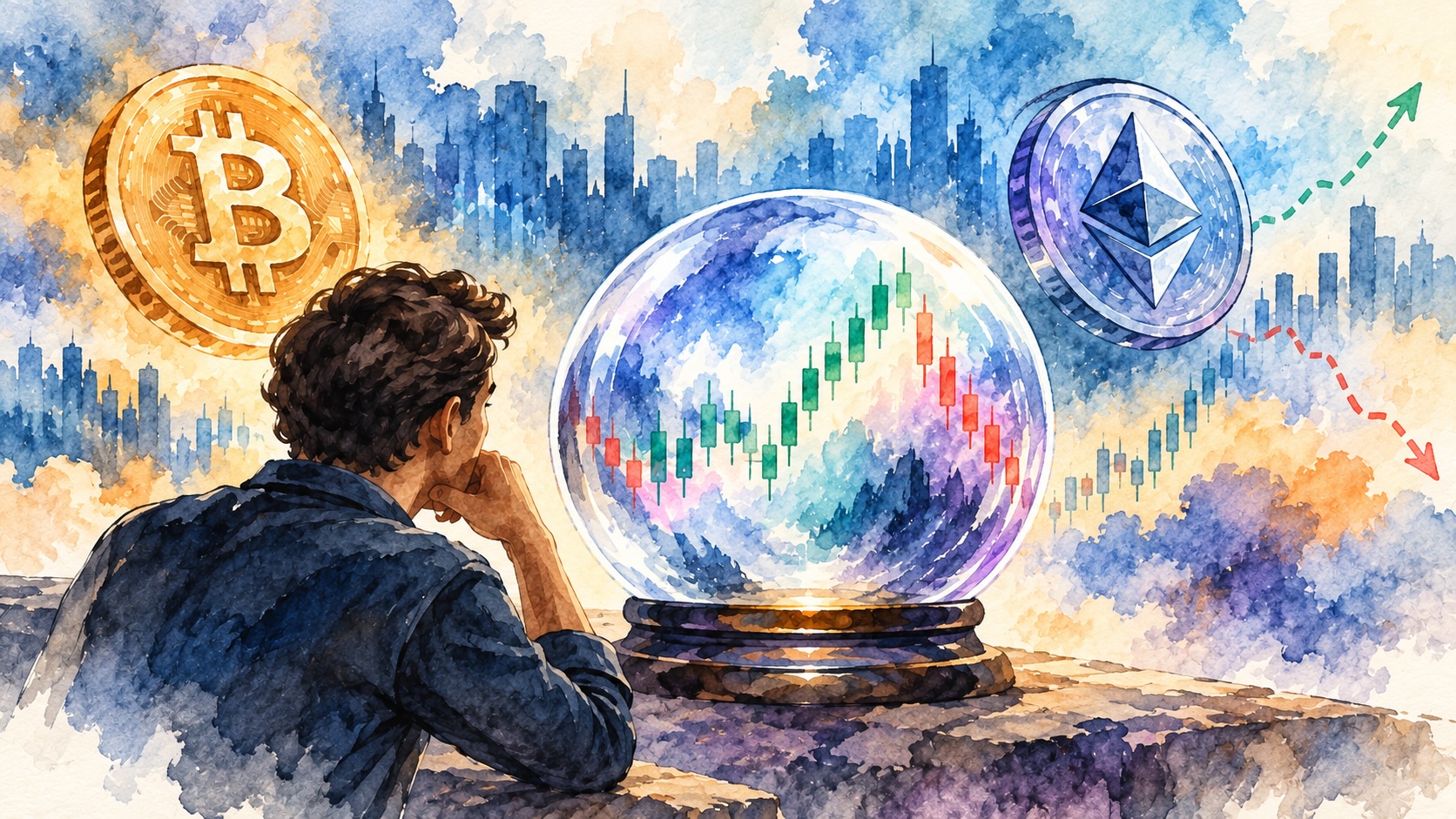
He outlined two possible outcomes if no different solution is adopted: a future attacker with quantum capability could drain vulnerable addresses and place a large volume of bitcoin on the market, or the community could implement a hard fork that would render the identified 1.7 million BTC permanently unspendable. Hoskinson also raised the potential influence of large institutional holders, saying major firms with sizable positions may press developers to act.
Hoskinson acknowledged he holds no formal role in the Bitcoin ecosystem and described himself as an observer who has raised post-quantum concerns for more than a decade. He called on Bitcoin developers that if a hard fork becomes necessary it should be approached with capable technical leadership and a clear plan for protocol changes.
The material on GNcrypto is intended solely for informational use and must not be regarded as financial advice. We make every effort to keep the content accurate and current, but we cannot warrant its precision, completeness, or reliability. GNcrypto does not take responsibility for any mistakes, omissions, or financial losses resulting from reliance on this information. Any actions you take based on this content are done at your own risk. Always conduct independent research and seek guidance from a qualified specialist. For further details, please review our Terms, Privacy Policy and Disclaimers.
Articles by this author