ETH Denver 2026 opens with a builder focus amid market downturn

ETH Denver 2026 opened at the new National Western Center campus, showing that despite the market slump, builder activity and interest in the Ethereum ecosystem remain high.
Editor’s note: This story is being updated daily with live coverage from the conference.
Day 4: ETHDenver 2026 closes after four days of policy, AI infrastructure, and builder focus
ETHDenver 2026 closed on February 21 after four days that reflected a maturing crypto industry – more policy detail, deeper AI experimentation, and clearer institutional positioning than in previous cycles.
Closing ceremony
John Paller (Founder and Chief Executive Steward, ETHDenver) reflected on the conference’s core principles – curiosity and intimacy – and reaffirmed the event’s long-standing commitment to accessibility.
We’ve never wanted to gatekeep education in a way that actually prevents the next Vitalik Buterin from being here. That’s a very important ethos component of ETHDenver, we just don’t believe you should gatekeep opportunity.
ETHDenver remains free to attend. “We’ll see you next year.”
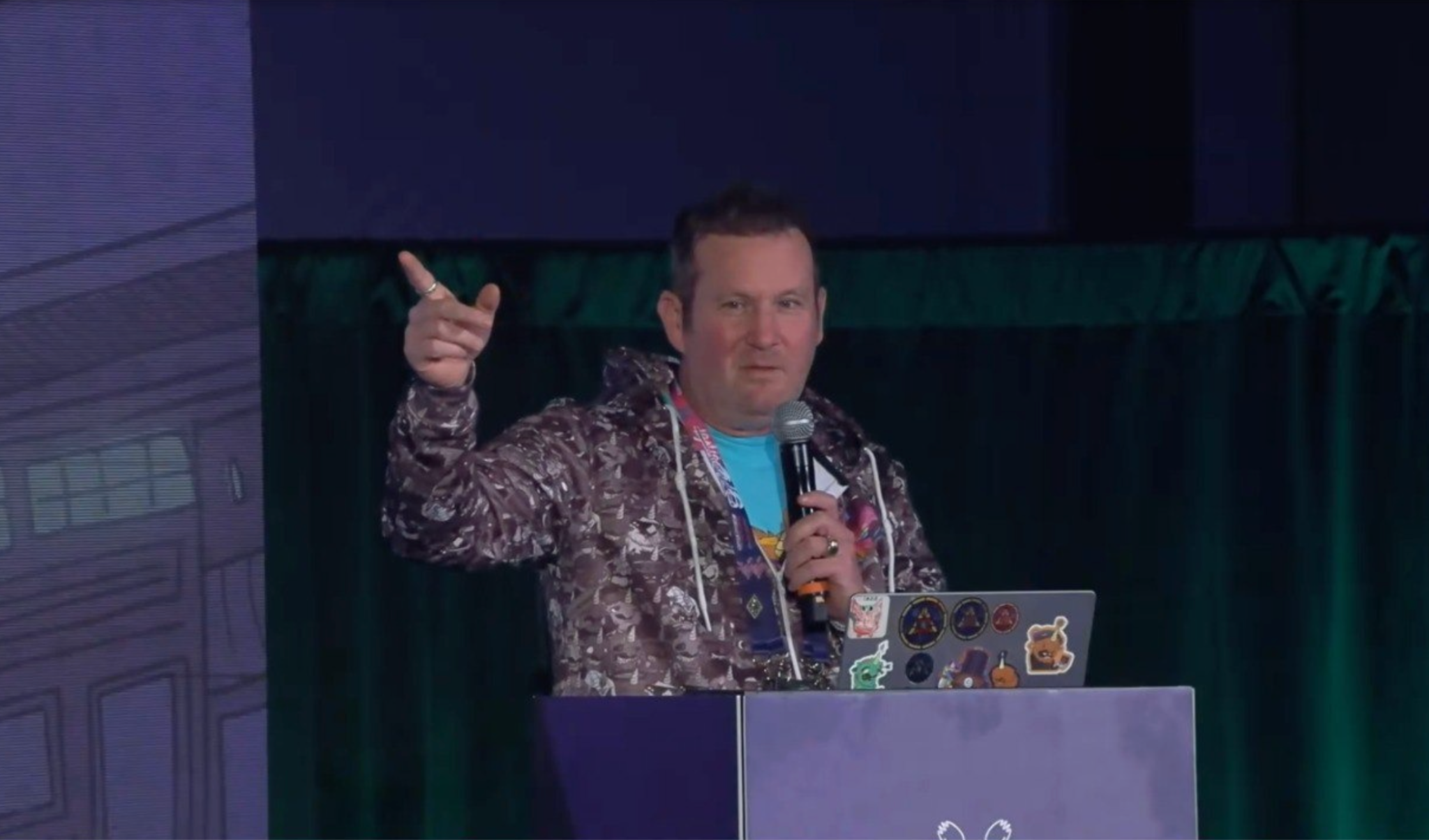
Claws Out AI Agent Demo Day & Clawards
The final Main Stage session showcased onchain AI agents, underscoring a week where AI infrastructure moved from abstract discussion to live production systems. Day 2 featured Austin Griffith demonstrating AI agents deploying smart contracts via Telegram, while Davide Crapis positioned Ethereum as the coordination layer for decentralized AI systems.
Four-day recap
Day 1 brought regulatory clarity into focus. SEC Chair Paul Atkins previewed the investment contract framework and innovation exemptions, while Commissioner Hester Peirce outlined roundtables on trading, custody, tokenization, and DeFi. Senate Staff Director Chris Land said the Clarity Act reached the “five-yard line.”
Day 2 centered on AI-native infrastructure and validator economics, with repeated emphasis on governance and long-term alignment. Devansh Mehta raised governance questions about validators, while institutional staking panels addressed whether scale and decentralization can coexist. Lido’s 700-node operator network was cited as evidence.
Day 3 shifted decisively toward policy and regulatory coordination. The White House’s Patrick Witt described three negotiation rounds on stablecoin yield, with the field of disagreement narrowing. Hester Peirce returned to map the SEC’s 2026 roadmap: durable regulatory positions, commission rulemaking, and implementing the CLARITY Act. Colorado Attorney General Phil Weiser and Securities Commissioner Tung Chan pitched the state as a national regulatory model.
Institutional momentum ran through all four days and emerged as one of the conference’s defining throughlines. Maria Shen (Electric Capital) highlighted $160B in stablecoins, $80B in DeFi, and $14B in RWAs on Ethereum. Haseeb Qureshi (Dragonfly) announced a $650M fund close. Joe Lubin (Consensys) framed the moment as the end of a trust supercycle.
Technical timelines tightened as Ethereum’s long-term roadmap came into sharper focus. Jerome de Tychey set a 2030 quantum-readiness deadline for Ethereum. George Zeng (NEAR Protocol) reported natural language intent systems processing $200M+ daily volume and $15B cumulative in recent months.

ETHDenver 2026 drew 8,000–10,000 attendees at the National Western Center campus, down from the 25,000 peak but up from 2,500 in 2020. John Paller noted bear cycles sharpen focus: “signal-to-noise ratio rises.”
ETHDenver 2026 reflected that shift – smaller than peak-cycle years, but more focused on infrastructure, policy, and execution than hype.
Day 3: White House pushes stablecoin bill, SEC maps three 2026 priorities, Colorado bids for builders
Day 3 brought U.S. crypto policy into sharp focus. The White House is negotiating stablecoin yield rules, the SEC laid out its roadmap, and Colorado pitched itself as the national regulatory model.
Across panels and private conversations, the tone shifted from ideological debate to implementation – with stablecoin rules, regulatory credibility, and state-level competition all framed as execution challenges rather than theoretical disputes.
White House stablecoin negotiations narrow
Three structured rounds between banking and crypto industries on stablecoin yield have shrunk the field of disagreement. Patrick Witt (Executive Director, President’s Council of Advisors for Digital Assets) framed the goal plainly:
My job is to get a bill to the President’s desk. Let’s not let perfect be the enemy of the good.
This focus on pragmatism quite possibly represents a departure from the industry’s maximalist demands toward legislation that Congress is actually likely to approve.
The most recent session happened the day before ETHDenver. Witt’s longer-term concern: “What we’re doing now is future-proofing the industry against a future administration that would come along and seek to undo all of the great work.”
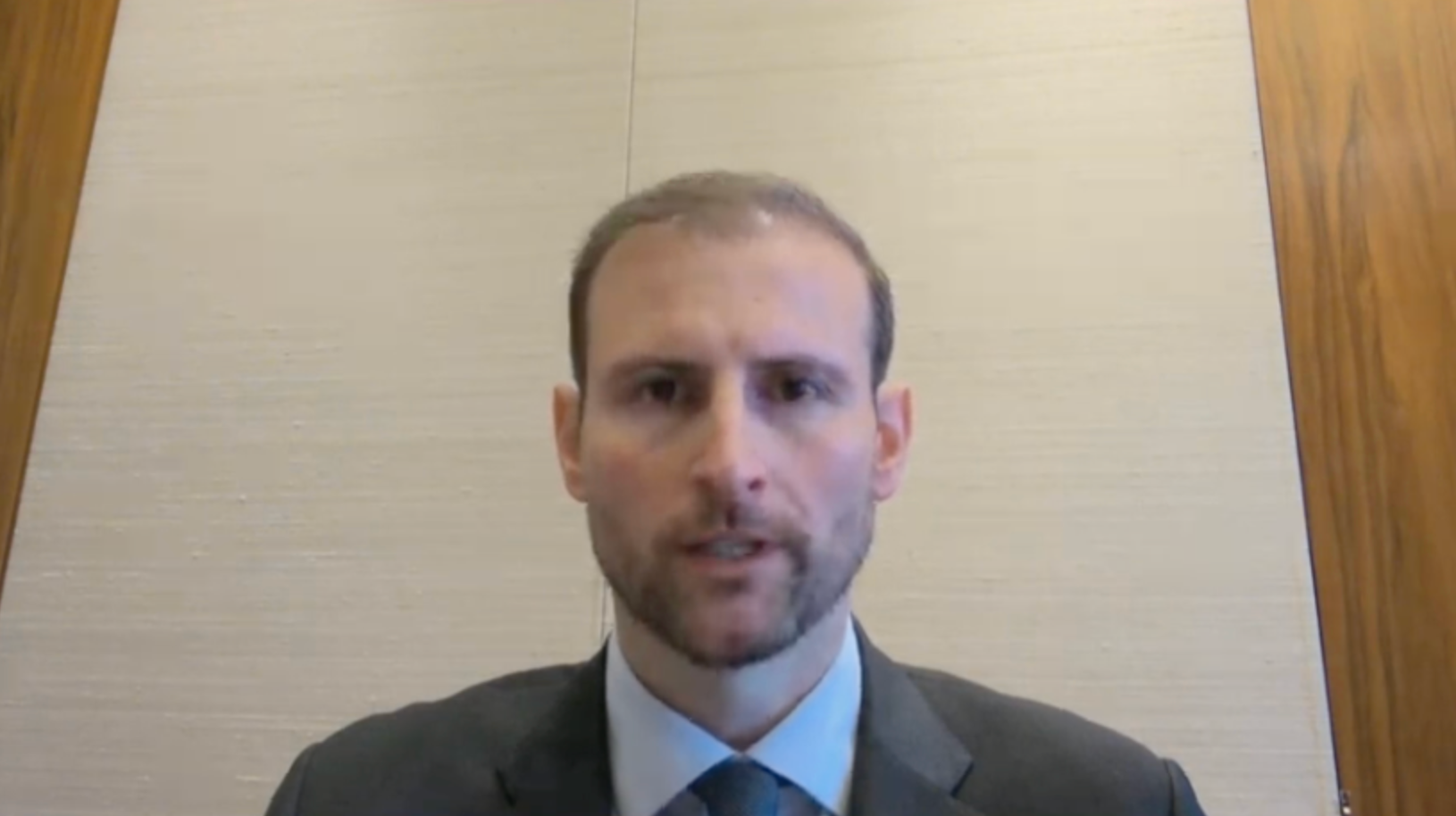
SEC’s 2026 roadmap: three focus areas
Hester Peirce (SEC Commissioner) broke down the agency’s agenda: durable regulatory positions, commission rulemaking, and implementing the CLARITY Act once it passes.
She emphasized lowering competitive barriers, viewing competitiveness as a structural issue rather than an enforcement problem:
Something I’m thinking about is trying to keep those competitive regulatory barriers as low as possible, because that is one of the reasons this industry hasn’t been as dynamic as it should be.
The SEC’s credibility with builders appears to be recovering: “I think the willingness of people to say, ‘okay, we’re going to give the SEC a second chance to get this right’ – that has been really encouraging.”
That perception shift may prove as important as formal rulemaking if the agency hopes to re-engage early-stage founders.
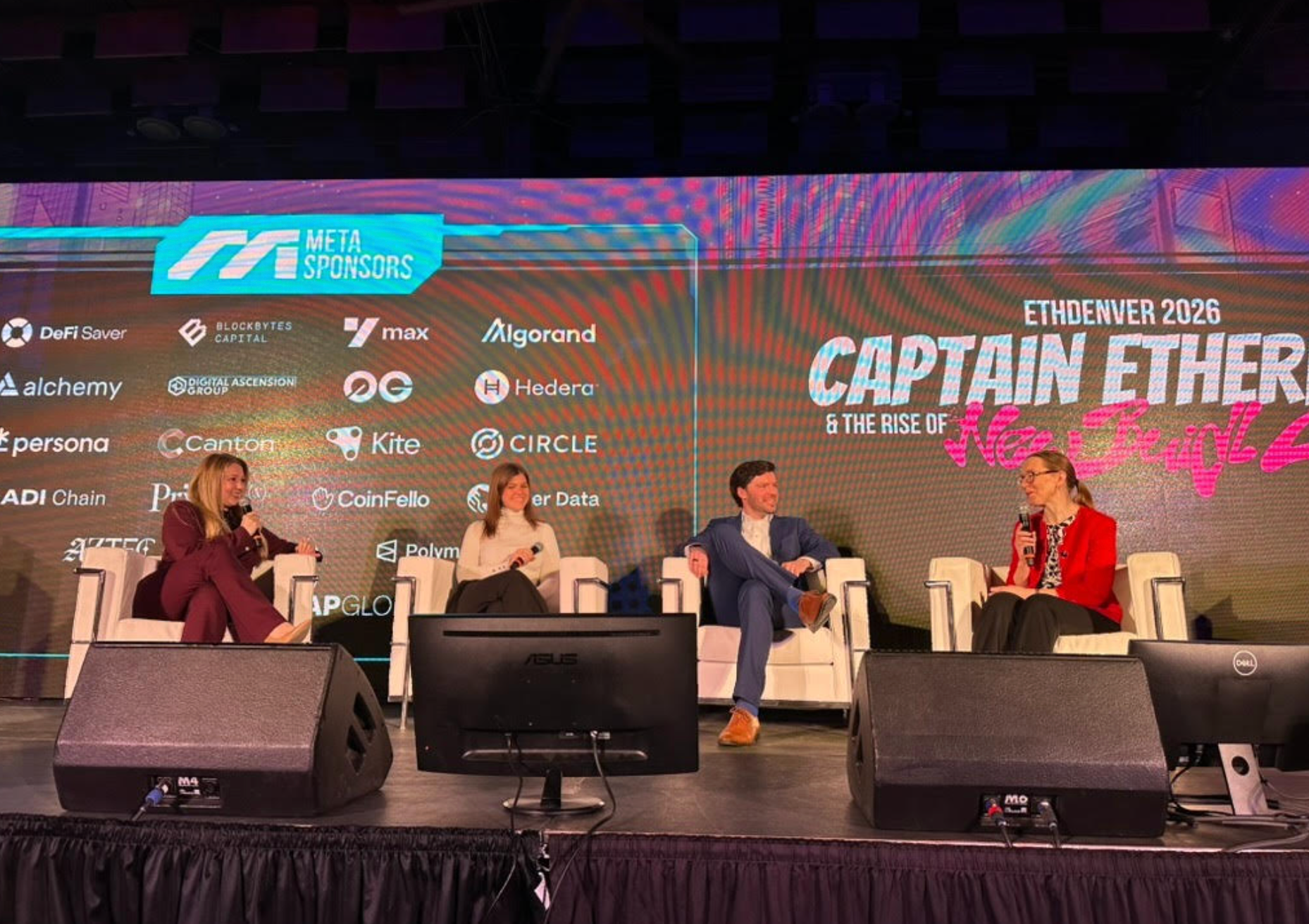
Colorado makes its pitch
Phil Weiser (Colorado Attorney General) wants innovators to see the state as the obvious choice:
I want the message to be if you’re an innovator, whether it’s in crypto, whether it’s in AI, whether it’s in BioTech – Colorado is the place to be because we’re going to support you both with the right legal environment, but also the right cultural environment.
The pitch reflects a broader trend of U.S. states competing for crypto incorporation, echoing earlier positioning by Wyoming and Texas.
Tung Chan (Colorado Securities Commissioner, former General Counsel to Ethereum Foundation) gave builders straightforward advice:
The regulators are really important, but they’re not the reason why everyone’s here. You guys are the reason why everyone’s there, the business, the commerce…make sure whatever you’re building is something people really want to use, and then go forth, innovate, make lots of money, and do it legally.
Chris Land (Staff Director, Subcommittee on Digital Assets, U.S. Senate) recommended starting local: state legislators have open-door policies and will meet with builders directly. Federal engagement comes later.
DeFi shifts from speed to durability
Alex Cutler (CEO, Dromos Labs) pointed to a widening gap:
DEXs already generate more value than the EVM chain layer itself…and as chains become cheaper and faster, this gap in accrual is going to widen.
The implication is that value capture is migrating upward in the stack – away from base-layer chains and toward applications.
Brian Huang (Co-Founder, Glider) noted that retail investors now access products previously limited to accredited investors.
Shyan Hussain (CEO, BlockBytes Capital) described the shift:
DeFi has always been concerned with ‘how fast can we achieve what we’re trying to do with this product?’ Now that we’re entering this new era in crypto, it’s about durability and optionality.
The language marked a noticeable shift from 2021-era growth narratives toward sustainability and long-term capital efficiency.
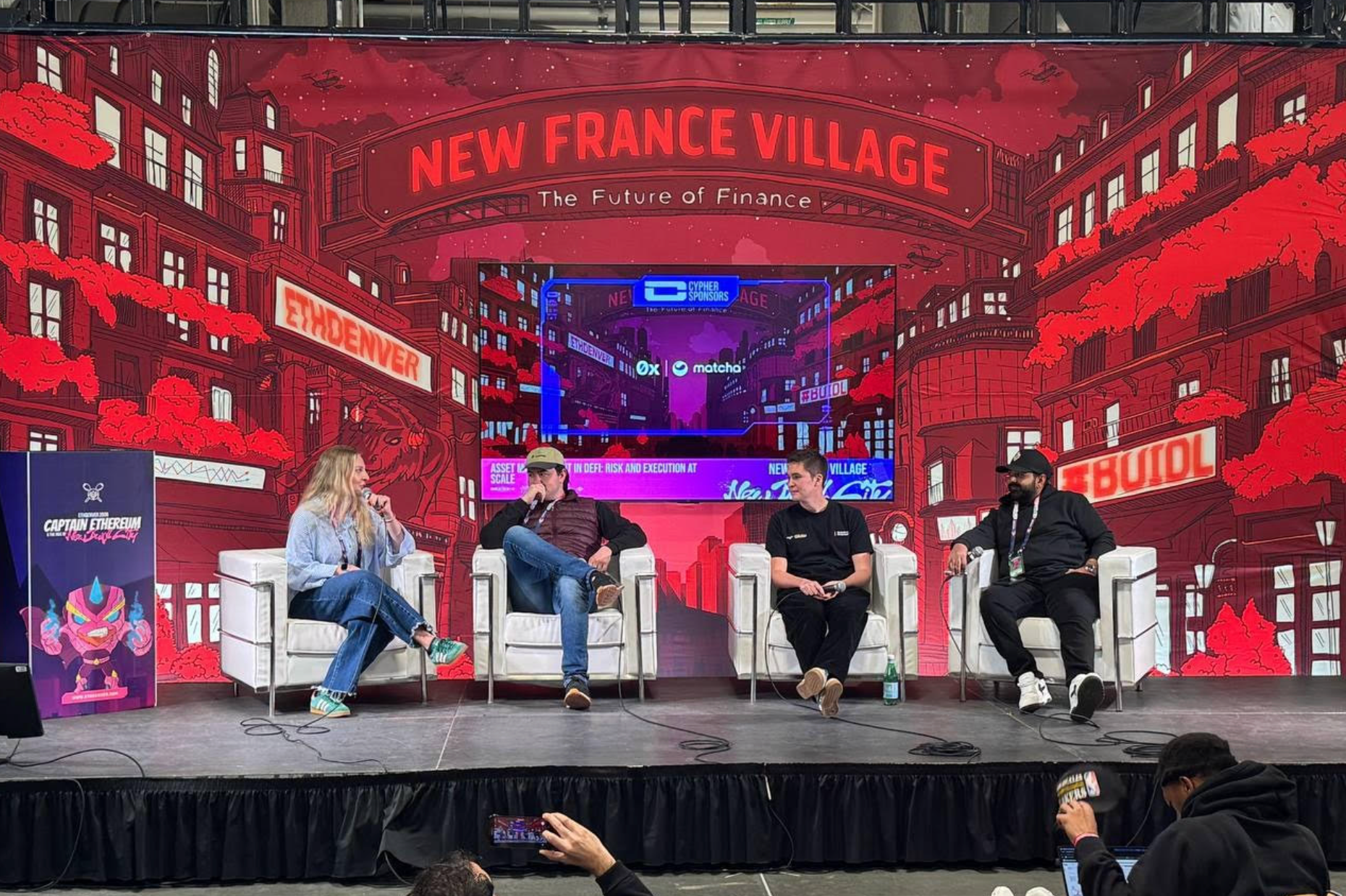
Institutional capital keeps flowing
Dragonfly closed a $650M fund. The size reinforces that venture appetite has not retreated despite regulatory uncertainty and market volatility.
Haseeb Qureshi (Managing Partner) writes checks from $3M to $40M across seed through Series B, with recent bets on Polymarket, Rain, Mesh, and Ethena. The institutions backing the fund are “genuinely excited about where crypto is headed.”
Beyond policy and venture capital, builders increasingly framed the next growth phase around automation and AI integration. And it must be said that the convergence of cryptocurrencies and artificial intelligence is accelerating. “The intersection of crypto and AI is just starting to blossom. These models are just starting to get good enough that they can actually manage money.”
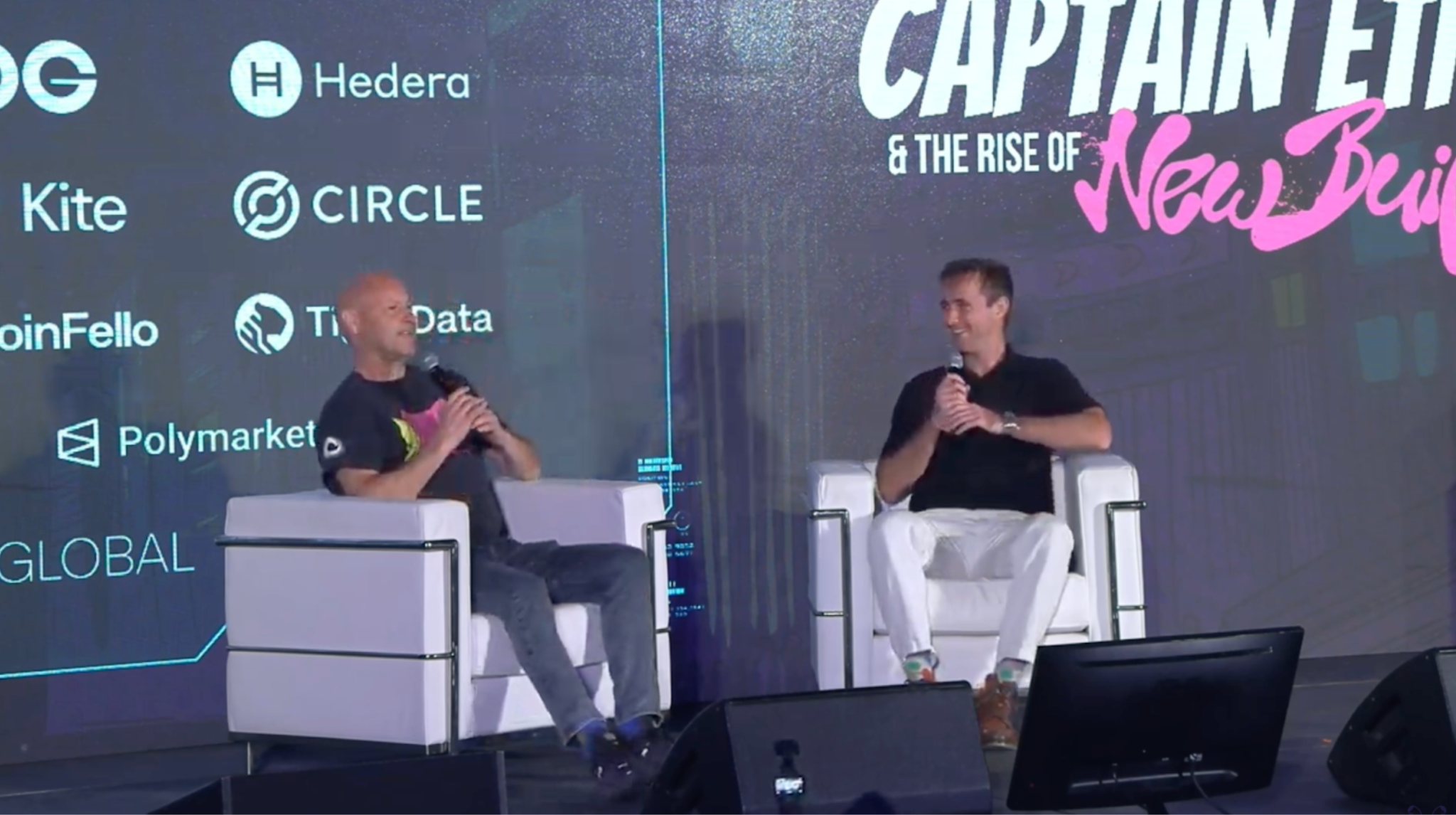
Joe Lubin (CEO, Consensys) positioned this moment as a structural shift:
We’re at the end of a trust supercycle. There’s been a loss of trust in centralized institutions…then along comes Satoshi, who invented the most profound new form of trust: decentralized trust.
The next supercycle, in his view, runs on decentralized rails: “Web3 is going to be user-centric, rather than Web2 being corporation-centric.”
Technical timelines tighten
Jerome de Tychey (CEO, Cometh and Ethereum France) set a quantum-readiness deadline: “By 2030, we should be quantum-ready in crypto. We should take a cautious approach to upgrade our systems to be ready to face quantum threats.”
While timelines for cryptographically relevant quantum machines remain debated, the consensus is that migration planning must begin well before the threat materializes.
William Mougayar (Ethereum Market Research Center) reframed Ethereum valuation:
Ethereum’s valuation is not the sum of its revenue. It is the sum of the world’s dependence on it. The architecture of trust is breaking, and this is why Ethereum is rebuilding it.
Taken together, Day 3 suggested that U.S. crypto policy and infrastructure are entering a consolidation phase – less about existential debates and more about governance, durability, and institutional integration.
Product launch
Horizen Labs launched a ZK-powered AI Agent Registry. The cryptographic “Agent Service Receipts” verify an AI agent completed a task without exposing its logic – moving the agentic economy from “trust me” to “verify me.”
Day 2: Lobsters in Telegram, $200M in intents, and 700 nodes proving decentralization scales
If Day 1 was about regulation (see below), Day 2 was about execution – AI-native infrastructure, validator economics, and whether decentralization still scales under institutional pressure.
AI and Ethereum convergence
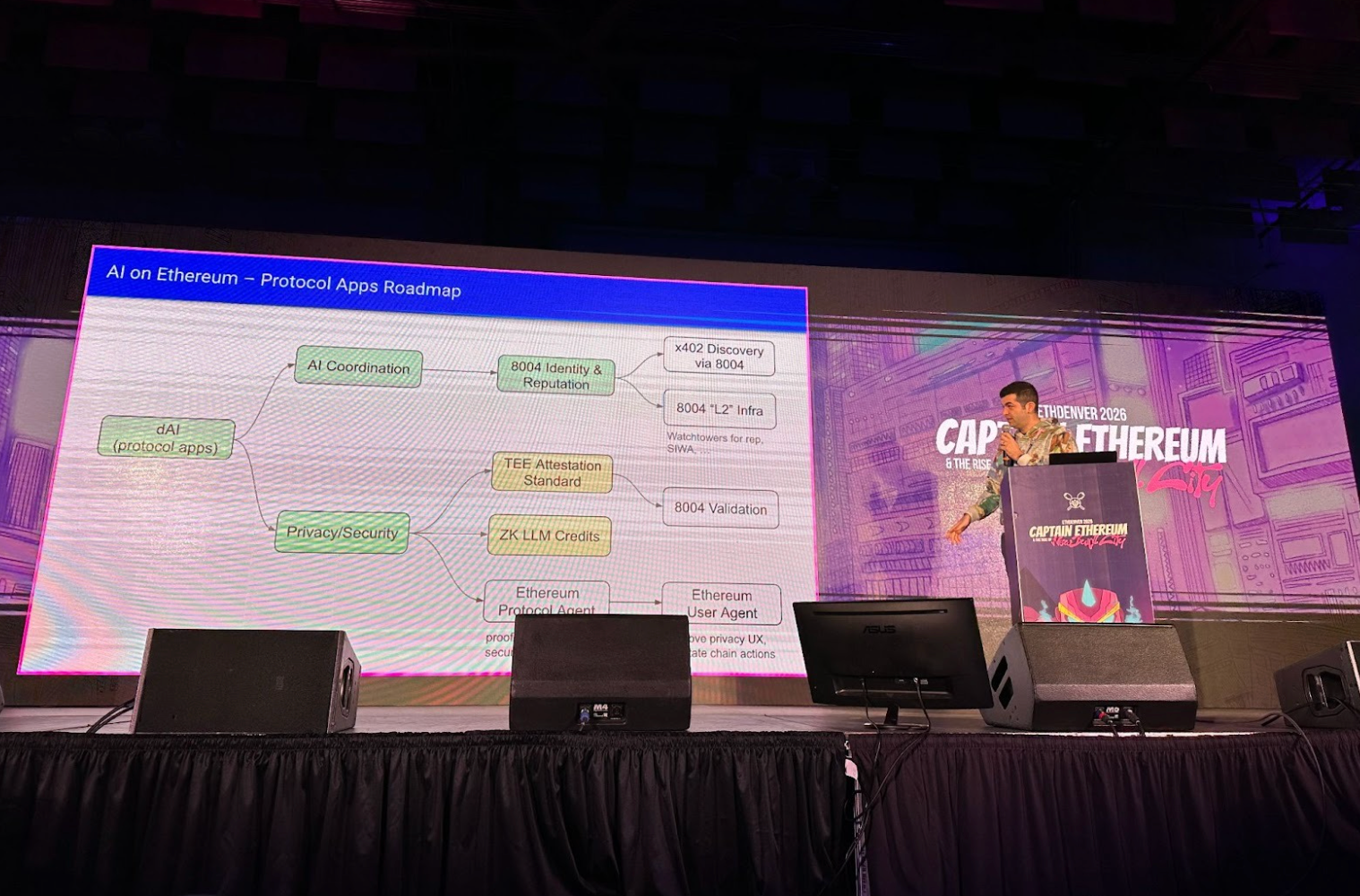
We want machines to use Ethereum, but we want to keep humans in the center. Ethereum for AI really means Ethereum for humans.
Davide Crapis (AI Lead, Ethereum Foundation) framed Ethereum as a coordination layer for decentralized AI systems – not as a replacement for humans, but as neutral infrastructure that keeps agency and alignment intact.
That vision felt less theoretical in Austin Griffith’s (BuidlGuidl) demo. He showed AI-directed workflows already running today: agents deploying smart contracts, moderating submissions, and liquidating positions – all via Telegram DMs.
I never thought it would be like this, but it’s me running a company of lobsters in a Telegram.
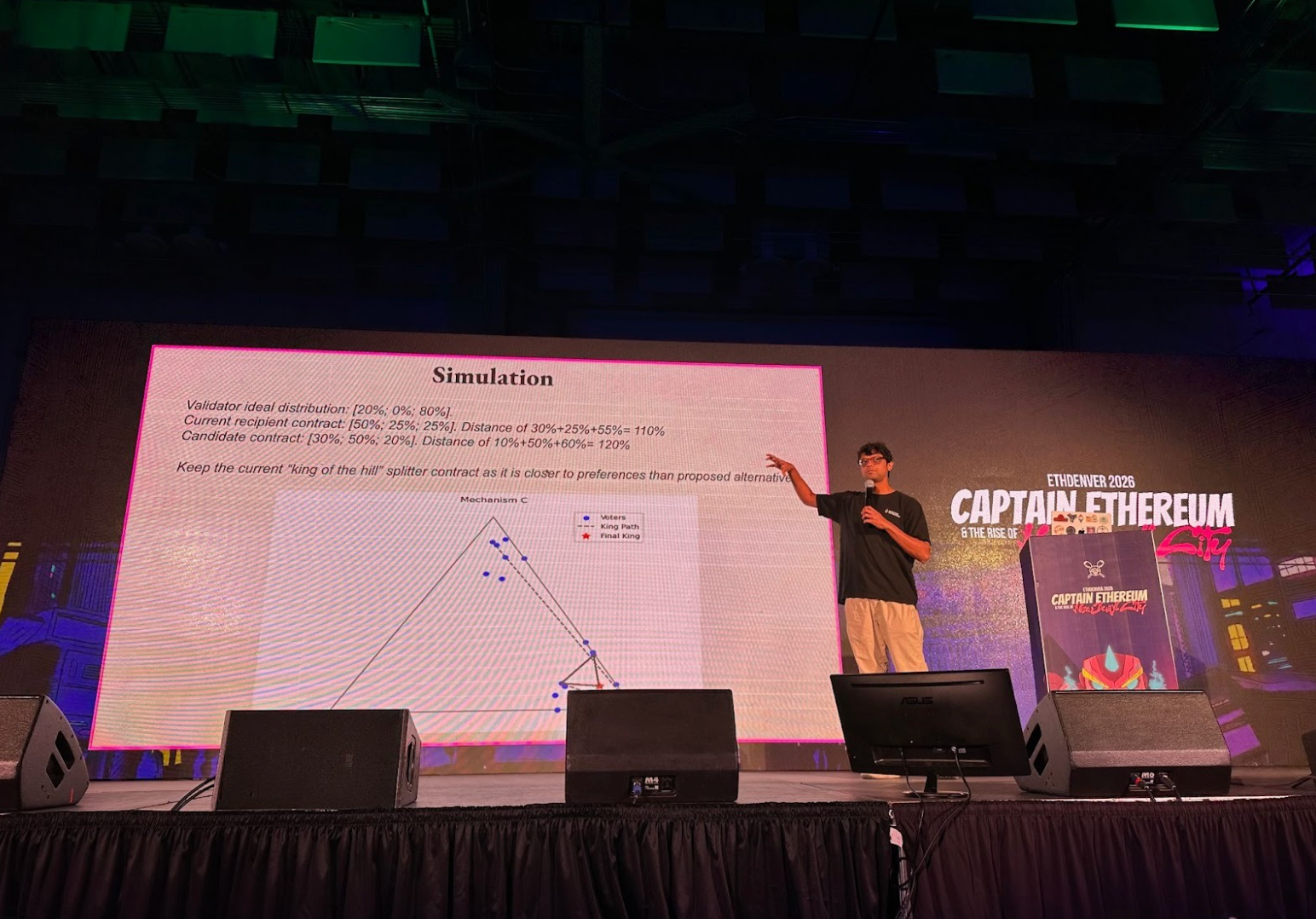
Validator economics quietly became one of the sharper debates of the day. Devansh Mehta (Ethereum Foundation) raised a core governance question: should validators merely provide services, or should they be active protocol actors? The distinction, he argued, matters for long-term alignment as staking scales.
Institutional infrastructure
Institutional adoption appears to be crossing an inflection point. Kyle Rojas (Institutional Lead, Ethereum Foundation) noted that institutions are no longer experimenting with small pilots – systems handling tens of millions of dollars suggest real commitment.
That momentum brought centralization concerns back into focus during the institutional staking panel (Rocket Pool, RockSolid, Lido). Lido’s 700-node operator community was cited as evidence that scale and decentralization can coexist. Will Shannon (Lido) pushed the idea further, arguing that ZK-based proof of personhood could help protect solo stakers even as institutional participation grows.
DeFi yield and market design
Every form of yield in crypto is one of four things: RWAs, leveraged looping or funding trades, selling options and structured products, and inflationary dynamics.
Simran Singh (Monaco Research) cut through DeFi yield narratives with a taxonomy that framed nearly every product on the market. The message was clear: yield doesn’t disappear – it just changes form.
Post-FTX, demand for decentralized infrastructure has grown, but Katie Talati (Arca) pointed to the gap between ideals and execution. “It will be difficult,” she said, “unless the technology greatly improves.”
New narratives
Blockchains radically reduce the unit cost of trust. Alex Stokes (Ethereum Foundation) started there, then outlined why that matters now: AI agents needing neutral infrastructure, a multipolar geopolitical environment where blockchain neutrality becomes strategic, and an era of epistemic fragmentation that requires shared ground truth.
Natural language intent systems offered a glimpse of what that future might look like in practice. George Zeng (NEAR Protocol) shared adoption data showing over $200 million in daily intent volume and $15 billion cumulative in recent months. The vision extended beyond DeFi – agents sourcing goods, optimizing shipping, and managing working capital across real-world commerce.
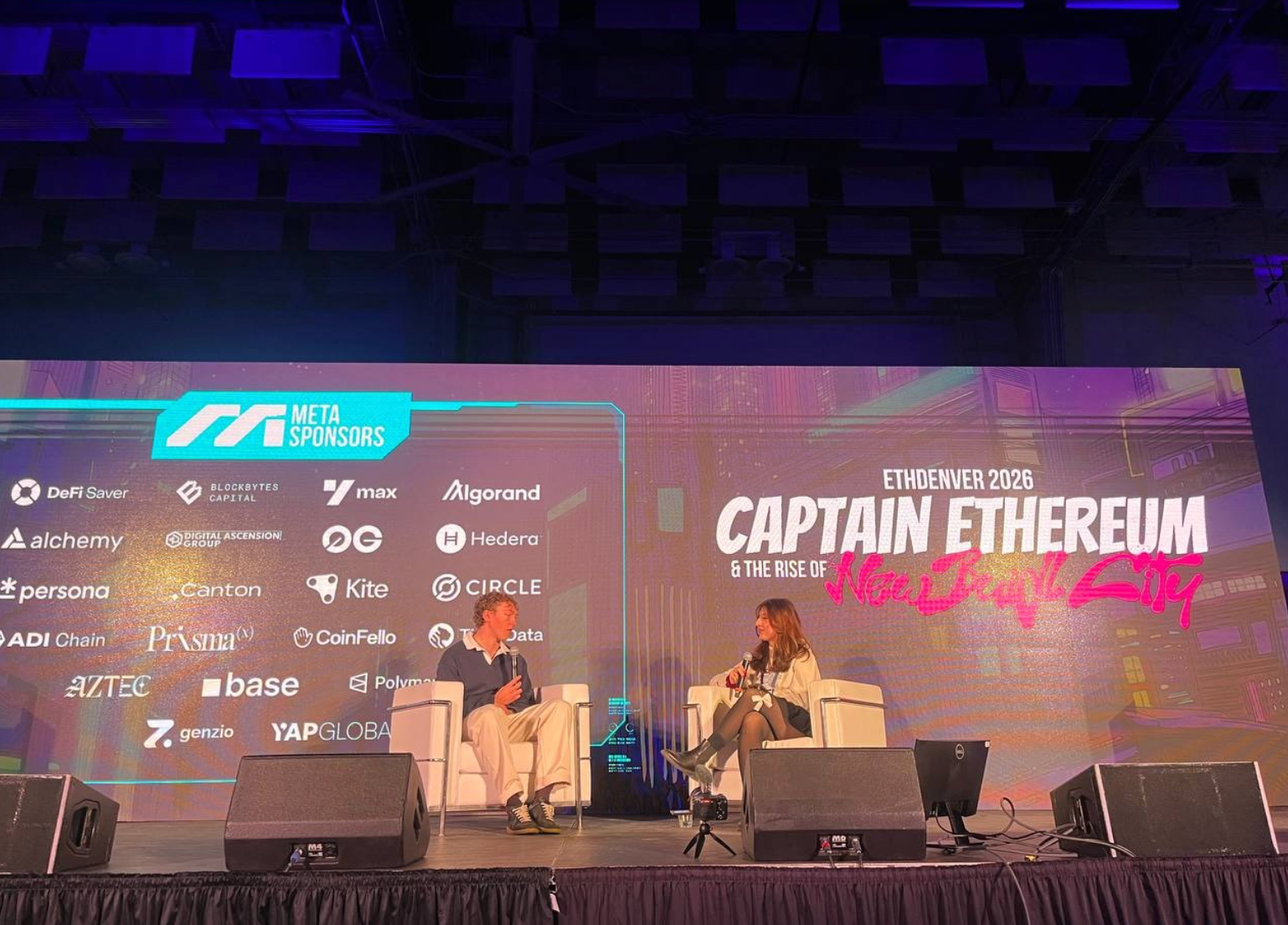
Ethereum is one of the greatest stories never told.
Louie O’Connor (Ethereum Foundation) closed on narrative leverage, arguing that trusted creators may be the missing distribution layer. MrBeast building on Ethereum? In his view, it’s a natural alignment between the creator economy and Ethereum’s values.
Day 1: Atkins, stablecoins, and AI agents
Regulatory clarity moves forward
SEC Chair Paul Atkins made his first-ever crypto conference appearance alongside Commissioner Hester Peirce, drawing sustained applause. Atkins previewed what’s coming: a framework for investment contracts, an innovation exemption for tokenized securities trading, and rulemaking on custody, capital raising, and transfer agent modernization. On the recent market downturn, he was direct:
It’s not the regulator’s job to worry about daily swings. It’s our job to make sure market participants have the disclosures they need to make informed decisions.
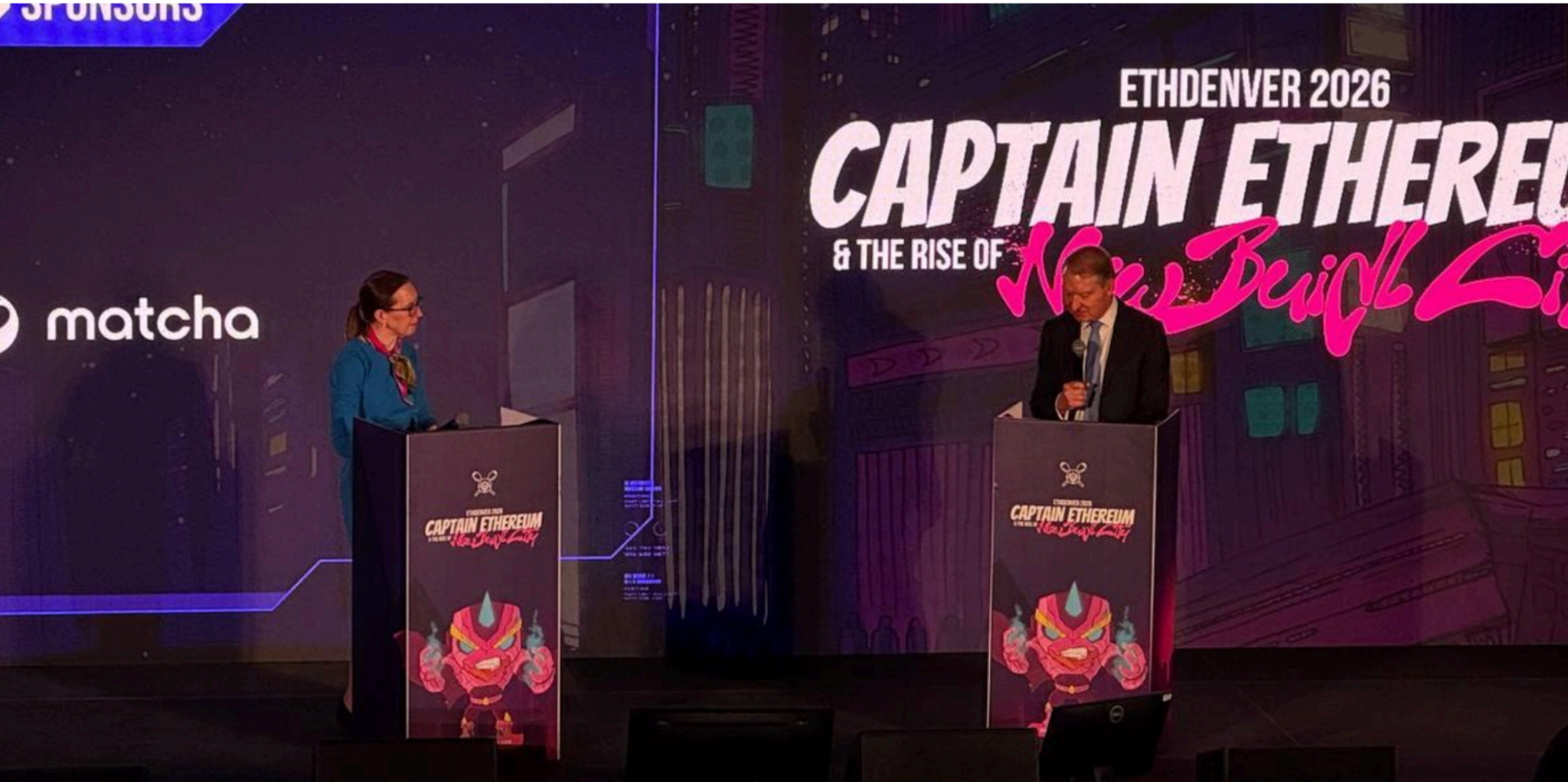
Peirce catalogued progress over the past year: roundtables on trading, custody, tokenization, and DeFi; staff guidance on staking, stablecoins, and memecoins; the end of SAB 121; and a new joint initiative with the CFTC.
Senate Subcommittee Staff Director Chris Land said the Clarity Act is at “the five-yard line” and emphasized the legislative push:
We want this industry to become part of our legal framework and give it a chance to grow.
Ethereum as stablecoin infrastructure
Maria Shen (Electric Capital) argued Ethereum is uniquely positioned to host the digital dollar economy, citing on-chain data: over $160 billion in stablecoins, $80 billion in DeFi protocols, and $14 billion in real-world assets already settled on Ethereum. She framed it as “the largest expansion of the dollar’s network effects in decades,” with stablecoins growing 60x since 2020 and 4 billion people facing significant currency risk. Her conclusion: “Holding ETH is likely the simplest and most effective way to gain exposure to this growing stablecoin economy.”
Tomasz Stańczak (Ethereum Foundation) said there are no longer “difficult hurdles” for institutions entering crypto:
What we’ve built created the rails for servicing institutional customers and fulfilling the promise of disintermediation.
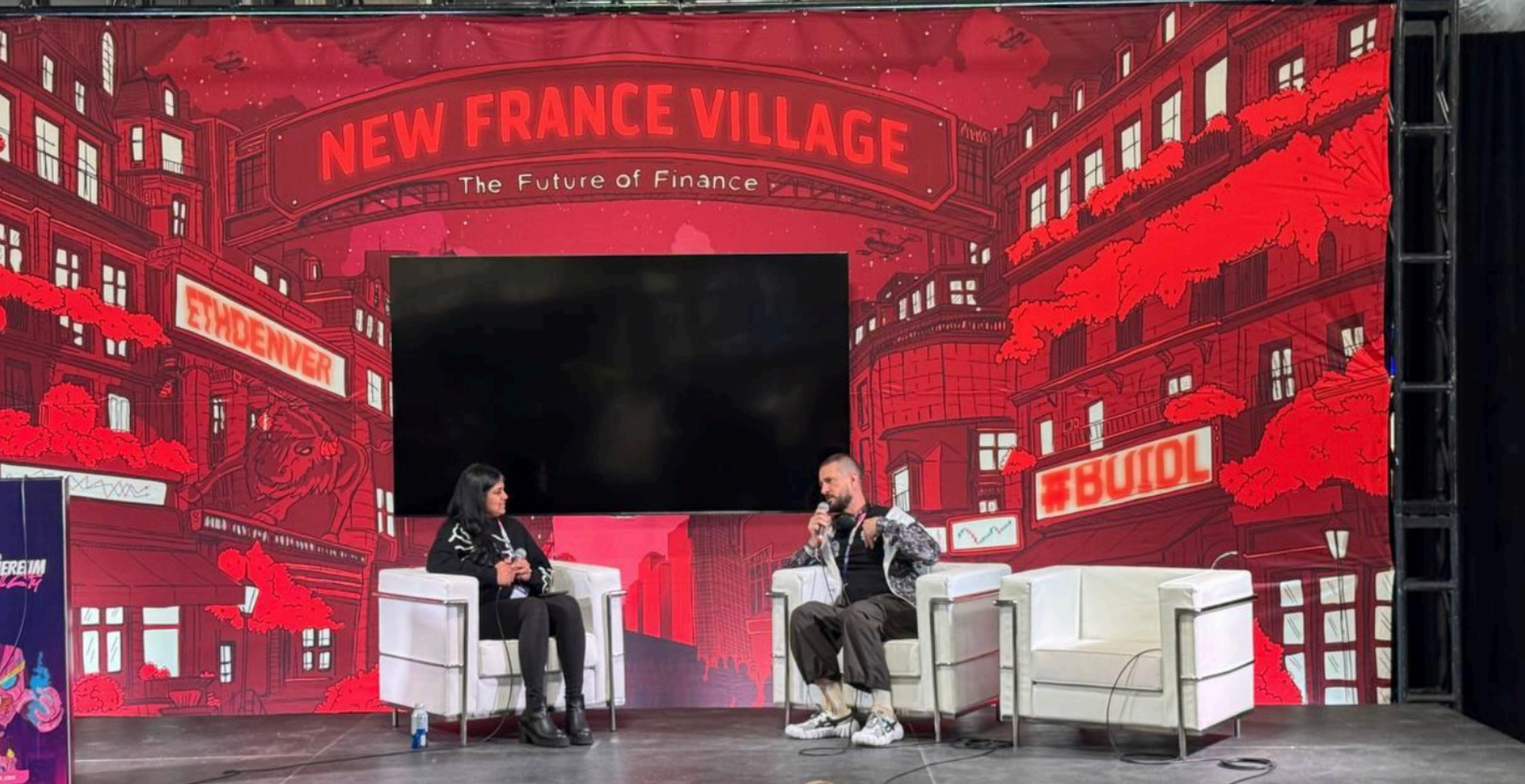
AI agents cross the chasm
Vitalik Buterin joined virtually to discuss AI alignment with Ethereum’s security-first principles. He drew parallels to zero-knowledge proofs:
Just like ZK washed away many intricate half-solutions from the previous era, AI is going to do the same for the user. But it’s very irresponsible to treat AI as magic – we want to take a security-first mindset.

Austin Griffith (Ethereum Foundation) unveiled ETH Skills, a live library teaching AI agents to build on Ethereum. He argued the focus should shift from “don’t be evil” to “can’t be evil.”
Jesse Pollak (Base) told the room that “agent-driven development has crossed the chasm,” shifting from 80% human-led to 80% model-led. He described agents that tokenize, raise capital, and reinvest on infrastructure secured by Ethereum as forming the basis of a new onchain economy.
Gordon Liao (Circle) pushed back on hype:
Reputation is not enough – you need recourse, and that recourse has to be linked to something with stakes.
Institutional adoption and RWAs
Joseph Chalom (Sharplink) said Ethereum needs to “stop being the little brother of Bitcoin,” citing intrinsic value through staking, tokenization, and stablecoin infrastructure. He highlighted the AI agent economy as a major driver:
You’re going to end up building an agentic machine economy like we’ve never seen before.
A panel on real-world assets (Centrifuge, Pantera, Grayscale) identified three forces behind RWA’s breakout: onchain yields becoming competitive, major asset managers lending brand credibility to tokenized products, and regulatory clarity in the U.S. Rayhaneh Sharif-Askary (Grayscale) noted real demand sits with onchain capital allocators and treasury managers buying tokenized T-bills because they cannot easily buy the real thing.
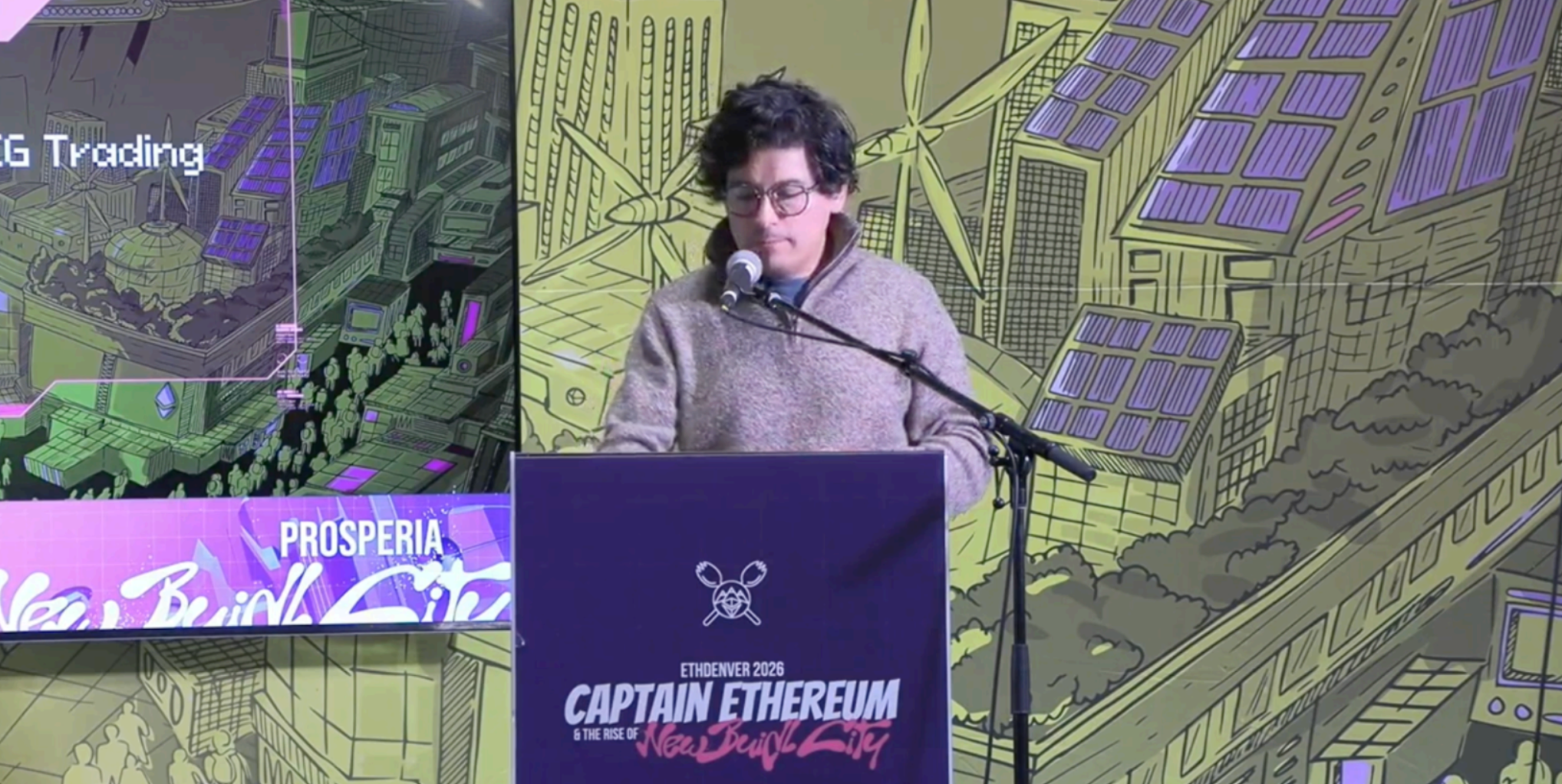
Beto Aparicio (Offchain Labs) said “the bar has been raised” for fundraising but reassured builders that the next cycle will focus on fundamentals:
This will be more about something that works rather than hype – stronger fundamentals with long-term alignment.
New launches
William Mougayar announced TRUSTSHIFT: Ethereum and the Reinvention of Trust, a book arguing that trust architecture is moving from centralized institutions to neutral code. The book provides a macro-level framework for executives and policymakers on why Ethereum exists, what it enables, and why it’s becoming essential infrastructure. Release: September 15, 2026.
Zircuit Finance launched an institutional-grade onchain yield platform targeting 8–11% APR.
ETHDenver 2026: The conference that works best in bear markets
ETH Denver 2026 opened at the revamped National Western Center campus with a clear message: even as the market cools, interest in building the Ethereum ecosystem remains strong.
According to conference founder John Paller, the team spent the entire year preparing, and the bear cycle only sharpened participants’ focus. He noted that ETH Denver “works best” during downturns: the audience becomes smaller but more motivated, and “the signal-to-noise ratio rises sharply.”
Organizers expect around 8,000-10,000 attendees this year – far below the peak of 25,000, but nearly four times the turnout of the 2020 conference. Long-time participants emphasize that this core community is now the main value of the event: less hype, more real ROI, networking, and practical tools.
Unicorn.eth founder Russell Castagnaro says the conference has “returned to its roots” and become more intimate.
Among the new participants are teams exploring ETH Denver as a platform to study decentralized governance models and integrate Web3 into real-world services. NEED-AID founder Tyler Gentry described using the conference to learn about DAOs and engage with active builders who remain focused on long-term ecosystem development.
The cultural layer of the event remains unchanged. Art performances, themed booths, and the Zen Zone mental-health area complement the technical agenda and create what participants describe as “a more mindful and focused” atmosphere.
NFT teams say the mix of AI, wellness themes, and Web3 culture makes the format “intense but comfortable.”
Despite the market downturn, pressure on alts, and declining liquidity, ETH Denver 2026 demonstrates that core ecosystem building continues. The conference serves as another signal: cycles may shift, but Ethereum’s builder energy remains most resilient when prices are low.
The material on GNcrypto is intended solely for informational use and must not be regarded as financial advice. We make every effort to keep the content accurate and current, but we cannot warrant its precision, completeness, or reliability. GNcrypto does not take responsibility for any mistakes, omissions, or financial losses resulting from reliance on this information. Any actions you take based on this content are done at your own risk. Always conduct independent research and seek guidance from a qualified specialist. For further details, please review our Terms, Privacy Policy and Disclaimers.
Articles by this author