Private key vs seed phrase: differences, risks, and backups

A crypto wallet controls access to your funds through secret cryptographic material. Your assets live on the blockchain, and the wallet stores what lets you authorize transactions and restore access if something goes wrong.
On this page
Private key vs seed phrase
Confusion usually comes from two items: the private key and the seed phrase. Handling either one incorrectly can trigger common trader problems: losing access after switching devices, leaks through phishing, or importing data into the wrong wallet.
Many people do not know how these items differ, where each one is used, what happens after a leak, and how to set up backups without extra steps. For seed phrase vs private key, the goal is practical: what to keep in a backup, what never to type into third‑party sites, and what to do if you suspect compromise.
How they work and what sets them apart
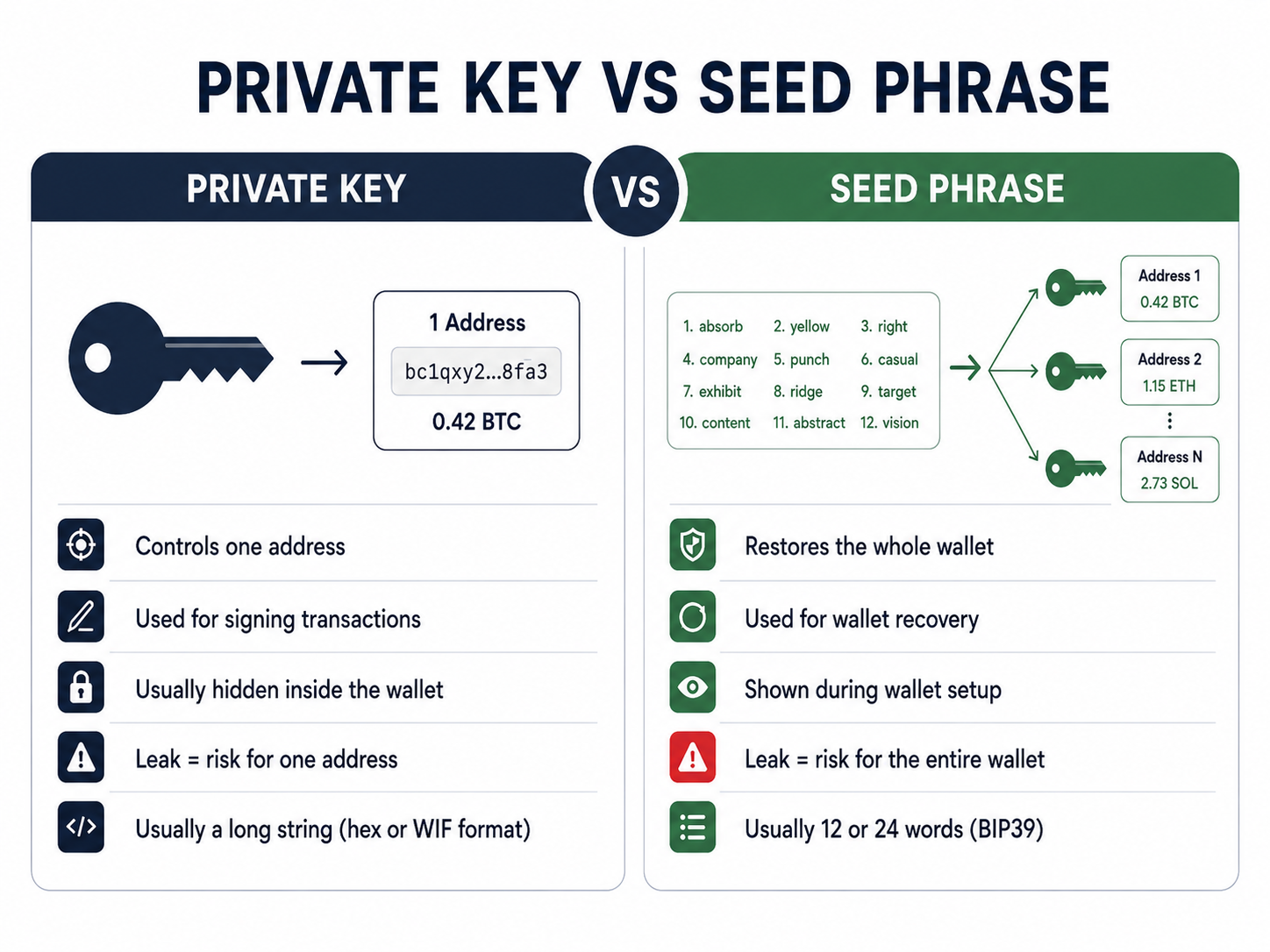
Wallet apps expose seed phrases and private keys in different ways, so it helps to define terms first. Some wallets generate a seed phrase during setup and do not show individual private keys. Other crypto wallets also let you export private keys for specific addresses. The formats differ too: a seed phrase typically follows the BIP39 standard, while private keys are often shown as a 64‑character hex string or in WIF format. This determines what you can import into another wallet: a single address via a private key, or the entire wallet via a seed phrase.
What a private key is and what it does
A private key is a long string of characters. It is the secret that lets your wallet create a digital signature for a transaction. When you send crypto, the wallet builds a transaction and signs it with the private key. The network verifies that signature and accepts the transaction.
A private key does not restore a full wallet on a new device. It controls the specific address it belongs to. You can import that key into another wallet and see the balance for that address.
You usually deal with a private key when you need access to one address only. For example, you might move a single address into a separate wallet or connect that address to a specific service.
What a seed phrase is and why it has broader access
A seed phrase is a list of words, usually 12 or 24. Those words are generated by a standard and encode a starting value that a wallet uses to derive private keys and addresses.
A seed phrase gives full access to a wallet. Restoring from the seed phrase recreates access to every address the wallet can generate.
That is why wallets show the seed phrase when you create a wallet and ask you to write it down. It is your recovery method if a device is lost, an app is removed, or wallet data becomes corrupted.
Comparing access scope and risk
If you compare private key vs seed phrase, it helps to compare the scope of access.
A private key usually controls one address. A leak is serious, but the damage is often limited to the funds held at that address.
A seed phrase unlocks the entire wallet. A leaked seed phrase almost always means losing all crypto tied to that wallet, both now and in the future.
They also differ in how they are used.
- A private key is required to sign every transaction. Your wallet keeps it internally and uses it when you send funds, so you typically never type it in.
- A seed phrase is rarely needed. You enter it to restore the wallet or move the wallet to another device. During normal use, it should stay off screen and be stored separately.
A 12‑word phrase can restore dozens of addresses because most modern wallets are deterministic. From a single seed (the number encoded by the seed phrase), the wallet generates many private keys with a standard algorithm: first a master key, then derived keys for each new address. The wallet follows standard derivation paths and regenerates the addresses it created before.
This is what recovery looks like: you install the wallet again, enter the seed phrase, and the app recomputes the same addresses. The coins remain on the blockchain, and only your access changes.
Which one is for you?
A seed phrase is for wallet recovery. A private key is part of the transaction signing process for a specific address.
If you use a typical wallet that creates multiple addresses, the main risk sits with the seed phrase. You need it when you recover after losing a device, move to a new phone, or set up the same wallet on a second device.
Private keys tend to show up when you work with individual addresses. For example, you might isolate funds on an address used for a specific dApp, or import an address from an older wallet.
To understand crypto private key vs seed phrase in terms of actions, use the checklists below.
How to store a seed phrase
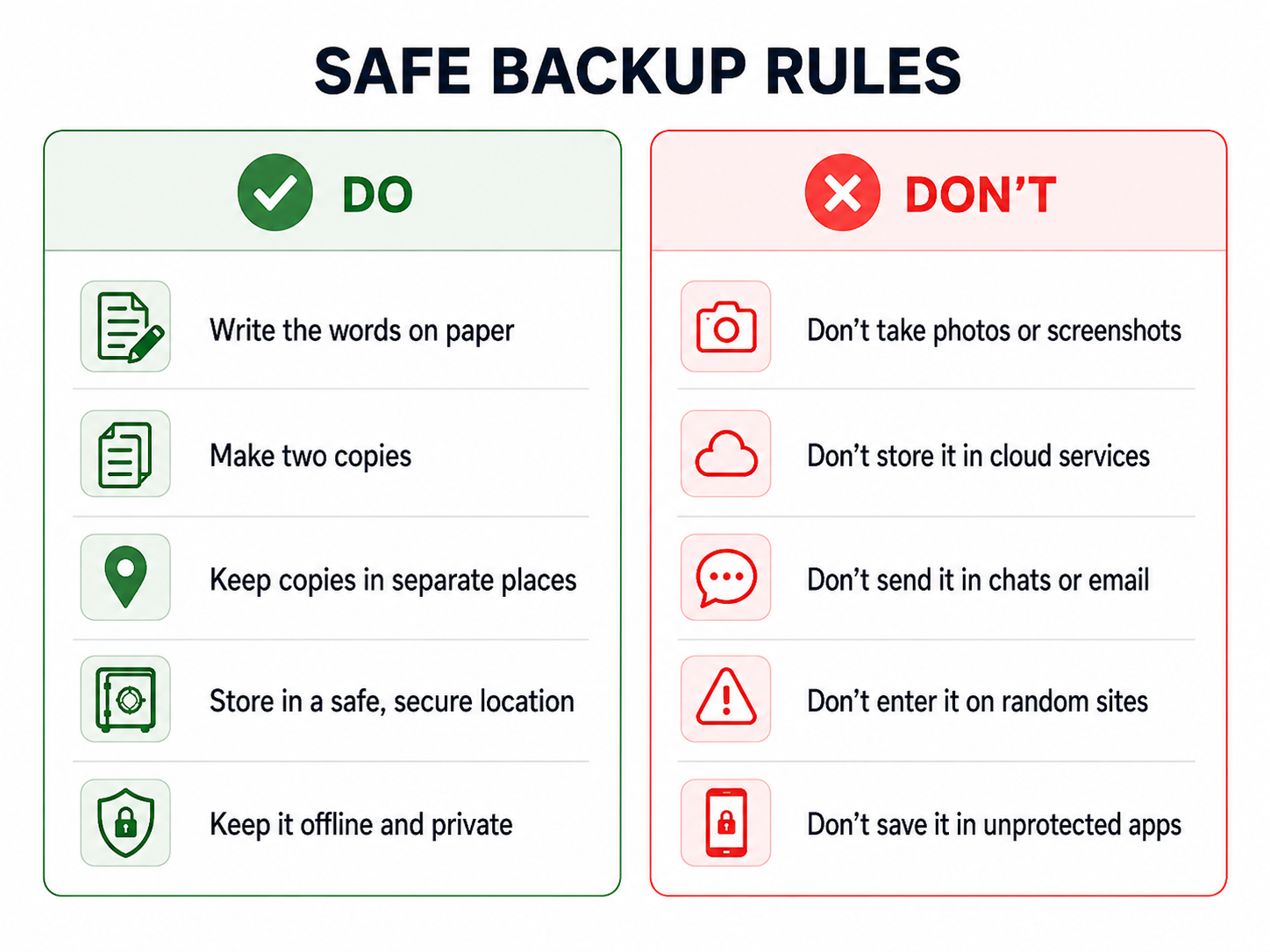
- Write the words on paper and store it somewhere that other people cannot access.
- Make two copies and keep them in separate places (for example, at home and in a safe).
- Do not take photos of the seed phrase and do not store it in cloud services. Screenshots and sync backups are common points of compromise.
- Do not enter the seed phrase on sites that offer verification, syncing, or recovery. A reputable wallet requests the phrase only during recovery.
How to handle a private key
- Do not send a private key in chat apps or email.
- Import a key only into wallets you trust, and do it on a clean device.
- If you suspect a leak, move funds to a new address created in a new wallet with a new seed phrase.
Common mistakes that lead to losses
One of the most common mistakes is trying to restore a wallet with a private key. A private key unlocks one address, so after importing it you will see only that address and its balance. Restoring the full wallet requires the seed phrase because it recreates the full set of addresses the wallet generated.
Another common cause of loss is poor storage. People save the seed phrase or private key in notes, email, a password manager without strong protection, or cloud photo storage. If an account is breached or a backup is accessed, an attacker can take control of the coins.
A third scenario is entering the seed phrase or private key where you should not. This happens on phishing pages, fake browser extensions, and apps that pretend to be a wallet. If the device is infected or the site is spoofed, the secrets are exfiltrated immediately, and withdrawals can start within minutes.
You might also like: How to recover stolen crypto
The material on GNcrypto is intended solely for informational use and must not be regarded as financial advice. We make every effort to keep the content accurate and current, but we cannot warrant its precision, completeness, or reliability. GNcrypto does not take responsibility for any mistakes, omissions, or financial losses resulting from reliance on this information. Any actions you take based on this content are done at your own risk. Always conduct independent research and seek guidance from a qualified specialist. For further details, please review our Terms, Privacy Policy and Disclaimers.
Articles by this author