What is a seed phrase in crypto? A beginner’s guide
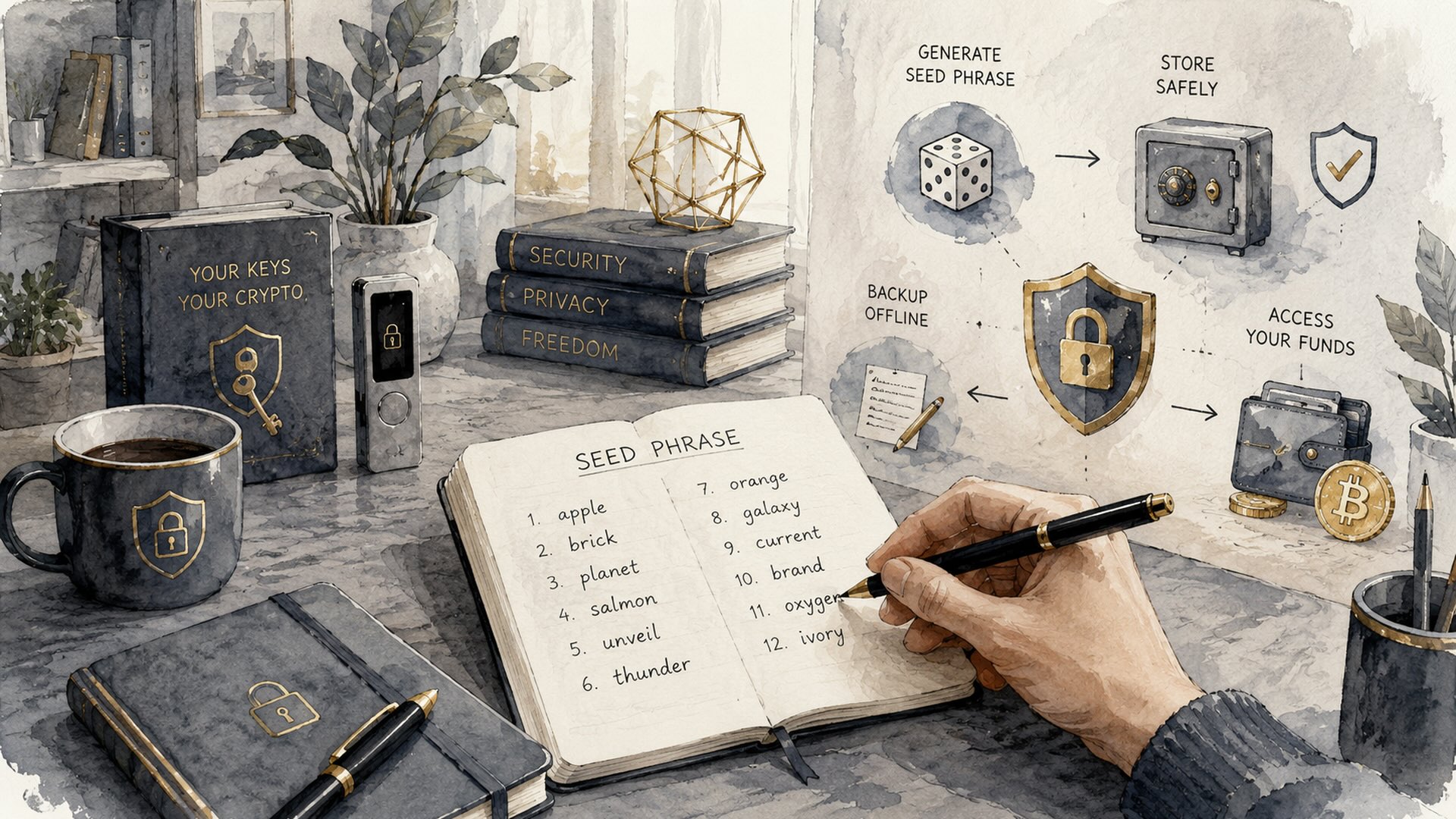
This article explains how wallet recovery works in practice: what a seed phrase is, why it gives full control over your funds, and how to store it so you do not lose access to your crypto.
What is a seed phrase?
Seed phrase, also called a recovery phrase or mnemonic phrase, is a set of 12–24 English words that a crypto wallet generates on first launch. In essence, it is a human-readable version of a master key from which the wallet derives all your private keys and addresses.
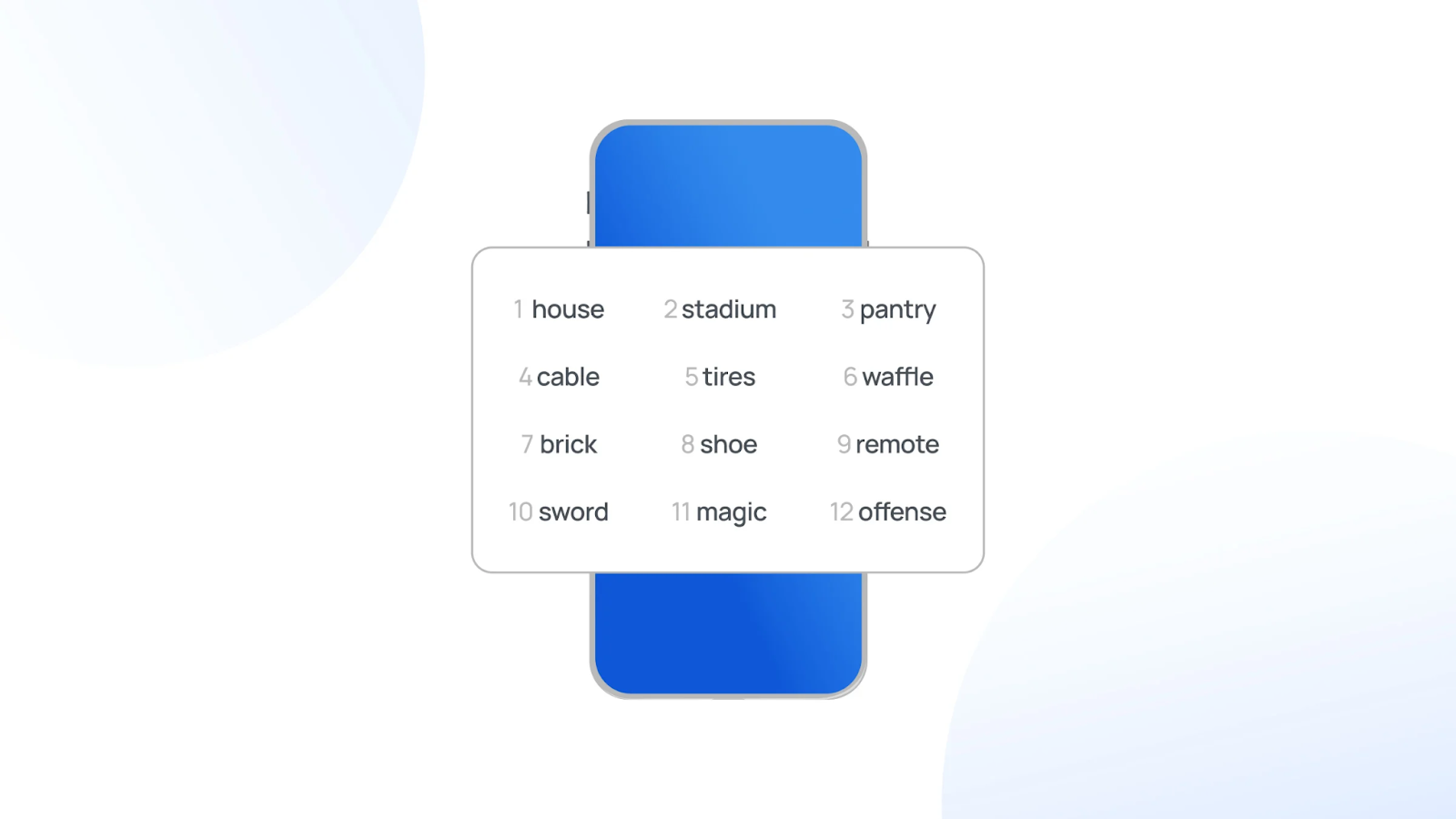
If you lose your device, app, or password, the seed restores access to all funds linked to that wallet. So when you ask what is a seed phrase, the most accurate answer is this: it is the master key to your crypto assets.
Technically, a seed phrase follows standards such as BIP-39: each word combination corresponds to a long random number. The wallet uses that number to generate a tree of private and public keys and operates through them. The coins themselves do not “sit” in the app or on the device; they exist on the blockchain. The wallet simply proves to the network that you have the right to control those coins. That proof is the private key, which is derived from the seed phrase.
From this follow two key functions of the seed. First, access. Lose your phone, delete the app, break your laptop – download any compatible wallet, enter the same 12–24 words, and all addresses and balances reappear. Second, control. Anyone who learns your seed phrase can do the same on their own device and transfer all funds without your involvement.
That is why the entire self-custody model in crypto rests on the seed phrase, a key difference between a custodial vs non custodial wallet. Do not photograph it, store it in notes, email it to yourself, or enter it on unknown websites. A secure option is to write the words down on paper or metal, make several copies, and store them in safe places. If the seed is preserved, the wallet can be restored from anywhere in the world. If the seed is lost or exposed, it cannot be recovered, and transactions cannot be reversed.
How seed phrases are generated
When someone tries to understand what is a crypto seed phrase, the next logical question is how the wallet generates those 12–24 words. There is no manual “invention” involved: the phrase is created through strictly defined cryptographic procedures and standards, primarily BIP-39.
First, the wallet generates a sequence of random bits, for example 128, 192, or 256 bits of entropy. It uses a cryptographically secure pseudorandom number generator built into the operating system or the wallet itself. The quality of randomness is critical: the higher the entropy, the harder it is for an attacker to guess the original value and reconstruct the seed phrase.
Next, a short checksum is added to help detect input errors. The full bit sequence is divided into 11-bit segments. Each segment corresponds to a word index in a standardized list of 2048 entries. This process turns a long binary number into a mnemonic phrase: instead of zeros and ones, the user sees a sequence of simple English words that are easy to handle. Each word maps unambiguously to its numeric code, allowing wallets to restore the original value and derive the corresponding keys without error.
BIP-39 word lists follow strict rules: words must be short, clearly distinguishable, and minimally similar to one another, especially in their first letters. This reduces the risk of mistakes during writing and recovery. Any change in a word or its order creates a different key, so you cannot “improve” or shorten the phrase.
A properly implemented wallet generates the seed phrase locally and does not transmit it to a server. It typically appears in plain text only on the user’s screen during backup, after which it is either encrypted or removed. You assume responsibility for long-term storage: write the phrase down once, verify the order and spelling, and keep copies in secure locations without entering them on third-party websites or unknown applications.
How to secure your seed phrase
Protecting a seed phrase begins with a simple fact: it is a single point of failure. If you lose it or expose it to third parties, wallet access cannot be restored. Treat storage not as a casual note, but as a separate security project. The same applies to the English term crypto seed phrase – the meaning is identical.
The basic rule – no digital environment. Screenshots, phone photos, cloud notes, emailing it to yourself, storing it in a messenger, or keeping unencrypted files on a computer create too many points of leakage. If an account is compromised, an attacker gains full control of the wallet.
A reliable option is a physical medium. Most people use paper or metal plates. Paper is convenient but vulnerable to water and fire. Metal costs more but survives fire and flooding. Write clearly, without abbreviations, in Latin letters exactly as the wallet displays. Any mistake in a letter changes the word and renders the phrase invalid.
It makes sense to create several copies, but do not store them in one place. Keep one at home in a location inaccessible to outsiders, another in a safe deposit box or with a trusted person, with clear access rules agreed in advance. Do not store copies next to hints such as “wallet password” or an exchange name. Ideally, anyone who finds the sheet should not understand what it is.
There are common mistakes in handling a seed phrase. Do not enter it on websites reached through links in emails or messengers, even if the interface fully copies the original wallet. Do not share the words “for verification” with supposed support staff. Do not store the phrase in the same room as visible hardware wallets if the location is vulnerable to theft.
A secure storage setup combines three elements: no digital copies, physically protected media, and thoughtful redundancy. When these conditions are met, the risk of losing access or having funds stolen drops significantly.
The material on GNcrypto is intended solely for informational use and must not be regarded as financial advice. We make every effort to keep the content accurate and current, but we cannot warrant its precision, completeness, or reliability. GNcrypto does not take responsibility for any mistakes, omissions, or financial losses resulting from reliance on this information. Any actions you take based on this content are done at your own risk. Always conduct independent research and seek guidance from a qualified specialist. For further details, please review our Terms, Privacy Policy and Disclaimers.
Articles by this author