How .ai domains turned Anguilla into a digital superpower
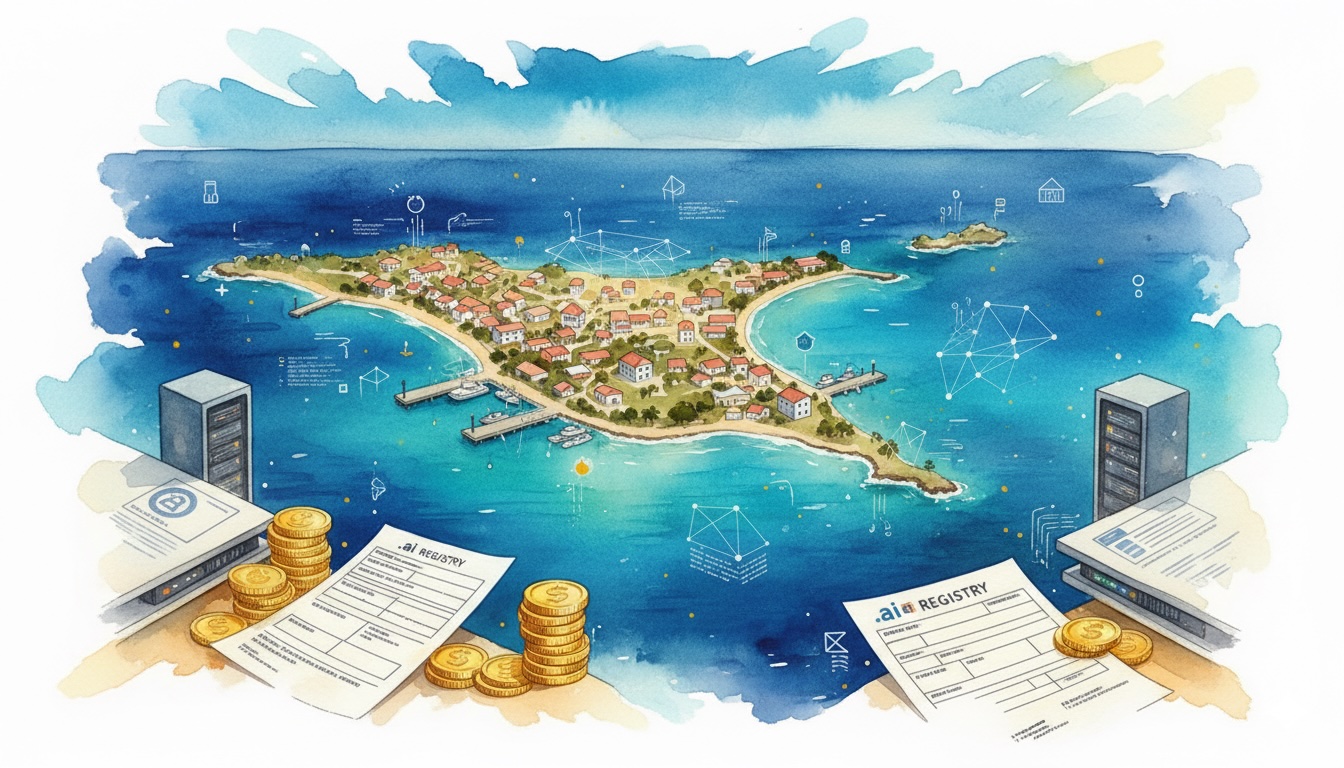
Nearly half of the government revenue in Anguilla comes from the .ai domain. This British Overseas Territory, home to just 15,000 people, earned over $70 million from domain registrations in 2025, with forecasts of $90–100 million in 2026. How did a tiny Caribbean island accidentally become the digital domain lord for Google, Microsoft, and thousands of AI startups? And what is the local government doing with this money?
On this page
Anguilla covers 91 square kilometers. Its population is three times smaller than Monaco’s. There isn’t a single tech giant office here, not a single globally known AI startup. Yet in 2026, the island earned more from the digital economy than many countries with well-established IT industries.
This stems from the assignment of the code “AI” to Anguilla in 1995, as a two-letter country designation for internet infrastructure by the International Organization for Standardization. Back then, it was a routine technical standard. Nearly 30 years later, those same two letters became the most sought-after abbreviation in big tech: Artificial Intelligence.
Today, every second dollar in the island’s budget comes from .ai domain registrations. This isn’t the result of strategic planning, investment, or government policy. It’s pure chance that has been working for the third year in a row with no signs of slowing down.
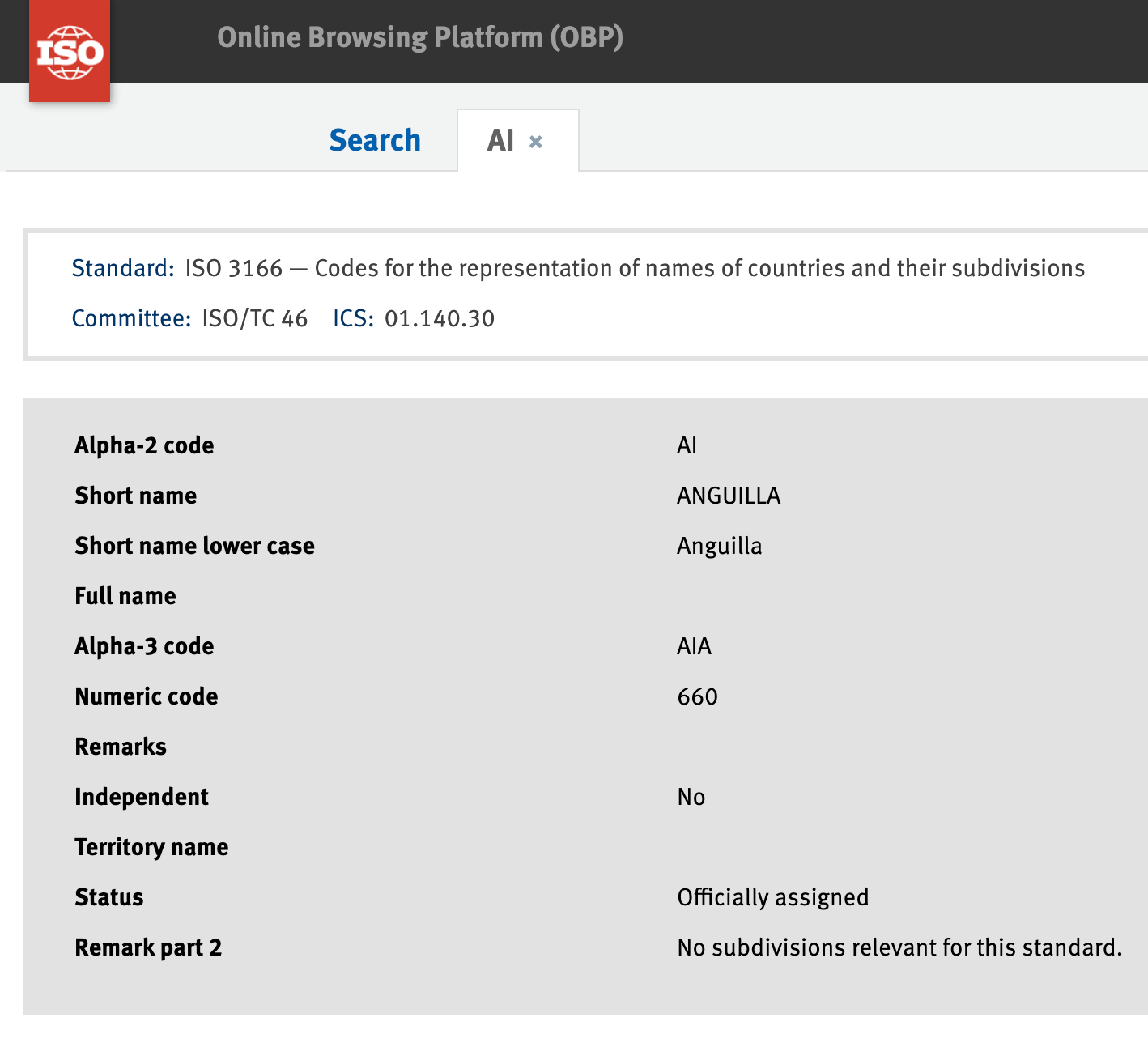
Domains create 50% of Anguilla’s budget
Back in 2020, revenue from .ai accounted for about 5% of Anguilla’s budget. The island lived on tourism and offshore financial services. Domains were registered mainly by tech enthusiasts and a few startups – a nice bonus, but not a serious economic foundation.
Everything changed in November 2022. OpenAI launched ChatGPT, and suddenly the world was talking about artificial intelligence not as a distant concept, but as something tangible. The trend in .ai domain registrations simply explodes: every new AI startup wants .ai as a branding signal. Tech giants also begin mass purchases of premium domains.
By the end of 2023, domains accounted for 20% of Anguilla’s budget, and in 2025 the island earned over $70 million. This allows the government to abolish property tax for all residents and launch free healthcare for children and the elderly.
By January 2026, the number of registered .ai domains officially surpassed one million! The forecast through the year-end is $90–100 million in revenue. If this happens, 50% of Anguilla’s budget will consist of domain registration fees.
For an island with a population of 15,000, this means over $6,000 in net income per resident! And that’s just from domains, excluding tourism, financial services, and other sources!
At the same time, these domains are still relatively inexpensive. For example, if GNcrypto decided to move to .ai, it would only cost us $37.72 for two years. Among other things, GoDaddy calls this domain name extremely undervalued: according to search queries for relevant keywords, the average purchase in this segment could cost about 7 times more.
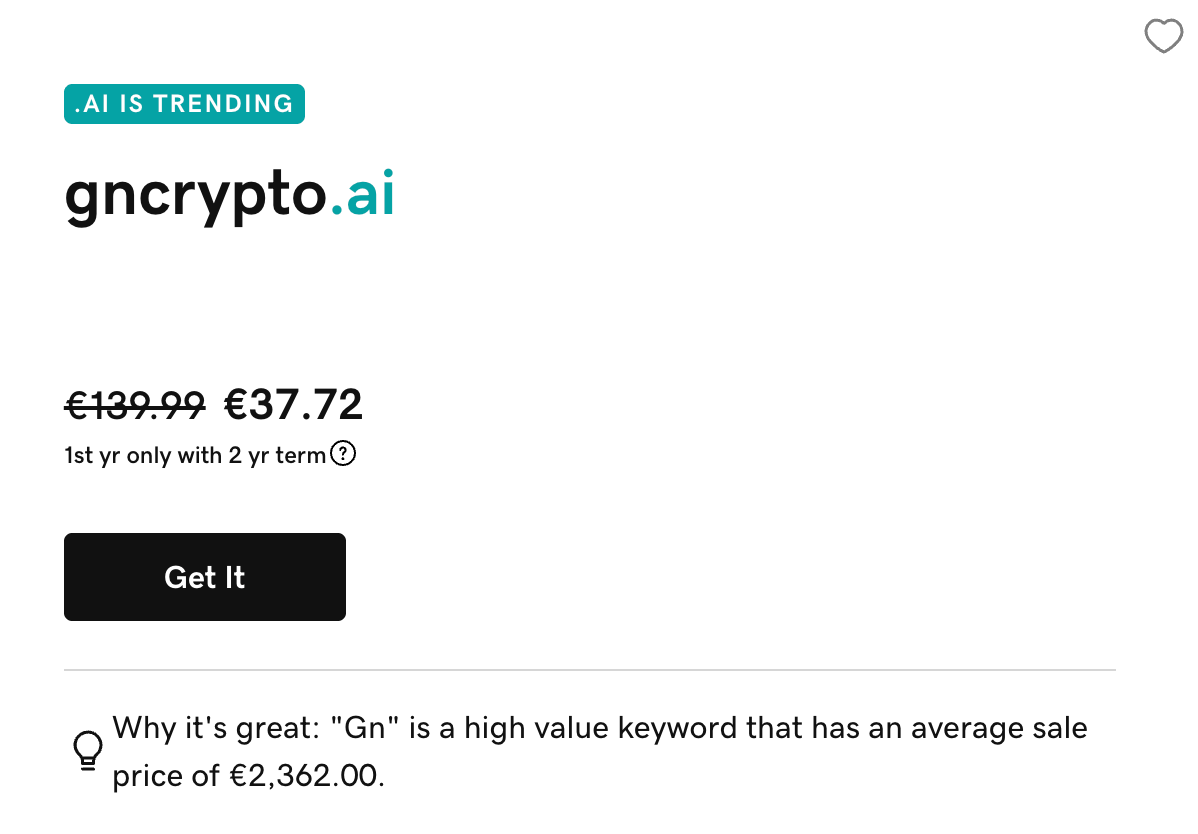
Musk, Google, Microsoft pay Anguilla for two letters
Google has a separate Google.ai domain for AI products and research. Microsoft has the Microsoft.ai domain for Azure AI services. Elon Musk and his company Xai (developer of Grok) have the sleek X.ai domain. Also in this domain zone is Character.ai, one of the world’s most popular AI chatbots. They all pay Anguilla for the right to use .ai.
Thousands of startups choose .ai over traditional .com or .io domains because it instantly signals their focus on AI. Users immediately understand: the company does something with artificial intelligence. In an era when AI is the main tech trend, this is a competitive advantage.
Investors and speculators buy short, catchy .ai domains as assets. Single-word domains can cost $100,000 or more. The resale market is quite active – owners hold domains expecting price increases or offers from major buyers.
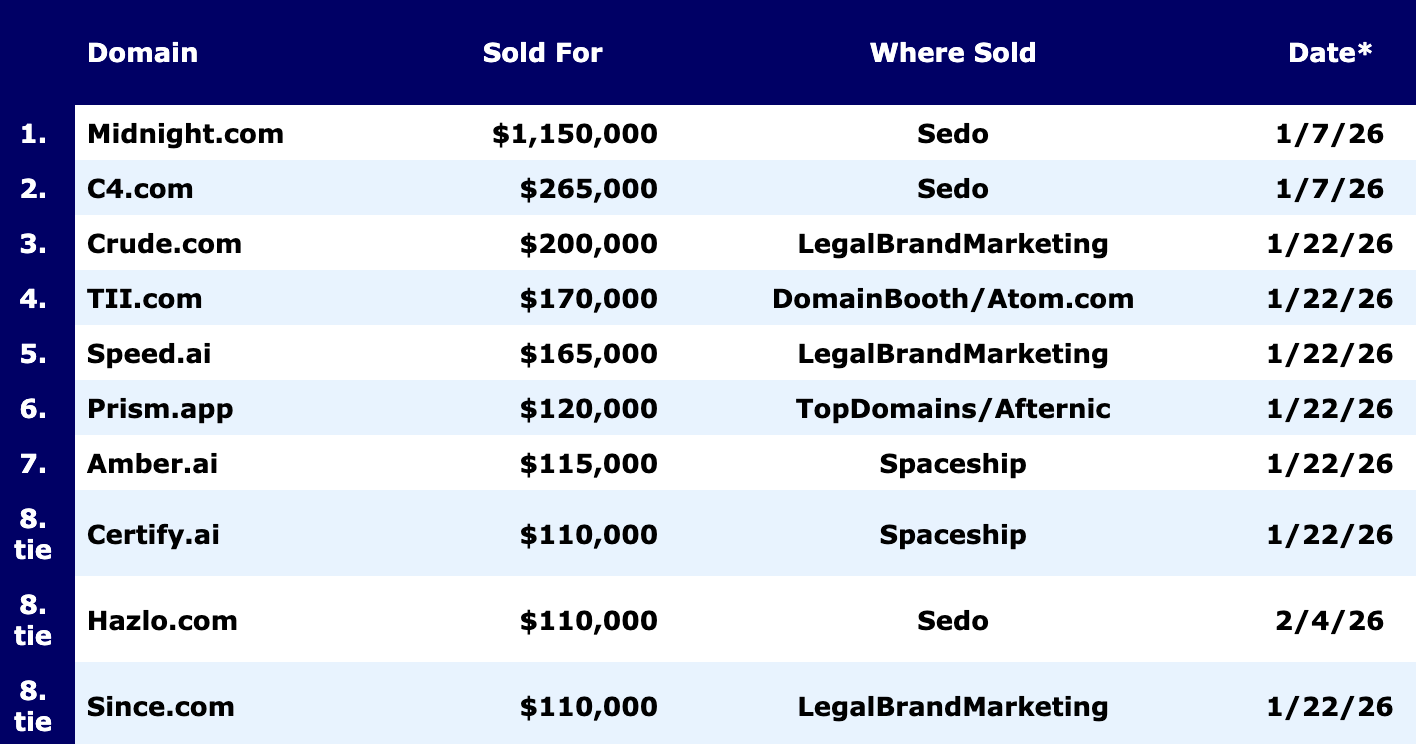
Look at the statistics from DNJournal: three .ai domains immediately made it into the top 8 most expensive domain name sales in barely-started 2026:
A two-year .ai registration costs an average of about $140. The lion’s share (approximately $70–80) goes directly to Anguilla’s treasury. The rest is taken by registrars and technical infrastructure. With a million registered domains, the arithmetic yields tens of millions of dollars in annual revenue. And since most domains renew automatically, this becomes a stable and predictable stream.
What the island does with AI millions
The government doesn’t hide the money or distribute it through populist payments. Revenue from .ai is being invested in infrastructure, social programs, and tax cuts.
The most noticeable change for residents is the complete abolition of property tax. Before the boom, this tax was one of the main sources of local revenue. Now the need for it has disappeared.
Expansion of the international airport started in 2025, which will increase capacity, attract more tourists, and create opportunities for business visits. In parallel, ports and roads are being modernized. Revenue from domains allows updating critical infrastructure without attracting external loans.
Free healthcare for children and the elderly covers basic services for the most vulnerable groups. Scholarships fund educational programs, sending talented students abroad with the expectation they return to contribute to the island.
Anguilla is actively reducing public debt. Instead of increasing borrowing to finance development, the island uses revenue from .ai to pay off old obligations and reduce dependence on external creditors.
From the budget report presented in January 2026:
“Revenue from the .ai domain zone has allowed us to invest in the island’s future without raising taxes or attracting new loans. We have turned a digital accident into a sustainable economic model that works for the benefit of every resident.”
What happens when the AI boom ends?
Nearly 50% of the budget from a single revenue source is a huge concentration of risk. The question isn’t whether demand for .ai domains will fall, but when it will happen and how sharply.
How many .ai domains does the world need? At some point, most companies that need such a domain will have already registered one. New registrations will slow down, leaving only renewals. Domains like .tech, .bot, .ml, or new AI-specific zones could pull away part of the demand. If a major registrar launches an alternative with aggressive marketing, .ai’s share will decrease.
Artificial intelligence remains the defining tech trend of the 2020s – for now. But the tech industry is cyclical. In 5–10 years, the focus may shift to other technologies, and .ai will lose its symbolic value. Blockchain also seemed like an eternal trend in 2017–2021, and then interest dropped.
The Anguilla government understands this. Part of the revenue from domains goes into a sovereign fund that invests in diversified assets – stocks, bonds, real estate outside the island. This is a safety cushion in case of revenue decline.
Airport expansion and infrastructure improvements are aimed at attracting tourists and reducing dependence on a single source. The government is exploring opportunities in Web3, including blockchain domain registration and attracting cryptocurrency companies for physical registration on the island.
The analogy is simple: Anguilla is like an oil-rich country that struck black gold but knows the reserves aren’t infinite. Smart oil countries diversify their economies while the money is there. Anguilla is trying to do the same.
Don’t confuse Anguilla with the Antilles
Anguilla is a specific island, a British Overseas Territory in the northeastern Caribbean Sea. The capital is The Valley. The official language is English. The currency is the Eastern Caribbean dollar.
The Antilles are an entire group in the Caribbean Sea, which includes Anguilla, but also Barbados, Saint Kitts and Nevis, Antigua and Barbuda. Confusion sometimes arises because there once were the “Netherlands Antilles” – a former country within the Kingdom of the Netherlands that dissolved in 2010.
Just reminder: when you see .ai domains, it always refers to Anguilla – the island itself.
The question is how long this luck will last and whether the island will manage to prepare for when the AI boom slows down. For now, the government is taking the right steps. Time will tell if they’re enough to turn temporary luck into sustainable prosperity.
The material on GNcrypto is intended solely for informational use and must not be regarded as financial advice. We make every effort to keep the content accurate and current, but we cannot warrant its precision, completeness, or reliability. GNcrypto does not take responsibility for any mistakes, omissions, or financial losses resulting from reliance on this information. Any actions you take based on this content are done at your own risk. Always conduct independent research and seek guidance from a qualified specialist. For further details, please review our Terms, Privacy Policy and Disclaimers.
Articles by this author