
Is Exodus Wallet Legit in 2026? Full Security Breakdown
Affiliate Disclosure:
GNCrypto editors review services independently. If you click on affiliate links, we may earn commissions, which help support our testing. The goal of our reviews is to provide our readers with the most objective and unbiased overviews of available platforms for spot crypto trading.
Exodus Wallet

When we used Exodus, the security model stayed consistent: local keys, on-device signing, and one master backup (the 12 words). That’s solid for self-custody, but it also means mistakes are final. If you want to lower hot-wallet risk, hardware integration is the practical step up.
GNcrypto's Verdict

We set up Exodus and moved a small amount through it to check the safety basics in real use. Exodus is a self-custody wallet, so your private keys stay on your device and transactions are signed there, not on a company server. The part that hit us as “strict” was recovery: the 12 words are the only backup, so there’s no reset if you lose them. That’s why the first upgrade we’d make for a bigger balance is hardware pairing (for example, with Trezor), because each send needs a physical approval.
- Local key storage (self-custody, on-device signing)
- PIN and biometric login options
- Hardware wallet pairing available for higher-security signing
- No recovery if the seed phrase is lost or exposed
- Hot-wallet risk depends heavily on device security and scam resistance
- No built-in multisig / policy guardrails by default
On this page


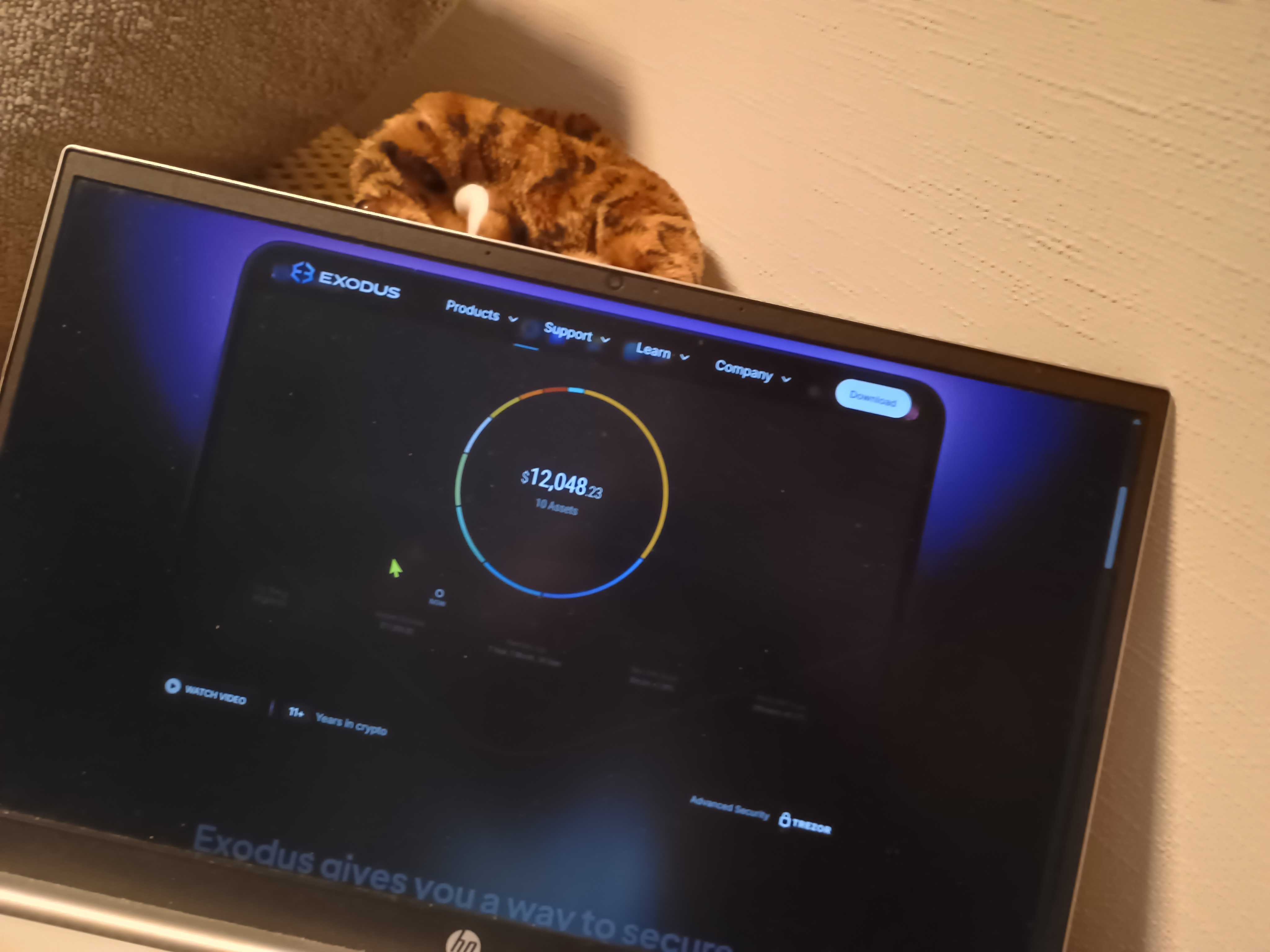
Exodus is a self-custody wallet, so you control the keys and the backup. We tested the setup and explain what to enable, what mistakes can permanently lock you out, and how to use Exodus safely with or without a hardware wallet.
Exodus Wallet Security Features Explained
When we set up Exodus for our Exodus wallet review, the security model was clear right away. It’s a non-custodial wallet where private keys live on your device, not on an Exodus server. That’s why the question how safe is Exodus wallet really comes down to two things: how well you protect your device, and how well you protect your recovery phrase. There’s no “central vault” holding user keys, so the classic exchange-style breach is not the main threat here.
In day-to-day use, Exodus leans on local access controls. On desktop, you protect the wallet with an app password. On mobile, protection is mostly your device lock and biometrics, depending on what you’ve enabled. Recovery is handled through a 12-word seed phrase, which is the only real “master key” that can restore the wallet if the phone or laptop is lost.
For stronger protection, Exodus supports hardware wallet integration (Trezor on desktop and Ledger on mobile). This is the cleanest upgrade path we’d recommend once balances grow. In this setup, the private keys stay on the hardware device, and Exodus becomes your portfolio screen. You can still view balances and prepare transactions inside Exodus, but approvals require the physical device, which reduces what a compromised computer can do.
Exodus Wallet Security Limitations
The biggest limitation is that Exodus can’t protect you from irreversible self-custody failures. There is no “reset” function. If you lose the recovery phrase or write it down incorrectly, access can be gone permanently. If someone gets your phrase, they can import your wallet elsewhere and drain it without touching your phone or laptop again. So, if you’re asking is Exodus wallet safe, you need to understand where protection ends and user responsibility begins.
The second limitation is that Exodus is a hot wallet. That means your threat model includes everything that can go wrong on a connected device. In real life, the most common “Exodus losses” don’t look like advanced cryptography attacks. They look like:
- A fake “Exodus Support” account that pressures users to “verify” by sharing their seed phrase.
- A fake app or clone download that asks for the recovery phrase on first launch.
- Clipboard hijacking malware that swaps the recipient address after you copy it, so you send to the attacker unless you verify the first and last characters before signing.
Finally, Exodus is designed for convenience, not enterprise guardrails. You don’t get built-in multi-person approvals, policy controls, or default multisig flows. That doesn’t make it unsafe, but it does mean the wallet depends heavily on the user doing the boring parts correctly.
If you’re weighing Exodus vs MetaMask, we’d frame it like this: MetaMask is built for browser-based dApp activity on EVM networks, while Exodus is built for multi-asset holding and simple swaps in a cleaner interface. Either way, the same rule applies. Your seed phrase and device security are the real perimeter.
Final Verdict: Is Exodus Wallet Safe?
After using Exodus end-to-end, we’d describe it as a legitimate self-custody wallet with a clear security model. Keys stay local, signing happens on-device, and there isn’t a centralized store of user keys that can be breached in the traditional exchange hack sense.
So, is Exodus wallet legit? Yes. On the company side, Exodus is a SEC-reporting entity, which adds a level of transparency that’s still rare in crypto wallet brands. On the product side, the strengths are simple and practical: local key control, straightforward recovery via a 12-word phrase, and a real security upgrade path through hardware wallet pairing.
However, we also noticed limitations. Exodus can’t reverse mistakes, it can’t protect a user who gives away a seed phrase, and it inherits the security quality of the device it runs on.
Our verdict: Exodus is safe for everyday hot-wallet use if you treat the seed phrase like your entire net worth and keep your device clean. If the balance is meaningful, the safest move is to pair Exodus with a hardware wallet or keep long-term holdings in hardware-first storage while using Exodus as the interface.
Latest News





Recommended Articles/Reviews




The material on GNcrypto is intended solely for informational use and must not be regarded as financial advice. We make every effort to keep the content accurate and current, but we cannot warrant its precision, completeness, or reliability. GNcrypto does not take responsibility for any mistakes, omissions, or financial losses resulting from reliance on this information. Any actions you take based on this content are done at your own risk. Always conduct independent research and seek guidance from a qualified specialist. For further details, please review our Terms, Privacy Policy and Disclaimers.