#university
42 articles found
Latest

 Researchers from the University of Cincinnati have crafted a crypto literacy scale (CLS) to gauge and standardize understanding of cryptocurrencies and related tech among consumers and policymakers. Their study, "Measuring Crypto Literacy," emphasizes the difference between traditional financial literacy and crypto literacy. The team believes that while financial literacy helps prevent scams, there's a distinct need for a crypto-specific scale.
  Imperial College London has teamed up with AI startup FluidAI to address challenges in the crypto market using artificial intaligance (AI).
The collaboration will focus on enhancing the tokenized market for various stakeholders, including institutions and retail investors.
FluidAI emphasizes the need to tackle liquidity aggregation issues in the crypto domain. AI can help predict and offer optimal bid and ask prices in the market.
Imperial College London has teamed up with AI startup FluidAI to address challenges in the crypto market using artificial intaligance (AI).
The collaboration will focus on enhancing the tokenized market for various stakeholders, including institutions and retail investors.
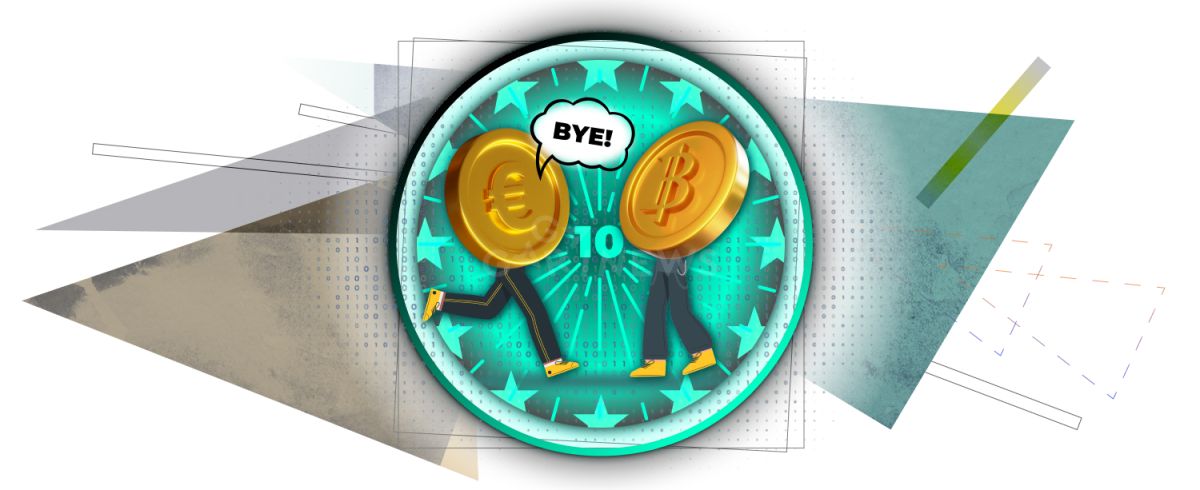
FluidAI emphasizes the need to tackle liquidity aggregation issues in the crypto domain. AI can help predict and offer optimal bid and ask prices in the market.  The proposal to create a digital Euro by the European Union is facing academic skepticism, with some specialists forecasting its doom from the get-go.
Two economists from the University of Bern, Cyril Monnetm and Dirk Niepelt, have cited preset storage limits for users as a primary concern.
They also flagged the possible disinterest of banks in the digital Euro's success if it doesn't lead to significant revenue. Without the backing of commercial entities, they believe, widespread adoption might remain a distant dream.
The proposal to create a digital Euro by the European Union is facing academic skepticism, with some specialists forecasting its doom from the get-go.
Two economists from the University of Bern, Cyril Monnetm and Dirk Niepelt, have cited preset storage limits for users as a primary concern.
They also flagged the possible disinterest of banks in the digital Euro's success if it doesn't lead to significant revenue. Without the backing of commercial entities, they believe, widespread adoption might remain a distant dream. Quantum Technology Transform Digital Payments
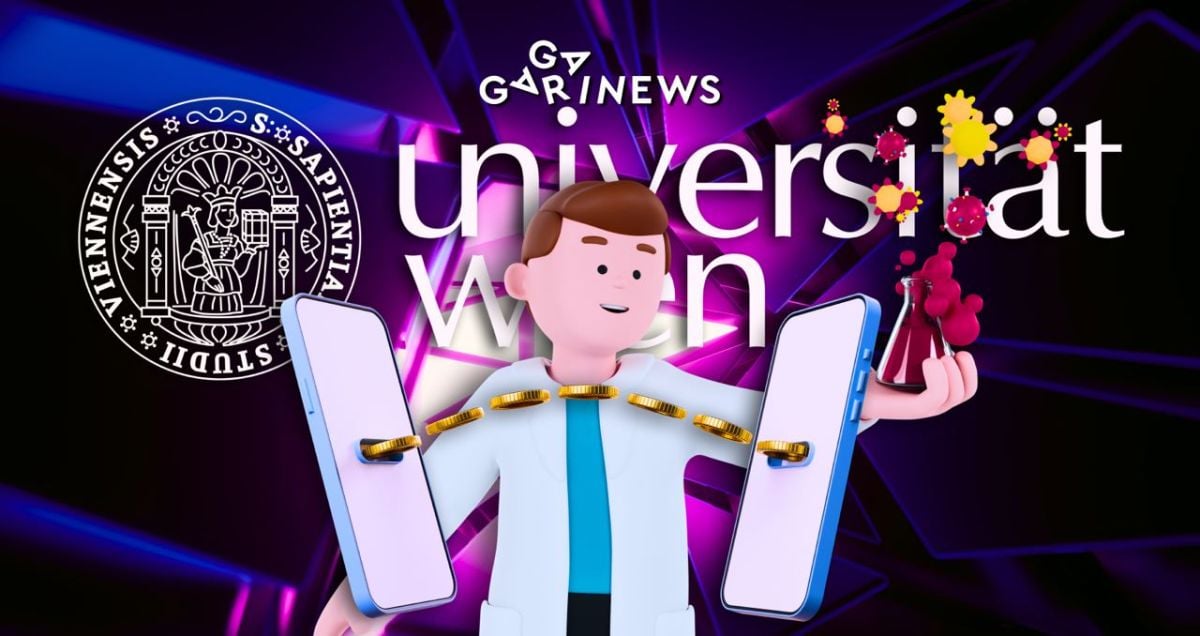 Researchers from the University of Vienna's Vienna Center for Quantum Science and Technology have unveiled a quantum-secured digital payment system. Utilizing pairs of quantum entangled photons, this innovation encrypts payment transactions in a way that makes them virtually impervious to tampering.
 AI Screens 100M+ Compounds Daily in Search for New Drugs
 The creation of pharmaceutical drugs is a prolonged and painstaking process. Scientists from the Massachusetts Institute of Technology and Tufts University see artificial intelligence as a vital tool in expediting the discovery of new medicines.
Rise of AI Bots: When Artificial Intelligence Takes the Lead
 A virtual city has been crafted by six Google and Stanford University enthusiasts, housing a group of 25 AI bots. Surprisingly, these bots exhibit human-like behavior, engaging in activities such as sleeping, preparing breakfast, working, and even interacting with one another.

 A spokesperson for the university stated that they have been in talks with FTX debtor attorneys to facilitate the full return of the donated funds. It’s worth noting that Sam Bankman-Fried’s parents have a longstanding association with Stanford Law School, serving as legal scholars and professors there. The donations in question, totaling approximately $5.5 million, were made by FTX-related entities between November 2021 and May 2022 for pandemic-related prevention and research.


Cyprus University Introduces Metaverse Masters Program
 The University of Nicosia (UNIC) is pioneering a new frontier in higher education by launching a Master's program in Metaverse Systems. Presently, it stands alone as the only institution in both Cyprus and Europe that acknowledges the vast potential of the Metaverse sector to such an extent that it has developed a dedicated Master's program.
Ripple and University of Toronto Team Up for Crypto Education
 The University of Toronto, Canada's largest higher education institution by enrollment, is partnering with Ripple to establish an independent XRP ledger validator that will primarily process payments, marking a significant step in fostering the upcoming wave of the crypto industry.
 Tether to Drive Blockchain Education in Georgia
 Tether, the leading stablecoin issuer, has announced a groundbreaking partnership with Business & Technology University (BTU) in Georgia to advance blockchain and cryptocurrency education in the region. The collaboration aims to empower students with the knowledge and skills needed to excel in the emerging digital economy.
  Yesterday, OpenAI announced that GPT-4 got a score above the 90th percentile out of 100 on the GRE, which is required for admission to many graduate programs.
During the test, the AI took exams in the following specialties:
Law
Mathematics
Biology
Chemistry
Programming
What's even more remarkable is that GPT-4 apparently has a talent for wine, and could even work as a sommelier in a French restaurant.
Yesterday, OpenAI announced that GPT-4 got a score above the 90th percentile out of 100 on the GRE, which is required for admission to many graduate programs.
During the test, the AI took exams in the following specialties:
Law
Mathematics
Biology
Chemistry
Programming
What's even more remarkable is that GPT-4 apparently has a talent for wine, and could even work as a sommelier in a French restaurant.