#stablecoin
252 articles found
Latest





 Coinbase and Circle, five years after jointly launching USDC, are evolving their partnership. Coinbase is acquiring an equity stake in Circle, emphasizing their shared vision for the financial future. To further its reach, USDC will launch on six new blockchains between September and October, expanding its multi-chain presence to 15. With clearer global stablecoin regulations, Circle will assume all governance, including smart contract management. The Centre Consortium, initially governing USDC, will dissolve.
 Liquity USD (LUSD): A DeFi Stablecoin Review
 Liquity USD, or LUSD, is a stablecoin that maintains a 1:1 peg with the US dollar. It's used by the Liquity lending protocol as the primary asset for issuing loans backed by Ethereum (ETH). When LUSD is repaid, the loan is resolved, and the ETH collateral is returned to the owner at its nominal value.
 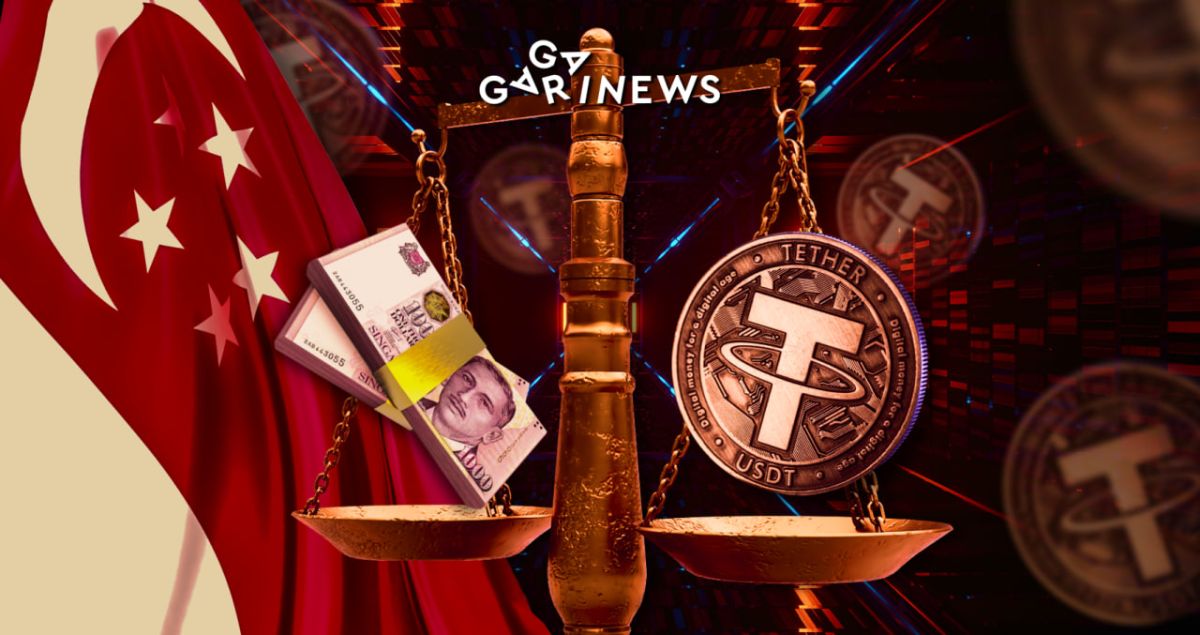 Singapore’s central bank, the Monetary Authority of Singapore (MAS), has released a final regulatory framework for single-currency stablecoins (SCS) under its regulation.
MAS stated that the framework’s goal is to guarantee “a significant level of value stability” for stablecoins.
This framework will be applicable to all stablecoins tied to the Singapore Dollar or any other G10 currency issued within Singapore.
Singapore’s central bank, the Monetary Authority of Singapore (MAS), has released a final regulatory framework for single-currency stablecoins (SCS) under its regulation.
MAS stated that the framework’s goal is to guarantee “a significant level of value stability” for stablecoins.
This framework will be applicable to all stablecoins tied to the Singapore Dollar or any other G10 currency issued within Singapore.  Facing increased competition from conventional financial giants like PayPal Holdings Inc., Circle is taking strategic measures.
To counter this threat and counterbalance the diminishing market share of its USD Coin stablecoin, Circle is expecting leveraging a substantial cash reserve surpassing $1 billion.
The circulating supply of Circle’s USD Coin has experienced a decline, shrinking from $45 billion to around $26 billion since the start of this year.
Facing increased competition from conventional financial giants like PayPal Holdings Inc., Circle is taking strategic measures.
To counter this threat and counterbalance the diminishing market share of its USD Coin stablecoin, Circle is expecting leveraging a substantial cash reserve surpassing $1 billion.
The circulating supply of Circle’s USD Coin has experienced a decline, shrinking from $45 billion to around $26 billion since the start of this year. 
 On October 6, 2014, the first-ever USDT transaction took place, marking the beginning of this stablecoin's journey. Since then, USDT has weathered its fair share of FUD (Fear, Uncertainty, Doubt). However, it's worth noting that USDT has also had several instances where it temporarily lost its peg to the US dollar.
  Bridging the gap between fiat and the stablecoin USDC, MoneyGram has unveiled its non-custodial crypto wallet.
The payment solution ensures compliance with all KYC norms and maintains adherence to sanction regulations.
“We’re turning MoneyGram into a global ATM concept using blockchain,” shared CEO Alex Holmes.
Bridging the gap between fiat and the stablecoin USDC, MoneyGram has unveiled its non-custodial crypto wallet.
The payment solution ensures compliance with all KYC norms and maintains adherence to sanction regulations.
“We’re turning MoneyGram into a global ATM concept using blockchain,” shared CEO Alex Holmes. 
 Today, the Federal Reserve Bank of Philadelphia held its seventh annual fintech conference.
A significant takeaway was Deputy Chair Michael Barr's pronounced concerns about the risks stablecoins, devoid of federal oversight, might pose to financial stability.
On the topic of CBDCs, Barr remarked that decisions remain on the distant horizon.
Today, the Federal Reserve Bank of Philadelphia held its seventh annual fintech conference.
A significant takeaway was Deputy Chair Michael Barr's pronounced concerns about the risks stablecoins, devoid of federal oversight, might pose to financial stability.
On the topic of CBDCs, Barr remarked that decisions remain on the distant horizon. 

 Under the new regulations, stablecoin transfers will require up to three business days. This rule has caused bewilderment within the blockchain community.
However, officials state that this restriction is consistent with the pace of standard domestic money transfers and will also apply to stablecoin redemptions.
"The redemption timeline is intended to strike a balance between responsiveness to users’ requests and ensuring there is enough time for the SCS issuer to do so in an orderly manner under various stress situations," added the regulator.
Under the new regulations, stablecoin transfers will require up to three business days. This rule has caused bewilderment within the blockchain community.
However, officials state that this restriction is consistent with the pace of standard domestic money transfers and will also apply to stablecoin redemptions.
"The redemption timeline is intended to strike a balance between responsiveness to users’ requests and ensuring there is enough time for the SCS issuer to do so in an orderly manner under various stress situations," added the regulator.  Despite advances in payment effectiveness and customer care, analysts Alkesh Shah and Andrew Moss from Bank of America think that PayPal USD (PYUSD) won't be widely adopted anytime soon.
They wrote, "Over the longer term, we expect PYUSD to experience additional adoption headwinds as competition from central bank digital currencies (CBDCs) and yield-bearing stablecoins increases."
Despite advances in payment effectiveness and customer care, analysts Alkesh Shah and Andrew Moss from Bank of America think that PayPal USD (PYUSD) won't be widely adopted anytime soon.
They wrote, "Over the longer term, we expect PYUSD to experience additional adoption headwinds as competition from central bank digital currencies (CBDCs) and yield-bearing stablecoins increases."  The recent debut of PayPal's stablecoin, PYUSD, has drawn concern from Congresswoman Maxine Waters. She criticized PayPal's entry into the cryptocurrency market without a defined federal regulatory structure.
Highlighting PayPal's vast clientele, which outnumbers the combined accounts of major banks, Waters stressed the pivotal role of federal oversight in crypto dealings:
"As I’ve said for more than a year, without legislation on the books that establishes clear and strong consumer protections at the Federal level, consumers are at greater risk of harm at the hands of bad actors."
The recent debut of PayPal's stablecoin, PYUSD, has drawn concern from Congresswoman Maxine Waters. She criticized PayPal's entry into the cryptocurrency market without a defined federal regulatory structure.
Highlighting PayPal's vast clientele, which outnumbers the combined accounts of major banks, Waters stressed the pivotal role of federal oversight in crypto dealings:
"As I’ve said for more than a year, without legislation on the books that establishes clear and strong consumer protections at the Federal level, consumers are at greater risk of harm at the hands of bad actors."