#security
236 articles found
Latest

 Researchers from a Web3 security company have recently discovered a number of serious flaws in the Dogecoin, Litecoin, and Zcash blockchains.
The most critical vulnerability affects P2P communications, allowing attackers to craft malicious consensus messages to key nodes and cause them to shut down.
What's more concerning is that there is a possibility that similar bugs may exist in around two hundred other networks.
If cybercriminals manage to exploit these flaws before Halborn receives payment for fixing it, it could put over $25 billion worth of digital assets at risk.
Researchers from a Web3 security company have recently discovered a number of serious flaws in the Dogecoin, Litecoin, and Zcash blockchains.
The most critical vulnerability affects P2P communications, allowing attackers to craft malicious consensus messages to key nodes and cause them to shut down.
What's more concerning is that there is a possibility that similar bugs may exist in around two hundred other networks.
If cybercriminals manage to exploit these flaws before Halborn receives payment for fixing it, it could put over $25 billion worth of digital assets at risk. 




Custodial and Non-Custodial Wallets: Know the Difference
 Cryptocurrency wallets are the main tools for storing and managing cryptocurrency. There are two main types of wallets: custodial and non-custodial. It is important to understand the difference between them, as it determines the security of your assets.
 What is zero-knowledge proof?
 Zero-Knowledge Proof is a technology that allows you to verify the veracity of a piece of information without disclosing the information itself. Such technology is gradually gaining importance as a means of enhancing security and privacy in blockchain, cryptocurrencies, and DeFi.
 PeckShield, a blockchain security firm, warns that zero-transfer scammers are behind two of the largest gas spenders.
The scheme is as follows:
? Fake addresses are created by imitating real ones.
? The TransferFrom function is then used to make a zero transfer from any wallet to a smart contract.
? As a result, a fake transaction history is created and shown in users' wallets and on Etherscan.
The only thing left to do is wait for the transfer from the victims who did not thoroughly check the address before sending the money.
PeckShield, a blockchain security firm, warns that zero-transfer scammers are behind two of the largest gas spenders.
The scheme is as follows:
? Fake addresses are created by imitating real ones.
? The TransferFrom function is then used to make a zero transfer from any wallet to a smart contract.
? As a result, a fake transaction history is created and shown in users' wallets and on Etherscan.
The only thing left to do is wait for the transfer from the victims who did not thoroughly check the address before sending the money. 
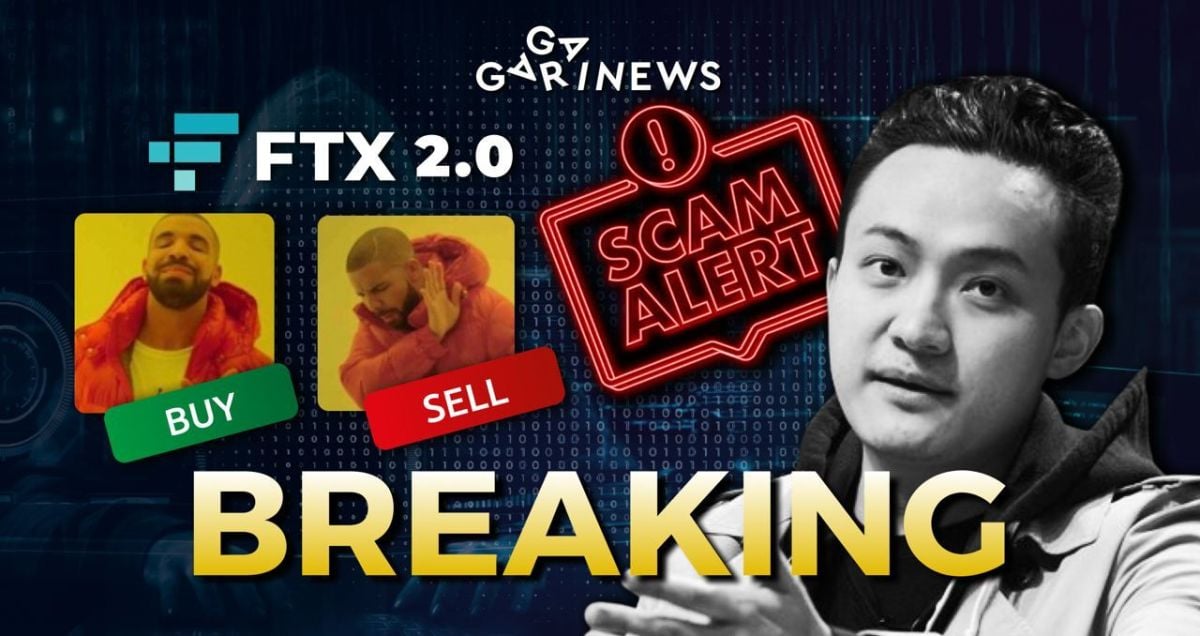 Just 24 hours after FTX's new CEO, John Ray, announced that the platform could be revived, fraudsters created a fake FTX 2.0 token.
The FTX2.0 scam token is being actively spread among the registered users' wallets, including Justin Sun, KuCoin, and Binance.
Security firm PeckShield reported that the smart contract of FTX 2.0 has a backdoor that allows hackers to steal funds from users' accounts. To participate in the "new airdrop" the users are encouraged to click on a phishing link.
But the worst part is that the token's code allows buying the coin, but prohibits it from being sold. That's why its price has quickly rocketed, causing a wave of FOMO among FTX customers.
Just 24 hours after FTX's new CEO, John Ray, announced that the platform could be revived, fraudsters created a fake FTX 2.0 token.
The FTX2.0 scam token is being actively spread among the registered users' wallets, including Justin Sun, KuCoin, and Binance.
Security firm PeckShield reported that the smart contract of FTX 2.0 has a backdoor that allows hackers to steal funds from users' accounts. To participate in the "new airdrop" the users are encouraged to click on a phishing link.
But the worst part is that the token's code allows buying the coin, but prohibits it from being sold. That's why its price has quickly rocketed, causing a wave of FOMO among FTX customers.