#network
440 articles found
Latest
 Lending protocol Everlend Finance has announced that it has ceased operations. The reason is simple: a lack of liquidity.
The codebase is left open-sourced by the developers so that others can continue working on the project.
However, the team also maintains that Everlend is a fantastic product that will eventually be very convenient, and that Solana is the most effective network for its implementation.
The app is now in withdrawal-only mode
Lending protocol Everlend Finance has announced that it has ceased operations. The reason is simple: a lack of liquidity.
The codebase is left open-sourced by the developers so that others can continue working on the project.
However, the team also maintains that Everlend is a fantastic product that will eventually be very convenient, and that Solana is the most effective network for its implementation.
The app is now in withdrawal-only mode 



 Loans were issued against mining equipment. The creditor has about 68,000 of them, as of today.
The company started selling last year. Unfortunately, some loans have already been declared default. The average price of BlockFi's credit ASIC miner is $2,350 and ASIC's current market value is $1,400.
The total companies' debt to the industry in similar loans is estimated at $4 billion. Apart from BlockFi, loans were also issued to NYDIG, Celsius Network, Foundry, Babel Finance, and Galaxy Digital.
Loans were issued against mining equipment. The creditor has about 68,000 of them, as of today.
The company started selling last year. Unfortunately, some loans have already been declared default. The average price of BlockFi's credit ASIC miner is $2,350 and ASIC's current market value is $1,400.
The total companies' debt to the industry in similar loans is estimated at $4 billion. Apart from BlockFi, loans were also issued to NYDIG, Celsius Network, Foundry, Babel Finance, and Galaxy Digital. 
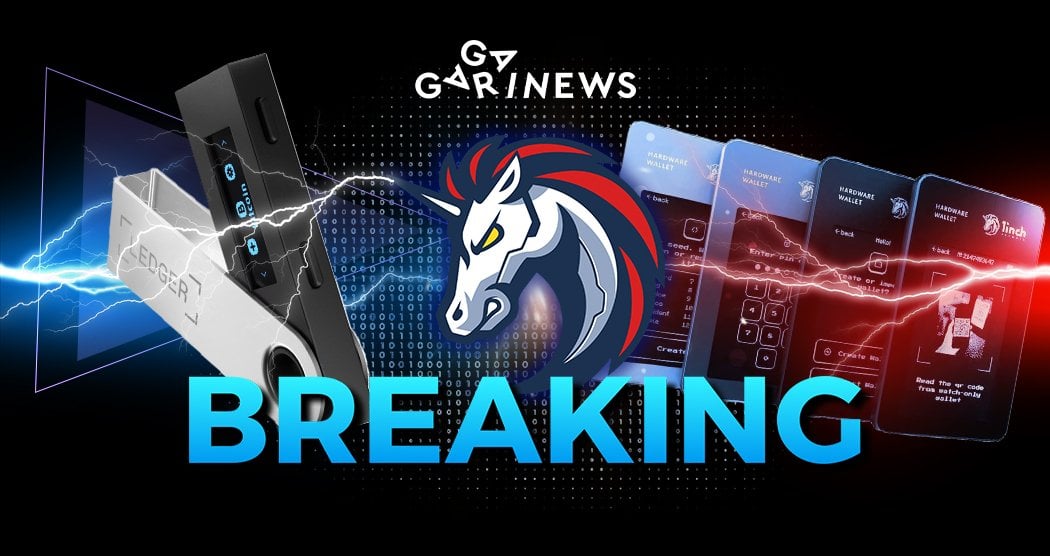 The developers claim that it will be on par with Ledger and Trezor in terms of technical characteristics.
What is already known about the upcoming device from 1inch:
?Touch display 2.7 inches
?Thickness: 4 mm
?Weight: 70 g
?Size: credit card
?Wireless communication
?NFT support
?Signing transactions via QR code
?Ability to generate several addresses with unique pin codes
There is no price tag yet, but you can already sign up for the waiting list.
The developers claim that it will be on par with Ledger and Trezor in terms of technical characteristics.
What is already known about the upcoming device from 1inch:
?Touch display 2.7 inches
?Thickness: 4 mm
?Weight: 70 g
?Size: credit card
?Wireless communication
?NFT support
?Signing transactions via QR code
?Ability to generate several addresses with unique pin codes
There is no price tag yet, but you can already sign up for the waiting list. 

 The App Store has approved Damus App, dubbed the "Twitter killer" mobile app.
The decentralized social network accepts Bitcoin payments via the Lightning Network and has the endorsement of Jack Dorsey (former CEO of Twitter), who believes the project has a bright future.
Now, Elon Musk, what do you think?
The App Store has approved Damus App, dubbed the "Twitter killer" mobile app.
The decentralized social network accepts Bitcoin payments via the Lightning Network and has the endorsement of Jack Dorsey (former CEO of Twitter), who believes the project has a bright future.
Now, Elon Musk, what do you think? 
Avalanche fans have reason to rejoice.
 The amount of bitcoins locked on the Avalanche network recently surpassed that of the Lightning Network.
Snowtrace.io reports that Avalanche currently has almost 5,500 BTC, compared to less than 5,250 on the Lightning Network.
However, they are all still a long way from Ethereum, as the number of wrapped bitcoins in this network is close to 180 thousand coins.
The amount of bitcoins locked on the Avalanche network recently surpassed that of the Lightning Network.
Snowtrace.io reports that Avalanche currently has almost 5,500 BTC, compared to less than 5,250 on the Lightning Network.
However, they are all still a long way from Ethereum, as the number of wrapped bitcoins in this network is close to 180 thousand coins.  Next month, The Open Network validators plan to vote on freezing 195 inactive addresses.
These addresses hold more than 1 billion TON coins, which amounts to $2.5 billion USD. If this decision is made, the blocking will last for 4 years and the owners of these wallets will not be able to make any transactions during this period.
A forced hold for long-term holders? It's interesting, but short term holders could definitely use some freezing!
Next month, The Open Network validators plan to vote on freezing 195 inactive addresses.
These addresses hold more than 1 billion TON coins, which amounts to $2.5 billion USD. If this decision is made, the blocking will last for 4 years and the owners of these wallets will not be able to make any transactions during this period.
A forced hold for long-term holders? It's interesting, but short term holders could definitely use some freezing!  Ethereum supporters are looking forward to the upcoming crypto spring. Another network update, dubbed Shanghai Fork, is scheduled for March. Shanghai Fork will allow users to access the funds locked into the Ethereum Beacon Chain. Depositors will be able to participate in validating transactions and earn newly-created Ethereum.
J.P. Morgan believes Shanghai Fork will be a pleasant surprise for Coinbase as well. It estimates that up to 95% of retail investors of this crypto exchange will be able to participate in Ethereum staking after the update. The matter is that Coinbase may get additional revenue of about $225-$545 million per year.
Ethereum supporters are looking forward to the upcoming crypto spring. Another network update, dubbed Shanghai Fork, is scheduled for March. Shanghai Fork will allow users to access the funds locked into the Ethereum Beacon Chain. Depositors will be able to participate in validating transactions and earn newly-created Ethereum.
J.P. Morgan believes Shanghai Fork will be a pleasant surprise for Coinbase as well. It estimates that up to 95% of retail investors of this crypto exchange will be able to participate in Ethereum staking after the update. The matter is that Coinbase may get additional revenue of about $225-$545 million per year.