#data
296 articles found
Latest
 European crypto-related exchange-traded products (ETPs) experienced a boost in net inflows during June and July, breaking a nearly three-month trend of global ETP outflows.
Europe-based ETPs saw inflows of €150 million in June and €60 million in July.
The trend change might be attributed to BlackRock's spot bitcoin ETF application. However, recent data indicates a downturn in August, possibly due to the SEC's delay in deciding.
European crypto-related exchange-traded products (ETPs) experienced a boost in net inflows during June and July, breaking a nearly three-month trend of global ETP outflows.
Europe-based ETPs saw inflows of €150 million in June and €60 million in July.
The trend change might be attributed to BlackRock's spot bitcoin ETF application. However, recent data indicates a downturn in August, possibly due to the SEC's delay in deciding. 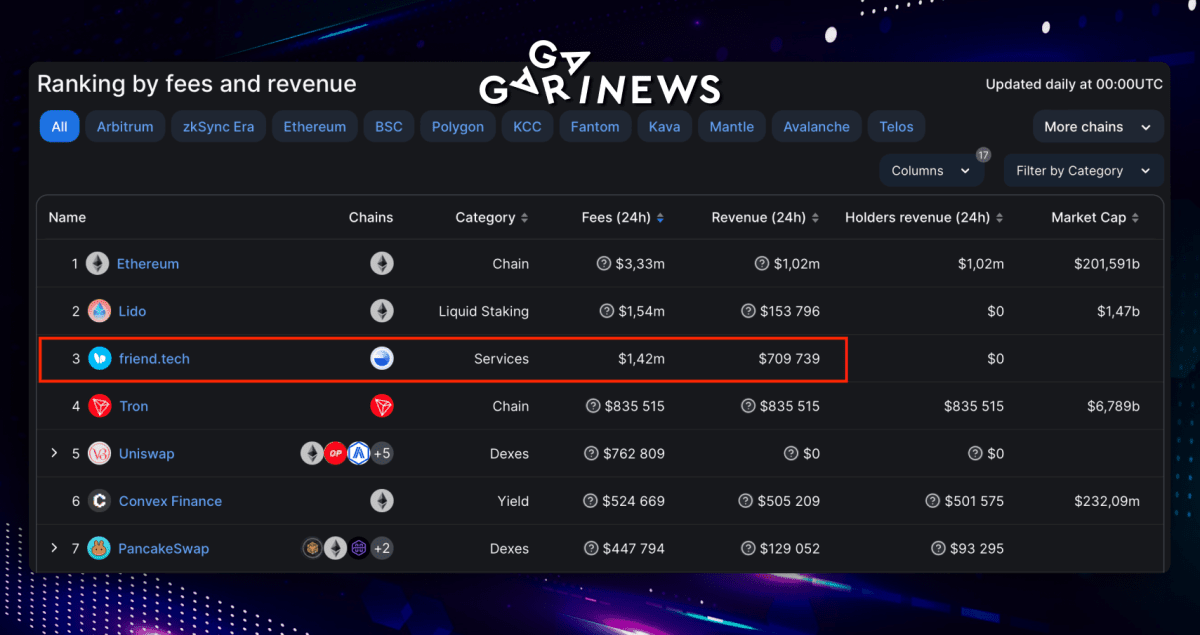 Social app friend.tech has recorded protocol fees amounting to more than $1.42 million within the past 24 hours, positioning it among the top three crypto projects in terms of user-paid fees. It now stands as the third-highest project for user-paid fees, following Ethereum and Lido Finance, according to data from DeFiLlama. Built on Coinbase’s Base Layer 2 chain, friend.tech is a social app that integrates with X (Twitter). It allows users to trade tokenized shares linked to each other’s profiles. Shareholders enjoy exclusive content access and private chat rooms in X.
  China's provisional AI guidelines, termed "Generative AI Measures," take effect today. Among the 24 measures, AI service platforms must register and undergo security reviews before public launch.
AI-generated content will need labels, and data must come from legitimate sources respecting intellectual property and user privacy. Service providers are accountable for content on their platforms.
China's provisional AI guidelines, termed "Generative AI Measures," take effect today. Among the 24 measures, AI service platforms must register and undergo security reviews before public launch.
AI-generated content will need labels, and data must come from legitimate sources respecting intellectual property and user privacy. Service providers are accountable for content on their platforms.  Kaiko Research’s data highlights reduced engagement in prominent tokens:
“AXS, the governance token of the Axie Infinity ecosystem is down more than 90% since early 2022 and SAND, MANA and GALA tokens have seen a a similar drop in value.”
Analysts point out that monetary incentives were a primary motivator for users, but these platforms faced challenges in maintaining their user base due to diminishing in-game rewards.
Kaiko Research’s data highlights reduced engagement in prominent tokens:
“AXS, the governance token of the Axie Infinity ecosystem is down more than 90% since early 2022 and SAND, MANA and GALA tokens have seen a a similar drop in value.”
Analysts point out that monetary incentives were a primary motivator for users, but these platforms faced challenges in maintaining their user base due to diminishing in-game rewards.  Local media in Nairobi reports that the police have raided a Worldcoin warehouse, confiscating documents to probe into the company's conduct.
The Data Commissioner alleges that the company failed to disclose its actual goals when registering.
The data from iris-scanning technology becoming compromised is a rising fear among industry specialists.
Nevertheless, Worldcoin maintains that they've safeguarded all pertinent data.
Local media in Nairobi reports that the police have raided a Worldcoin warehouse, confiscating documents to probe into the company's conduct.
The Data Commissioner alleges that the company failed to disclose its actual goals when registering.
The data from iris-scanning technology becoming compromised is a rising fear among industry specialists.
Nevertheless, Worldcoin maintains that they've safeguarded all pertinent data.  X (Twitter) is actively seeking a financial-data giant to collaborate on building a trading hub within its app.
The request for plans emphasizes the importance of real-time information, particularly in the realm of investing. The company aims to offer financial content, real-time stock data, and other related features to enhance user experience.
Reminding that Elon Musk envisions the platform as a Western super-app akin to WeChat in China, Gojek in Indonesia, Grab in Singapore, and Gozem in Africa.
Such super-apps integrate various consumer services like food delivery, ride-hailing, payments, investing, and identity authentication into a single app, providing a comprehensive user experience.
X (Twitter) is actively seeking a financial-data giant to collaborate on building a trading hub within its app.
The request for plans emphasizes the importance of real-time information, particularly in the realm of investing. The company aims to offer financial content, real-time stock data, and other related features to enhance user experience.
Reminding that Elon Musk envisions the platform as a Western super-app akin to WeChat in China, Gojek in Indonesia, Grab in Singapore, and Gozem in Africa.
Such super-apps integrate various consumer services like food delivery, ride-hailing, payments, investing, and identity authentication into a single app, providing a comprehensive user experience.  The data analysis company, Santiment, has detected a notable surge in transactions (exceeding $10 million) within certain renowned altcoins, including AAVE, APE, COMP and others.
The majority of these have seen a price decline, with AAVE being the exception, as its value increased by 1.14%. This shift was discernible not only against the dollar but also when compared to Bitcoin.
The data analysis company, Santiment, has detected a notable surge in transactions (exceeding $10 million) within certain renowned altcoins, including AAVE, APE, COMP and others.
The majority of these have seen a price decline, with AAVE being the exception, as its value increased by 1.14%. This shift was discernible not only against the dollar but also when compared to Bitcoin.  LunarCrush, the data analytics company, has reported that the most frequent search on their platform is now the SHIB token, overtaking Optimism (OP) and Worldcoin (WLD) which landed in the second and third spots respectively.
Notably, this "meme token" has shown a surge in its overall social engagement by 20% and has held a strong social dominance of 4.8% in the past 24 hours.
LunarCrush, the data analytics company, has reported that the most frequent search on their platform is now the SHIB token, overtaking Optimism (OP) and Worldcoin (WLD) which landed in the second and third spots respectively.
Notably, this "meme token" has shown a surge in its overall social engagement by 20% and has held a strong social dominance of 4.8% in the past 24 hours.  Germany's data watchdog has been scrutinizing the Worldcoin initiative since the previous year due to apprehensions concerning the extensive processing of confidential biometric information.
Currently, concerns have been raised about Sam Altman's project from the United Kingdom, France, and Germany.
Germany's data watchdog has been scrutinizing the Worldcoin initiative since the previous year due to apprehensions concerning the extensive processing of confidential biometric information.
Currently, concerns have been raised about Sam Altman's project from the United Kingdom, France, and Germany. 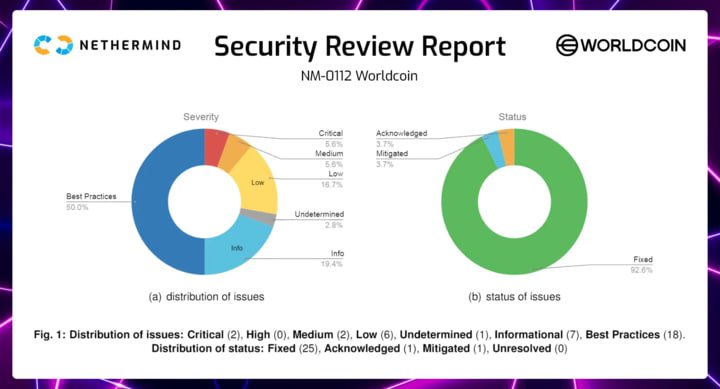 Worldcoin Addresses Security Concerns
Worldcoin has released its audit reports amid increasing criticism of its data collection practices.
The audit revealed a total of 29 security issues with the protocol.
Out of these, 27 have been fixed, one was mitigated, and another was acknowledged.
The audit was conducted by security consulting firms Nethermind and Least Authority.
Worldcoin Addresses Security Concerns
Worldcoin has released its audit reports amid increasing criticism of its data collection practices.
The audit revealed a total of 29 security issues with the protocol.
Out of these, 27 have been fixed, one was mitigated, and another was acknowledged.
The audit was conducted by security consulting firms Nethermind and Least Authority. 
 Base, engineered on OP Stack as a second layer network, has managed to surpass Arbitrum and Optimism in the number of daily transactions this week. Data from The Block highlighted that on August 15, Base's moving average reached 610,000 transactions, while the counts for Arbitrum and Optimism stood at 576,000 and 597,000, respectively. Although Optimism currently holds a slight lead, overall, the networks are closely competing.
  DeBank has introduced a new Layer-2 solution based on OP Stack for user experimentation. It's now live for testing, and the mainnet is slated for 2024.
According to an official briefing, developers have accomplished cost reductions ranging from 100 to 400 times for specific transactions, all the while targeting gas expenditure.
Besides, to fortify user defense and trim L1 data leaks, transactions will be signed with a specially devised second-tier private key.
DeBank has introduced a new Layer-2 solution based on OP Stack for user experimentation. It's now live for testing, and the mainnet is slated for 2024.
According to an official briefing, developers have accomplished cost reductions ranging from 100 to 400 times for specific transactions, all the while targeting gas expenditure.
Besides, to fortify user defense and trim L1 data leaks, transactions will be signed with a specially devised second-tier private key.  According to OpenAI’s blog post, web pages crawled with GPTBot could potentially be utilized to enhance accuracy and expand the capabilities of upcoming iterations of their AI models.
A web crawler (web spider), is a type of bot that indexes website content across the internet.
Popular search engines like Google and Bing employ web crawlers to enable websites to appear in search results.
OpenAI clarified that their web crawler will gather publicly available data from the world wide web while excluding sources with paywalled content, personally identifiable information, or text that violates their policies.
According to OpenAI’s blog post, web pages crawled with GPTBot could potentially be utilized to enhance accuracy and expand the capabilities of upcoming iterations of their AI models.
A web crawler (web spider), is a type of bot that indexes website content across the internet.
Popular search engines like Google and Bing employ web crawlers to enable websites to appear in search results.
OpenAI clarified that their web crawler will gather publicly available data from the world wide web while excluding sources with paywalled content, personally identifiable information, or text that violates their policies.  The data analytics company, PeckShield, has announced that about $52.3 million, equating to 73% of the assets pilfered from several decentralized protocols, have been recovered. Unfortunately, a balance of $19.7 million is still under the control of malefactors.
AlchemixFi stands out, having recouped all its compromised assets, while Jpegd and MetronomeDAO have only recaptured 90% of their stolen capital.
An important query surfaces: Is there a chance to reclaim the rest of the funds?
The data analytics company, PeckShield, has announced that about $52.3 million, equating to 73% of the assets pilfered from several decentralized protocols, have been recovered. Unfortunately, a balance of $19.7 million is still under the control of malefactors.
AlchemixFi stands out, having recouped all its compromised assets, while Jpegd and MetronomeDAO have only recaptured 90% of their stolen capital.
An important query surfaces: Is there a chance to reclaim the rest of the funds? Travala.com: Bringing Blockchain to the Tourism Industry
 If blockchain proves beneficial in fields such as finance, data storage, supply chain management, healthcare, and even religion, why not exploit its potential in tourism? We're showcasing the merits of this approach through the established crypto platform, Travala.com!
  The scientists at Nvidia have pioneered a new technique that converts textual content into imagery, helping to tackle the data storage predicaments that arise during the formation of novel models.
Currently, the specifics of a single concept occupy roughly 100 KB. This efficiency stems from the fact that the approach doesn't reengineer the entire model; instead, it adjusts select "internal representations", bypassing the need to retrain the model entirely.
The scientists at Nvidia have pioneered a new technique that converts textual content into imagery, helping to tackle the data storage predicaments that arise during the formation of novel models.
Currently, the specifics of a single concept occupy roughly 100 KB. This efficiency stems from the fact that the approach doesn't reengineer the entire model; instead, it adjusts select "internal representations", bypassing the need to retrain the model entirely.  A Twitter debate has erupted, speculating that Sam Bankman-Fried (SBF) might be involved with the BALD memcoin rugpull.
Blockchain analysts delved into the developer’s on-chain history and discovered a connection between the wallet address deploying the BALD token and ETH funding from wallets linked to FTX and Alameda Research.
An anonymous DeFi commentator suggested that this link might indicate SBF’s attempt to recover some losses.
Data editors found that the same wallet address had made numerous transfers (400) to blacklisted USDT addresses and appeared to have strong connections with Alameda Research.
A Twitter debate has erupted, speculating that Sam Bankman-Fried (SBF) might be involved with the BALD memcoin rugpull.
Blockchain analysts delved into the developer’s on-chain history and discovered a connection between the wallet address deploying the BALD token and ETH funding from wallets linked to FTX and Alameda Research.
An anonymous DeFi commentator suggested that this link might indicate SBF’s attempt to recover some losses.
Data editors found that the same wallet address had made numerous transfers (400) to blacklisted USDT addresses and appeared to have strong connections with Alameda Research.  CryptoQuant data indicates that there's been a 99% decrease in the number of active addresses, along with a 98% drop in transaction volume.
The majority of airdrop recipients (95% of them) opted to sell their tokens, with a significant 80% getting rid of their tokens entirely.
CryptoQuant data indicates that there's been a 99% decrease in the number of active addresses, along with a 98% drop in transaction volume.
The majority of airdrop recipients (95% of them) opted to sell their tokens, with a significant 80% getting rid of their tokens entirely.  NFT royalties on Ethereum hit an eye-popping 699,816 ETH, roughly translating to $1.8 billion. However, data analytics firm Nansen's deep-dive analysis points to an unsettling trend.
Despite sustained NFT volumes in 2023, royalties for this year only constitute 9.4% of the total payout, a stark contrast to 2022, which accounted for over 64% of the total ETH paid. The culprit behind this disparity is the downward trend in effective royalty rates, which fell from 2.5% in 2022 to a scant 0.6% by July 2023.
Some NFT projects such as Yuga Labs, behind popular initiatives like Bored Ape Yacht Club (BAYC) and Mutant Ape Yacht Club (MAYC), are among the few benefiting, receiving 9.4% of all royalties.
NFT royalties on Ethereum hit an eye-popping 699,816 ETH, roughly translating to $1.8 billion. However, data analytics firm Nansen's deep-dive analysis points to an unsettling trend.
Despite sustained NFT volumes in 2023, royalties for this year only constitute 9.4% of the total payout, a stark contrast to 2022, which accounted for over 64% of the total ETH paid. The culprit behind this disparity is the downward trend in effective royalty rates, which fell from 2.5% in 2022 to a scant 0.6% by July 2023.
Some NFT projects such as Yuga Labs, behind popular initiatives like Bored Ape Yacht Club (BAYC) and Mutant Ape Yacht Club (MAYC), are among the few benefiting, receiving 9.4% of all royalties.