#cryptocurrency
1130 articles found
Latest
 Raoul Pal, once at the helm of Goldman Sachs, envisions a steep rise in the global count of cryptocurrency users. He drew parallels between the initial decade of digital assets and internet evolution, leading to the conclusion that the tally of cryptocurrency enthusiasts could hit the 1.2 billion mark by the end of 2025.
His projections suggest this number could catapult to a staggering 5.1 billion by 2030. The key drivers in achieving such an extensive digital asset adoption, he believes, will be Central Bank Digital Currencies (CBDCs) and NFTs.
Raoul Pal, once at the helm of Goldman Sachs, envisions a steep rise in the global count of cryptocurrency users. He drew parallels between the initial decade of digital assets and internet evolution, leading to the conclusion that the tally of cryptocurrency enthusiasts could hit the 1.2 billion mark by the end of 2025.
His projections suggest this number could catapult to a staggering 5.1 billion by 2030. The key drivers in achieving such an extensive digital asset adoption, he believes, will be Central Bank Digital Currencies (CBDCs) and NFTs. 

 US presidential candidate Robert F. Kennedy Jr. disclosed that he invested in Bitcoin earlier this year, buying two BTC for each of his seven children. This move came after facing criticism for promoting the cryptocurrency without having any personal stake in it.
Kennedy clarified that he made the investment right after attending a Bitcoin conference where he announced his decision to accept campaign donations in Bitcoin.
“Right after that Bitcoin conference, I got a big check, and I said, okay, you know, I’m going to put my money where my mouth is.”
During the conference, he denied having any personal investment in the cryptocurrency. However, he later decided to invest in Bitcoin to demonstrate his commitment to the technology and its potential.
US presidential candidate Robert F. Kennedy Jr. disclosed that he invested in Bitcoin earlier this year, buying two BTC for each of his seven children. This move came after facing criticism for promoting the cryptocurrency without having any personal stake in it.
Kennedy clarified that he made the investment right after attending a Bitcoin conference where he announced his decision to accept campaign donations in Bitcoin.
“Right after that Bitcoin conference, I got a big check, and I said, okay, you know, I’m going to put my money where my mouth is.”
During the conference, he denied having any personal investment in the cryptocurrency. However, he later decided to invest in Bitcoin to demonstrate his commitment to the technology and its potential.  In a pivotal ruling on July 25, Judge Philip Jeyaretnam of the Singapore High Court declared cryptocurrency as personal property, placing it on par with fiat money. Judge Jeyaretnam's elucidation is notable for the legal status of digital assets.
It was stemmed from a case where ByBit accused its former employee, Ho Kai Xin, of illicitly transferring approximately 4.2 million USDT from the company's coffers to personal accounts. The court mandated Ho to return the funds to cryptocurrency exchange.
In a pivotal ruling on July 25, Judge Philip Jeyaretnam of the Singapore High Court declared cryptocurrency as personal property, placing it on par with fiat money. Judge Jeyaretnam's elucidation is notable for the legal status of digital assets.
It was stemmed from a case where ByBit accused its former employee, Ho Kai Xin, of illicitly transferring approximately 4.2 million USDT from the company's coffers to personal accounts. The court mandated Ho to return the funds to cryptocurrency exchange.  EraLend, a cryptocurrency lending protocol, was victimized by a re-entrancy attack, leading to substantial losses of $3.4 million.
The project's team confirmed via Twitter that the threat has been contained, and all loan transactions have been halted. As a precautionary measure, it's currently recommended to avoid making USDC deposits.
EraLend, a cryptocurrency lending protocol, was victimized by a re-entrancy attack, leading to substantial losses of $3.4 million.
The project's team confirmed via Twitter that the threat has been contained, and all loan transactions have been halted. As a precautionary measure, it's currently recommended to avoid making USDC deposits.  The UK's data watchdog is setting its sights on Worldcoin, Sam Altman's initiative offering free crypto for iris scans.
With digital ID on one side and cryptocurrency on the other, it's caught the Information Commissioner's Office's attention.
"We note the launch of WorldCoin in the UK and will be making further enquiries," a spokesperson for the ICO says.
The UK's data watchdog is setting its sights on Worldcoin, Sam Altman's initiative offering free crypto for iris scans.
With digital ID on one side and cryptocurrency on the other, it's caught the Information Commissioner's Office's attention.
"We note the launch of WorldCoin in the UK and will be making further enquiries," a spokesperson for the ICO says. 
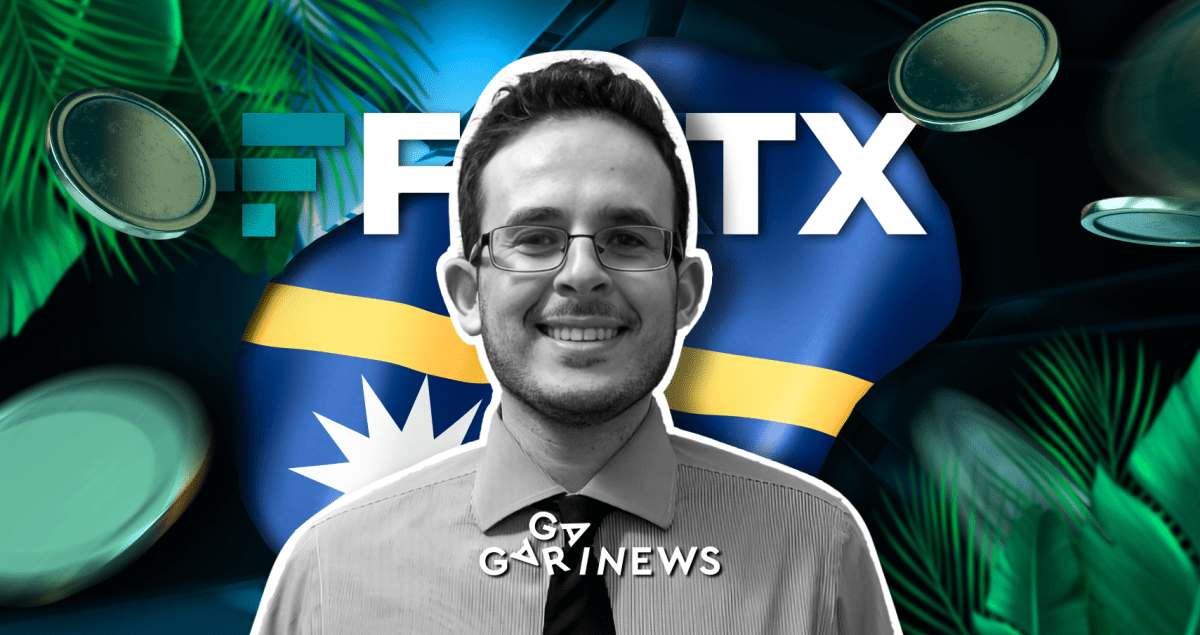 FTX, the prominent cryptocurrency exchange, was recently embroiled in controversy when court documents revealed a plan devised by Gabriel, the younger brother of FTX's CEO, SBF. According to the documents, Gabriel aimed to utilize FTX clients' funds to purchase the entire country of Nauru.
The idea was to transform Nauru into a post-apocalyptic sanctuary, complete with a highly secretive laboratory for conducting human genetics experiments and other projects. Who needs a private island when you can have a whole sovereign nation, right?
The court documents further detailed instances of transactions involving the founder's family, including those that have been previously disclosed.
While the idea of buying a nation for such purposes seems like something out of a sci-fi movie, it underscores the madness that was going on inside the FTX.
FTX, the prominent cryptocurrency exchange, was recently embroiled in controversy when court documents revealed a plan devised by Gabriel, the younger brother of FTX's CEO, SBF. According to the documents, Gabriel aimed to utilize FTX clients' funds to purchase the entire country of Nauru.
The idea was to transform Nauru into a post-apocalyptic sanctuary, complete with a highly secretive laboratory for conducting human genetics experiments and other projects. Who needs a private island when you can have a whole sovereign nation, right?
The court documents further detailed instances of transactions involving the founder's family, including those that have been previously disclosed.
While the idea of buying a nation for such purposes seems like something out of a sci-fi movie, it underscores the madness that was going on inside the FTX. 
The Role of AI in Trading: A Boon for Crypto Traders
 Artificial Intelligence (AI) and cryptocurrency are two of the most cutting-edge technologies of our time. Naturally, it was only a matter of time before they found a way to complement each other. Today, we will explore the definite advantages and drawbacks of utilizing AI in cryptocurrency trading.
 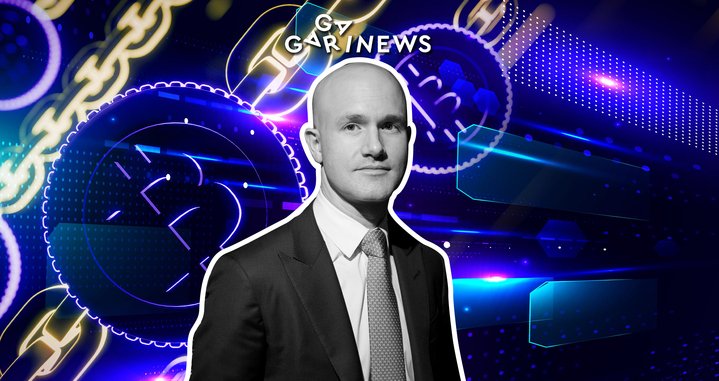 Brian Armstrong has publicly urged US residents to actively support the 21st Century Financial Innovation and Technology Bill, which promises to bring much-needed clarity to cryptocurrency regulation.
Armstrong emphasized that it is ordinary Americans who can have a decisive impact on the outcome of the vote by sending an email to their representatives asking them to support the bill.
In a more detailed statement, Coinbase added that the bill, in addition to protecting consumer rights and enhancing national security, has the potential to spur job creation in the US.
Brian Armstrong has publicly urged US residents to actively support the 21st Century Financial Innovation and Technology Bill, which promises to bring much-needed clarity to cryptocurrency regulation.
Armstrong emphasized that it is ordinary Americans who can have a decisive impact on the outcome of the vote by sending an email to their representatives asking them to support the bill.
In a more detailed statement, Coinbase added that the bill, in addition to protecting consumer rights and enhancing national security, has the potential to spur job creation in the US. What Is an Automated Market Maker (AMM)?
 Think of an automated market maker as a critical software or protocol, the absence of which would render the operation of decentralized cryptocurrency exchanges virtually impossible. AMMs serve the crucial role of offering automatic, round-the-clock liquidity provisions on Decentralized Exchanges (DEXs) and various DeFi platforms, catering to a diverse array of cryptocurrency pairs.
  Yesterday, reports surfaced suggesting that KuCoin had dismissed 30% of its employees due to declining profits. However, the cryptocurrency exchange's representatives debunked these claims today, explaining that there was just a slight downsizing in line with their routine organizational strategy.
"To stay on top, we regularly evaluate our org structure based on employee performance and company development. So it is not layoffs, and it is all about making the organization more dynamic," asserted Johnny Lyu, the Chief Executive of KuCoin.
Yesterday, reports surfaced suggesting that KuCoin had dismissed 30% of its employees due to declining profits. However, the cryptocurrency exchange's representatives debunked these claims today, explaining that there was just a slight downsizing in line with their routine organizational strategy.
"To stay on top, we regularly evaluate our org structure based on employee performance and company development. So it is not layoffs, and it is all about making the organization more dynamic," asserted Johnny Lyu, the Chief Executive of KuCoin. Immunefi: The Platform for White Hat Hackers
 Immunefi, introduced to the world by Mitchell Amador in 2020, is a high-ranking platform within the realm of cryptocurrency bug-bounty operations. This dynamic initiative brings white hat hackers into play, hosting contests that allow them to unearth flaws in various blockchain projects and their corresponding smart contracts.
 A Deep Dive into the DeFi Project DeXe and Its Native Token
 DeXe has emerged as a cryptocurrency protocol with a primary focus on investment management and the facilitation of decentralized autonomous organizations. Its core objective is to enhance the overall functionality of DAOs and their operations.
  The lawsuit between the U.S Securities and Exchange Commission (SEC) and cryptocurrency exchange Coinbase is moving forward as the date for initial arguments has been confirmed. Coinbase's chief legal officer, Paul Grewal, revealed on Twitter that New York judge Katherine Polk Failla had approved the joint request from both parties to proceed with hearings.
Coinbase has until August 4, 2023, to submit its initial brief and additional supporting documents by August 11. The SEC's opposition brief is due on or before October 10, with Coinbase's reply by October 24 or sooner.
The lawsuit between the U.S Securities and Exchange Commission (SEC) and cryptocurrency exchange Coinbase is moving forward as the date for initial arguments has been confirmed. Coinbase's chief legal officer, Paul Grewal, revealed on Twitter that New York judge Katherine Polk Failla had approved the joint request from both parties to proceed with hearings.
Coinbase has until August 4, 2023, to submit its initial brief and additional supporting documents by August 11. The SEC's opposition brief is due on or before October 10, with Coinbase's reply by October 24 or sooner.  The UK court has upheld Craig Wright's appeal, allowing him to maintain in legal proceedings that he is the originator of the Bitcoin white paper.
Wright gained notoriety in 2016 when he professed to be Bitcoin's creator and subsequently sued Bitcoin Core's developers.
While his claims have not been definitively proven, this court ruling enables Craig to continue his legal battles against companies, eliciting laughter across the cryptocurrency community with his antics.
The UK court has upheld Craig Wright's appeal, allowing him to maintain in legal proceedings that he is the originator of the Bitcoin white paper.
Wright gained notoriety in 2016 when he professed to be Bitcoin's creator and subsequently sued Bitcoin Core's developers.
While his claims have not been definitively proven, this court ruling enables Craig to continue his legal battles against companies, eliciting laughter across the cryptocurrency community with his antics. Cryptocurrency Regulation in Estonia: Key Features Unveiled
 With a welcoming attitude towards digital assets, Estonia makes running a digital business just as straightforward as it would be in Lithuania, Poland, Malta, or Gibraltar. For this reason, numerous cryptocurrency companies have chosen to register in this jurisdiction.