#blockchain
1029 articles found
Latest
Swift sees blockchain as a practical solution
 The prominent banking system, SWIFT, has outlined its plans to incorporate blockchain technology. Instead of combining CBDCs and tokenized assets using distributed ledger technology, it aims to utilize blockchain and address interoperability challenges across different networks.
 Bitcoin laundering suspicions arise over old wallet activity
 A Bitcoin wallet, stagnant since 2018 with a hefty 10,000 bitcoins (approximately $260 million), recently caught the attention of blockchain researcher ZachXBT. It's now moving these assets through certain cryptocurrency mixers, raising eyebrows.
 Quantstamp, a blockchain security firm, has introduced the Economic Exploit Analysis tool designed to detect potential flash loan attack vulnerabilities in smart contracts.
While it can analyze multiple contracts from various DeFi protocols, some manual adjustments are needed for specific protocols.
Flash loan attacks, which have drained about $200 million in the Euler Finance exploit alone, are a growing concern in DeFi.
Quantstamp, a blockchain security firm, has introduced the Economic Exploit Analysis tool designed to detect potential flash loan attack vulnerabilities in smart contracts.
While it can analyze multiple contracts from various DeFi protocols, some manual adjustments are needed for specific protocols.
Flash loan attacks, which have drained about $200 million in the Euler Finance exploit alone, are a growing concern in DeFi. Friend.tech Project Overview: Challenges and Prospects Analyzed
 Friend.tech stands as a distinctive cryptocurrency venture built on the Base blockchain. It empowers users to invest in shares of influencers and celebrities, granting exclusive communication access to these notable figures. Moreover, there's an exciting opportunity for potential profits as these shares gain value over time.
  The Central African Republic (CAR) is expanding its Sango blockchain initiative to include the tokenization of land and natural resources. Recently, the CAR National Assembly passed a law, receiving unanimous approval, that facilitates online business visa applications and simplifies the process for both locals and foreigners to establish businesses in sectors like real estate, agriculture, and forestry. This move follows CAR's earlier efforts in the crypto space, including the launch of Project Sango in May 2022 and its brief adoption of Bitcoin as a national currency.
  Base, engineered on OP Stack as a second layer network, has managed to surpass Arbitrum and Optimism in the number of daily transactions this week. Data from The Block highlighted that on August 15, Base's moving average reached 610,000 transactions, while the counts for Arbitrum and Optimism stood at 576,000 and 597,000, respectively. Although Optimism currently holds a slight lead, overall, the networks are closely competing.
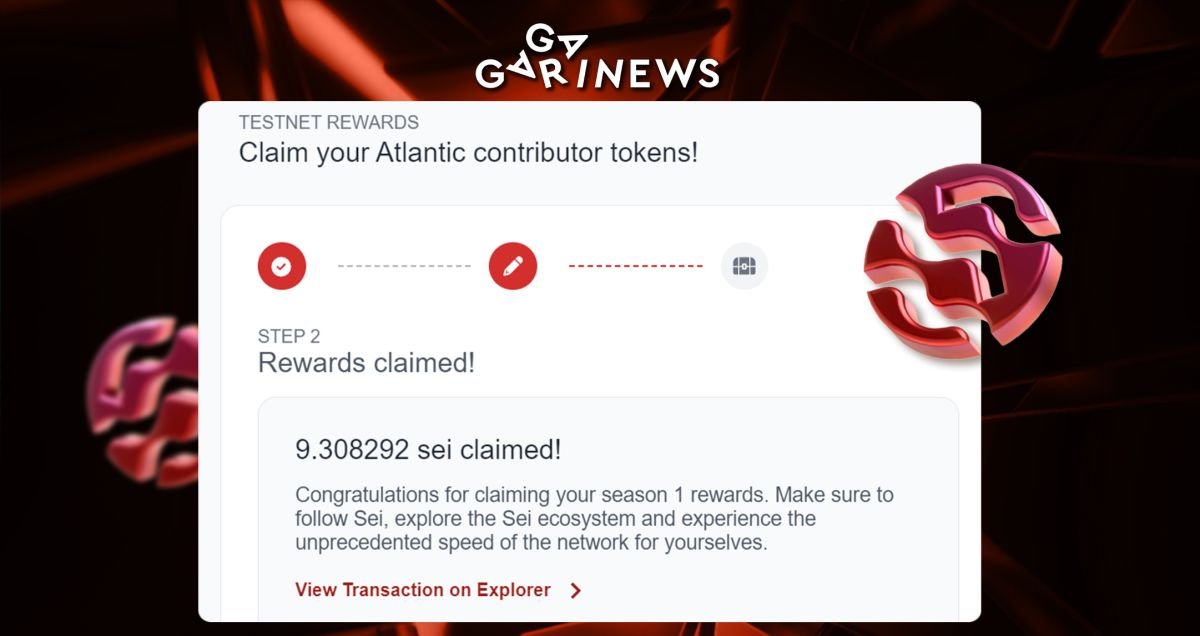 The Sei team has initiated token claims for those who participated in the testnet early on. However, the meager bonuses received have left many reevaluating their decision to engage in future airdrops, especially for Tier-2 or Tier-3 projects.
Rewards were disappointingly scant, with most individuals earning only a nominal amount for blockchain testing.
The SEI token price decreased by 20%, possibly attributed to either the overnight downturn in the crypto market or the airdrop itself.
P.S.:To claim your tokens, the Compass wallet is essential, and some regions might require a VPN.
The Sei team has initiated token claims for those who participated in the testnet early on. However, the meager bonuses received have left many reevaluating their decision to engage in future airdrops, especially for Tier-2 or Tier-3 projects.
Rewards were disappointingly scant, with most individuals earning only a nominal amount for blockchain testing.
The SEI token price decreased by 20%, possibly attributed to either the overnight downturn in the crypto market or the airdrop itself.
P.S.:To claim your tokens, the Compass wallet is essential, and some regions might require a VPN. 

 Shibarium, the Layer 2 blockchain by Shiba Inu's creators, is back in action. After a temporary shutdown due to scalability issues, the team has reopened withdrawals on its bridge to Ethereum. The pause initially locked millions in user funds and caused community unrest.
Now, the mainnet and bridge are fully functional, allowing withdrawals of various assets like SHIB, LEASH, and WETH within 45 minutes to 3 hours. BONE token withdrawals are also back but may take up to 7 days.
Shibarium, the Layer 2 blockchain by Shiba Inu's creators, is back in action. After a temporary shutdown due to scalability issues, the team has reopened withdrawals on its bridge to Ethereum. The pause initially locked millions in user funds and caused community unrest.
Now, the mainnet and bridge are fully functional, allowing withdrawals of various assets like SHIB, LEASH, and WETH within 45 minutes to 3 hours. BONE token withdrawals are also back but may take up to 7 days. Lon Wong: "Don't Be Afraid to Dream Big"
 Lon Wong, the brain behind the cryptocurrency XEM, is a significant figure whose immense contribution to the blockchain industry cannot be overstated. In addition to this, the NEM Foundation's CEO is a dedicated benefactor, backing several charitable initiatives.
  Srettha Thavisin became the Prime Minister of Thailand and continued to discuss the idea of an airdrop for all citizens of the country over the age of sixteen. Under the preliminary terms, each individual will receive 10,000 Thai baht (approximately $300) in a national token and will be able to spend it within a four-kilometer radius of their residence. The initiative has not yet received approval among politicians, as its cost is estimated at $14.3 billion, and financiers have questioned the feasibility of using blockchain for such campaigns. Apparently, the promises about airdrop was not unnecessary for victory!

 Currently, Mantle DAO is evaluating a proposal that would prohibit the conversion of BIT tokens held by FTX Group into the new MNT token. Previously, Alameda Research, a branch of the FTX Group, swapped 3.4 million FTT tokens for a staggering 100 million BIT tokens, which equated to around $43 million. Yet FTX's descent into bankruptcy prompted DAO members to introduce this proposal. MNT is a token that was launched as Mantle's L2 mainnet went live. The blockchain was established by the Bybit exchange, which initiated the merge of BIT (BitDAO) and MNT tokens. Controversies aside, there's robust support for this proposal within the Mantle enclave, spotlighting the overarching investor community's interests.
  The Exactly Protocol has suffered a hacking attack. Running on the Optimism blockchain, this lending DeFi platform was targeted by malefactors who stole over 4300 ETH, totaling approximately $7.3 million.
Both BlockSec and Beosin security agencies have corroborated the theft. The hackers reportedly found and exploited a weak point in the platform's smart contracts, although the finer details are still under wraps.
UPD: The team at Exactly Protocol would declare a $700,000 reward for any leads on the hacker, should they not receive a response from the malefactor by the end of August 22nd.
"You can return the funds, minus a 10% fee to you, without worries about us coming after you," the Exactly team conveyed in their message.
The Exactly Protocol has suffered a hacking attack. Running on the Optimism blockchain, this lending DeFi platform was targeted by malefactors who stole over 4300 ETH, totaling approximately $7.3 million.
Both BlockSec and Beosin security agencies have corroborated the theft. The hackers reportedly found and exploited a weak point in the platform's smart contracts, although the finer details are still under wraps.
UPD: The team at Exactly Protocol would declare a $700,000 reward for any leads on the hacker, should they not receive a response from the malefactor by the end of August 22nd.
"You can return the funds, minus a 10% fee to you, without worries about us coming after you," the Exactly team conveyed in their message.  The issuer of USDT has resolved to end support for Kusama, Bitcoin Cash SLP, and Omni Layer. This move follows an in-depth analysis of the functionality, safety, and stability of these particular blockchains.
Notably, Omni Layer, Tether's first transport layer since its inception in 2014, was instrumental during its early days. However, it has witnessed a decline in popularity due to rising competitive solutions.
Though minting of USDT on the aforesaid platforms will be terminated, the redemption process will stay in place for a duration extending at least a year.
The issuer of USDT has resolved to end support for Kusama, Bitcoin Cash SLP, and Omni Layer. This move follows an in-depth analysis of the functionality, safety, and stability of these particular blockchains.
Notably, Omni Layer, Tether's first transport layer since its inception in 2014, was instrumental during its early days. However, it has witnessed a decline in popularity due to rising competitive solutions.
Though minting of USDT on the aforesaid platforms will be terminated, the redemption process will stay in place for a duration extending at least a year.