
Phemex vs Coinbase Spot Trading Comparison in 2026: Fees and Tools
Affiliate Disclosure:
GNCrypto editors review services independently. If you click on affiliate links, we may earn commissions, which help support our testing. The goal of our reviews is to provide our readers with the most objective and unbiased overviews of available platforms for spot crypto trading.
Phemex vs Coinbase

Phemex (4.3/5) is superior for cost-sensitive traders who want a pro-grade terminal and the option of zero-fee spot via Premium, while Coinbase (4/5) fits beginners who value regulation, clean UX, and strong fiat to crypto rails even if trading costs are higher.
The Bottom Line

After our live test, the distinction is sharp. Choose Coinbase if you want the most comfortable regulated on-ramp for majors like BTC and ETH, especially in the US and Europe. Choose Phemex if you care more about pro tools and cost efficiency, including Premium zero fee spot and a more customizable trading workspace. Coinbase is built for trust and simplicity, while Phemex is built for active traders who can handle a bit more platform risk.
- Phemex: Premium membership can unlock 0% spot trading fees
- Phemex: Pro-grade terminal with TradingView, layout customization, and bracket-style TP SL
- Coinbase: Regulation-first platform with clean beginner UX and strong fiat rails
- Coinbase: Top-tier liquidity on majors and reliable execution for small tickets
- Phemex: Offshore and regulatory grey zone, unavailable in the US, with a January 2025 hot wallet incident on record
- Phemex: Fiat buy flow often routes to third parties, with card costs around 3.5% and slower bank transfer paths
- Coinbase: High retail spot costs, with Advanced Trade around 0.40% maker and 0.60% taker at base tiers
- Coinbase: Altcoin breadth is solid but not a thousand coins venue, and some features are geo-restricted
On this page


We tested Phemex and Coinbase with a real $200 spot trading run. This guide breaks down the everyday differences in tools, fees, and fiat access so beginners can pick the safer fit for their first trades.
Coinbase vs Phemex at a Glance
| Category | Coinbase | Phemex | Winner |
|---|---|---|---|
| Overall GNcrypto spot score (weighted) | 4/5 | 4.3/5 | Phemex (overall) |
| Liquidity & Volume | 5/5 | 4/5 | Coinbase |
| Fees & Total Cost to Trade | 2/5 | 4/5 | Phemex |
| Asset Selection & Trading Pairs | 4/5 | 4/5 | Draw |
| Execution Quality / Market Quality | 4/5 | 5/5 | Phemex |
| Tools & Order Controls | 4/5 | 5/5 | Phemex |
| Fiat Access & Minimum Trade Size | 5/5 | 3/5 | Coinbase |
| Reliability & Transparency | 4/5 | 3/5 | Coinbase |
| Daily spot volume (as described in reviews) | billions daily | ~$500M–$700M daily | Coinbase |
| Spot asset breadth (as described in reviews) | mid/high tier | 600+ spot coins counted | Phemex |
Phemex vs Coinbase Overview
In our view, Phemex vs Coinbase is not a normal apples-to-apples comparison. Coinbase is built like a regulated on-ramp that makes crypto feel like a mainstream finance app. Phemex feels like a trading terminal first, with the kind of layout and speed you normally see on derivatives-heavy exchanges.
What it feels like to start. Coinbase is the more predictable first step for beginners. The account flow is clean, verification is standard, and the platform is designed so you can buy BTC or ETH without thinking about order books. The downside is that Coinbase also nudges you toward convenience. If you stay in the easiest buy flow, you will rarely feel lost, but you also tend to accept whatever price and cost stack the flow gives you.
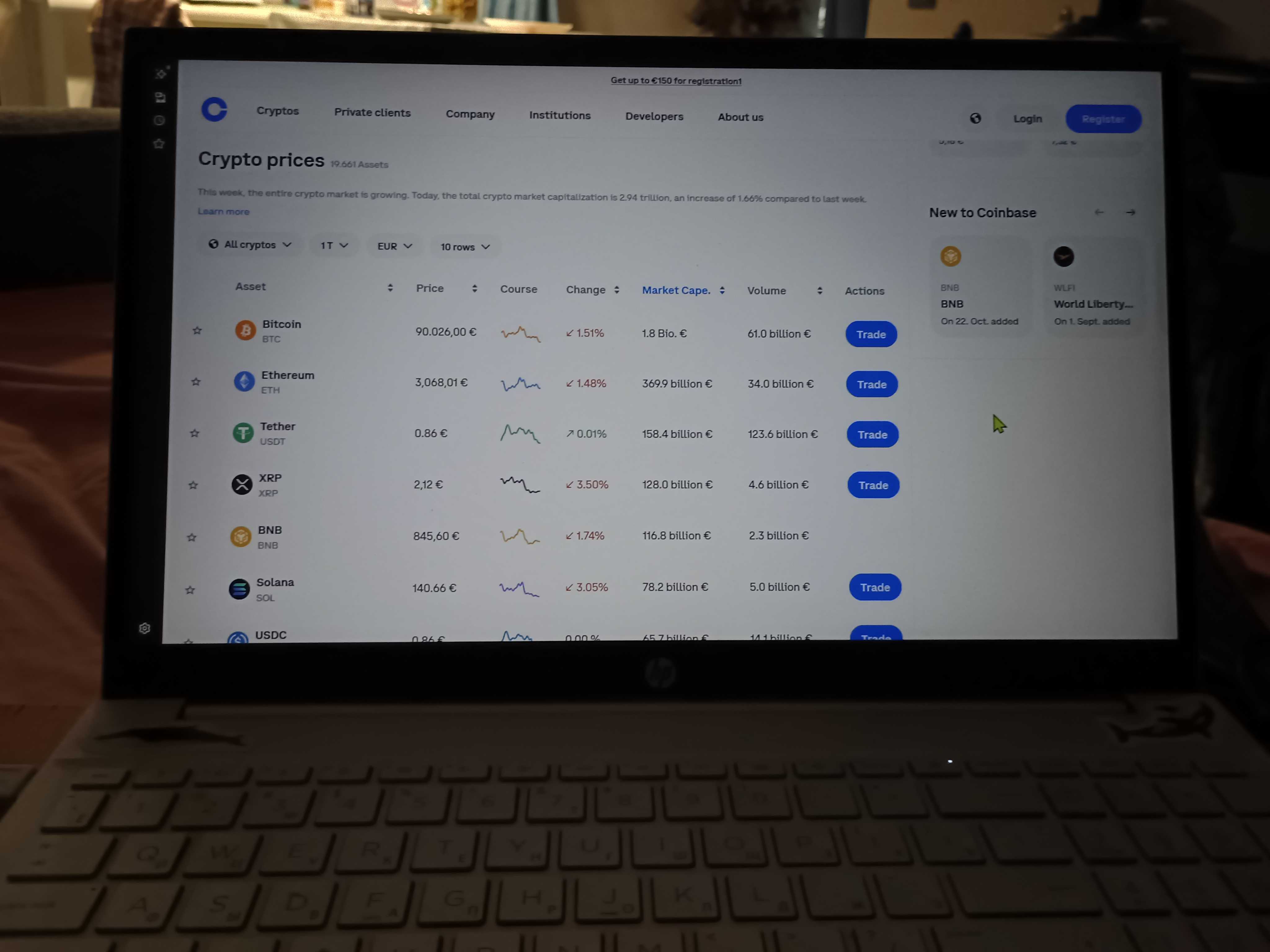
Phemex is faster to register, but the vibe changes the moment you try to fund the account. In our test, identity verification was a hard gate for depositing, and the most natural path was simply sending crypto in. Phemex can work for beginners, but it works best for beginners who are willing to do one extra step and learn a basic deposit routine.
What you can trade. Coinbase is a majors first experience for many users. It covers plenty of coins, but it does not feel like a hunt through endless microcaps. Phemex, on the other hand, is openly broader on spot listings, including an Innovation Zone-style menu. If your first months in crypto include exploring new narratives and smaller tokens, Phemex will feel less limiting.

The simplest way to frame it. If your goal is to buy a few core assets and you value a regulated, familiar flow, Coinbase feels like the safer entry point. If your goal is to trade more actively and you want a platform that feels built around charts, order books, and speed, Phemex feels more natural.
Trading Tools, Platform Products, and Fees Compared
Now that the stage is set, the real difference shows up in the daily mechanics: what tools you get and what you pay when you use them.
If you are comparing Coinbase vs Phemex, we think the easiest way to stay sane is to separate two things: what the platform lets you do, and what it costs when you do it.
Products and modes. Coinbase is basically two experiences in one. The default buy flow is built for comfort, not for precision. It is smooth, it feels safe, and it gets a beginner from fiat to BTC in minutes. But if you want real trading controls, you end up in Advanced Trade. Phemex is more direct: it is a classic exchange terminal with spot and contracts clearly separated. For spot, the layout feels closer to what you see on Bybit or Binance, and it loads fast with no wasted clicks.
Tools that change your day. Coinbase Advanced Trade gives you the essentials, but it is not trying to be a traders playground. Phemex is. In our test, the TradingView integration, the customizable layout, and the order ticket that supports conditional triggers and bracket style take profit and stop loss made spot trading feel more controlled. That matters most when you are doing anything beyond a simple buy and hold.
Fees and the real cost curve. Coinbase is where beginners feel the bill. Even in Advanced Trade, base tiers start around 0.40% maker and 0.60% taker, and the easy buy flow can stack spread and processing on small tickets. Phemex flips the story with Premium: we confirmed 0% spot fees for members. The trade-off is that fiat buying often routes through third parties, and card quotes around 3.5% are painful. In practice, Phemex looks cheapest if you deposit crypto or use bank-style routes, while Coinbase looks best when you value native fiat rails and do not mind paying for the convenience.
Three quick style fits from our $200 run. If you do frequent small trades, Coinbase fees add up fast. If you trade actively and hate paying per click, Phemex Premium can be a real edge. If you buy BTC or ETH once a month and want the simplest bank or card flow, Coinbase still feels like the easiest path.
Choosing Between Phemex and Coinbase: Final Take
Our final take on Phemex vs Coinbase is that you are choosing between two different comfort models. Coinbase is comfort through regulation, familiar onboarding, and strong fiat rails. Phemex is comfort through a pro-style terminal, fast execution, and a pricing model that can feel much cheaper if you trade often.
Who we think Coinbase fits best. If you are a beginner who mostly wants BTC, ETH, and a short list of mainstream coins, Coinbase is hard to beat for day one. The interface is clean, the fiat path is straightforward in the US and Europe, and you do not have to second guess whether the venue is legitimate. The trade-off is that active spot traders will feel the costs more than on leaner platforms.
Who we think Phemex fits best. If you like charts, order books, and a terminal that feels built for trading, Phemex is the more natural daily driver. The platform is also much less limiting if you want to explore smaller narratives, since the review counted 600 plus spot coins. The cost story can be attractive, but it comes with more responsibility on funding methods and platform due diligence.
The trust reality check. Coinbase is not perfect, but it is a listed, regulated company with visible reporting, and that matters for many beginners. The review also flagged real compliance and incident headlines in 2025, which is a reminder that even large regulated venues have operational risk. Phemex carries a different kind of risk profile: it is offshore, it has had regulator warnings in places like the UK and Ontario, and it disclosed a January 2025 hot wallet incident with a short service pause. We see the Proof of Reserves push as a positive response, but it still belongs in the decision.
A boring checklist we would use before picking either one.
- Decide how you will fund the account. If you need seamless bank and card rails, Coinbase usually feels simpler. If you can deposit crypto, Phemex becomes more practical.
- Choose one default trading lane for your first month. Either stick to the simple buy flow, or commit to the advanced terminal, but do not bounce between both every day.
- Do a small withdrawal test early. It is the fastest way to learn the real friction of self-custody, and it prevents ugly surprises later.
Phemex vs Coinbase – Which Should You Choose?
If you want the simplest fiat-to-crypto path in the US or Europe
Choose: Coinbase
The native bank and card rails plus the clean onboarding flow make it the easier first platform when you are still learning the basics.
If you trade spot actively and hate paying high retail fees
Choose: Phemex
Premium zero fee spot can change your cost curve fast, especially if you place lots of small trades.
If you mostly buy BTC and ETH and value regulation and brand trust
Choose: Coinbase
It is a more regulation first venue, so the overall risk feels easier to reason about for beginners.
If you want a pro terminal with TradingView and bracket-style risk controls
Choose: Phemex
The interface is built around charts, order books, and faster trading workflows, which helps if you actually trade instead of only buying.
If you want a broader coin variety without hunting microcaps elsewhere
Choose: Phemex
The review counted 600+ spot coins, so it tends to feel less limiting once you go beyond the majors.
If you want to avoid offshore regulatory grey zones
Choose: Coinbase
Phemex has a more offshore profile, so if you want fewer jurisdiction questions, Coinbase is the calmer choice.
Methodology – Why You Should Trust Us
We use a weighted, category-based model, collect standardized data from each platform (public pages + hands-on testing), and convert that into a 1.0–5.0 star score in 0.1 increments.
How We Collect Data
- Public data: fee pages, supported assets/pairs lists, status/incidents pages, official filings and help-center security statements.
- First-hand testing: we placed about $200 in spot trades to check spread, slippage and order-entry UX.
We do not rate solvency or make any guarantees about financial stability. Our ratings reflect user experience rather than solvency.
Categories & Weights
– Liquidity & Volume – 25%
– Fees & Total Cost to Trade – 25%
– Asset Selection & Trading Pairs – 15%
– Execution Quality (Market Quality) – 10%
– Tools & Order Controls – 10%
– Fiat Access & Minimum Trade Size – 5%
Latest News





Recommended Articles/Reviews




The material on GNcrypto is intended solely for informational use and must not be regarded as financial advice. We make every effort to keep the content accurate and current, but we cannot warrant its precision, completeness, or reliability. GNcrypto does not take responsibility for any mistakes, omissions, or financial losses resulting from reliance on this information. Any actions you take based on this content are done at your own risk. Always conduct independent research and seek guidance from a qualified specialist. For further details, please review our Terms, Privacy Policy and Disclaimers.