
BTCC vs Coinbase Spot Trading Comparison in 2026
Affiliate Disclosure:
GNCrypto editors review services independently. If you click on affiliate links, we may earn commissions, which help support our testing. The goal of our reviews is to provide our readers with the most objective and unbiased overviews of available platforms for spot crypto trading.
BTCC vs Coinbase

BTCC (3.8/5) is superior for traders who want a familiar pro-style spot terminal with hundreds of USDT pairs, while Coinbase (4.0/5) fits beginners who value regulation, strong fiat rails, and top-tier majors liquidity, even if fees are higher.
The Bottom Line

After our live test, the distinction is clear. Choose Coinbase if you want the most comfortable regulated onramp for BTC and ETH with strong bank and card access in the US and Europe. Choose BTCC if you want a straightforward order-book interface and a broad USDT-quoted pair list, and you can accept higher entry-tier spot fees and less public operations transparency. After running the test, the split feels sharp. Coinbase is built for mainstream trust and fiat convenience, while BTCC is built for simple book trading on a classic exchange screen.
- BTCC: Long-running CEX founded in 2011 with solid reported spot turnover around $1.5B per 24h
- BTCC: Merkle-tree Proof-of-Reserves hub with verification guidance
- Coinbase: Top-tier spot liquidity on BTC and ETH with clean execution for small tickets
- Coinbase: Strong fiat access plus a regulated US-listed brand with public reporting
- BTCC: Entry-tier spot fees are high at 0.20% maker and 0.30% taker, and there are no spot trading discounts
- BTCC: No public real-time status hub, and spot offering skews heavily to USDT quotes
- Coinbase: Low-volume trading costs are not the cheapest, especially for instant buys and small tickets
- Coinbase: Asset menu is strong for a US venue but not thousands of alts, and some features are geo-restricted
On this page


We tested BTCC and Coinbase with a real $200 spot trading run. This guide compares costs, liquidity, and beginner usability so you can pick the better venue for your first spot trades.
BTCC vs Coinbase at a Glance
| Category | BTCC | Coinbase | Winner |
|---|---|---|---|
| Overall GNcrypto rating | 3.8/5 | 4.0/5 | Coinbase (overall) |
| Liquidity & Volume | 4/5 | 5/5 | Coinbase |
| Fees & Total Cost to Trade | 3/5 | 2/5 | BTCC |
| Asset Selection & Trading Pairs | 4/5 | 4/5 | Draw |
| Execution Quality / Market Quality | 4/5 | 4/5 | Draw |
| Tools & Order Controls | 4/5 | 4/5 | Draw |
| Fiat Access & Minimum Trade Size | 4/5 | 5/5 | Coinbase |
| Reliability & Transparency | 4/5 | 4/5 | Draw |
| Daily spot turnover (as described in reviews) | ~$1.5B | ~$2.18B | Coinbase |
| Base spot fees (as stated) | up to 0.20% maker / 0.30% taker | 0%–0.40% maker / 0.05%–0.60% taker | Coinbase |
| $200 spot test effective cost (BTC buy) | ~0.32%–0.35% (0.30% taker + 0.02%–0.05% spread) | higher on instant buys; Advanced Trade starts ~0.40% / 0.60% | Coinbase |
Platform Overviews
In this BTCC vs Coinbase matchup, you are basically choosing between two different comfort models.
Coinbase is the regulated, mainstream entry point. It feels designed for people who want crypto to behave like a normal finance app: clean onboarding, strong fiat rails in the US and Europe, and a mobile experience that does not overwhelm beginners. The trade-off is cost. In our $200 test, the flow is smooth, but the bill is not subtle on small tickets, especially if you use instant buys. Even in Advanced Trade, the base maker and taker tiers start around 0.40% and 0.60%, which active spot traders will feel.

BTCC is the classic exchange terminal vibe. It is a long-running CEX founded in 2011, with a pro-style spot screen and hundreds of USDT-quoted pairs. In our test, execution was stable, the BTC USDT spread stayed modest during liquid hours, and the layout is familiar if you have ever used a trading terminal with an order book and a chart. The trade-off here is also cost, but in a different way: entry tier spot fees are high at about 0.20% maker and 0.30% taker, and the platform does not offer spot trading discounts. BTCC also leans on Merkle tree Proof of Reserves for transparency, but it lacks a public real-time status hub like the biggest venues.
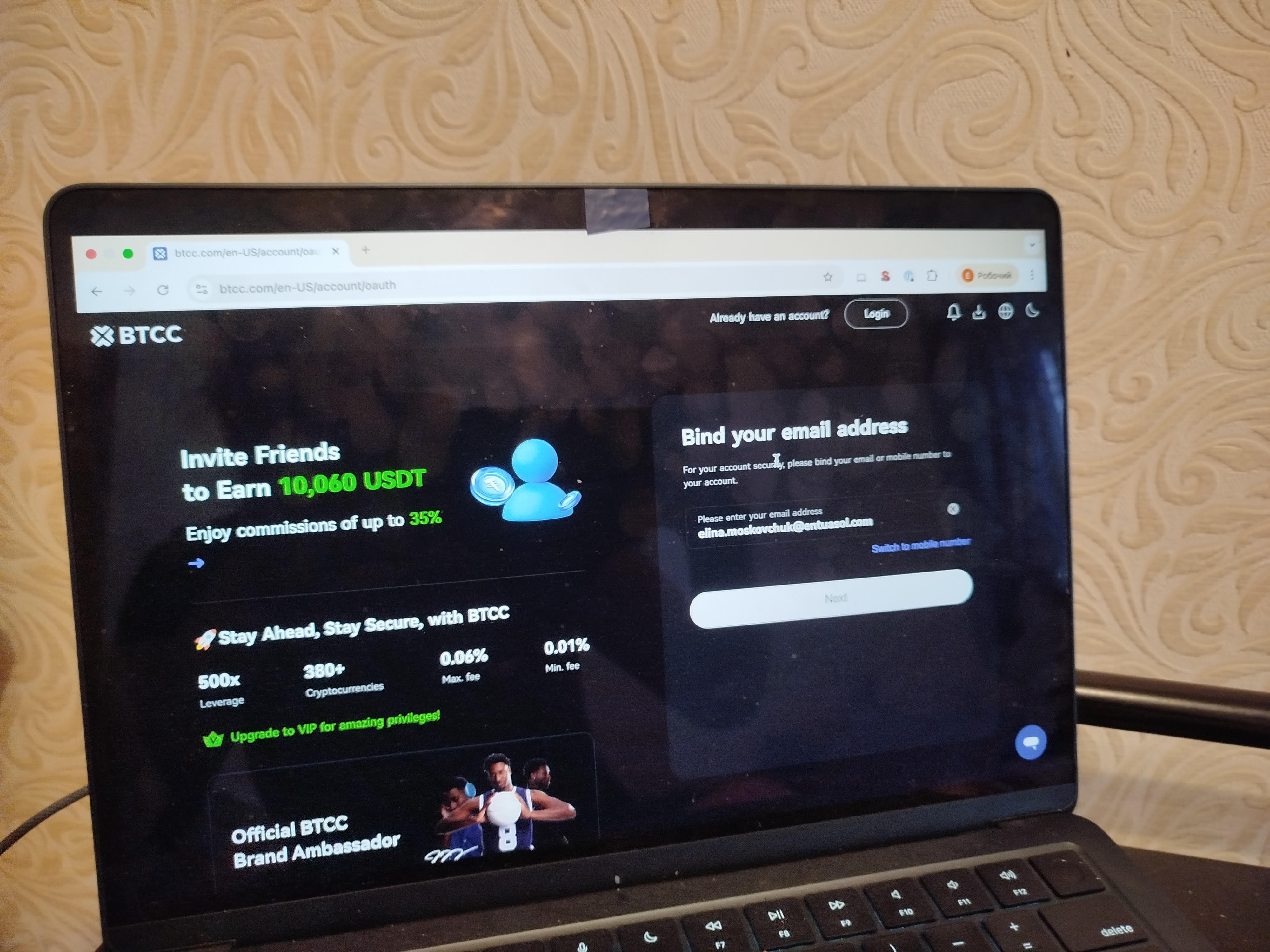
Two real beginner scenarios make the positioning clear.
- If your first goal is to buy BTC with a bank card or a bank transfer and not worry about whether the platform is legitimate, Coinbase feels like the calmer choice.
- If you want a simple pro-style terminal and you mainly trade USDT pairs on the order book, BTCC can feel more natural, as long as you accept that the entry tier fee is heavy on small trades.
Supported Cryptos, Volume, Trading Markets
In a BTCC vs Coinbase comparison, this section is where the differences become very concrete: what you can trade, how liquid it feels on majors, and whether the platform is spot-first or part of a broader trading suite.
Supported cryptos and pairs. BTCC is heavy on USDT-quoted markets. The review describes hundreds of USDT pairs and cites 250+ trading pairs after its spot expansion, which is great if you live in the USDT universe and want lots of choice without dealing with dozens of fiat quote formats. Coinbase is a more curated menu. Asset coverage is strong for a U.S.-listed exchange, but it is not a thousands-of-alts venue. In practice, Coinbase feels majors-first and “mainstream coins plus a selection of larger alts.”
Volume, liquidity, and how it feels on a $200 ticket. Coinbase is positioned as a major player with daily spot volume in the billions and strong market quality on BTC-USD and ETH-USD. That is why small retail orders usually clear quickly without you thinking about depth. BTCC is smaller, but not tiny. The review notes spot turnover around $1.5B per 24 hours, and in the $200 BTC/USDT test the spread during liquid hours sat around 0.02 to 0.05%. For a beginner, that means the book is workable for retail size, but you will feel fees more than you feel slippage.
Available markets: spot, futures, and leverage. BTCC is presented as a broader suite with an expanded spot market alongside derivatives, which matters if you want one login for both basic spot and more advanced products later. Coinbase, in the text you provided, is framed primarily as a spot-first venue with an Advanced Trade layer for order-book trading. If your main plan is spot investing and occasional rebalancing, Coinbase already covers the core workflow. If you expect to move into derivatives, BTCC is more explicit about that product surface.
Two quick beginner scenarios. If you only trade BTC and ETH and you care about the cleanest majors liquidity, Coinbase tends to feel more premium. If you want a wider menu of USDT pairs on a classic terminal and you are comfortable with an exchange-first interface, BTCC can feel more like home.
Which Should You Choose?
If you want the safest mainstream onramp with strong fiat rails
Choose: Coinbase
Cleaner onboarding, bank and card access, and a regulation-first feel.
If you want a pro-style spot terminal and you trade mainly USDT pairs
Choose: BTCC
Familiar book-first workflow with hundreds of USDT-quoted pairs.
If you make frequent small trades and hate high entry-tier taker costs
Choose: Coinbase
BTCC entry-tier taker fee of 0.30% is heavy on small tickets.
If you mostly buy BTC and ETH and care about top-tier majors liquidity
Choose: Coinbase
The venue is positioned as strong on majors and market quality.
If you want a long-running exchange with Merkle-tree proof-of-reserves
Choose: BTCC
The platform uses Merkle-tree PoR and has a long operating history.
Summary
In this BTCC vs Coinbase comparison, our final takeaway is simple. Coinbase is the better default if you want a regulated, fiat-friendly path to majors and a beginner UI that rarely confuses you. BTCC is the better fit if you prefer a classic pro-style terminal and a wide USDT-quoted menu, and you are willing to accept higher entry-tier fees and lighter public ops transparency.
What we would want beginners to remember:
- Coinbase is the easier first buy experience, but you pay for convenience. If you care about price, move into Advanced Trade and avoid reflexive instant buys.
- BTCC feels comfortable for order-book trading, but a 0.30% taker fee makes frequent small trades expensive fast. Maker discipline matters more here than on cheaper venues.
- If you withdraw often, check the total cost every time. BTCC withdrawal network fees are dynamic and only finalize at confirmation.
Methodology – Why You Should Trust Us
We use a weighted, category-based model, collect standardized data from each platform (public pages + hands-on testing), and convert that into a 1.0–5.0 star score in 0.1 increments.
How We Collect Data
- Public data: fee pages, supported assets/pairs lists, status/incidents pages, official filings and help-center security statements.
- First-hand testing: we placed about $200 in spot trades to check spread, slippage and order-entry UX.
We do not rate solvency or make any guarantees about financial stability. Our ratings reflect user experience rather than solvency.
Categories & Weights
– Liquidity & Volume – 25%
– Fees & Total Cost to Trade – 25%
– Asset Selection & Trading Pairs – 15%
– Execution Quality (Market Quality) – 10%
– Tools & Order Controls – 10%
– Fiat Access & Minimum Trade Size – 5%
– Reliability & Transparency – 10%
Latest News





Recommended Articles/Reviews




The material on GNcrypto is intended solely for informational use and must not be regarded as financial advice. We make every effort to keep the content accurate and current, but we cannot warrant its precision, completeness, or reliability. GNcrypto does not take responsibility for any mistakes, omissions, or financial losses resulting from reliance on this information. Any actions you take based on this content are done at your own risk. Always conduct independent research and seek guidance from a qualified specialist. For further details, please review our Terms, Privacy Policy and Disclaimers.