
BitMEX Vs Bybit: Which Exchange Fits Your Trading Style?
Affiliate Disclosure:
GNCrypto editors review services independently. If you click on affiliate links, we may earn commissions, which help support our testing. The goal of our reviews is to provide our readers with the most objective and unbiased overviews of available platforms for spot crypto trading.
BitMEX vs Bybit

Bybit (4.3/5) won. Better liquidity, tighter spreads, unified account for spot and derivatives. BitMEX (4.1/5) works only if you trade futures exclusively – limited spot pairs and no fiat access make it impractical otherwise.
The Bottom Line

We tested both with real trades and ran trades across majors and mid-caps. Bybit dominated: order books on BTC/USDT stayed tight (spreads under 0.02% even at 11 PM UTC), the unified margin account handled spot and futures seamlessly, and 496 coins covered everything we needed. BitMEX impressed on derivatives – 100+ markets, 250x leverage, granular risk controls. But the spot felt tacked on: just 30 pairs, no fiat deposits, and higher fees than Bybit. If you’re building a portfolio or need crypto-to-fiat conversions, BitMEX won’t work.
- BitMEX: Strong derivatives liquidity with a clear focus on experienced traders.
- BitMEX: Advanced order options and risk management tools, plus bots and copy trading support. We tested trailing stops on XBTUSD perpetuals – they executed exactly as set, even during volatile moves.
- Bybit: Deep liquidity and tight spreads on major pairs with fast execution speeds. BTC/USDT spreads stayed under 0.02% during evening tests – tighter than what we saw on Kraken (0.03-0.04%) or Coinbase (0.05%+).
- Bybit: Professional-grade tools, automated trading, copy trading, and a unified trading account (UTA) that connects spot and margin. Funds moved between spot and futures instantly – no separate transfers needed.
- BitMEX: Few spot pairs and limited liquidity on spot markets. Several mid-cap altcoins just weren’t listed.
- BitMEX: No fiat on-ramps – the platform caters mainly to crypto-native users. We had to buy USDT on Binance, transfer it to BitMEX (10-minute wait for confirmations), then start testing.
- Bybit: Strict geo-restrictions (including the U.S., U.K., Canada, and France). VPN detection caught the test from a restricted region immediately.
- Bybit: A more complex interface for beginners and fewer fiat on-ramp options. First login felt overwhelming – multiple trading modes, tabs everywhere, not obvious where to start.
On this page


We compared Bybit vs BitMEX using our proprietary methodology, analyzing markets, leverage, fees, spot listings, and risk management tools. Here’s which exchange fits your trading style and where you can save on costs.
BitMEX vs Bybit at a Glance
| Category | Bybit | BitMEX | Winner |
|---|---|---|---|
| Overall GNcrypto rating | 4.3 / 5 | 4.1 / 5 | Bybit (overall) |
| Daily spot turnover (approx.) | ≈$3.0B | ≈$0.2M | Bybit |
| Tradable assets (spot) | 491 | 13 | Bybit |
| Liquidity & volume rating | 5 / 5 | 4.5 / 5 | Bybit |
| Fees & total cost rating | 4 / 5 | 4.3 / 5 | BitMEX |
| Asset selection rating | 4 / 5 | 3.4 / 5 | Bybit |
| Tools & order controls | 5 / 5 | 4.5 / 5 | Bybit |
| Fiat access & minimum trade size | 3 / 5 | 3.0 / 5 | Bybit |
| Reliability & transparency rating | 4 / 5 | 4.0 / 5 | Draw |
Trading Markets, Products and Leverage Compared
In our BitMEX vs Bybit comparison, we analyzed derivatives trading from an active trader’s perspective, focusing on contract variety, leverage options, and margin management efficiency.
BitMEX scored 4.1/5 in our review and positioned itself as a derivatives-first exchange. Its strengths lie in its broad range of contracts and high-leverage options, including perpetual swaps, dated futures, and pre-launch futures, with leverage of up to 250x on select markets.
The interface gives you cross and isolated margin modes, reduce-only orders, and conditional stops. We tested trailing stops on XBTUSD perpetuals – they triggered exactly where we set them, even during a 5% price swing. The main drawback: spot trading feels like an afterthought. We had to move USDT from Binance just to fund the account – BitMEX doesn’t accept fiat at all.

Bybit scored 4.3/5 in our test and offers a wider market selection under a single account. Its derivatives include perpetual and futures contracts with leverage up to 100x, while its standout feature – the Unified Trading Account – simplifies margin management and allows capital to move seamlessly between spot and derivatives without manual transfers. We moved $200 from spot to futures margin instantly during testing – BitMEX requires manual wallet transfers.
Bybit also excels with its strategy tools, offering advanced order types, trading bots, and copy trading that reduce routine workload for active traders. Its main limitation is regional availability, as access varies by country.
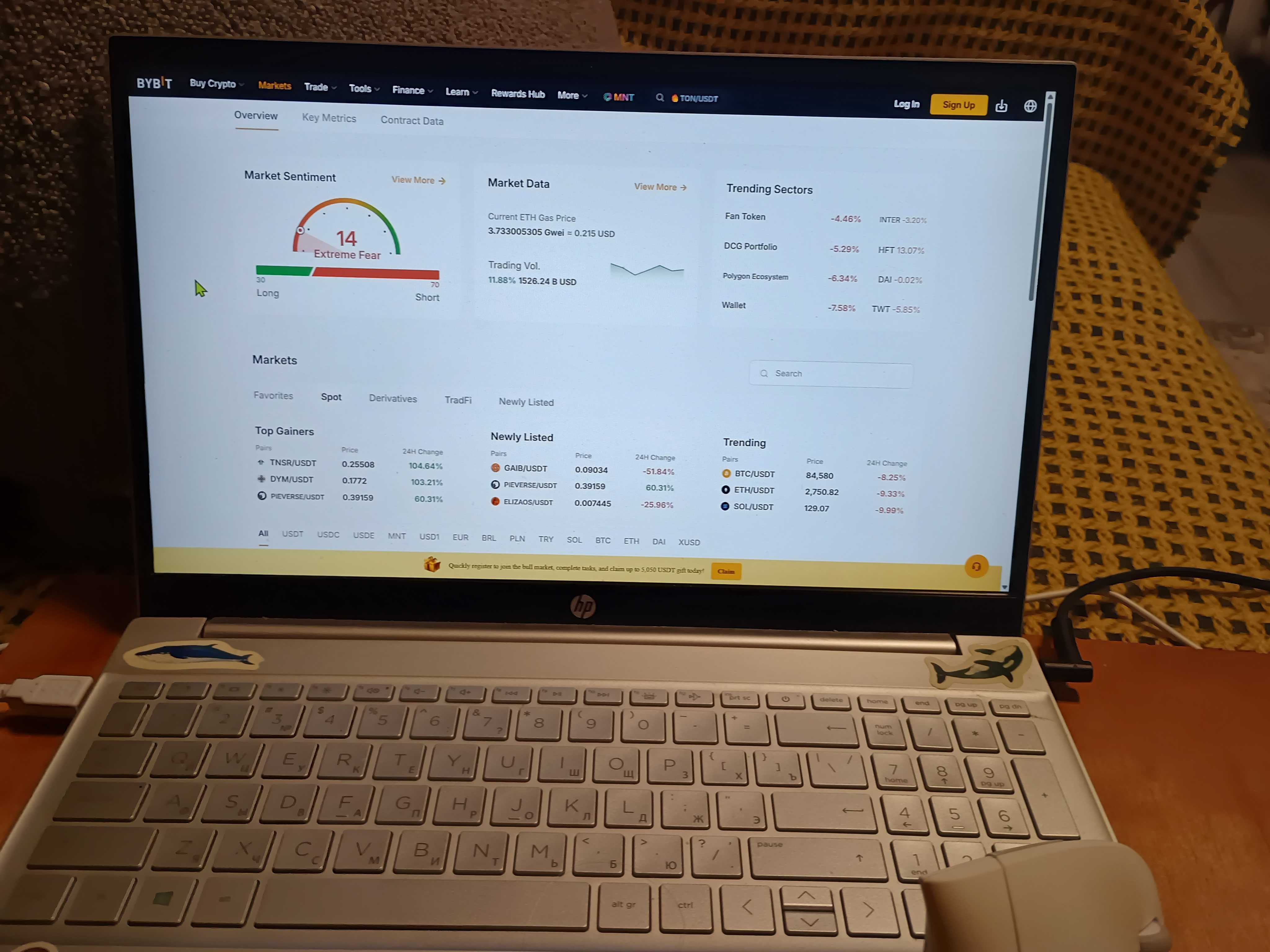
Our verdict: Bybit is the better choice for traders who use both spot and derivatives and want efficient, unified margin management. BitMEX is stronger for those focused solely on derivatives, prioritizing high leverage, precise risk control, and a crypto-only ecosystem.
Supported Cryptocurrencies and Available Pairs
In our tests, we evaluated the spot market based on practical criteria – how many assets can be traded without switching to another exchange. We also assessed how easily traders can navigate between pairs within a single CEX, focusing on interface clarity and search efficiency.
Bybit scored 4.3/5 in our review, offering an extensive selection for spot trading: 496 coins and 664 pairs. We found everything we wanted to test – ARB, OP, MATIC, even smaller caps like FET and RNDR. The exchange features the most liquid altcoins, making it easy to trade and rebalance portfolios within one platform. In our experience, Bybit focuses on listing tokens that are both popular with traders and aligned with current market trends.
BitMEX scored 4.1/5 but fell short in spot offerings, with only 13 coins available. We wanted to test a few Layer 2 tokens – none were listed. Spot trading on BitMEX works best as a base layer for derivatives strategies. If your strategy relies on altcoins, BitMEX may not provide the variety you need.
Our verdict: Bybit wins decisively in coin and pair selection – 496 coins vs 13 isn’t even close. BitMEX is better suited for derivatives traders who maintain only a small spot balance. As for fees, comparing Bybit fees vs BitMEX makes sense only after choosing your market – fees matter most where you can actually trade the pairs you need.
BitMEX vs Bybit – Which Should You Choose?
If you’re a beginner or first-time buyer
Choose: Bybit
In our tests, Bybit proved easier to use. It offers more coins and pairs on spot, and basic actions like “buy,” “sell,” or “set a stop” require fewer steps. If you’re just starting out and prefer a single, straightforward platform, Bybit is the more practical option.
If you’re an active, fee-sensitive spot trader
Choose: BitMEX
When comparing Bybit vs BitMEX fees, BitMEX can be cheaper for spot trading – but only if its limited list of spot coins suits your needs. We recommend BitMEX if you mainly trade major pairs and want to minimize costs on frequent trades.
If you mainly want a curated list of majors
Choose: BitMEX
BitMEX keeps its spot market focused, avoiding hundreds of lesser-known tickers. It’s ideal if you trade primarily major coins and don’t want to sift through altcoins, especially if most of your activity is in derivatives.
If you want maximum asset variety and global reach
Choose: Bybit
Bybit offers a much broader range of spot assets and often works as an all-in-one trading platform, eliminating the need for a second exchange. Before signing up, check regional restrictions and feature availability in your country – these determine whether you can access derivatives, on-ramps, and other products.
Final Verdict
In our test, Bybit scored 4.3/5 and BitMEX 4.1/5. Choose Bybit if you want a broad spot market (496 coins), strong liquidity on major pairs, and seamless integration between spot and derivatives through a unified account – along with access to bots and copy trading.
Choose BitMEX if your focus is derivatives trading, you need advanced risk management tools (we appreciated the reduce-only and post-only order options), high leverage (up to 250x), and you use spot only as a secondary option while operating without fiat on-ramps.
Comparing Bybit vs BitMEX fees only makes sense after choosing your market: Bybit’s base spot rate is 0.10%/0.10%, while BitMEX charges 0.05%-0.10% for spot trades – though its range of spot assets is far more limited.
How We Tested BitMEX vs Bybit
We evaluated both exchanges using the same GNcrypto methodology to ensure the BitMEX vs Bybit comparison follows a consistent standard.
The framework covers seven categories: liquidity and volume, fees and overall trading cost, asset and pair selection, order execution quality, tools and order types, fiat options and minimum trade size, and reliability and transparency.
Scores are normalized on a 1.0–5.0 scale in 0.1 increments and combined into a final rating (4.1 for BitMEX and 4.3 for Bybit). Our assessment was based on public data – including fees, asset and pair lists, status pages, proof-of-reserves, security reports, and regulatory filings – and verified manually through registration, KYC, deposits, and test trades.
Latest News





Recommended Articles/Reviews




The material on GNcrypto is intended solely for informational use and must not be regarded as financial advice. We make every effort to keep the content accurate and current, but we cannot warrant its precision, completeness, or reliability. GNcrypto does not take responsibility for any mistakes, omissions, or financial losses resulting from reliance on this information. Any actions you take based on this content are done at your own risk. Always conduct independent research and seek guidance from a qualified specialist. For further details, please review our Terms, Privacy Policy and Disclaimers.