
OKX vs Binance Comparison 2026: Fees, Assets, and Which Is Better
Affiliate Disclosure:
GNCrypto editors review services independently. If you click on affiliate links, we may earn commissions, which help support our testing. The goal of our reviews is to provide our readers with the most objective and unbiased overviews of available platforms for spot crypto trading.
OKX vs Binance

Binance (4.4/5) is the better pick for most spot users thanks to very low effective costs, deep liquidity, and a huge asset list. OKX (3.5/5) suits traders who like a terminal-style experience, built-in bots, and can benefit from the global fee ladder (regional pricing may vary).
The Bottom Line

We tested both exchanges for spot trading. In our view, if you want minimal on-book costs, near-instant execution and broad market coverage, Binance is the easier default. OKX feels like a trader’s terminal with bots and regular PoR snapshots; its global baseline fees are competitive, but in the EEA entry-level rates are higher and some products are restricted.
- Binance: near-instant fills on majors, very low base fees (lower with volume/BNB), full pro toolset, 500+ assets.
- OKX: low global baseline fees, good liquidity on majors, pro interface and bots, recurring Proof-of-Reserves.
- Binance: fiat rails and features vary by jurisdiction; PoR is not a full financial audit.
- OKX: higher entry-tier fees in the EEA; legal/regulatory overhang in some regions; uneven product availability.
On this page


We tested both exchanges. In our view, Binance leads on low on book costs, deeper liquidity, and a large, easy to navigate asset list. OKX counters with a terminal style feel, bots, and competitive global fees, but EEA pricing and product limits make value more location dependent.
OKX vs Binance at a Glance
| Category | OKX | Binance | Winner |
|---|---|---|---|
| Overall GNcrypto rating | 3.5 / 5 | 4.4 / 5 | Binance |
| Daily spot turnover (approx.) | $2.2–2.9B | ≈$31B | Binance |
| Tradable assets (spot) | 350 | 500+ | Binance |
| Liquidity & volume rating | 4.2 | 5 | Binance |
| Fees & total cost rating | 3.5 | 5 | OKX (Global)Binance (EEA) |
| Asset selection rating | 4.5 | 5 | Binance |
| Tools & order controls | 3.4 | 5 | Binance |
| Fiat access & minimum trade size | 3.5 | 4 | Binance |
| Reliability & transparency rating | 3.0 | 4 | Draw (Binance has higher ratios, OKX has better methodology rating) |
OKX vs Binance – Which Should You Choose?
If you’re a beginner or first-time buyer
Choose: Binance
Very quick fills on major pairs, deep order books, and an advanced screen that stays approachable after a short learning curve. It’s easier to buy your first BTC/ETH without wrestling with settings.
If you’re an active, fee-sensitive spot trader
Choose: Binance (default)
Base fees are typically lower, with extra discounts for volume and paying fees in BNB. In our $200 tests, on-book effective costs were very low.
If you trade outside high-fee regions and want a “terminal” feel with bots
Choose: OKX
Pro-style layout with built-in grid/DCA bots (where available) and a flexible global fee ladder. Works best if you place disciplined limit orders and automate parts of your flow.
If you’re in the EEA and care about entry-level costs
Choose: Binance
In our experience, OKX’s EEA entry tier is higher, which makes small tickets pricier. Binance tends to be a better value for beginners in the region.
If you want maximum asset variety in one place
Choose: Binance
A very broad lineup – 500+ assets and thousands of pairs – so it’s easier to find the exact market and quote currency without switching platforms.
If regional availability and features matter most
Choose: It depends
Both platforms vary by country. We recommend checking local fiat rails and which features are enabled for your jurisdiction before signing up.
Binance vs OKX: Quick Overview of Both Exchanges
When people search phrases like Binance vs OKX comparison, they’re usually asking which one feels safer, is more established, and fits everyday spot trading.
Here we apply the same lens to Binance and OKX so a beginner can see what’s different and who each platform is for.
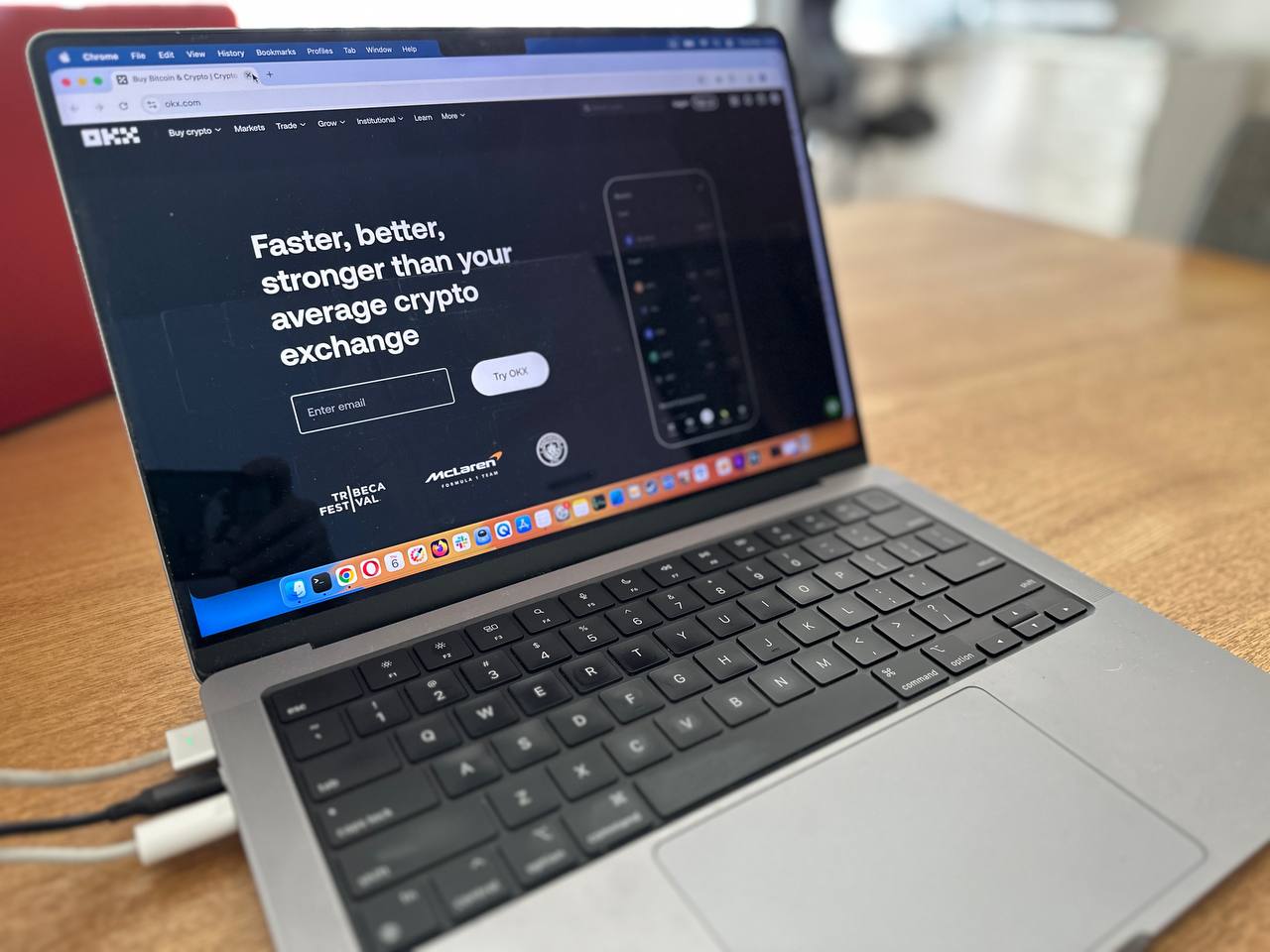
OKX was founded in 2017 and runs a global, trading‑terminal style exchange with strong spot liquidity on major pairs and a full pro toolkit (advanced orders, bots, regular PoR snapshots). Access and pricing vary by region, and some products are limited in the EEA, so availability depends on where you live. OKX’s regional availability and product structure are examined in our OKX review.
Binance launched in 2017 and has grown into the market leader by daily spot volume, listing 500+ assets with low standard fees and broad coverage. In our $200 test, BTC/USDT filled instantly with negligible spreads, and the advanced terminal provided the full pro experience (Market/Limit/OCO/Trailing Stop, L2 depth, APIs). As the largest venue, it suits most spot traders, but fiat rails and certain features still vary by jurisdiction, and public‑audit expectations differ by regulator. Binance’s broader fee structure, product ecosystem, and regional considerations are examined in our Binance reviews.

Key Features and Trading Experience Compared
When people ask for a Binance vs OKX comparison, they usually want to know how it feels to place real spot trades: the interface, order types, and how fast/cheap orders are clear. We tested both with $200 spot purchases and, in our view, the differences show up across order flow, toolset, and regional pricing rather than in one single feature.
From our hands-on runs, both platforms offer a simple mode and a pro/advanced screen, but we found the pro views are where costs and control improve. Trading directly from the book, watching Level‑2 depth, and placing disciplined limit orders reduced our effective costs on each venue versus “instant buy” routes.
On OKX, we felt like we were working in a trading terminal. The advanced view exposed full L2 depth, TradingView‑style charts, and the order types we expect (market/limit with stop variants), plus built‑in bots for grid or DCA where allowed. Globally, the fee ladder struck us as competitive. In the EEA, however, our tests and docs are aligned on higher entry‑tier pricing and some product limits, so in our opinion the value you get depends heavily on location and whether you can stick to maker orders.
On Binance, our $200 BTC/USDT orders filled essentially instantly at retail size during liquid hours, and spreads were negligible. The pro terminal felt complete: Market, Limit, Stop‑Limit, Trailing Stop, and OCO were all there alongside full L2 depth and public APIs; we also noticed optional semi‑automation via Spot Copy Trading where available. For newcomers, we think the learning curve is short, and the depth helps small tickets clear at fair prices without fuss.
Our verdict on features and day‑to‑day trading feel: we call it a narrow win for Binance on execution polish and depth concentrated in one place. OKX remains a strong alternative if you want bots and a flexible global fee ladder, but in the EEA its higher entry‑tier rates can blunt that advantage for smaller, beginner‑level trades.
Supported Assets and Trading Pair Selection
In this Binance vs OKX comparison, we looked at how many coins, pairs, and markets you actually get to trade – because breadth matters to beginners deciding where to start.
From our reading and tests, Binance clearly leads on coverage. We counted 500+ listed assets and thousands of spot pairs, which means most majors, mid‑caps, and many niche markets are one search away. In our opinion, that breadth plus deep liquidity makes it easier to find the exact quote you want (USDT, USD, or other major quotes) without hopping venues.
OKX, in our experience, also offers a wide lineup with hundreds of USDT‑quoted pairs and a continually updated catalog. For everyday spot traders, this feels sufficient – you’ll find BTC/ETH/blue chips and plenty of trending names. That said, we think availability can vary more by region on OKX, and some product limits in the EEA reduce the practical menu versus the global site.
Our verdict: Binance wins on absolute breadth and pair variety; OKX remains competitive for most retail needs but is more sensitive to regional constraints and quote‑currency coverage.
Fees and Overall Cost Breakdown
If you’re asking about OKX vs Binance differences on cost, here’s what our $200 tests and docs showed. In our opinion, Binance is the cheaper default for most spot styles: base tiers start at 0.10%/0.10% and often drop with volume or BNB fee payment (plus occasional 0%/rebate promos). With deep books, spreads on BTC/USDT were negligible in our runs, so the effective cost stayed very low when trading on the book. Fiat rails vary by region; card/processor fees may apply.
For OKX, we found a split picture. On the global schedule, baseline spot fees of 0.08% maker / 0.10% taker (with VIP and OKB discounts) are competitive. However, in the EEA the entry tier is 0.20% / 0.35% with a different discount logic, which – by our math – makes small retail tickets meaningfully pricier than Binance. SEPA/ACH and P2P rails exist, but third‑party charges can add to the all‑in.
Margin & extras: both platforms support margin and automation features; actual borrowing or funding costs vary by asset and market conditions. We’d recommend beginners stick to the spot first, then compare margin rates inside the account if/when they upgrade their strategy.
Summary
In our view, the Binance vs OKX differences come down to execution polish, breadth, and regional pricing. We tested both with $200 spot buys and saw Binance clear orders essentially instantly on majors with negligible spreads; for most beginners, that makes it the easier “default.”
OKX, in our opinion, is a strong alternative if you value a terminal‑style interface, built-in bots, and a flexible global fee ladder. Our analysis showed that in the EEA the entry‑tier structure narrows the cost gap and can make small tickets pricier.
Who should choose what: we’d recommend Binance for first‑time buyers and fee‑sensitive spot traders who want deep books and a quick learning curve. We’d recommend OKX for users outside high‑fee regions who plan to place disciplined limit orders, experiment with bots, and don’t mind checking regional availability before committing.
How We Tested OKX vs Binance
We evaluated both exchanges using the same GNcrypto methodology, which is why a OKX vs Binance comparison is consistent. GNcrypto employs a standardized rating framework with 7 major categories: liquidity & volume, fees & total cost, asset selection & trading pairs, execution quality, tools & order controls, fiat access & minimum trade size, reliability & transparency.
Scores are normalized into a 1.0–5.0 star rating in 0.1-point steps, and then rolled into an overall rating (3.5 for OKX, 4.4 for Binance). For both exchanges we looked at public data: fee schedules, supported pairs/asset lists, status pages, proof-of-reserves and security documentation, regulatory filings. And then we evaluated it against our first-hand testing, which included: opening accounts, completing KYC, funding balances and placing spot trades.
Latest News




Recommended Articles/Reviews




The material on GNcrypto is intended solely for informational use and must not be regarded as financial advice. We make every effort to keep the content accurate and current, but we cannot warrant its precision, completeness, or reliability. GNcrypto does not take responsibility for any mistakes, omissions, or financial losses resulting from reliance on this information. Any actions you take based on this content are done at your own risk. Always conduct independent research and seek guidance from a qualified specialist. For further details, please review our Terms, Privacy Policy and Disclaimers.