
Best Crypto Exchanges in 2026: Our Tested Top 5 Picks for Beginners
Affiliate Disclosure:
GNCrypto editors review services independently. If you click on affiliate links, we may earn commissions, which help support our testing. The goal of our reviews is to provide our readers with the most objective and unbiased overviews of available platforms for spot crypto trading.
Binance – Best Crypto Exchange in 2026

We tested five crypto exchanges with $200 spot trades. In our view, Binance ranks first for deep BTC/ETH liquidity, low fees, and a full pro toolkit. Phemex targets high-volume traders with Premium 0% spot fees, Bybit suits terminal-style pros (geo limits), Bitget keeps costs low with a clean UI, and WhiteBIT is Europe’s largest by traffic (about $2.5B daily volume) with a security-first focus.
GNcrypto's Verdict

Binance is our top pick in this ranking for most spot users, mainly because it feels consistently reliable on majors and stays usable as you move beyond basic spot trading. Phemex stands out if you can justify a subscription to remove spot fees, while Bybit is best for technically confident users who want a pro terminal and unified spot-plus-derivatives workflow. Bitget is our pick for a cleaner, low-minimum order-book experience, and WhiteBIT fits EU-oriented users who prioritize security and a straightforward interface.
- Orders fill instantly
- Low fees
- Full pro toolset
- Watch for limits by jurisdiction
- Somewhat lacking in terms of public audits
On this page


We tested five crypto exchanges to see real fees, spreads, and usability in practice. Binance ranks first for clean BTC and ETH execution and a pro toolkit you can grow into. Phemex fits high-volume traders, Bybit suits terminal-style users, Bitget is great for low minimums, and WhiteBIT leans security first.
Binance

Based on our tests, Binance is the most practical starting point in this ranking: majors execute cleanly at retail sizes, and the platform offers both a simple spot flow and a full advanced terminal when you are ready. In our test trade, BTC/USDT filled cleanly with negligible spreads, and the platform offered a wide set of order types plus copy trading, bots, and APIs. Fiat methods and product menus can differ by country, so confirm what is available before committing serious size.
Very strong liquidity on BTC/USDT and ETH/USDT with fast retail fills (based on our test); low baseline spot fees with common discount paths for active users; and a complete pro toolkit (advanced orders, deep order book view, copy trading, bots, and APIs).
Fiat rails, limits, and certain features can differ by country/region; Proof of Reserves is recurring and Merkle-based but not the same as a full external financial-statement audit; and regulatory conditions can affect what products are available in some regions.
Beginner to active spot traders who prioritize low effective costs, deep liquidity on majors, and a platform they can grow into.
Strengths:
- Top global spot liquidity on BTC, ETH and USDT pairs; orders fill instantly at retail size.
- Very low standard maker/taker (0.1%/0.1%) and frequent 0%/rebate campaigns → 5/5 on costs.
- Huge market coverage: 500+ assets and frequent listings/delistings.
- Full pro toolset: advanced orders, L2/depth, TradingView-style charting, public REST/WebSocket, copy and bot hooks.
- Transparent PoR page and recurring reserve snapshots; SAFU described and wallets shown publicly.
Weaknesses:
- Fiat ramps and limits still vary strongly by jurisdiction – it’s not as uniform as on a single-country, single-license U.S. exchange.
- PoR is recurring and Merkle-based but still self-published; not all regulators count that as a full audit.
Phemex
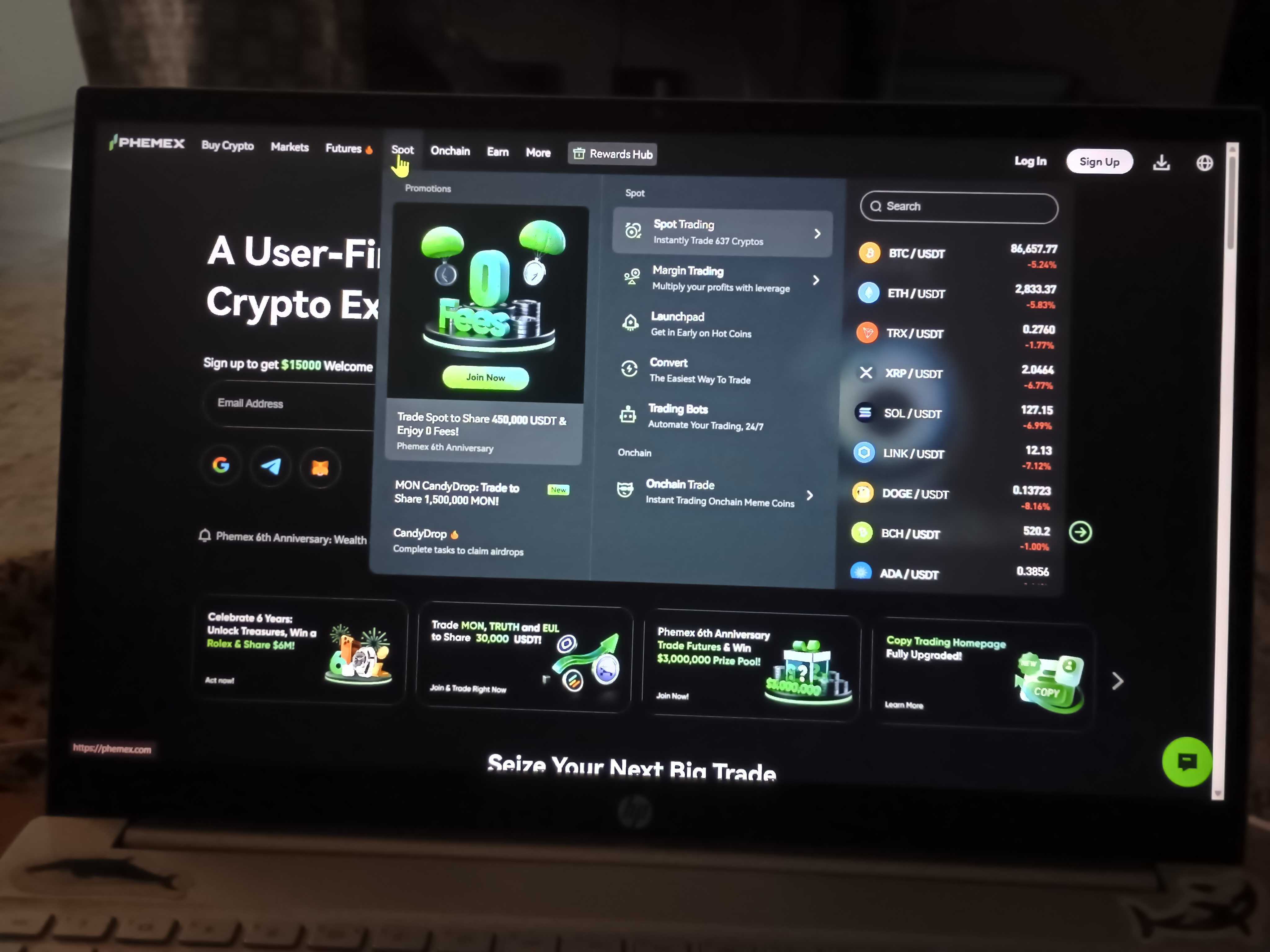
From what we saw in testing, Phemex is a strong pick if you trade a lot and care about execution speed. The Premium membership can unlock 0% spot fees, which is a real edge for high-frequency spot users, and in our $200 test the CrossEngine handled volatility without lag, with instant fills and no noticeable slippage on majors. The trade-off is that Phemex is more of a mid-tier, hybrid ecosystem: fiat rails are less native than on top regulated venues, and trust and access depend heavily on your jurisdiction.

Zero-fee spot trading for Premium members; very fast execution on majors (based on our $200 test); and a pro-grade, customizable dashboard with TradingView charting plus strong derivatives coverage.
Premium zero-fee is subscription-based; credit card buys can be expensive and some bank transfer options run through partners and may be slower than true native rails; mandatory KYC is required to deposit; and regulatory access varies by country.
High-volume traders who can benefit from Premium 0% spot fees and want a fast, customizable pro terminal, plus active users who also trade perpetuals from the same account.
Strengths:
- The speed advantage: our test trade confirmed the hype – the matching engine is blistering fast. We experienced zero latency or slippage on our market orders, even during volatility.
- Premium “zero-fee” spot: for active traders who upgrade to the Premium membership, the 0% spot trading fee is a massive edge that undercuts almost every competitor.
- Pro-grade dashboard: the ability to customize the layout and use integrated TradingView charts creates a highly efficient workspace for technical analysis.
- Derivatives depth: with 150+ contracts and up to 100x leverage, it remains a top-tier venue for futures traders.
- Transparency recovery: following the security incident, Phemex has been diligent about publishing Proof-of-Reserves (PoR) to rebuild trust.
Weaknesses:
- Security track record: the January 2025 hot wallet hack (approx. $70M lost) casts a long shadow. While users were reimbursed, it highlights the risks of using a centralized, offshore venue.
- Fiat “sticker shock”: buying crypto via credit card incurs fees upwards of 3.5%. The “direct” bank transfer option is slower than true native rails found on regulated exchanges.
- Mandatory KYC: the days of “privacy-first” trading are over. Mandatory identity verification is now a hard gate for depositing, removing one of its former key selling points.
- Regulatory grey zone: as an unregulated offshore entity, it is strictly unavailable in the U.S., and regulatory pressure is mounting in the UK and Canada.
Bybit
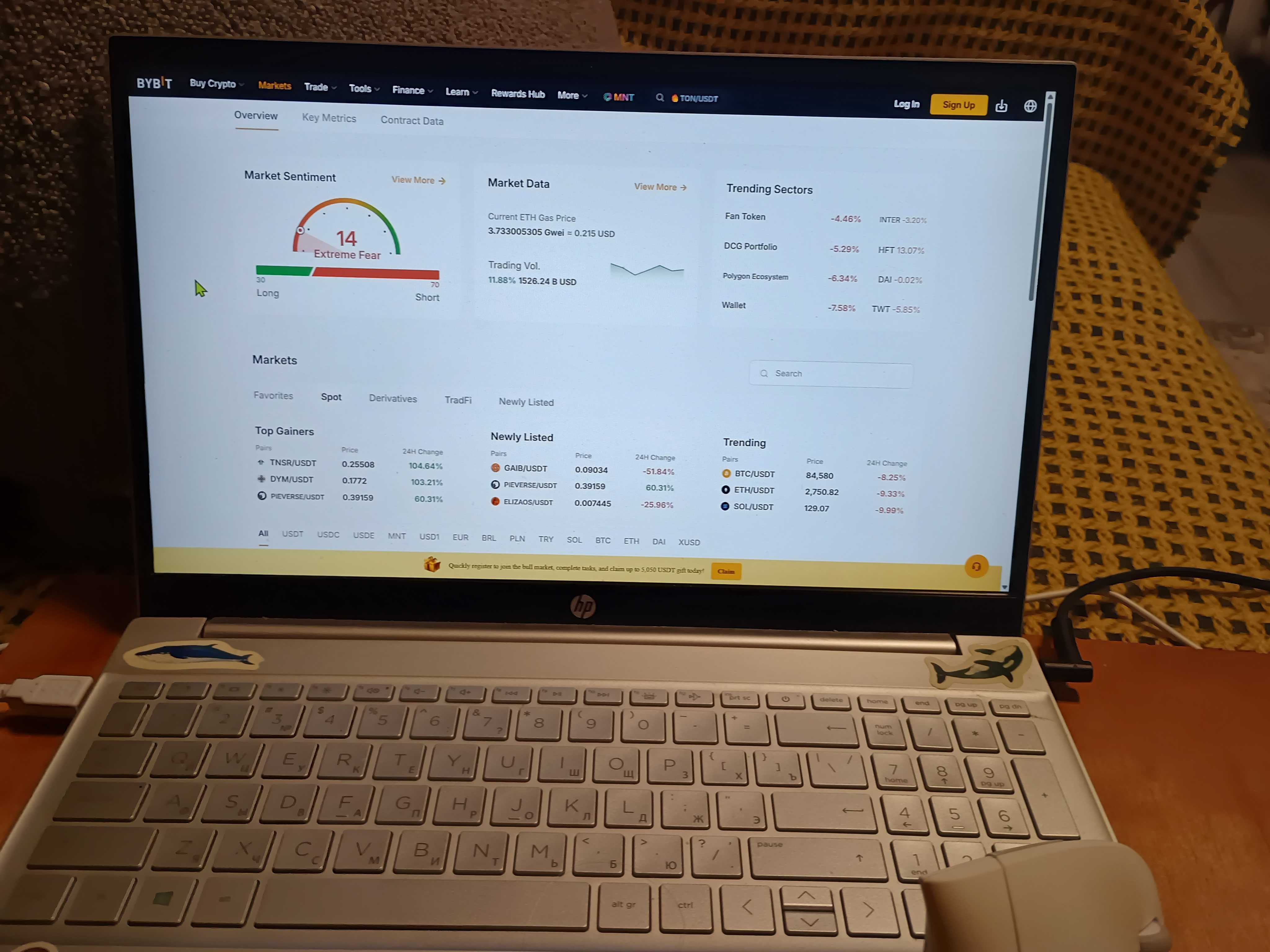
In our experience, Bybit feels less like a retail-first exchange and more like a professional spot terminal. We liked that execution was fast and stable, with negligible slippage on majors, and the Unified Trading Account made it easy to move between spot and derivatives without juggling separate balances. The main trade-offs are strict geo-restrictions and a feature-dense interface that can overwhelm true beginners.
Deep liquidity and strong execution on BTC/ETH majors; low base spot fees and pro-grade order controls (OCO, post-only, reduce-only, TP/SL); plus a Unified Trading Account that streamlines spot-to-derivatives workflows.
Not available in several major markets (including the U.S., UK, Canada, and France); funding and fiat gateways vary by region and may rely on P2P or third-party partners; Proof of Reserves is published but not a full external financial audit; and the UI has a steeper learning curve than beginner-focused apps.
Technically confident active traders outside restricted countries who want a fast terminal-style experience, deep BTC/ETH books, and a unified spot-plus-derivatives account.
Strengths:
- High market quality: we experienced instant fills and tight spreads on majors (BTC/ETH) during our $200 test orders.
- Competitive costs: low 0.10% base fees, which can be further reduced via “Post-Only” orders and frequent promotions.
- Power user terminal: a complete toolkit featuring native OCO orders, Grid Bots, Copy Trading, and TradingView charts.
- Asset depth: an aggressive listing cadence (496+ coins) that provides early liquidity for altcoin hunters.
Weaknesses:
- Geo-restrictions: the platform is strictly blocked in major markets, including the U.S., UK, Canada, and France.
- Fiat friction: direct bank deposits are limited; funding often relies on P2P markets or pricier third-party gateways.
- Audit status: while Bybit publishes a self-reported Proof of Reserves, it lacks a fully independent, external financial audit.
- Learning threshold complexity: the feature-dense interface is often overwhelming for absolute beginners.
Bitget

Bitget is a strong fit for non-U.S. spot traders who want a simple, fast Pro/Spot screen without giving up core trading tools. In our $200 BTC/USDT test, order-book trading felt smooth and cost-efficient: the base taker fee was 0.10% (about $0.20 on the ticket) and spreads on majors were generally tight. Where costs can jump is outside the order book: instant card buys are typically pricier, and withdrawal fees are dynamic and only finalized right before confirmation.

A clean Pro/Spot workflow with low minimum spot orders (about $5); low base taker fees and tight spreads on major pairs in our testing; plus full core spot order types (limit, stop, stop-limit, OCO) with L2 depth, APIs, and strong mobile apps.
All-in costs can be higher if you rely on instant card purchases; withdrawal fees are dynamic and should be checked at confirmation; depth on majors is solid for retail but not always at top-tier thresholds; and the mix of fiat quote pairs is not always clearly published even when common rails like SEPA work.
Beginner and casual spot users outside the U.S. who want a clean order-book experience with low minimums, plus light-pro traders who value simple execution on majors without a cluttered interface.
Strengths:
- Low base taker fee (0.10%) in the Pro/Spot interface – cost‑efficient for small to mid-size trades when using the order book.
- Strong mobile apps (Android ~4.7★, iOS ~4.5★).
- Broad asset coverage and hundreds of spot pairs.
- All key spot order types (limit, stop, stop‑limit, OCO), plus L2 book, charts, and public REST/WebSocket APIs.
- Multiple fiat on/off ramps (e.g., SEPA, cards, P2P/local methods); low minimum spot order (~$5).
Weaknesses:
- Depth within ±1% on BTC/USDT and ETH/USDT is generally solid but doesn’t always meet our strict ≥$5M per-side threshold for a 5★ rating.
- BTC withdrawal fees are dynamic and, and platform surcharges only appear at confirmation. Always check the total withdrawal cost per transfer.
- Lacks a clearly published line‑up of ≥5 major fiat quote pairs across spot (USD/EUR/GBP/etc.), even though EUR/SEPA and other rails work.
WhiteBIT

WhiteBIT is Europe’s largest crypto exchange by traffic, with about $2.5B in daily volume and spot, margin, and USDT-settled futures. It is a comfortable spot venue if you care about security and a clear interface. In our testing, trading felt smooth on both web and mobile, and the platform supported 300+ assets, including WBT markets. The main trade-offs are higher costs on some fiat gateways and thinner liquidity on certain smaller pairs.
A user-friendly web and mobile experience; a strong security focus (including 96% of funds in cold storage and regular audits, per the platform’s stated approach); and a versatile product set, including spot, margin, USDT-settled futures, and demo trading for practice.
Fiat deposits and withdrawals can be relatively expensive compared with pure-crypto transfers; some smaller pairs show lower liquidity and wider spreads; margin markets cover fewer assets than spot; and the platform is not licensed to serve U.S. residents.
EU and regional users who want a security-focused exchange with a clean interface, multi-currency support, and the option to practice on demo before trading spot or futures.
Strengths:
- Strong security focus, including 96% of funds in cold storage and regular audits.
- User‑friendly website and mobile apps with nearly identical functionality.
- Diverse trading options: spot, margin, and USDT‑margined futures with up to 100x leverage.
- Extra tools for earning passive income (crypto lending, holdings program, tournaments, Launchpad).
- Demo trading with virtual assets for beginners.
- Broad geographic reach with multi‑currency fiat support and bank‑card integration.
- Active development and ecosystem expansion, including WBT utilities and institutional programs.
Weaknesses:
- Margin markets cover fewer assets than spot markets.
Some smaller trading pairs show low liquidity and wider spreads. - Fiat deposits and withdrawals can be relatively expensive compared to pure crypto transfers.
- A limited number of supported fiat currencies compared with global competitors.
- Not licensed to serve U.S. residents.
Best Crypto Exchanges 2026: Side-by-Side Comparison
| Exchange | Standout | Fees | Assets | Fiat | PoR | Best for |
|---|---|---|---|---|---|---|
| Binance | Deep BTC/ETH liquidity and full pro toolkit | 0.1% maker, 0.1% taker; 10% discount with BNB | 500+ | Varies by country/region | Recurring Merkle-based PoR snapshots; self-published | Beginner to active spot traders who want low costs and strong majors execution |
| Phemex | Premium can unlock 0% spot fees; very fast engine | Premium 0% spot; card buys can be expensive (about 3.5%) | 600+ | Limited native rails; partners and P2P | PoR published after 2025 incident | High-volume traders who benefit from 0% spot and a fast, customizable terminal |
| Bybit | Pro terminal with Unified Trading Account | 0.10% base spot fees; promos and post-only can reduce | 496+ coins, 664 pairs | Varies; often P2P or partners; blocked in US/UK/CA/FR | Self-reported PoR; no full external audit | Technically confident traders outside restricted countries who want unified spot plus derivatives |
| Bitget | Clean Pro/Spot UI with low minimum order | 0.10% base taker in Pro/Spot; card buys cost more | Hundreds | SEPA, cards, P2P and local methods | Regular PoR reports | Beginners and casual spot users who want low minimums and a simple order-book flow |
| WhiteBIT | Europe’s largest by traffic; security-first UX | Spot starts at 0.1%; discounts via WBT | 300+ | Bank cards and providers can be costly | 96% cold storage and regular audits (as stated) | EU and regional users who want a clean interface, security focus, and demo trading |
What a Crypto Exchange Is
A crypto exchange is a platform that lets you buy and sell cryptocurrencies by matching your order with other traders. The key idea is the order book: you place a limit order (you set the price) or a market order (you take the best available price right now), and the exchange routes it into the book.
This matters because it explains why the same purchase can cost differently depending on how you do it. On the order book, your main costs are the trading fee plus the spread and any slippage. With an instant buy or “broker-style” flow, the platform often wraps extra costs into the quoted price (and sometimes uses third-party processors), so the convenience can be noticeably more expensive on small tickets.
Another beginner misunderstanding: you are not buying “shares of the exchange.” You are trading pairs like BTC/USDT or ETH/USDT, meaning you swap one asset for another at the current market price.
When people ask what the best crypto exchange is, we think the most practical answer starts with your use case: do you want the cheapest order book fills, or the simplest one-click purchase? In our tests, Binance is a clear example of the order-book model working well at retail size: our $200 BTC/USDT spot trade filled cleanly with negligible spreads, and the terminal supported advanced orders like OCO. We documented that flow in our Binance review of fees, liquidity, and order types.
Our tip for first-timers: start small, enable 2FA, make one spot trade on the order book, then do a test withdrawal. That single loop tells you more than any marketing page.
How to Choose the Right Exchange
If you are new to crypto, we think the fastest way to pick the best crypto trading platform is to run a simple, real-world checklist on a small amount. Fees matter, but your real cost is usually the fee plus the spread and any slippage.
Here is the beginner flow we use:
- Real trade cost: look at the spot fee, then sanity-check spreads. Example: on a $200 order, a 0.10% fee is about $0.20, and a few basis points of spread can add more.
- Minimum order size: lower is better for testing. A $5 minimum lets you learn without committing much.
- Order controls: at minimum, you want limit orders. Stop, stop-limit, and OCO help you manage risk without watching the screen all day.
- Funding method: instant card buys are convenient, but often more expensive than placing an order on the book.
- Withdrawals: always do a small test withdrawal. We prefer exchanges that show network fees and any surcharges before you confirm.
- Usability: a clean Pro/Spot screen and strong mobile apps reduce mistakes, especially for first-timers.
In our Bitget test, this checklist was easy to execute: we placed a $200 BTC/USDT trade in the Pro/Spot view, saw the 0.10% base taker fee on the ticket, and observed generally tight spreads on majors. We also noted that withdrawal costs are dynamic and only finalize at confirmation, which is exactly why we recommend the small test-withdraw step. If you want the full walkthrough and what we checked, see our Bitget reviews.
How Crypto Investing Differs From Stocks
If you are coming from stocks, the biggest surprise is that crypto never sleeps. Prices move 24/7, and weekend volatility is normal, so we think risk controls matter more than trying to time a “market open.”
The second difference is custody responsibility. With stocks, your broker and bank rails feel familiar. With crypto, deposits and withdrawals can involve networks, addresses, and confirmation times. In our experience, that is where beginners make the most expensive mistakes, so we always recommend a small test withdrawal before you scale.
The third difference is how quickly exchanges mix spot and leverage products. Many platforms put spot, margin, and perpetual futures a click apart. That is convenient once you know what you are doing, but it can be risky if you accidentally trade with leverage.
A good example is Bybit. In our testing, it behaves like a pro terminal, and its Unified Trading Account makes it easy to move between spot and derivatives without separate balances. We also saw strict geo-restrictions in major markets, and the interface can feel dense if you are brand new. For the full context, see our Bybit exchange review.
Bottom line: when comparing best crypto exchanges to stock apps, start with simple spot buys, avoid leverage early, and focus on clean execution and withdrawals you understand.
Common Questions for New Users
Q: How much money do I need to start?
A: In our experience, the smartest move is to start small and treat your first deposit as a test. Make one simple spot buy on the order book, then do a small withdrawal. That single loop tells you whether fees, speed, verification, and the interface feel beginner-friendly before you scale.
Q: What is usually cheaper: card buy or order-book trading?
A: Order-book trades are typically cheaper. Card buys often bundle processor fees and extra spread into the quoted price, so the convenience can cost more, especially on small tickets. If you want to keep costs down, we think it is better to fund with a cheaper method (when available) and place a limit or market order on the book.
Q: Is it safe to leave funds on an exchange?
A: We think it is safer to treat exchanges as trading venues, not long-term wallets. Security varies, and the biggest beginner risk is still account hygiene. Use a unique password, turn on 2FA, enable anti-phishing protections if offered, and consider a withdrawal whitelist. Keep only what you need for near-term trading on the platform.
Q: Can I practice without risking real money?
A: Sometimes. Some platforms offer demo or paper trading with virtual balances so you can learn the order ticket, stops, and risk controls without real losses. If you want an example from our testing, see our Whitebit reviews.
Q: What if I am in the United States?
A: Availability is not universal. Access, KYC requirements, and fiat rails can change by country and over time. Before you deposit, we recommend checking the platform’s supported regions, what features are enabled in your location, and whether withdrawals work smoothly for your preferred method.
When people ask what the best place to buy crypto is, we think the practical answer is: the place you can access legally, fund at a reasonable cost, trade on the order book, and withdraw smoothly after a small test.
Our Criteria for Ranking Exchanges
When we publish a top list, we do not try to guess the best cryptocurrency exchange from marketing claims. In our view, a ranking is only useful if it reflects real friction and real all-in costs for a normal spot user.
That is why our team tests every platform the same way. We register, complete the required verification, fund the account, place a $200 spot trade on a major pair, and then attempt a small withdrawal. We document what beginners actually feel: where the interface confuses you, where the fees appear, how the order book behaves, and whether the platform shows final withdrawal costs before you confirm.
We use a weighted, category-based model across six categories and convert that into a 1.0–5.0 star score in 0.1 increments, using fixed weights:
- Trading fees and true costs (25%): maker and taker fees, spreads, deposits and withdrawals
- Asset selection and liquidity (20%): majors depth, spreads in normal and volatile periods
- Performance and reliability (20%): execution speed, stability, mobile and web responsiveness
- Security and regulatory signals (15%): 2FA options, storage claims, incident history and response
- User experience (10%): order types, charting, funding and withdrawal flow
- Support and extra features (10%): ticket handling plus earn and education tools
We do not accept paid placements, and we do not rate platforms we cannot fully test due to regional restrictions. We also refresh our reviews when fees, features, or rules change. If you want a concrete example of how this process plays out, see our Phemex reviews.
Latest News





Recommended Articles/Reviews


The material on GNcrypto is intended solely for informational use and must not be regarded as financial advice. We make every effort to keep the content accurate and current, but we cannot warrant its precision, completeness, or reliability. GNcrypto does not take responsibility for any mistakes, omissions, or financial losses resulting from reliance on this information. Any actions you take based on this content are done at your own risk. Always conduct independent research and seek guidance from a qualified specialist. For further details, please review our Terms, Privacy Policy and Disclaimers.