Zengo crypto wallet review 2026: a unique deep-dive
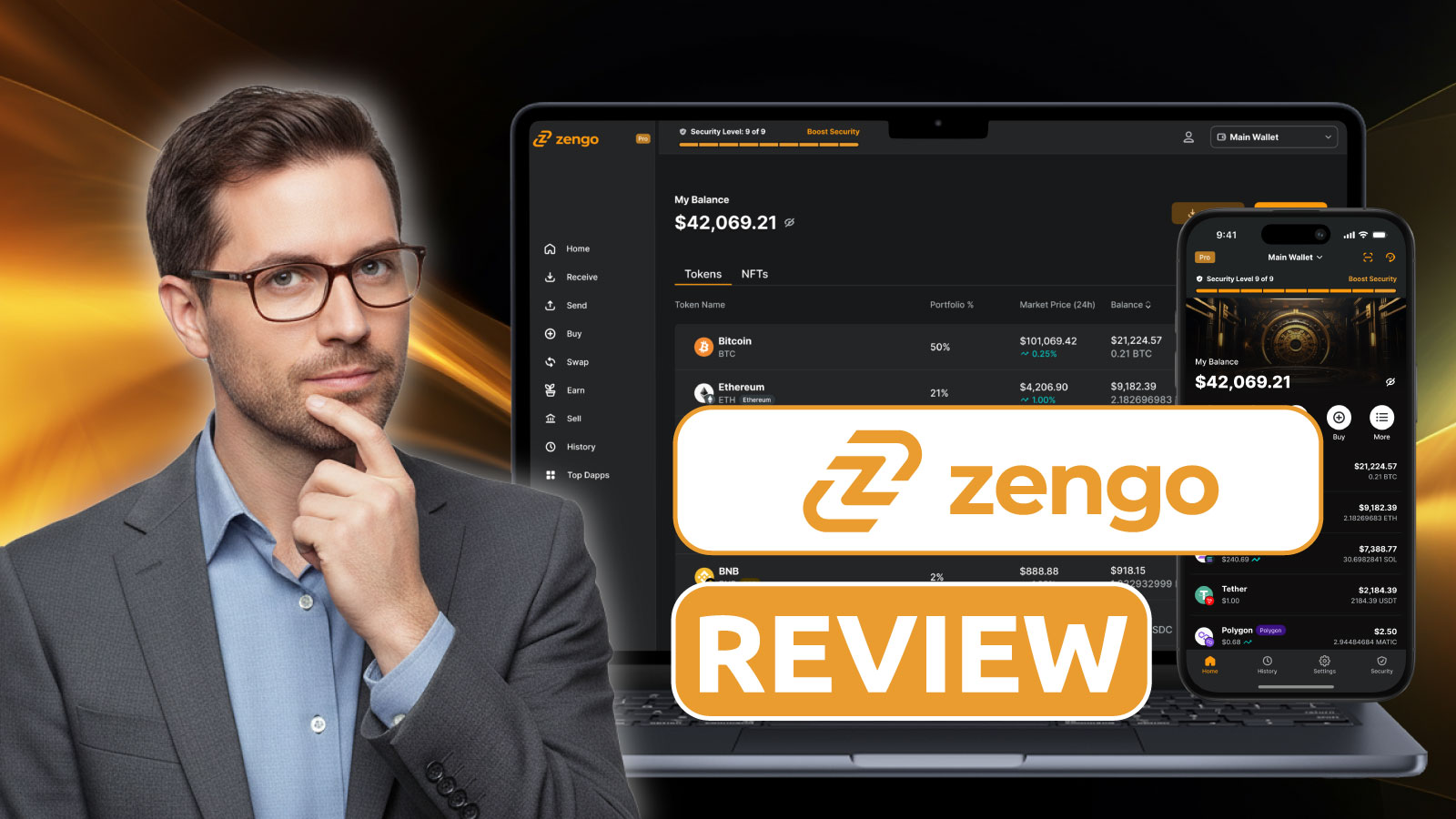
GNcrypto analysts tested Zengo wallet to see what it has to offer to regular users like you and I. Here’s what we found out.
What Zengo is
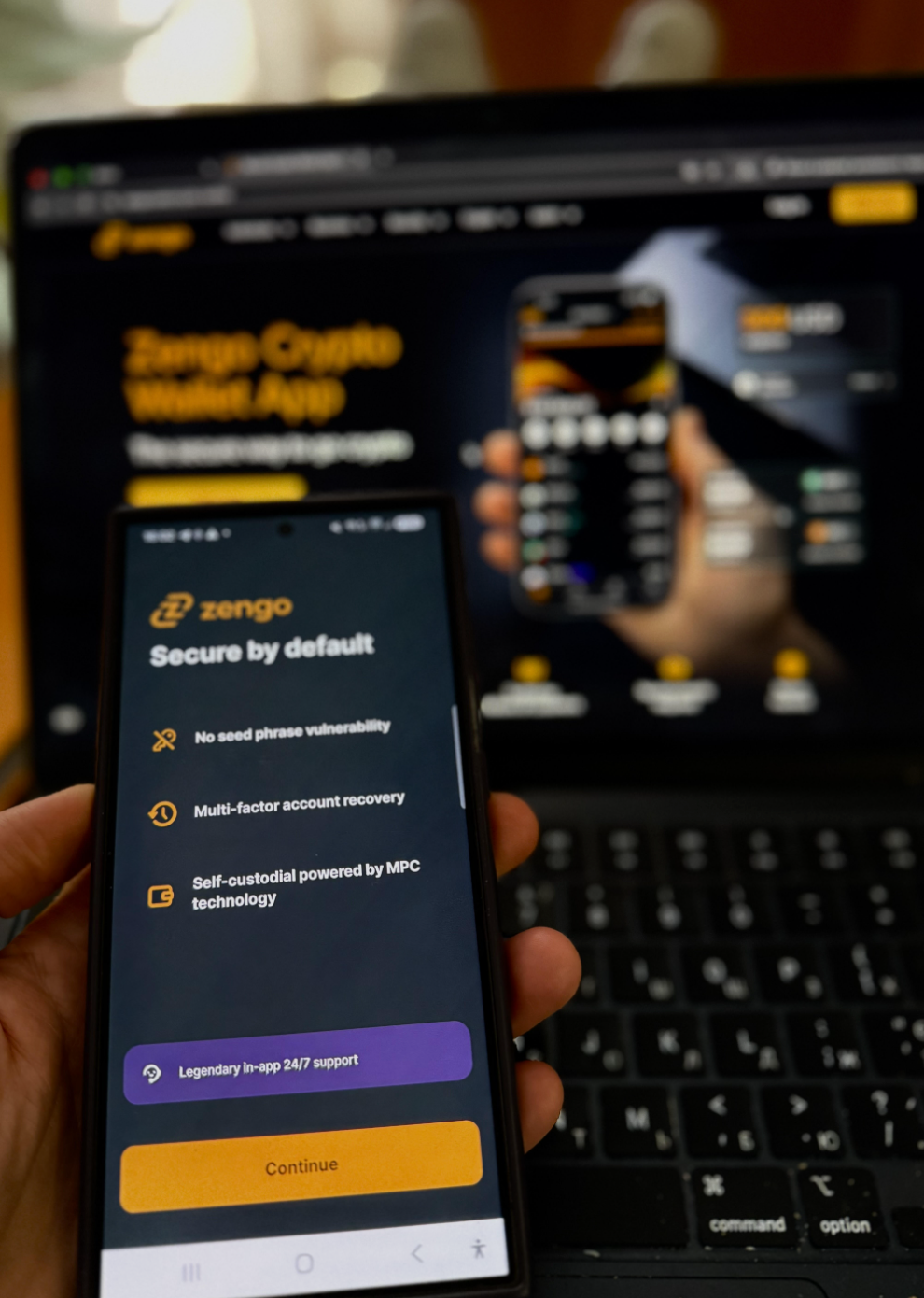
Zengo is a keyless, self-custody mobile crypto wallet that eliminates seed phrases using multi-party computation (MPC). This Zengo crypto wallet review examines how that model works in practice: most people lose crypto by losing private keys or seed phrases, not from blockchain failures. Zengo redesigns self-custody around this reality.
Instead of generating a single private key or a 12–24 word recovery phrase, Zengo uses multi-party computation (MPC). Control over your wallet is split cryptographically between your device and Zengo’s infrastructure. No one, not even Zengo, ever holds the full key. There is no seed phrase to misplace, photograph, or hand to a scammer.
This makes Zengo unusual. It is not custodial in the way exchanges or fintech apps are. Users retain ownership of their assets. But it is also not a traditional “hardcore” crypto wallet. The design deliberately trades ideological purity for practical safety.
Zengo is mobile-only, built for iOS and Android, and aimed squarely at everyday users.
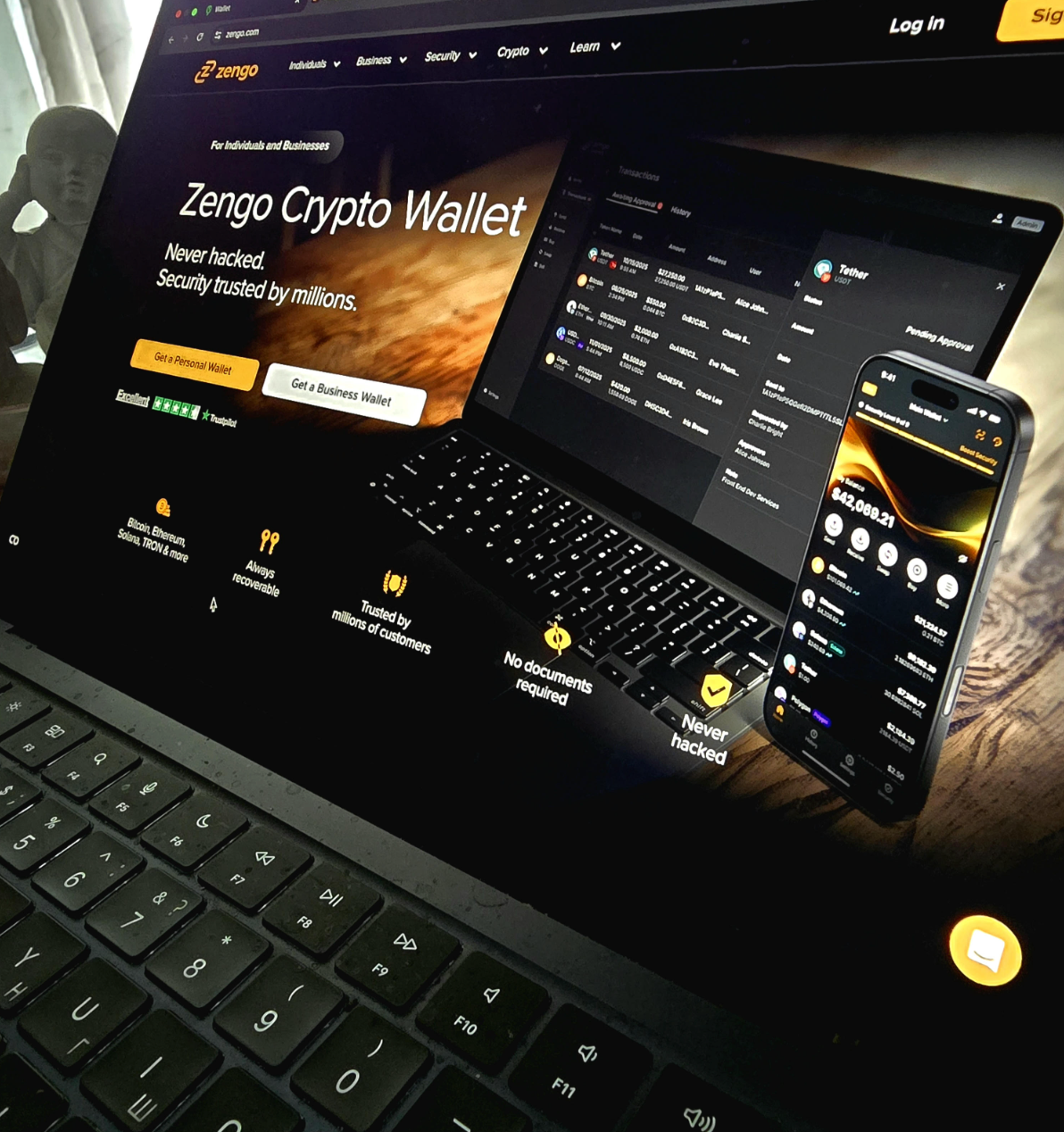
Supported assets & features
Zengo’s asset support reflects its philosophy: broad enough to be useful, narrow enough to stay manageable.
The wallet supports major cryptocurrencies such as Bitcoin and Ethereum, along with stablecoins and a growing range of ERC-20 tokens. It does not attempt to list every speculative altcoin, and that appears intentional. Zengo wallet reviews often highlight this selective approach: the wallet focuses on assets that users are likely to hold long-term or transact with regularly.
NFTs are also supported. Users can view and manage NFTs directly inside the app, alongside their token balances. This is not an advanced trading interface, but it works well for ownership and basic management.
On the functionality side, Zengo includes in-app swaps and fiat on-ramps. Users can buy crypto with traditional payment methods and swap between supported assets without leaving the wallet. For many users, this eliminates the need to create and manage an exchange account just to get started.
Zengo also supports WalletConnect, allowing users to interact with DeFi protocols, NFT marketplaces, and other Web3 applications. While it doesn’t expose every advanced setting power users might want, it covers the majority of mainstream dApp interactions reliably.
Ease of use for beginners
Zengo reviews consistently highlight ease of use as the wallet’s defining feature, and our testing confirms why. Zengo separates itself from traditional self-custody wallets in three key areas:
Onboarding easily
Setting up a Zengo wallet does not feel like entering a high-stakes technical ceremony. There is no moment where the app tells you, “If you lose this phrase, everything is gone forever.” Instead, onboarding resembles setting up a modern consumer app: email verification, biometric security, and optional recovery protections.
For beginners, this matters. The psychological barrier of seed phrases has kept many users either fully custodial or entirely out of crypto. Zengo lowers that barrier without reverting to exchange custody.
Recovery that reflects real life
If a phone is lost or replaced, recovery does not depend on a seed phrase. In our test, recovering on iPad took 2 minutes 15 seconds: email verification code + Face ID. All balances appeared within 30 seconds. Recovery relies on Zengo infrastructure and email access – no offline option. It feels closer to restoring access to a financial app than resurrecting a cryptographic identity.
While this introduces reliance on Zengo’s system, it also dramatically reduces permanent loss caused by human error.
Everyday usability
Sending and receiving crypto in Zengo is straightforward. Addresses are clearly labeled, fees are shown before confirmation, and the interface avoids unnecessary technical jargon. For users who are not interested in tweaking gas settings or transaction parameters, this simplicity is a feature, not a limitation.
Advanced users may find the experience constrained. But for people who want crypto ownership without constant anxiety the design is deliberate and effective.
Testing process
We tested Zengo with wallet creation, test transactions, swaps, recovery on secondary devices, WalletConnect integration, and NFT viewing to evaluate its keyless MPC model in real-world use.
Wallet setup:
- Download and install: 1 minute (iOS, iPhone 13)
- Onboarding: 3 minutes (email verification, Face ID setup, optional 3D face scan for recovery)
- No seed phrase generated (keyless MPC model)
- Cloud backup: automatic via email + biometric
Test transaction (sending ETH):
- Sent $15 worth of ETH (0.0042 ETH) to external wallet
- Network: Ethereum mainnet – Fee: $1.20 (medium priority, auto-selected)
- Confirmation: 18 seconds (2 blocks)
- UX: Network shown clearly, fee in USD displayed before confirmation
Swap test:
- Swapped $50 USDC → ETH (Ethereum mainnet)
- Provider: 1inch integration (shown in-app)
- Fee: 0.8% ($0.40) + $0.35 gas
- Total cost: $0.75 (1.5% of $50)
- Execution: 22 seconds from approval to coins received
- Rate transparency: Clear breakdown of swap rate vs market rate shown
Fiat on-ramp test:
- Bought $50 ETH via credit card (Moonpay integration)
- Fee: 3.5% ($1.75) + credit card processing
- Total cost: $51.75 for $50 ETH (3.5% markup)
- KYC required: Selfie + ID verification (5 minutes)
- ETH arrived in wallet: 8 minutes after payment
Recovery test (keyless MPC recovery):
- Deleted app, installed on secondary device (iPad)
- Recovery method: Email verification code + Face ID (no seed phrase)
- Recovery time: 2 minutes 15 seconds
- All balances appeared: 30 seconds after login
- Critical observation: recovery depends on Zengo infrastructure + email access. No offline seed phrase option.
WalletConnect test:
- Connected to Uniswap via WalletConnect
- Connection time: 10 seconds (QR scan)
- Transaction signing: Smooth, gas fee shown clearly in USD
- Disconnection: Manual disconnect worked instantly
NFT viewing test:
- Viewed existing NFT collection (3 NFTs on Ethereum)
- NFTs appeared in dedicated tab within 1 minute
- Metadata loaded correctly (image, name, collection)
- No advanced NFT management (cannot list for sale in-app)
3D face scan (optional recovery backup):
- Completed optional 3D face scan for enhanced recovery
- Scan time: 45 seconds (requires rotating head slowly)
- Purpose: Additional biometric recovery layer if email access lost
- Privacy concern: Face data stored on Zengo servers (encrypted)
Customer support test:
- Submitted ticket asking about MPC security model
- Response time: 6 hours 40 minutes
- Answer quality: Detailed explanation with links to technical docs
Pros and cons of using Zengo
After hands-on testing of onboarding, recovery flows, everyday transfers, swaps, and basic Web3 connections, here’s where Zengo stands out – and where its design choices introduce trade-offs.
Strengths:
- No seed phrase to lose, steal, or mismanage: Zengo’s biggest practical advantage shows up on day one. When creating a wallet, there is no moment where the app tells you to write down 12 or 24 words and warns that losing them means losing everything. For example, a new user setting up Zengo on a phone can complete onboarding in minutes without needing to store sensitive information offline. This removes one of the most common failure points in self-custody.
- Recovery that actually works in real life: if a phone is lost or replaced, Zengo recovery feels more like restoring a modern banking app than reconstructing a cryptographic secret. During testing, restoring access required identity and biometric verification rather than a piece of paper created months earlier. For users who have ever worried about losing a seed phrase in a move, device failure, or theft, this is a major practical improvement.
- Clear, beginner-friendly daily usage: sending and receiving crypto in Zengo is hard to mess up. Addresses are clearly labeled, fees are shown before confirmation, and the app avoids technical jargon. For example, when we sent $15 ETH, Zengo showed: network (Ethereum), estimated fee ($1.20 in USD), final amount received, and confirmation time estimate (2 blocks, ~18 sec) before approval – reducing accidental mistakes.
- True self-custody without exchange risk: unlike custodial wallets or exchange accounts, Zengo does not pool user funds or control balances internally. If an exchange halts withdrawals, that risk doesn’t apply here. Users retain ownership of assets, and Zengo cannot move funds unilaterally. This matters for users who want to move off exchanges but aren’t ready for raw key management.
- Built-in swaps and buying crypto: Zengo allows users to buy crypto and swap supported assets directly in the app. In our test, we bought $50 ETH via credit card (3.5% Moonpay fee, 8-minute wait) and immediately swapped $25 to USDC (1.5% total cost) without leaving the app. For basic portfolio management, this reduces friction and platform hopping.
Weaknesses:
- No private key or seed phrase export: Zengo’s security model also limits independence. Users cannot export a private key and import the wallet into another app. For example, if a user decides later that they want full key control or hardware wallet integration, they cannot simply migrate the same wallet. Instead, they must move funds manually to a new wallet.
- Dependence on Zengo’s infrastructure: while Zengo cannot move funds alone, part of the cryptographic process depends on Zengo’s servers. In our recovery test, we required active Zengo infrastructure + email access. If Zengo’s servers were permanently down, recovery would be impossible without seed phrase backup (which Zengo doesn’t provide). This is not custodial risk, but it is operational dependence, which may concern users who want absolute autonomy.
- Limited appeal for power users: advanced users who want to manually adjust gas settings, manage multiple accounts, or interact with niche DeFi protocols may find Zengo restrictive. For example, a DeFi trader running complex strategies across multiple chains will likely need a more configurable wallet.
- Asset and network coverage is selective: Zengo supports major assets and common ERC-20 tokens, but it does not cover every blockchain or experimental ecosystem. Users chasing newly launched tokens or obscure networks may need an additional wallet.
- Web3 interaction is functional, not deep: Zengo supports WalletConnect, which works well for mainstream dApps. However, some advanced signing flows or niche applications may not be supported. For most users this is fine, but for heavy DeFi or NFT traders it can feel limiting.
Trustworthiness check
Trust is a central question for any crypto wallet, but it takes on a different meaning when a wallet claims to be self-custody without private keys. Zengo sits in that gray zone, and understanding where trust actually lives is essential before using it.
Company & custody model
Zengo does not operate as a custodial wallet in the traditional sense. Users do not deposit assets into an exchange or broker-controlled account, and Zengo cannot move funds on its own. At the same time, users are not given a private key or seed phrase. Instead, Zengo relies on multi-party computation (MPC), where control over the wallet is split cryptographically between the user’s device and Zengo’s infrastructure.
In practice, this means no single party ever holds a complete key. An attacker would need to compromise both the user and Zengo at the same time to access funds. This places Zengo in a middle category: more independent than custodial wallets, but less autonomous than wallets where users hold an exportable private key.
Security & fund protection
Zengo’s security model is designed to eliminate the most common cause of crypto loss: human error. There is no seed phrase to lose, copy, or accidentally reveal, and no single key that malware can quietly extract. Authentication relies heavily on device security and biometrics, which aligns well with how people already protect sensitive apps on their phones.
We did not find public reports of large-scale user fund losses directly linked to Zengo’s wallet infrastructure. However, users are relying on Zengo’s systems to remain secure and operational, and on the correct implementation of MPC rather than on personal key management alone.
Recovery & control trade-offs
Recovery is one of Zengo’s strongest selling points, and also one of its clearest compromises. If a phone is lost or replaced, access can be restored through Zengo’s recovery process rather than a seed phrase written down months earlier. For most users, this dramatically lowers the chance of permanent loss.
The trade-off is that recovery is inseparable from Zengo’s infrastructure. Users cannot independently restore their wallet in a completely separate environment using a private key. Control is real, but not absolute. Zengo’s design favors survivability and user protection over maximum independence.
Regulatory context
Zengo is not a regulated financial custodian, and assets held in the wallet are not protected by bank-style insurance or government guarantees. Trust here is not regulatory – it is architectural. Users are trusting cryptography, system design, and the long-term operation of the company rather than legal safeguards or custodial oversight.
This is fundamentally different from both regulated fintech wallets and fully decentralized, protocol-only tools.
Transparency & reputation
Zengo has been operating for several years and is well known among users who want self-custody without seed-phrase risk. Its reputation is strongest among beginners moving off exchanges and users who prioritize safety over power-user flexibility. Feedback tends to emphasize reduced anxiety, straightforward onboarding, and confidence in everyday use. Criticism usually centers on the lack of private key export and the dependence on Zengo’s infrastructure rather than on security incidents.
Overall trust assessment
Zengo is not trustless, and it does not claim to be. Instead, it deliberately shifts trust away from human memory and custodians toward cryptographic design and operational reliability.
If your definition of trust is total independence and raw key ownership, Zengo may feel restrictive. If your definition of trust is minimizing irreversible mistakes while preserving real ownership, Zengo performs exceptionally well.
Key takeaway: Zengo is best suited for users who want genuine self-custody without the fragility and anxiety that traditional private keys impose.
GNcrypto’s overall Zengo Wallet rating
After testing Zengo with wallet creation (3-minute keyless setup with email + Face ID, no seed phrase), test transactions ($15 ETH sent with $1.20 fee in 18 seconds), swaps ($50 USDC → ETH with 1.5% total cost via 1inch), fiat on-ramp ($50 ETH bought via credit card with 3.5% Moonpay fee), recovery on secondary device (2 minutes 15 seconds via email verification + Face ID, no offline option), and WalletConnect integration (Uniswap connected in 10 seconds), the wallet delivered on beginner-friendly self-custody (no seed phrase anxiety, biometric-based recovery) and clean mobile UX (clear fee displays, automatic network selection).
We rated it 4.2/5 overall, with 5.0/5 for recovery systems (email + biometric backup eliminates seed phrase loss risk), 4.5/5 for UX (mobile-native design, fast onboarding), but 3.5/5 for asset support (major chains only, no niche tokens) and dependency on Zengo infrastructure for recovery (no offline seed phrase export option).
Strong for beginners wanting self-custody without seed phrase management, weaker for power users needing full private key control or hardware wallet integration.
| Criteria | Weight Score (1-5) | Notes |
|---|---|---|
| Security & Key Management (25%) | 4.5 | Zengo is built around a keyless self-custody model using multi-party computation (MPC). There is no single private key and no seed phrase for users to store, lose, or accidentally expose. Control over funds is split between the user’s device and Zengo’s infrastructure, meaning neither side can move assets independently. From a real-world safety perspective, this design meaningfully reduces the most common causes of crypto loss: forgotten backups, phishing, and malware targeting private keys. For many users, especially beginners, this is a major security improvement over traditional self-custody. The trade-off is philosophical rather than practical. Users do not have an exportable private key and must rely on Zengo’s systems as part of the security model. For users who equate security with absolute independence, this is a limitation; for users who equate security with not losing funds, it’s a strong advantage. |
| Supported Assets & Networks (20%) | 3.5 | Zengo supports a solid range of major cryptocurrencies, stablecoins, and ERC-20 tokens, along with NFT storage on supported networks. Coverage is sufficient for most mainstream use cases – long-term holding, basic transfers, swaps, and NFT ownership. However, Zengo does not aim to support every chain, token standard, or experimental ecosystem. Asset breadth is narrower than power-user wallets, and users interested in niche altcoins or emerging networks may find the selection limiting. This reflects Zengo’s positioning: usability and safety over exhaustive market coverage. |
| Transaction Costs & Speed (15%) | 4.0 | Transaction speed and cost are largely dictated by the underlying blockchain networks. Zengo does not add hidden wallet-level fees, and transactions are submitted reliably. What stands out is clarity. Fees are shown clearly before confirmation, network selection is handled automatically, and users are not required to manage technical parameters like gas settings unless they choose to. This reduces friction and costly mistakes, especially for less experienced users. Zengo won’t make congested networks cheaper, but it also won’t slow users down or complicate execution. |
| User Experience & Interface (15%) | 4.5 | This is one of Zengo’s strongest categories. The interface is clean, mobile-native, and intentionally non-intimidating. Sending, receiving, swapping assets, and viewing NFTs all happen in a single, coherent flow. Onboarding is fast and does not involve seed phrases, which dramatically lowers the psychological barrier to self-custody. For beginners, this is one of the most approachable self-custody experiences available. Advanced users may find the lack of granular controls limiting, but for Zengo’s target audience, the balance clearly favors clarity and confidence over customization. |
| DeFi & dApp Integration (10%) | 3.5 | Zengo supports Web3 interaction through WalletConnect, allowing users to connect to many DeFi protocols, NFT marketplaces, and dApps. For common use cases, this works reliably. That said, Zengo is not optimized for heavy DeFi power users. Advanced signing workflows, niche protocols, and deep configurability are outside its core focus. Integration is good, but not exhaustive. |
| Recovery & Backup Systems (10%) | 5.0 | Zengo excels in recovery systems. By eliminating seed phrases, Zengo drastically reduces the risk of permanent loss due to user error. Recovery relies on biometric authentication and encrypted recovery data rather than a single fragile secret. While recovery depends on Zengo’s infrastructure, the practical benefit is clear: users are far less likely to lose access forever. Among consumer-facing self-custody wallets, this is one of the most robust recovery designs available. |
| Customer Support & Educational Resources (5%) | 4.0 | Zengo provides clear documentation and responsive support, particularly around onboarding, recovery, and basic wallet usage. Educational content focuses on helping users feel safe and confident rather than diving deep into blockchain theory. Support is stronger than most crypto-native wallets, though less comprehensive than large fintech platforms. For its audience, the level of support is appropriate and effective. |
| Final score | 4.3 | Zengo scores highly because it successfully solves one of crypto’s hardest problems: how to offer real self-custody without making users responsible for a single point of catastrophic failure. |
Who Zengo fits based on testing
Based on hands-on use of onboarding, recovery flows, everyday transactions, and basic Web3 interactions, Zengo is clearly designed for users who want true ownership of crypto without the operational stress that usually comes with self-custody.
Best for:
- Beginners who want to move away from exchanges but are intimidated by seed phrases and private keys;
- everyday crypto users who primarily hold major assets and want a wallet that feels as safe and familiar as a modern mobile app;
- users who value strong recovery options and loss prevention over maximum technical control;
- people who want self-custody while minimizing the risk of irreversible mistakes caused by human error.
Skip if:
- You insist on full private key ownership and the ability to export keys freely;
- you rely on hardware wallets or cold storage for maximum isolation;
- you need advanced transaction controls or deep customization;
- you are uncomfortable with relying on Zengo’s infrastructure as part of the security model.
Key takeaway: Zengo fits users who want real self-custody without seed-phrase anxiety. It prioritizes safety, recoverability, and usability over ideological purity, making it a strong choice for those who want ownership without constantly worrying about doing something irreversibly wrong.
How we test hot crypto wallets
At GNcrypto, we put transparency first when evaluating hot cryptocurrency wallets. Our reviews are based on hands-on testing and thorough analysis across all key dimensions that matter for self-custody and daily crypto use.
What We Test
We rate hot wallets on seven criteria that matter when you’re actually storing, sending, and using crypto. Each wallet gets a score from 1.0 to 5.0 based on weighted performance across security, asset support, transaction costs, and user experience.
Our focus: Can you store assets safely, transact efficiently, and access DeFi without exposing your keys to unnecessary risk?
We don’t audit wallet code or guarantee security against all attack vectors. These scores reflect usability, feature completeness, and observable security practices – not absolute protection from exploits.
Read more: How we test hot crypto wallets
The material on GNcrypto is intended solely for informational use and must not be regarded as financial advice. We make every effort to keep the content accurate and current, but we cannot warrant its precision, completeness, or reliability. GNcrypto does not take responsibility for any mistakes, omissions, or financial losses resulting from reliance on this information. Any actions you take based on this content are done at your own risk. Always conduct independent research and seek guidance from a qualified specialist. For further details, please review our Terms, Privacy Policy and Disclaimers.
Articles by this author