White.Market CEO: "Nothing broke in CS2 – Valve just stepped in”
After Valve's shocking update allowing knife crafting in CS2, the skin market experienced the biggest crash in the game's history. We asked White.Market CEO how broken everything really is, what Valve's motivation was, and what awaits players in the future.
The Counter-Strike 2 ecosystem experienced arguably the biggest economic shock in the entire series history. Valve released an update allowing knife and glove crafting through the new Trade Up Contract system – and the skin market immediately crashed.
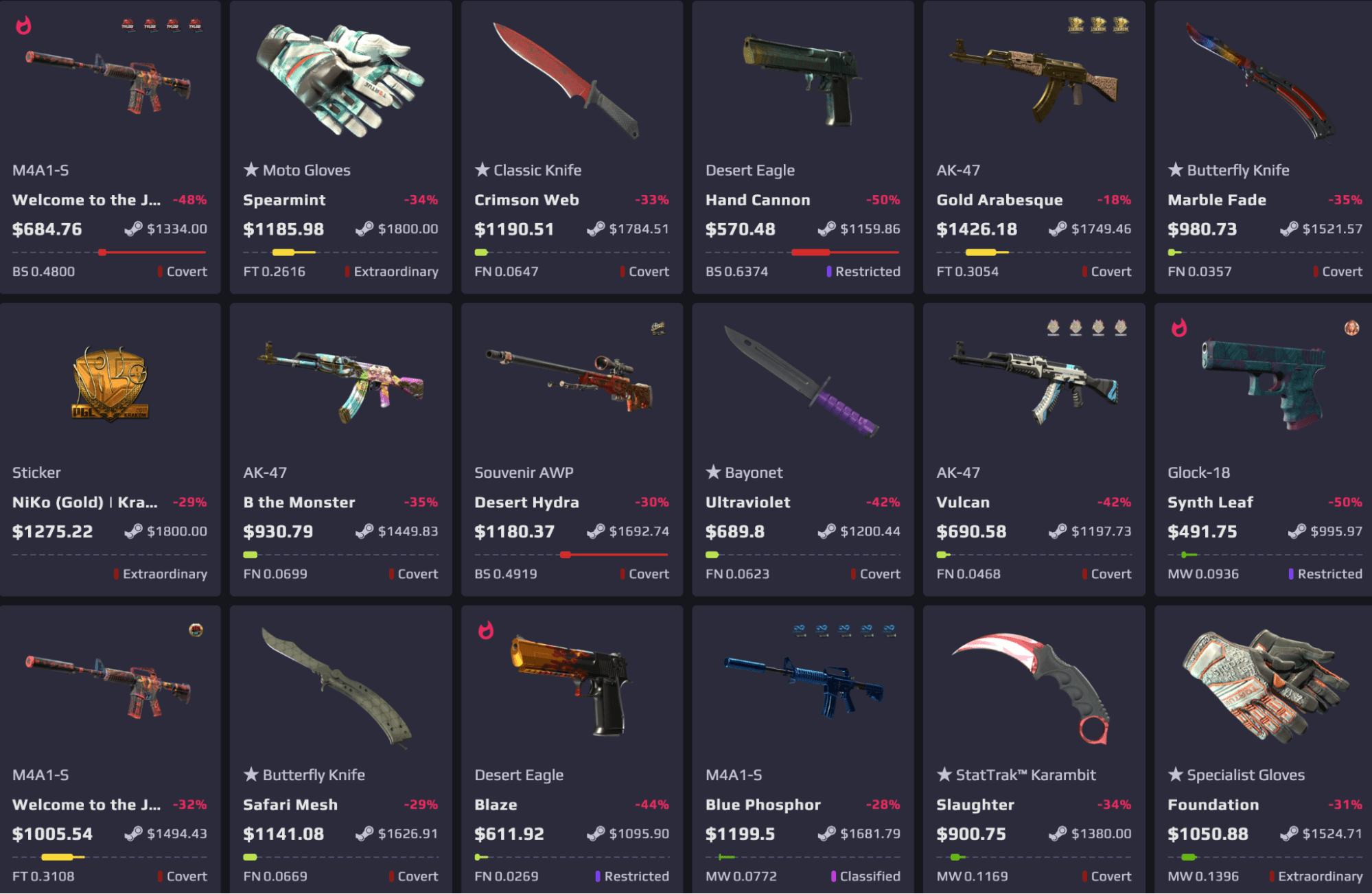
Knives lost 40% of their value within hours, collectors complained about losing thousands of dollars, and the CS community split between those celebrating accessibility of favorite skins and those seeing this as the end of the game's investment appeal.
We reached out to White.Market’s CEO – who runs one of the largest P2P CS2 skin platforms – to gauge how hard the market was hit, why Valve made the move, and what it means for Counter-Strike’s economy.
"Nothing is broken – this is regulation from Valve"
Asked about the CS economy state after the upheaval, Oleksandr (White.Market CEO) gives a surprisingly calm assessment:
Nothing is broken. This is perfectly understandable regulation of their own market by Valve. There have been several major changes before, but they mostly concerned trade rules and mechanics. Globally, this didn't affect skin prices – the market quickly adapted. Now, however, Valve significantly simplified specifically the process of obtaining valuable skins, which caused this impact.
In other words: panic is a normal reaction to sudden rule changes, but the market itself remains functional. This isn't Valve's first intervention in their own economy, just this time the blow landed directly on prices rather than exchange mechanics.
Doubling knife quantity – but not everyone will have Emerald
Regarding the scale of changes, White.Market CEO explains:
The total number of knives and gloves on the market will likely double. But we won't see every other person with Emerald Butterfly knives and Hedge Maze gloves – relative to others, they'll still remain rare.
This is a key point for understanding the situation. Yes, knife accessibility will increase, and basic models will become cheaper. But the rarest combinations (top skins with the best patterns) will retain their value due to natural scarcity. The market won't disappear – it will simply become more differentiated.
Over time, as has happened before, the market will gradually stabilize. These changes may have a positive impact on the entire community – both for those who held rare skins with long-term perspective, and for those who have long dreamed of getting a nice skin at a reasonable price.
White.Market withstood the rush — competitors didn't
Immediately after the Valve update, many trading platforms experienced technical failures due to the massive user influx. White.Market was among those that held strong:
We're a P2P market, so there are no significant changes for us, since all offers are formed organically by users themselves. We're one of the few who withstood the huge influx of people in the first hours after the update. Everything works in normal mode, support helps 24/7.
The P2P model proved more resilient to shocks than centralized marketplaces with fixed prices. When the market drops 40% in an hour, the flexibility of user offers provides an advantage.
The White.Market team is also confident the situation won't harm either the platform or users.
"How will this affect us? Exclusively positively – we demonstrated to our users that we're capable of ensuring stable operation even during a 'storm' period," Oleksandr summarizes.
Valve's motivation: deflate the market bubble
Why did Valve take such a radical step? White.Market CEO sees this as deliberate intervention:
In my opinion, this was done to somewhat 'deflate' the market bubble, which recently only grew on speculation. Knives and gloves became almost inaccessible for most players – a normal knife cost from $500.
This seems like a fair observation. CS2 had become a game where a significant portion of content (knives, gloves) was physically inaccessible to 95% of the audience due to prohibitive prices. Valve earns from case and key sales – if players abandon the system due to hopelessness of getting something valuable, that's a problem for the company itself.
The update restores hope: now there's a real path to desired skins through Trade Up Contract, even if it requires time and investment. Psychologically, this changes the system's perception from "impossible" to "difficult, but achievable."
What's next: auctions and new mechanics
Attentive players will confirm that the CS skin market began transforming long before the latest update. White.Market CEO notes:
Cardinal changes were noticeable even before this update. First came Armory Pass, then Terminal (new case opening format). Data miners find mentions of possible auctions and other new features. How all this will be implemented will determine the market's future dynamics.
Where is this leading? Perhaps to a world where Valve has greater control over pricing and rarity, reducing the influence of speculators and third-party marketplaces. Or to a more transparent and accessible economy where players receive real value for their time and money.
Conclusions: market adapts, panic is temporary
The main message from White.Market CEO: this isn't a catastrophe, it's a correction. Valve isn't destroying CS2's economy – they're correcting an imbalance that arose through years of speculation and artificial scarcity.
For investors holding portfolios with dozens of knives, this is a painful blow. For regular players who dreamed of Karambit Fade or Butterfly Doppler, this is a chance to finally get what they want at a reasonable price.
The market will stabilize. The rarest skins will retain value. P2P platforms like White.Market will continue operating. And Counter-Strike 2 will gain a healthier economy where content is accessible not only to the wealthiest 1% of players.
Valve did what they should have done long ago: restored hope to millions of players that a valuable skin isn't a cosmic dream, but an achievable goal.


Recommended