U.S. Senate may move to end government shutdown

The U.S. Senate has reached a preliminary agreement on a three-part budget to end the record 40-day shutdown. According to sources, the bill has enough support to clear the 60-vote threshold needed for passage.
The deal followed Republican leader John Thune’s 15th attempt to secure Democratic support. Under the compromise, Democrats agreed to reopen the government in exchange for a future vote on extending subsidies under the Affordable Care program.
A group of eight moderate Democrats finalized the deal with Republican leaders and the White House. The bill passed 60–40 and now moves to the House of Representatives before reaching President Donald Trump for signature.
News of the agreement triggered a market rebound. Bitcoin, which had fallen more than 17% during the shutdown – from $126,000 to $104,000 – climbed back to around $106,000. Investors attribute the recovery to easing macroeconomic uncertainty and expectations of improved liquidity.
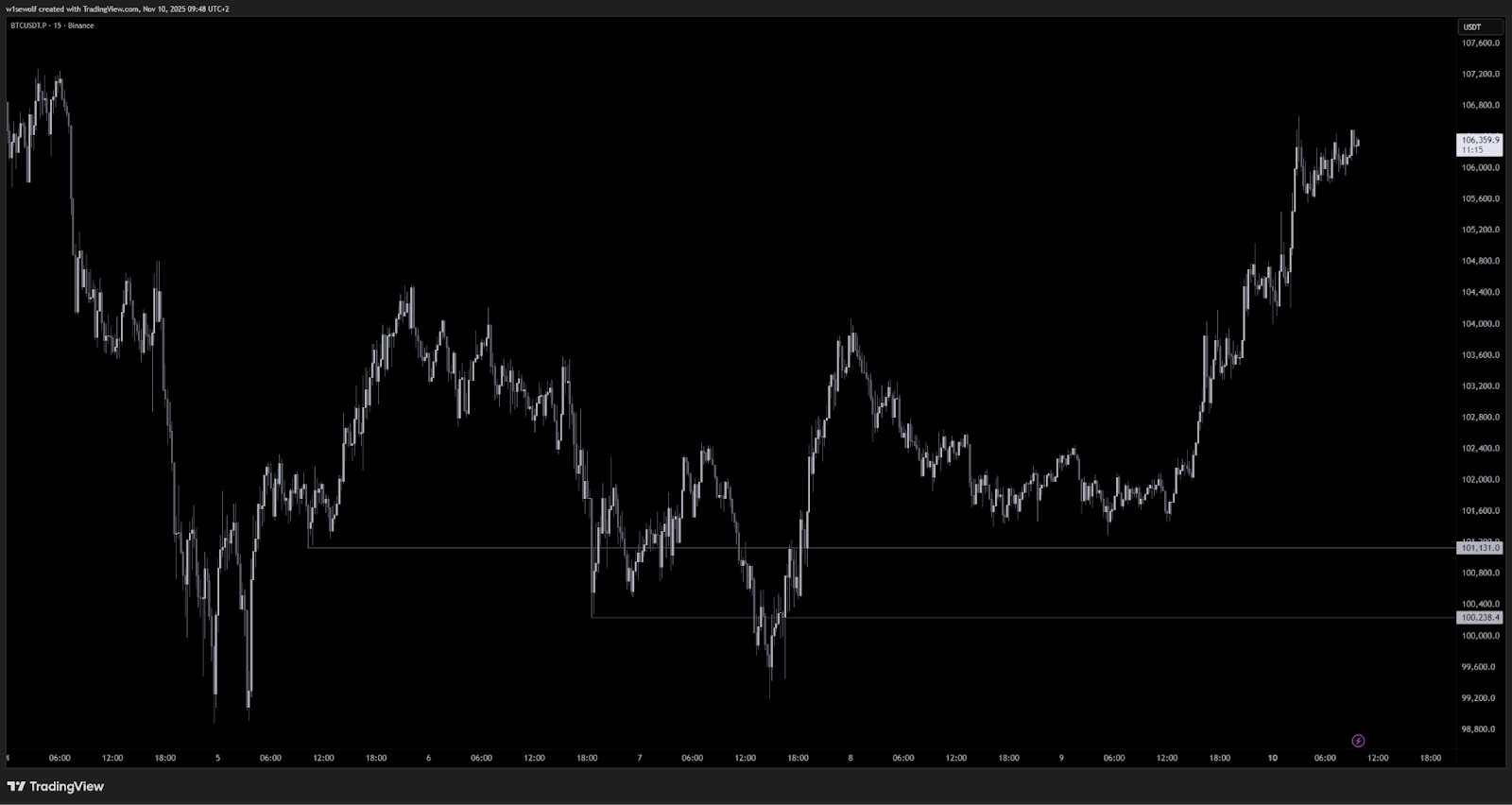
Historically, the end of a government shutdown has fueled crypto rallies. After a similar standoff in 2018–2019, Bitcoin surged 266% in five months – from $3,550 to $13,000. Many traders now view the situation as a potential cycle reversal.
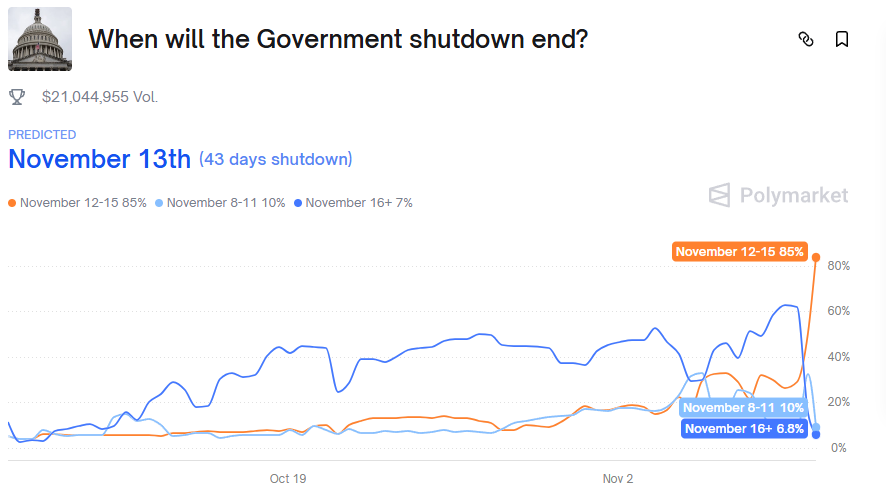
Prediction markets show growing confidence in a resolution. On Polymarket, the odds of the shutdown ending by Friday stand at 85%, while Kalshi forecasts a resolution by week’s end.
Another factor supporting sentiment is Trump’s latest announcement that 85% of Americans will receive $2,000 payments funded by tariffs on Chinese imports – a move seen as an effort to stimulate spending amid slowing economic growth.
The material on GNcrypto is intended solely for informational use and must not be regarded as financial advice. We make every effort to keep the content accurate and current, but we cannot warrant its precision, completeness, or reliability. GNcrypto does not take responsibility for any mistakes, omissions, or financial losses resulting from reliance on this information. Any actions you take based on this content are done at your own risk. Always conduct independent research and seek guidance from a qualified specialist. For further details, please review our Terms, Privacy Policy and Disclaimers.
Articles by this author