MetaMask vs Uniswap Wallet: what are the key differences?
If MetaMask is the “Swiss Army Knife” of crypto – a tool that does everything reasonably well but charges a premium for it – then Uniswap Wallet is the precision scalpel. We pitted the “Universal Gateway” against the “Vertical Specialist” to see if the new challenger can dethrone the king of fees.
For years, MetaMask has been the default choice. We use it to connect to everything, and in exchange, it often charges a 0.875% service fee when users swap tokens directly in the app. Uniswap Wallet, launched by one of the leading decentralized exchanges, challenges this model with a simple premise: go direct to the source and cut out the aggregator tax.
GNcrypto tested both wallets to see if that premise holds up. We compared the “Universal Gateway” (MetaMask) against the “Vertical Specialist” (Uniswap), scrutinizing mobile interfaces, swap fee structures, and the actual utility of Uniswap’s built-in MEV protection.
MetaMask vs Uniswap Wallet at a glance
| Category | MetaMask | Uniswap Wallet | Winner |
|---|---|---|---|
| Overall GNcrypto rating | 4.6 / 5 | 4.4 / 5 | MetaMask (overall) |
| Supported Chains | EVM + Bitcoin (Beta) | Ethereum + 12 EVM L2s | MetaMask |
| Security & Key Management | 4 / 5 | 4 / 5 | Draw (MetaMask anti-phishing; Uniswap anti-MEV) |
| Transaction Costs & Speed | 3 / 5 | 4.5 / 5 | Uniswap Wallet |
| User Experience & Interface | 3 / 5 | 5 / 5 | Uniswap Wallet |
| DeFi & dApp Integration | 5 / 5 | 3 / 5 | MetaMask |
| Recovery & Backup Systems | 5 / 5 | 4 / 5 | MetaMask |
| Customer Support & Documentation | 5 / 5 | 4 / 5 | MetaMask |
Security & permissions – granular control vs safety rails
Both wallets are non-custodial, meaning you – and only you – hold the keys. But they protect you from very different threats. MetaMask is built to stop you from signing a bad contract (scams); Uniswap Wallet is built to stop bots from eating your lunch (MEV). So let MetaMask wallet vs Uniswap clash.
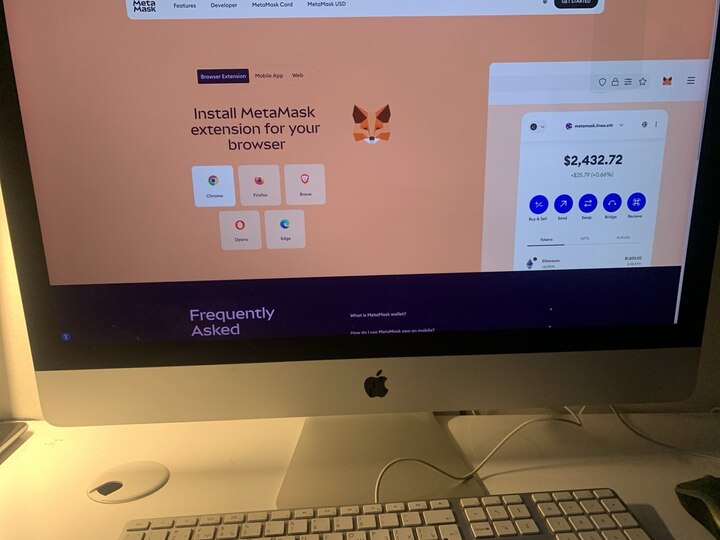
MetaMask’s primary security focus is interaction safety. Because it connects to thousands of random dApps, it has built the industry’s most robust permission system.
- Spending caps: When you approve a token for spending (e.g., letting Uniswap spend your USDC), MetaMask forces you to set a specific limit. It defaults to a “custom” cap rather than “unlimited,” preventing the “drainer” nightmares where a hacked protocol wipes your entire balance years later.
- Phishing protection: It integrates with Blockaid (and similar databases) to simulate transactions before you sign them. If a contract looks malicious, the wallet throws a bright red warning. It’s a “Guard Dog” that barks when you walk into a bad neighborhood.
Uniswap Wallet assumes you are trading legitimate tokens but are at risk from MEV bots (Maximal Extractable Value). These are predators that watch the mempool and “sandwich” your trade – buying before you to pump the price and selling after you to pocket the difference.
- Native MEV protection: Uniswap Wallet routes your swaps through private RPCs (like MEV-Blocker) by default. Your transaction is hidden from the public mempool until it is confirmed, starving the front-runners.
- Simulation: Like MetaMask, it simulates transactions to show you the net balance change (e.g., “You will lose 1 ETH and gain 3000 USDC”) before you sign, helping prevent basic “fat finger” errors.
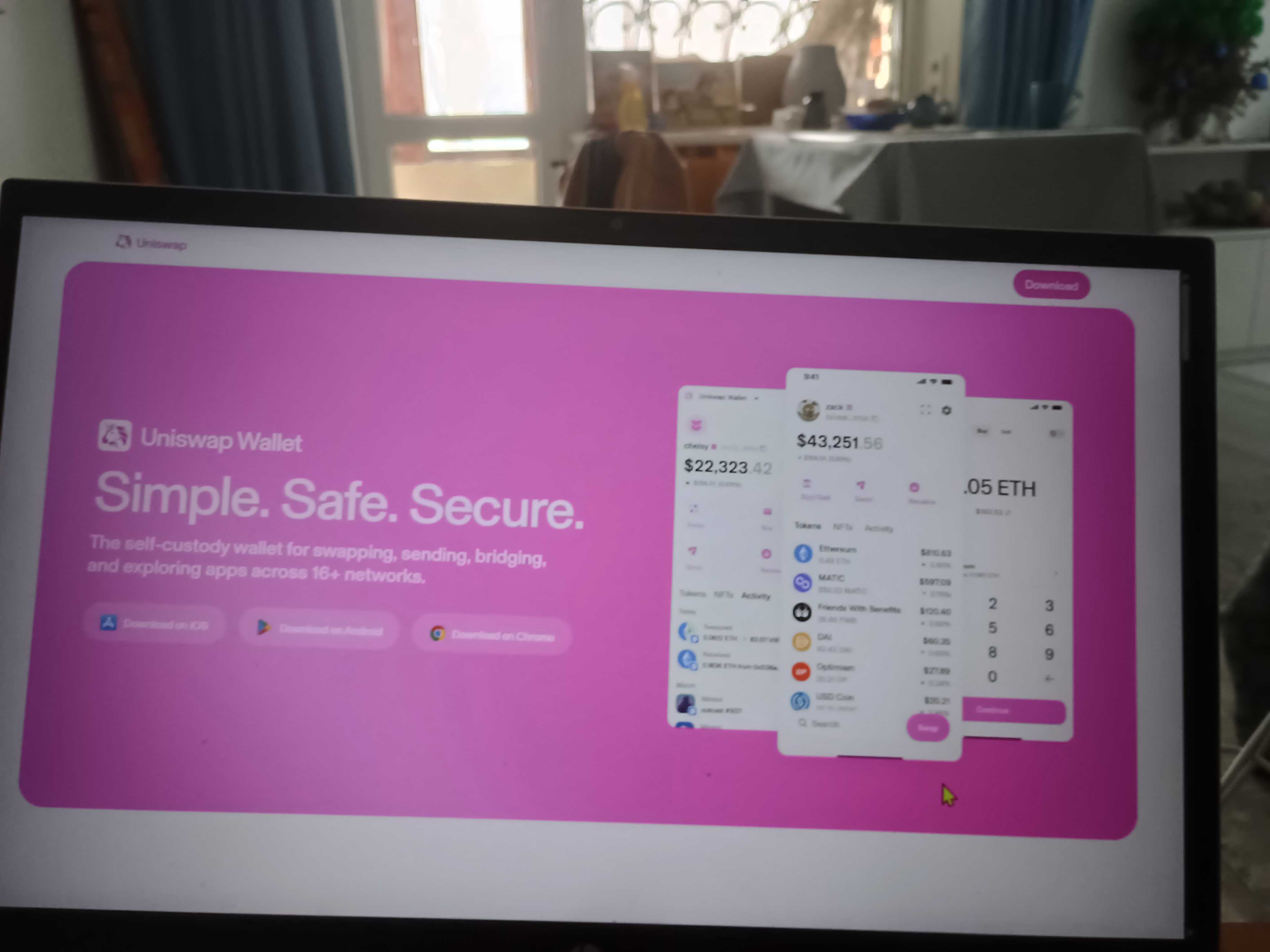
The verdict: If you are farming yield on sketchy new protocols, MetaMask’s spending caps are your lifejacket. If you are swapping huge volumes on the ETH mainnet, Uniswap Wallet’s MEV protection is your bulletproof vest.
Swap experience compared – built-in vs protocol swaps
Swapping tokens is the bread and butter of these apps, but their business models are diametrically opposed. One acts as a travel agent that books your flight for a fee; the other is the airline itself.
MetaMask uses an Aggregator Model. When you ask for a quote, it scans multiple decentralized exchanges (like Uniswap, Curve, and 1inch) to find the best market price.
- The cost: This convenience comes with a steep price tag. MetaMask adds a 0.875% service fee to every transaction. On a $10,000 trade, you are handing $87.50 directly to Consensys, not including gas.
- The logic: You pay for the “laziness” of not leaving the app. While efficient, the routing algorithm rarely saves you enough to offset the nearly 1% surcharge.
When analyzing the Uniswap Wallet vs MetaMask swap flow, the difference is strictly financial. MetaMask offers broader market coverage (scanning multiple DEXs) but taxes you heavily for it. Uniswap Wallet limits you to its own liquidity pools but removes the middleman tax, offering a direct pipe to the market that is almost always cheaper for standard assets.
Uniswap Wallet uses a Direct Protocol Model enhanced by UniswapX.
- The cost: You pay the standard protocol fees (typically 0.3% to liquidity providers) and potentially a small interface fee (approx. 0.25% on certain pairs), but you avoid MetaMask’s 0.875% surcharge.
- UniswapX advantage: The wallet leverages “intent-based” routing. Instead of you paying for a failed transaction, fillers bid to execute your trade. This can result in gas-free swaps and improved pricing, as professional fillers capture the arbitrage spread and pass some savings back to you.
- MEV Protection: By default, swaps are routed through private RPCs, shielding you from “sandwich attacks” (bots that front-run your trade to give you a worse price).
Our verdict: If you are swapping huge volumes, Uniswap Wallet saves you money on both fees and slippage. MetaMask’s swap button is a luxury feature for users who don’t care about the cost.
When to use each
If you are a DeFi degen or NFT collector
Choose: MetaMask
If your daily routine involves minting NFTs on OpenSea, lending USDC on Aave, or voting in a DAO on Snapshot, MetaMask is non-negotiable. It is the universal standard; virtually every dApp supports it natively. Trying to connect Uniswap Wallet to a niche lending protocol via WalletConnect often results in disconnects or bugs. Use MetaMask for connectivity, but avoid the internal swap button to save fees.
If you are an active trader or “alpha hunter”
Choose: Uniswap Wallet
If you are buying and selling tokens on Ethereum, Base, or Arbitrum to catch a market pump, Uniswap Wallet is the superior tool. The interface removes the clutter, letting you switch chains and swap instantly. More importantly, the MEV protection ensures that when you buy a volatile meme coin, a bot doesn’t sandwich your trade and give you a terrible price.
If you are an L2 explorer (Base, Optimism, Arbitrum)
Choose: Uniswap Wallet
If you frequently move between Layer-2 networks, Uniswap’s mobile experience puts MetaMask to shame. MetaMask often treats L2s as separate islands, forcing you to manually switch networks and bridge. Uniswap Wallet abstracts much of this complexity, making cross-chain asset management in MetaMask vs Uniswap Wallet review feel like a modern fintech app rather than a developer tool.
If you are a developer or testnet user
Choose: MetaMask
If you need to switch to “Sepolia” testnets, or configure a custom RPC for a brand-new blockchain that launched yesterday, MetaMask is your only option. Uniswap Wallet hides these advanced settings to keep the UI clean. MetaMask gives you full control over the plumbing, which is essential for builders and early adopters.
Methodology – why you should trust us
At GNcrypto, we put transparency first when evaluating hot cryptocurrency wallets. Our reviews are based on hands-on testing and thorough analysis across all key dimensions that matter for self-custody and daily crypto use.
We do not audit wallet code or guarantee security against all attack vectors. Instead, our scores reflect usability, feature completeness, and observable security practices. We do not accept payment for ratings or modify scores based on partnerships.
Categories & weights
We rate hot wallets on seven criteria. Security and Asset Support are weighted heaviest because a wallet that isn’t safe or can’t hold your coins is useless, regardless of how pretty the UI is.
- Security & Key Management – 25%
- Supported Assets & Networks – 20%
- Transaction Costs & Speed – 15%
- User Experience & Interface – 15%
- DeFi & dApp Integration – 10%
- Recovery & Backup Systems – 10%
- Customer Support & Documentation – 5%
The material on GNcrypto is intended solely for informational use and must not be regarded as financial advice. We make every effort to keep the content accurate and current, but we cannot warrant its precision, completeness, or reliability. GNcrypto does not take responsibility for any mistakes, omissions, or financial losses resulting from reliance on this information. Any actions you take based on this content are done at your own risk. Always conduct independent research and seek guidance from a qualified specialist. For further details, please review our Terms, Privacy Policy and Disclaimers.
Articles by this author