Trump-linked stablecoin USD1 faces spotlight as World Liberty seeks bank charter
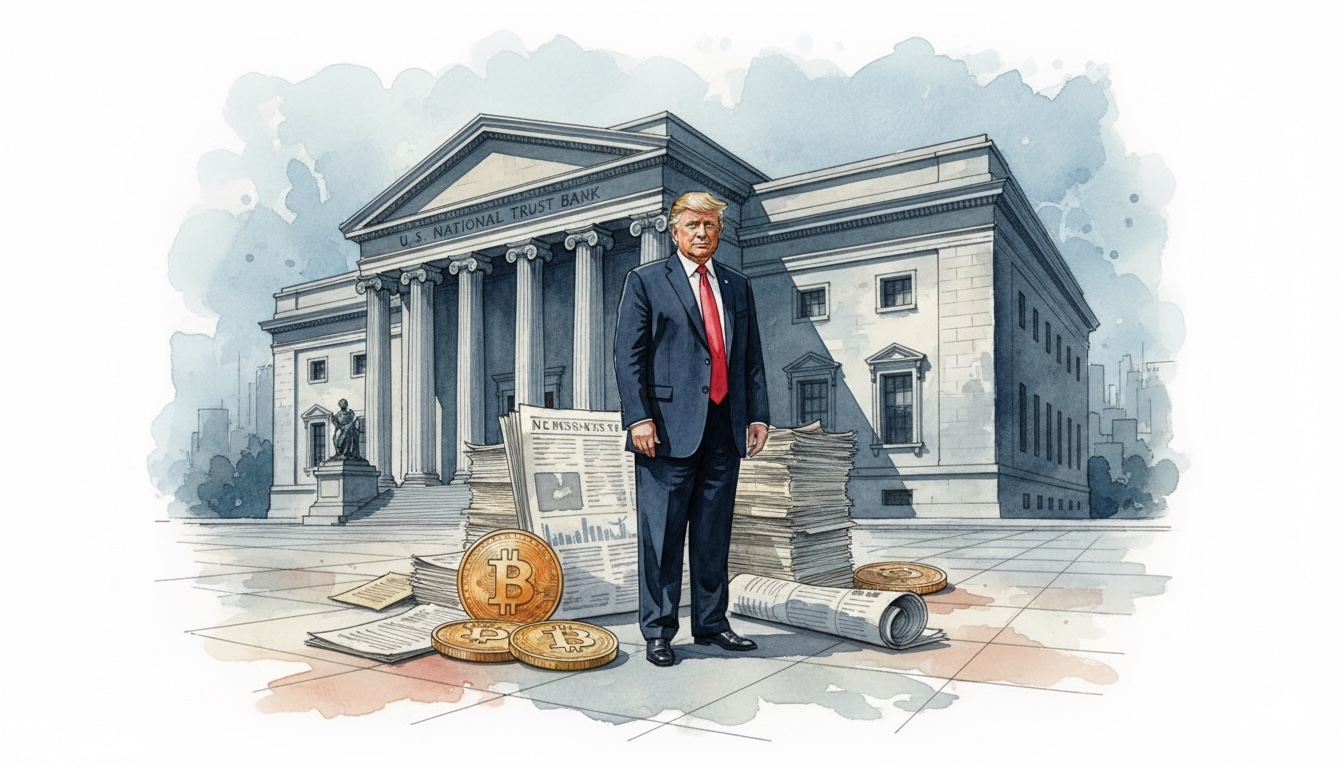
World Liberty Financial, the crypto venture tied to the Trump family, has applied to the U.S. Office of the Comptroller of the Currency for a national trust bank charter that would put issuance and custody of its dollar-backed stablecoin, USD1, under federal oversight – prompting fresh scrutiny of how a presidential family commercial crypto interests intersect with U.S. financial regulation.
The charter application – filed through an affiliate called World Liberty Trust Company – would allow the firm to manage minting, redemption and custody of digital assets at the national level and to operate without securing state-by-state money-transmitter approvals. The target product is USD1, which the company says has surpassed roughly $3.3–$3.4 billion in circulation within its first year.
Executives say the trust bank would not take deposits or make loans, but would provide institutional custody and stablecoin conversion, including “free” USD↔USD1 swaps at launch. The company argues the charter aligns it with the recently enacted federal stablecoin framework referred to in its materials, positioning USD1 for clearer supervisory expectations under an OCC regime. The regulator has not commented on the filing.
The governance structure sits at the center of the conflict-of-interest debate. World Liberty emphasizes that President Trump and family members hold non-voting interests and are not involved in day-to-day management; Zach Witkoff, a co-founder with the Trump sons, is set to lead the trust entity.
Nonetheless, outside legal scholars have flagged the tension created when a firm so closely associated with a sitting president seeks privileges – such as potential access to Fedwire and ACH via a master account application – that are influenced by federal overseers. As Fortune noted, academic analysis last year warned of “massive potential for conflicts” as the family pushed deeper into stablecoins while the OCC’s gatekeeping role in crypto expanded.
A successful OCC trust charter would mirror a path taken by several digital-asset companies that have obtained conditional or preliminary approvals, placing a narrow set of activities – principally custody and token administration – under bank-like supervision. Anchorage Digital remains the only digital-asset firm with a full national trust bank charter; other applicants have advanced in stages. World Liberty is seeking to join that cohort to consolidate issuance, redemption and custody of USD1 within a single federally regulated entity.
The filing follows a rapid commercial expansion across the Trump family’s crypto ventures in 2025, including token sales and stablecoin activity that generated hundreds of millions of dollars in revenue and paper gains, according to prior investigative reporting. Those flows, some sourced abroad, intensified concerns about the line between public office and private gain – concerns that are now resurfacing as the family’s flagship crypto business moves to secure a banking charter.
The filing follows a rapid commercial expansion across the Trump family’s crypto ventures in 2025, including token sales and stablecoin activity that generated hundreds of millions of dollars in revenue and paper gains, according to prior investigative reporting. Those flows, some sourced abroad, intensified concerns about the line between public office and private gain – concerns that are now resurfacing as the family’s flagship crypto business moves to secure a banking charter.
Market structure is another fault line. USD1’s scale gives World Liberty a direct stake in federal rule-setting over stablecoin reserves, redemptions, disclosures and wallet controls. The company has previously pitched seamless conversion and institutional onboarding, and has highlighted plans to custody and convert other stablecoins into USD1 – a strategy that would benefit from the credibility and operational benefits a national trust charter can confer.
Critics say that even with a trust-only scope, an OCC-chartered entity attached to the president’s family introduces appearance-of-impropriety risks if future policy decisions touch stablecoin reserve composition, prudential standards, or access to Federal Reserve payment rails. Supporters counter that the trust-company structure, non-voting interests and explicit separation from management are designed “intentionally” to reduce conflicts and keep the business within existing guardrails for limited-purpose national banks.
World Liberty’s application lands amid a broader push by crypto firms to migrate core functions – custody, token administration, and settlement – into regulated bank perimeters. If the OCC advances the filing, the review would examine capitalization, risk management, compliance, governance, and consumer-protection controls specific to stablecoin operations. Any subsequent effort to secure a Federal Reserve master account would face a separate process.
The material on GNcrypto is intended solely for informational use and must not be regarded as financial advice. We make every effort to keep the content accurate and current, but we cannot warrant its precision, completeness, or reliability. GNcrypto does not take responsibility for any mistakes, omissions, or financial losses resulting from reliance on this information. Any actions you take based on this content are done at your own risk. Always conduct independent research and seek guidance from a qualified specialist. For further details, please review our Terms, Privacy Policy and Disclaimers.
Articles by this author