CashShuffle: How Bitcoin Cash built privacy into its wallets

CashShuffle has grown from a community experiment into a core privacy layer for Bitcoin Cash. This article explains how it works and why it matters in the post-Tornado Cash era.
Public blockchains expose transaction data by design: amounts, addresses, and the links between them. For regulators and analysts, that’s a feature; for everyday users, it’s a risk of losing financial privacy entirely.
The Bitcoin Cash community is trying to solve this on its own terms: preserve the “cash for the internet” model while giving people a tool that obscures their transactions from third parties without relying on a separate mixer or custodial service. That’s the idea behind CashShuffle, a collaborative transaction protocol built directly into BCH wallets.
CashShuffle: Embedding privacy into Bitcoin Cash
Bitcoin Cash was designed as “cash for the internet”: fast, low-cost payments on a transparent blockchain. That transparency helps with auditing and verifying supply, but it weakens privacy. CashShuffle addresses this at the application level. The protocol adds an optional privacy layer to BCH without changing consensus rules or transaction formats.

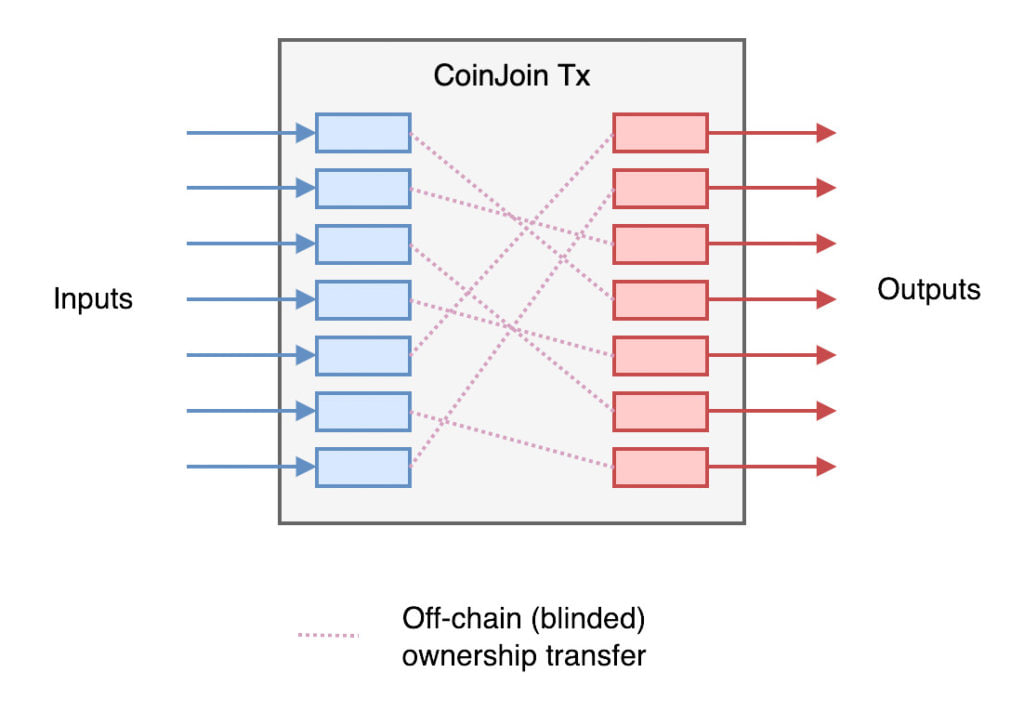
In practice, it implements the CoinJoin/CoinShuffle concept for Bitcoin Cash: users combine inputs and outputs into a single transaction so an observer cannot reliably link them.
CashShuffle acts as a decentralized coordinator for collaborative transactions. Users connect to a coordination server, are matched into a group, exchange encrypted messages, and jointly construct a transaction that only executes if all signatures are valid. There is no custodial service that can steal funds or collect fees: the code is open, the server cannot determine which input corresponds to which output, and there are no extra charges for encryption or mixing.
CashShuffle is built into the Electron Cash wallet and other BCH wallets, where it can run in the background and continuously shuffle a user’s UTXOs. This increases the anonymity set and makes BCH more fungible for everyday payments.
This built-in privacy model strengthens the idea of “optional cash” within the Bitcoin Cash ecosystem. Users can still make standard transparent transactions when accounting or regulatory reporting requires it, and enable CashShuffle when they need to protect their financial history.
As a result, BCH preserves a verifiable, openly auditable issuance model while adding a practical wallet-level privacy tool that later became the foundation for solutions such as CashFusion and other privacy layers.
From mixer alternative to privacy standard
CashShuffle was originally positioned as an alternative to traditional mixers: instead of sending coins to a custodial service and paying a mixing fee, users connected to an open protocol that bundled their transactions with those of other people.
The protocol implements the CoinJoin concept on Bitcoin Cash without third-party trust: the server never controls funds and cannot tell which input corresponds to which output.
From there, CashShuffle began to evolve into a privacy standard in the BCH ecosystem. It first launched as a plugin for Electron Cash, then was built into the wallet’s main release, allowing coins to be encrypted and mixed automatically in the background while the user simply keeps the app open. Later, developers announced plans to integrate it into other popular Bitcoin Cash wallets, including Bitcoin.com Wallet.
Privacy in a post-Tornado Cash regulatory era
After sanctions against Tornado Cash, privacy in crypto stopped being an abstract issue. OFAC added not a company but a smart contract to its sanctions list, stating that more than $7 billion had been laundered through the mixer, including funds tied to North Korea’s Lazarus Group.
This set the tone globally: regulators and AML providers began treating mixers as high-risk infrastructure directly linked to cybercrime and sanctions evasion. Even the later lifting of sanctions on Tornado Cash and court rulings on regulatory overreach did not change the core takeaway: centralized and semi-centralized mixers are now under constant scrutiny.
In contrast, non-custodial coordination protocols – CoinJoin, CashShuffle, and other forms of collaborative transactions – are viewed differently. Unlike traditional mixers, they do not take custody of funds; they simply allow users to combine inputs into a single transaction while retaining control of their keys.
Legal analyses and compliance research increasingly distinguish between custodial “black box” services and open-source wallet software built into wallets that do not function as a standalone service provider. Still, regulators expect VASPs to comply with the Travel Rule and AML/KYC procedures, even if a user relies on a privacy wallet or a CoinJoin-style protocol.
In the post-Tornado era, such non-custodial coordination protocols represent a compromise between technical privacy and regulatory reality: the infrastructure can remain open and decentralized, while compliance responsibilities shift to entry and exit points – exchanges, brokers, and payment gateways.
How the BCH community navigates regulatory pressure in 2026
By 2026, the Bitcoin Cash community operates in a constant balance between the idea of “cash for the internet” and tightening regulation. In the EU, MiCA and the TFR/AMLR package are fully in force: they do not ban self-hosted wallets or P2P transfers, but they impose strict requirements on VASPs – exchanges and custodial services must collect sender and recipient data, especially for amounts above €1,000.
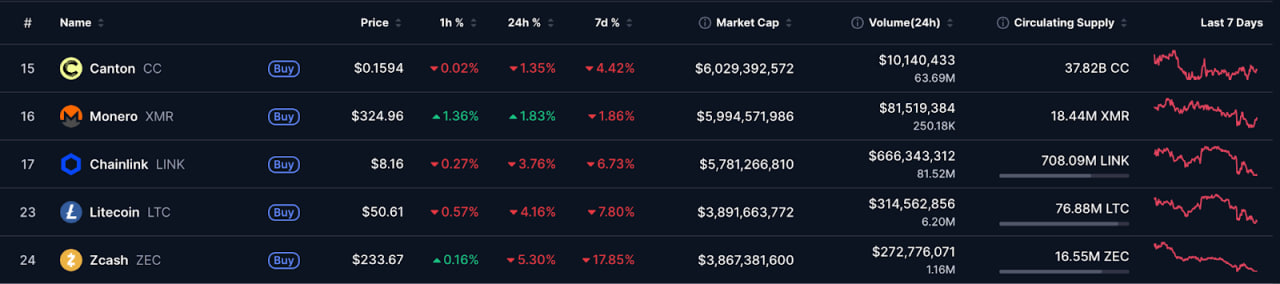
At the same time, policymakers continue to debate targeted restrictions on privacy coins and anonymous accounts, increasing pressure on projects built around full anonymity, such as Monero or Zcash.
Against this backdrop, the BCH ecosystem promotes “optional privacy” as a more resilient model. Technologies such as CashFusion and CashShuffle operate at the wallet level and do not rely on a custodial operator: users retain control of their keys, while the protocol merely coordinates joint transactions. This design allows developers to position these tools as open-source software rather than mixer services directly exposed to regulatory action. At the same time, BCH exchanges and payment providers accept the Travel Rule and AML procedures as a given: they screen deposits originating from privacy wallets and strengthen KYC to remain compliant.
As a result, the BCH community’s 2026 strategy appears pragmatic. The base protocol remains transparent to meet traceability requirements, while privacy exists as a voluntary layer that users enable at their discretion.
Within the community, the debate has shifted from slogans about “full anonymity” to a more grounded point: individuals should retain the right to confidential everyday payments, while infrastructure interacting with fiat and the banking system will operate under regulatory rules. This approach does not remove the tension between privacy and compliance, but it reduces exposure to regulatory risk compared with centralized mixers or fully opaque privacy coins.
The material on GNcrypto is intended solely for informational use and must not be regarded as financial advice. We make every effort to keep the content accurate and current, but we cannot warrant its precision, completeness, or reliability. GNcrypto does not take responsibility for any mistakes, omissions, or financial losses resulting from reliance on this information. Any actions you take based on this content are done at your own risk. Always conduct independent research and seek guidance from a qualified specialist. For further details, please review our Terms, Privacy Policy and Disclaimers.
Articles by this author