Solana Mobile launches SKR airdrop for Seeker owners and devs
Seeker phone owners and Season 1 dApp Store developers can claim SKR through the device wallet over the next 90 days, with unclaimed tokens returning to the airdrop pool.
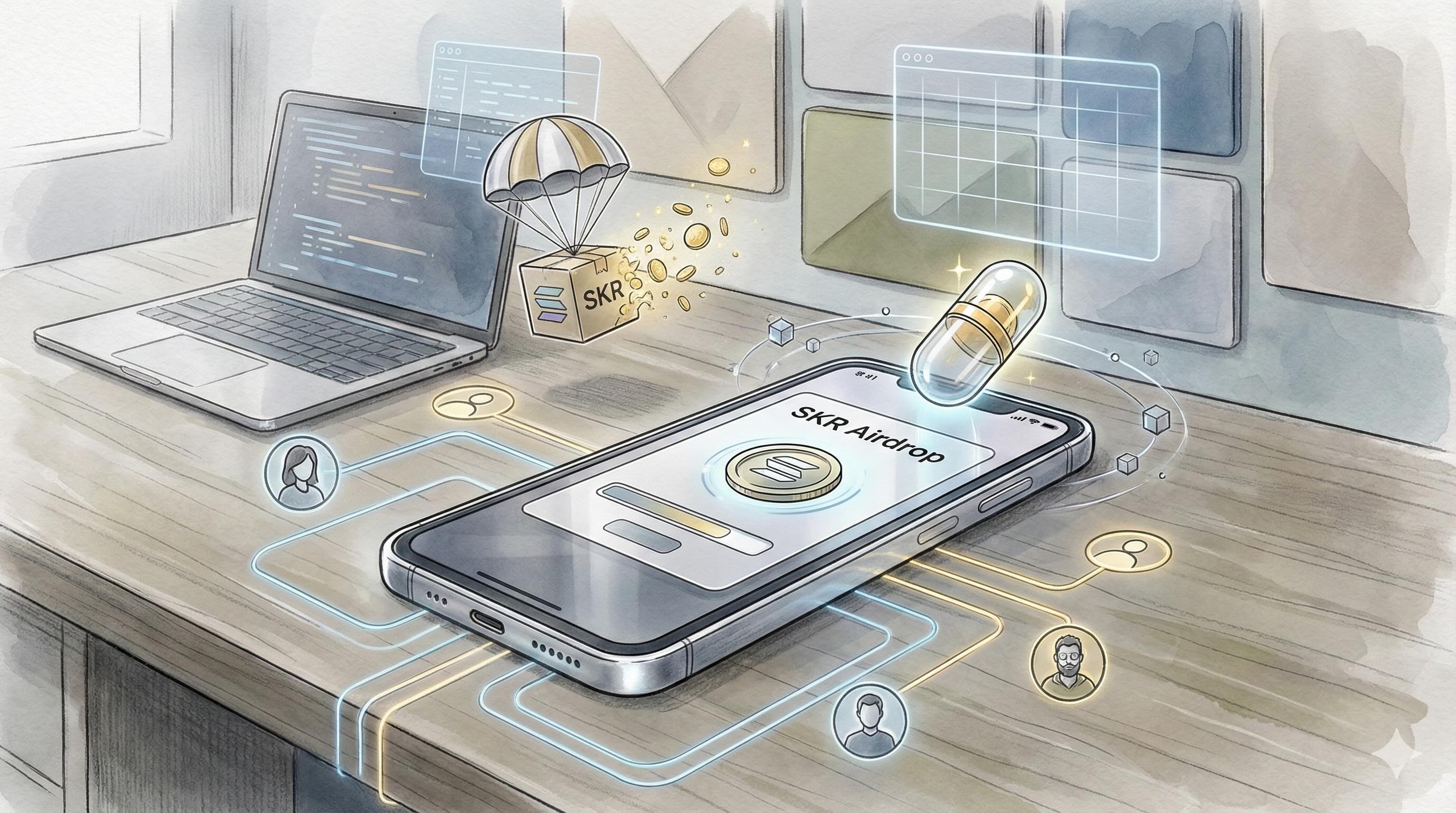
Solana Mobile on Tuesday launched an airdrop of its native token, SKR, for Seeker smartphone owners and developers who shipped apps in Season 1 of the Solana Mobile dApp Store. Claims can be made through the phone’s built-in wallet during a 90-day window. After the deadline, any unclaimed tokens will return to the airdrop pool.
SKR is the ecosystem token for Solana Mobile, intended to support governance, incentives, and ownership features across the Seeker platform and its app marketplace. The token has a fixed supply of 10 billion, with 30% allocated to airdrops and launch unlocks. Recipients can stake SKR, and issuance follows a linear inflation schedule with updates every 48 hours. The annual rate starts at 10% and declines by 25% each year until it reaches 2%, where it remains.
“Seeker and SKR are a bet that there’s another way for mobile: that the people who use the network should own the network,” according to the company’s announcement.
The airdrop coincides with the start of Seeker’s Season 2 campaign on Wednesday, featuring new apps, reward programs, and early access options. Focus areas include decentralized finance, gaming, payments, trading, and decentralized physical infrastructure networks.
Seeker is an Android-based device and the successor to Solana Mobile’s first phone, Saga. It includes hardware-backed Seed Vault key storage and a built-in Solana dApp Store for on-chain apps. In August, Solana Mobile put preorders for Seeker at 150,000, with shipments planned to more than 50 countries.
As we reported earlier, Ledger disclosed an unpatchable hardware weakness in MediaTek’s Dimensity 7300 (MT6878) chip used in the Solana Seeker and other phones. Security engineers Charles Christen and Léo Benito showed that electromagnetic pulses applied during the chip’s boot process can bypass the system-on-chip’s defenses, letting an attacker seize full control of the device and access private keys stored on it. In their tests, the method granted complete control, with no remaining security barriers.
The material on GNcrypto is intended solely for informational use and must not be regarded as financial advice. We make every effort to keep the content accurate and current, but we cannot warrant its precision, completeness, or reliability. GNcrypto does not take responsibility for any mistakes, omissions, or financial losses resulting from reliance on this information. Any actions you take based on this content are done at your own risk. Always conduct independent research and seek guidance from a qualified specialist. For further details, please review our Terms, Privacy Policy and Disclaimers.
Articles by this author