From Uptober to Rektober: Saylor, Bukele and Mow on Bitcoin dump

Uptober turned into Red October 2025 after $19B in liquidations. Compilation of reactions from Michael Saylor, Samson Mow, Max Keiser and other Bitcoin maximalists.
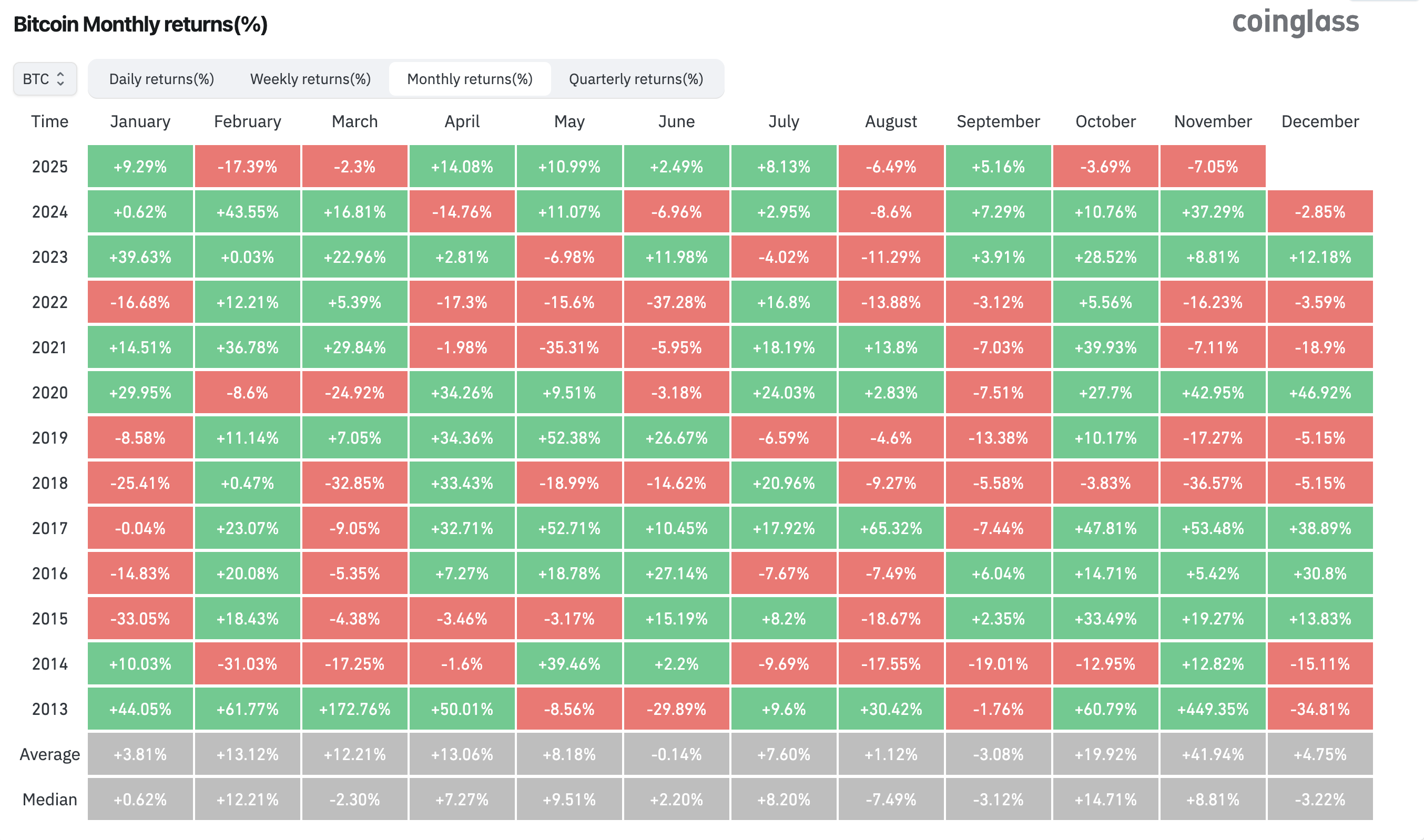
October has earned the nickname ‘Uptober,’ usually Bitcoin’s luckiest month. But things didn’t go as planned, and October 2025 will go down in history as the most brutal period for the first cryptocurrency in a long time.
On October 10, Bitcoin fell below $105,000, falling 14% within hours after President Trump announced 100% tariffs on Chinese imports. Within 24 hours, over $19 billion in positions were liquidated – the largest dump in crypto industry history, surpassing even the collapse of scam exchange FTX.
For the first time since 2018, Bitcoin closed October in the red zone, breaking a six-year “green” streak. However, the best-known Bitcoin maximalists reacted with trademark calm. Here are reactions from true legends of the crypto industry.
Michael Saylor: “The Battle Begins”
Strategy Chairman Michael Saylor reacted to the October dump with a dramatic post on X on October 30, when it was already clear that no miracle would happen.
“The ₿attle ₿egins,” Saylor wrote, publishing an AI-generated image of himself at a chessboard with an hourglass beside him.
Saylor framed Bitcoin as a long-term strategic game – not a playground for short-term speculators. The hourglass hints at a limited time to accumulate BTC at current prices. The post gathered millions of views and became another meme among the crypto community.
Before this, on October 13, when the market was in free fall, Saylor published another iconic post: “Don’t Stop Believin'” – a reference to Journey’s legendary rock composition. The message was accompanied by a Bitcoin chart with Strategy’s purchase marks.
Strategy holds over 640,000 BTC, acquired at an average price of around $74,000 per coin. In the third quarter of 2025, the company had about $4 billion in unrealized profit from its Bitcoin holdings.
Another symbolic Saylor reaction: “There are no tariffs for Bitcoin.” This was when his company continued buying BTC, right before the crash.
Samson Mow: “Bull run hasn’t started yet”
JAN3 CEO Samson Mow, known for his “$1 million Bitcoin” predictions, also remained unwavering during the October chaos.
“The Bitcoin bull run hasn’t started yet. We’re just marginally outperforming inflation at this price range,” Mow stated in mid-October 9, right before the big drop began.
Mow argued fears of old-guard Bitcoin holders selling were exaggerated and urged traders to focus on the next bull run.
His company JAN3 even created its own index that inverts the classic Fear & Greed Index:
“The market’s crying. Bitcoiners? Still stacking. Fear and Greed Index sits at 23 which is the Extreme Greed area. Because Bitcoiners fear missing sats, not Bitcoin price drops.”
Mow also predicted that if you believe in cycles, the top might come in 2026, not 2025:
“Bitcoin has been basically flat for 2025. If you believe in cycles, then it hasn’t topped. That means a longer cycle, cycle top in 2026? Or it means a generational bull run for a decade, like gold post ETF. Or maybe there are no more cycles at all? Omegacycle.”
Max Keiser: “Supply shock imminent”
Max Keiser, advisor to El Salvador’s President Nayib Bukele on Bitcoin matters and one of the earliest BTC adopters (bought at $1 per coin), remained faithful to his mantra even during the crash.
“I’ve done the math. A Bitcoin supply shock is imminent”, Keiser likes to say. And he repeated this thesis throughout October.
Early November demonstrated that Keiser’s unwavering stance is still here.
“Scam crypto fans and fiat money lovers don’t believe in Bitcoin’s existence. Sooner or later everyone reaches their bottom, and if they survive, they’re ready to hear Bitcoin’s message.”
His logic is based on Bitcoin’s fixed limit of 21 million coins, of which nearly 20 million have already been mined. After the April 2024 halving, the block reward dropped to 3.125 BTC, halving new BTC inflows to the market.
Keiser predicts that the combination of limited supply and growing institutional demand (ETFs, corporate treasuries like Strategy) will create a “supply shock” that will send Bitcoin’s price sharply higher.
Adam Back: long-term game
Adam Back, founder of Blockstream and co-developer of the hashing technology underlying Bitcoin, remained calm during the October chaos.On November 5, his company FUTURE announced raising $35 million to expand the institutional Bitcoin balance sheet model – right in the middle of market turbulence.
Back previously stated that Bitcoin is “significantly undervalued” and could reach $500,000 to $1 million per coin during the current market cycle.
His approach: long-term accumulation regardless of short-term volatility. “Dips exist for Bitcoin to transit from weak hands to strong hands,” Back comments on Bitcoin community discussions about the crash.
Nayib Bukele: Proof-of-Work wins
El Salvador’s President Nayib Bukele, who made Bitcoin legal tender in his country, continued buying BTC even under IMF pressure.
“‘This all stops in April.’ ‘This all stops in June.’ ‘This all stops in December.’ No, it’s not stopping,” Bukele wrote on March 4, 2025, and this position remained unchanged during the October crash.
“Proof of work > proof of whining,” he added, emphasizing that El Salvador will continue accumulating Bitcoin regardless of market conditions or external pressure.
Red October is behind, and El Salvador presses forward. For example, they started registering official documents on the Bitcoin blockchain. And on October 12-13, the first major Bitcoin conference with the country’s Bitcoin Office participation will take place in San Salvador’s historic district.
As of October 2025, El Salvador holds over 6,100 BTC worth about $530 million at current prices.
Uptober that became Rektober: crash lessons
The biggest test of Bitcoin maximalists‘ strength since the FTX collapse showed the following:
Institutional holders didn’t sell. Strategy, BlackRock, Metaplanet and other corporate treasuries not only didn’t realize paper losses or profits but continued buying on the dip. No “panic” at the major player level.
DeFi withstood the blow. Unlike the Terra Luna or FTX crashes, this time there were no significant stablecoin depegs, fund bankruptcies or systemic failures. The $100 billion DeFi lending market executed all liquidations without technical issues.
This was a deleveraging event, not a trend change. Over $19 billion in liquidations cleaned the market of excessive leverage. After this, Bitcoin quickly recovered above $108,000, and on-chain data showed that large holders (wallets with >10 BTC) continued accumulating. Yes, the November decline continues for now, but Bitcoin maxis are already waiting for Bullvember.
Maximalists didn’t change their rhetoric. From Saylor to Keiser – none of the leading Bitcoin evangelists started talking about a “bear market” or “trend reversal.” On the contrary, most interpreted the crash as a last chance to buy Bitcoin at a “discount” before the next parabolic growth.
The material on GNcrypto is intended solely for informational use and must not be regarded as financial advice. We make every effort to keep the content accurate and current, but we cannot warrant its precision, completeness, or reliability. GNcrypto does not take responsibility for any mistakes, omissions, or financial losses resulting from reliance on this information. Any actions you take based on this content are done at your own risk. Always conduct independent research and seek guidance from a qualified specialist. For further details, please review our Terms, Privacy Policy and Disclaimers.
Articles by this author