Why is a rare earth dispute crashing Bitcoin?
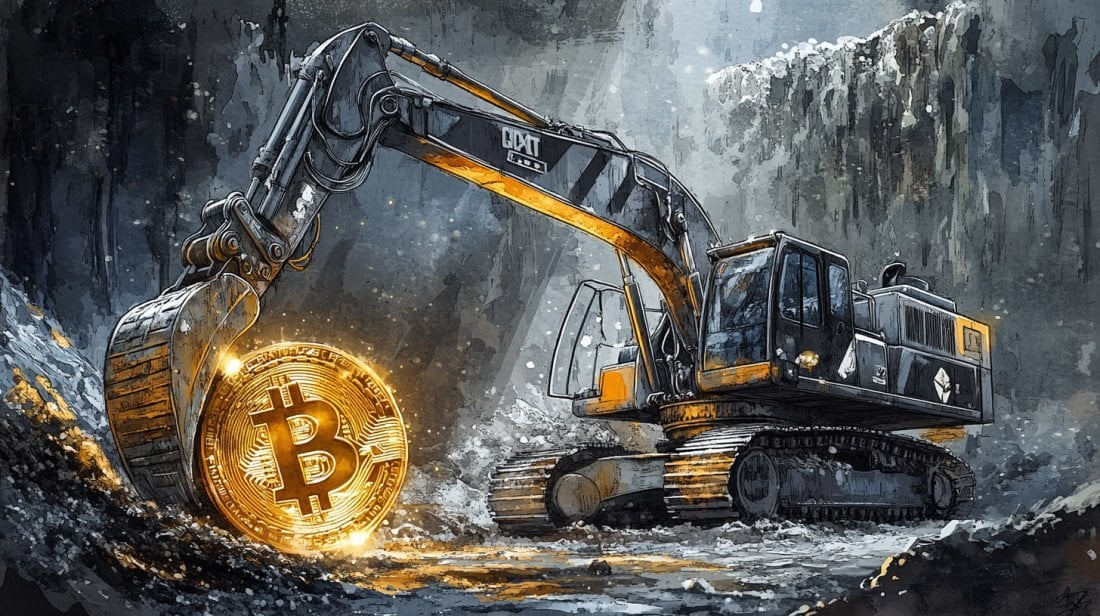
October’s crypto sell‑off was rooted in the US–China trade confrontation over rare earths. Beijing’s tighter export controls and Washington’s tariff threats squeezed liquidity and pushed a flash‑crash across digital assets.
The commodity shock and its transmission to digital assets
Crypto markets rarely fall in a vacuum; distress usually starts elsewhere, such as an exchange failure like FTX, a regulatory shift, or macroeconomic factors.
In early October 2025, the impulse came from government decisions rather than trading venues. Beijing expanded export controls on rare earth elements (REEs) and related technologies; Washington replied with the loudest foreign‑trade tool – threats of triple‑digit tariffs on a wide range of Chinese imports. Markets read this as a clear signal: components would soon be costlier, supply chains less reliable and the outlook for US big tech weaker.
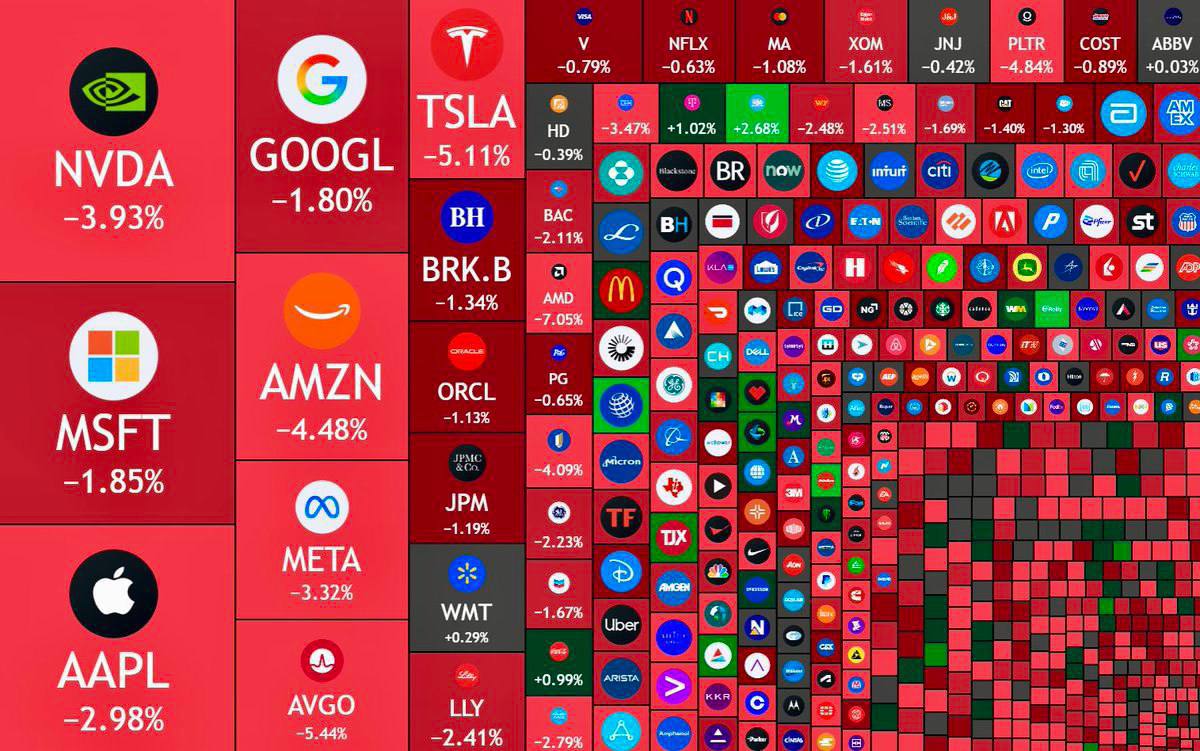
The initial reaction was a decline across the technology complex. Within hours, the US big‑tech market value fell by $1.65 trillion. However, shares of rare earth metal companies have emerged as beneficiaries in the current situation.
The key leverage is processing, not mining the separation and purification stages where market power concentrates. China controls roughly nine‑tenths of global processing capacity and dominates magnet production.
10 October: technology mega‑caps fell. Source: TradingView
The shock then transmitted via crypto derivatives. On 10–11 October 2025, forced liquidations exceeded $19.13bn and roughly 1.62m accounts were closed out.
Thus, a seemingly technical update on “licences and quotas” for REEs morphed within a day into a global crash sale.
Politics amplified the move. China’s leadership typically steps back from public view after summer conclaves the “Beidaihe effect”. This time it overlapped with rumours about Xi Jinping’s health or political standing, while Premier Li Qiang assumed a more visible diplomatic role, including a visit to Pyongyang, the highest‑level trip since 2019.
By early October, markets priced in an 8% probability that Xi would leave office before 2026. In the absence of official commentary, investors actively traded on these probabilities. Against that backdrop, any hardening in Beijing’s tone was read as a signal of prolonged confrontation, widening the shock across global assets.
What REEs are and why China grips big tech
Rare earth elements comprise seventeen entries on the periodic table that never appear in shop windows but underpin modern life. Their power lies in magnets, alloys and optics.
REEs are used in:
- Electric vehicles and renewables. Permanent magnets based on neodymium, praseodymium and dysprosium power EV traction motors and wind‑turbine generators. Availability directly shapes the cost of clean energy and the pace of electrification.
- Consumer electronics. Speakers, cameras, haptics, hard drives and displays rely on REEs, including yttrium, europium and terbium for phosphors and lasers.
- Defence and space. Laser designators, radars, guidance systems and high‑strength alloys critically depend on REEs. Strategic sectors are even more sensitive to price and availability than civilian users.
- Crypto mining and AI infrastructure. While GPUs and ASICs contain little REE, production and operation rely heavily on them. For example, laser systems use YAG and cerium-oxide slurries, data-center fans and motors contain NdFeB magnets, and hard-disk drives for proof-of-space require REE components. Tight export controls increase both capital (CAPEX) and operating (OPEX) costs across these systems.
This is precisely where new rules appeared: export licences, broader control lists and potential inspections of equipment and technologies.
This is modern economic statecraft: not halting oil tankers, but restricting purified oxides and powders that keep precision lines and chip tools running. Any hint of tighter rules forces global manufacturers to rework budgets and reduce risk exposure.
The transmission channel to crypto then follows: technology equities de‑rate, a stronger US dollar drains dollar liquidity, and a highly leveraged crypto market responds with the deepest corrections.
Three plausible paths from here
Scenario 1: Beijing maintains and expands controls on REE oxides/metals and magnet‑rich products while the US phases in high tariffs. Expect structurally higher input costs in electronics and EVs, longer production cycles and uncertain budgeting for tech. Financially, the dollar stays firm, funding costs rise, equity valuations compress and risk spreads widen. In crypto, news‑driven shocks occur more often, implied volatility stays elevated and futures basis leans neutral/negative around headlines.
Scenario 2: China implements predictable licensing and quotas with “green lanes” for critical items; the US pauses further tariff expansion. Uncertainty falls and production planning normalises, though prices remain above pre‑conflict levels. Public markets see moderate recovery; crypto experiences smaller swings, deeper order books and funding rates near zero, yet remains sensitive to shipment delays or list revisions.
Scenario 3: Controls extend to finished magnets and processing equipment, with tighter inspections. This hits the lower end of the chain where re‑design takes months to years, causing price spikes and delivery slippage. Real‑economy effects include launch deferrals, higher safety stocks and margin pressure at tech manufacturers. Traditional markets rotate out of high‑risk assets; in crypto, liquidity things, cross‑exchange spreads widen and short‑lived depegs become more likely under stress.
Why tariffs alone cannot “turn off” the risk
Tariffs both raise import prices and signal further escalation, but they do not fix the bottleneck – REE processing, which takes 5–10 years to build. For the US, diversification is a national‑security issue. Yet even as attention to China increased within the intelligence community, gaps remained.
Critics argue the administration did too little to counter China’s REE dominance in Africa and Greenland. The expiry in September 2025 of the African Growth and Opportunity Act (AGOA) raised concerns: linking AGOA renewal to mining investment could have channelled capital and secured strategic supplies. Instead, debates turned to tariff increases on African partners and unrelated political issues, delaying clarity.
Greenland shows similar gaps. Despite repeated statements about the island’s strategic value and resistance to Chinese acquisitions, Washington has not sufficiently matched trade posture with upstream and processing investment. Arctic projects typically require 5–10 years to reach commercial scale. Hence tariffs alone are insufficient; accelerated, comprehensive programmes for supply diversification and processing build‑out are required.
The uncomfortable conclusion is clear: rare earths now act as both a critical industrial input and a financial trigger. So long as China holds the processing key, each new turn in the tariff conflict will filter rapidly into crypto‑asset volatility, because behind bits stand motors, magnets and lasers. Until alternative mining and processing capacity is in place, short‑term market dynamics will be driven by concrete regulatory decisions and official statements.


Recommended