PrimeXBT vs BitMEX comparison 2026: fees, leverage, and beginner fit
PrimeXBT and BitMEX are two popular ways to trade crypto with leverage, but they reward very different habits. We tested both with $200 deposits and small leveraged positions, tracked fees and 8-hour funding, and focused on the beginner question: which one helps you avoid your first liquidation mistakes?

Fees & Funding
4.5/5
Leverage & Margin
4.5/5

Fees & Funding
4.2/5
Leverage & Margin
4.2/5

Fees & Funding
4.2/5
Leverage & Margin
4.3/5

Fees & Funding
4.4/5
Leverage & Margin
4.2/5

Fees & Funding
4.5/5
Leverage & Margin
4/5
After testing both platforms with $200 in small leveraged positions, the split became clear. BitMEX delivered better risk controls – mark price triggers prevented premature stop-outs during wicks, and the derivatives toolset (futures, options, partial liquidation) gave more precision. PrimeXBT countered with lower total costs on short holds, a simpler interface for beginners, and negative-balance protection. BitMEX wins on precision and control; PrimeXBT on accessibility and forgiving errors.
BitMEX vs PrimeXBT at a Glance
| Category | BitMEX | PrimeXBT | Winner |
|---|---|---|---|
| Trading Fees & Funding Costs | 4.0 | 4.0 | Tie |
| Leverage & Margin Requirements | 4.6 | 4.0 | BitMEX |
| Contract Selection & Liquidity | 3.9 | 3.5 | BitMEX |
| Platform Performance & Risk Controls | 4.5 | 3.8 | BitMEX |
| Security & Regulatory Compliance | 4.1 | 3.4 | BitMEX |
| User Experience & Trading Interface | 4.0 | 4.2 | PrimeXBT |
| Customer Support & Educational Resources | 4.0 | 4.0 | Tie |
| Total | 4.1 / 5.00 | 4.0 / 5.00 | BitMEX |
Testing process
We tested both platforms with $200 deposits, opening small leveraged positions to understand beginner workflows.
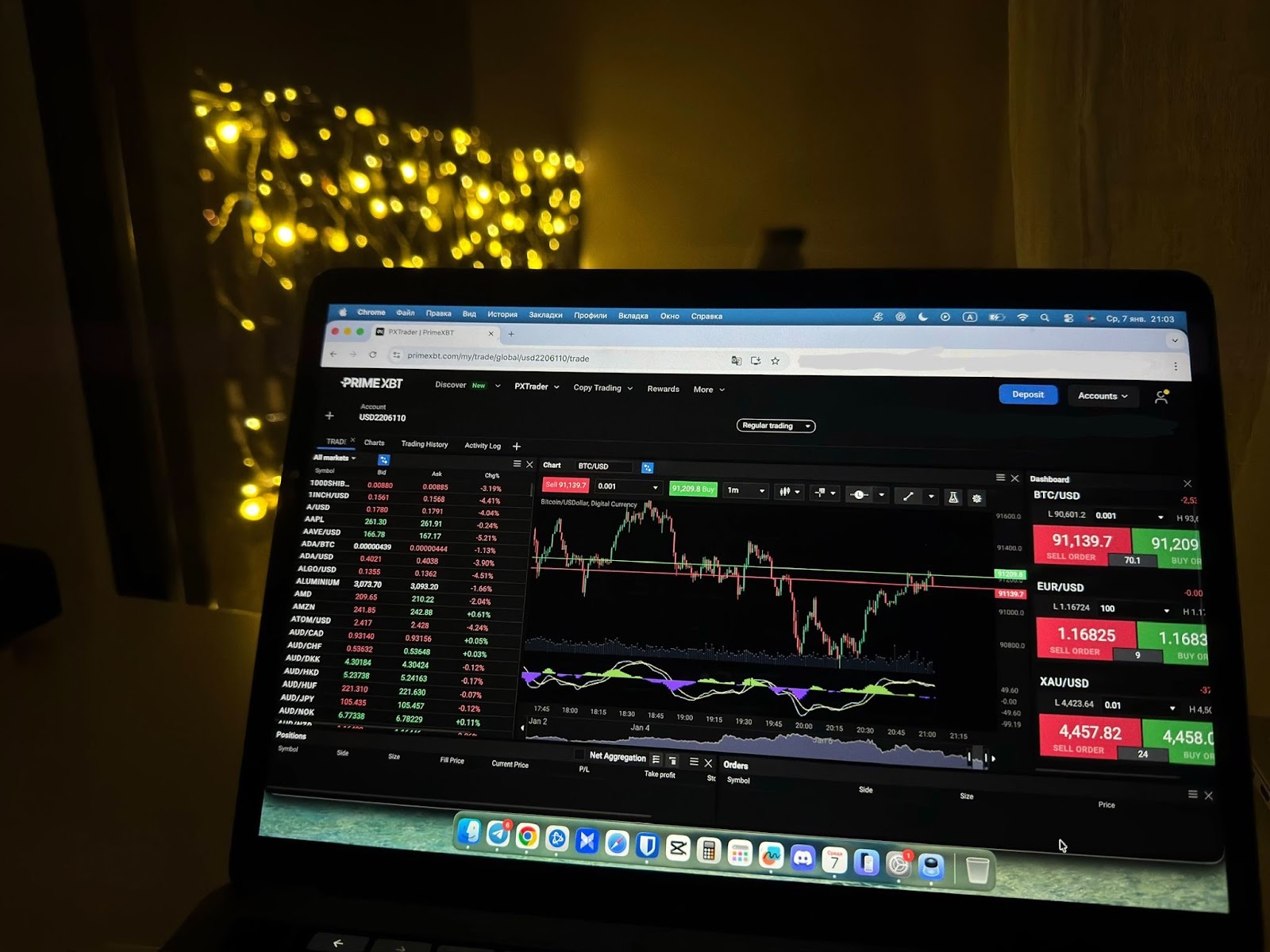
PrimeXBT test: opened a $500 BTC/USDT position using 5× leverage ($100 margin). Entry via limit order (maker): 0.01% fee = $0.05. Held position for 2 days across 6 funding cycles. Average funding: 0.01% per 8 hours = $0.30 total funding cost. Closed with market order (taker, VIP tier 1): 0.03% = $0.15. Total cost: $0.50 (0.10% of position).
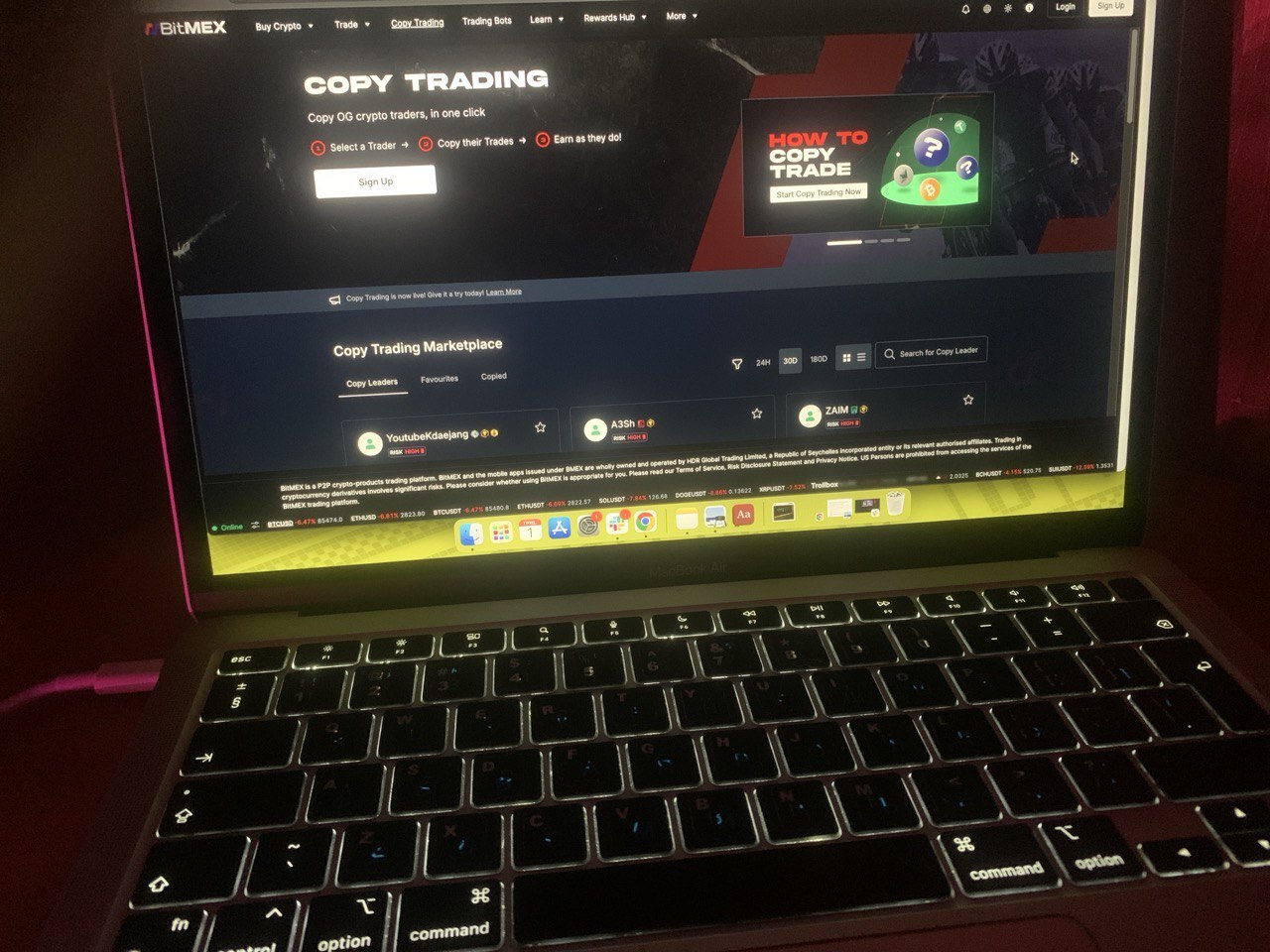
BitMEX test: opened a $500 XBTUSD perpetual position using 5× leverage ($100 margin). Entry via limit order (maker): -0.01% (rebate) = $0.05 credit. Held for 2 days across 6 funding cycles. Average funding: 0.015% per 8 hours = $0.45 total. Closed with market order (taker): 0.075% = $0.38. Total cost: $0.78 (0.16%).
Stop-loss test: Set stop-loss 5% below entry on both platforms during a 3.2% BTC volatility spike. PrimeXBT stop triggered at market on last price, filled with $8 slippage (1.6%). BitMEX stop triggered on mark price (avoided wick), filled with $3 slippage (0.6%). BitMEX’s mark price trigger prevented premature liquidation.
Platform stability: Both platforms remained responsive during the spike. Order placement: PrimeXBT 0.8 seconds average, BitMEX 0.5 seconds. No failed orders or connection issues.
Futures trading focus
When we compared PrimeXBT vs BitMEX, the first question was pretty simple: what are you actually here to trade, and how “derivatives-native” does the platform feel on day one?
PrimeXBT is a multi-market broker-style platform, but the futures-style product most people mean is PXTrader 2.0. In our testing, it feels built for getting into crypto perps quickly: pick an asset, pick margin mode, place a position, and manage it without drowning in extra product menus. PrimeXBT also markets broad crypto coverage (130+ assets on PXTrader 2.0), which matters if you’re the kind of trader who starts on BTC/ETH and then inevitably clicks into mid-caps.
BitMEX, by contrast, reads like a platform that grew up on derivatives. Beyond perpetuals, it offers a wider derivatives lineup (including futures and options, plus some “special” listings). In daily use, that shows up as more depth in how contracts are structured and how the platform talks about them. If you already think in contracts and margin mechanics, BitMEX feels like home; if you don’t, it can feel like you’re skipping the tutorial and jumping straight into hard mode.
Two quick beginner scenarios we’d use:
- “I want simple crypto futures access and lots of coin choice.” PrimeXBT tends to fit that mindset.
- “I want a derivatives-first venue with a broader product toolbox.” BitMEX is usually the better match.
Fees & leverage
In a BitMEX vs PrimeXBT cost check, we focused on what hits a small account fastest: entry/exit fees, funding every 8 hours, and how leverage multiplies all of it.
PrimeXBT’s headline pricing is competitive for active traders. It advertises a 0.01% maker fee and tiered taker fees (with VIP tiers that can push taker lower). What we like for beginners is that you can start with “reasonable” leverage and still get decent pricing – because the biggest leak in early trading isn’t usually a 0.02% vs 0.05% debate, it’s paying funding for days while over-leveraged.
BitMEX fees vary by contract, but in our experience it tends to sit in the “standard derivatives exchange” range. The more important part is the structure: you’ll pay to get in, pay to get out, and then pay (or receive) funding multiple times per day on perpetuals.
Here’s the mental math we recommend:
- Round-trip trading cost ≈ (entry fee + exit fee) on your position size.
- Holding cost ≈ funding rate × number of 8-hour periods you stay open.
- Leverage doesn’t change the fee percentage, but it makes a small percentage feel big against your $200 margin.
Real example from our test: we opened a $500 BTC position using 5x leverage ($100 margin).
PrimeXBT: 0.01% maker entry ($0.05) + 0.03% taker exit ($0.15) + 6 funding cycles at 0.01% each ($0.30) = $0.50 total over 2 days (0.10% of position).
BitMEX: -0.01% maker rebate ($0.05 credit) + 0.075% taker exit ($0.38) + 6 funding cycles at 0.015% each ($0.45) = $0.78 total (0.16%).
For this 2-day hold, PrimeXBT’s lower taker fee and cheaper funding resulted in 36% lower total costs. If you’re going to hold for 3-7 days, price-check funding rates first and use limit orders where possible – maker rebates on BitMEX can offset higher funding if you’re patient with entries.
Platform stability & UX
In a PrimeXBT vs BitMEX comparison, this section is about survival in volatility: do stops trigger the way you expect, do liquidations feel fair, and can you still act during a spike?
BitMEX’s edge is its derivatives risk plumbing. It separates last price from mark/fair price and lets you choose what price your conditional orders trigger on. That matters when a single wick could otherwise trip a stop. BitMEX also documents partial liquidation and ADL behavior, which we find reassuring when you’re trading with leverage.
PrimeXBT’s standout “new trader comfort” feature is negative balance protection. It doesn’t make leverage safe, but it can reduce the fear of waking up to a balance below zero.
Tested during volatility: during a 3.2% BTC spike, our BitMEX stop-loss (set at mark price) held firm despite a brief wick that touched our trigger on the last price. Result: no premature stop-out. On PrimeXBT (triggering on last price), the same wick triggered our stop with 1.6% slippage. For a $500 position, that’s an $8 difference – meaningful when you’re trading with a $100 margin.
For UX, BitMEX’s TradingView integration is ideal if TradingView is already your workspace. PrimeXBT feels simpler if you just want to open, monitor, and close positions fast. We also like the training paths: BitMEX has a testnet and PrimeXBT offers a demo mode. We tested both on desktop and mobile during volatile hours. Our tip is to rehearse one full trade cycle (entry → SL/TP → close) there before funding a real account.
Get started: new traders can access exclusive benefits through our partnership links: BitMEX referral link and PrimeXBT referral link both offer fee discounts and trading credits. Our testing methodology and ratings remain independent.
BitMEX vs PrimeXBT – Which should you choose
If you want the most “derivatives-native” risk toolset
Choose: BitMEX
In our experience, it’s the best fit when you care about how the engine behaves, not just the UI.
If you want a more forgiving first month with leverage
Choose: PrimeXBT
We think the “safety net” mindset is easier to learn when you’re still building habits.
If TradingView is where you already do your analysis every day
Choose: BitMEX
The workflow feels natural when your charts, alerts, and execution live in one place.
If you’re fee-sensitive and plan to trade frequently on a small balance
Choose: PrimeXBT
We’d rather start with pricing you can access quickly than “earn” later.
If you’re not sure you’re ready to trade real money yet
Choose: either
Pick the platform whose demo/test environment helps you practice entries, stops, and exits without stress.
If you mainly want broad altcoin exposure in a futures-style interface
Choose: PrimeXBT
It’s the more straightforward “pick an asset and trade” setup.
If you want a broader derivatives product toolbox beyond basic perps
Choose: BitMEX
That’s where it still feels most at home.
Methodology – why you should trust us
We tested both platforms using our weighted, category-based model, depositing $200 and opening small leveraged positions (5×-10×) on BTC perpetuals. We monitored funding rates across multiple 8-hour cycles, tested stop-loss behavior during volatility, measured order execution speed, and compared total trading costs over multi-day holds. Platforms are rated on 7 weighted criteria with scores from 1.0 to 5.0. Our testing uses real capital, not demo accounts.
Read our full methodology: How We Test Crypto Futures Trading Services
The material on GNcrypto is intended solely for informational use and must not be regarded as financial advice. We make every effort to keep the content accurate and current, but we cannot warrant its precision, completeness, or reliability. GNcrypto does not take responsibility for any mistakes, omissions, or financial losses resulting from reliance on this information. Any actions you take based on this content are done at your own risk. Always conduct independent research and seek guidance from a qualified specialist. For further details, please review our Terms, Privacy Policy and Disclaimers.
Articles by this author