House lawmakers introduce PREDICT Act to ban officials from betting on prediction markets
Reps. Adrian Smith and Nikki Budzinski filed the PREDICT Act to ban Congress, the president and senior officials from betting on prediction markets, with a 10% fine and disgorgement.
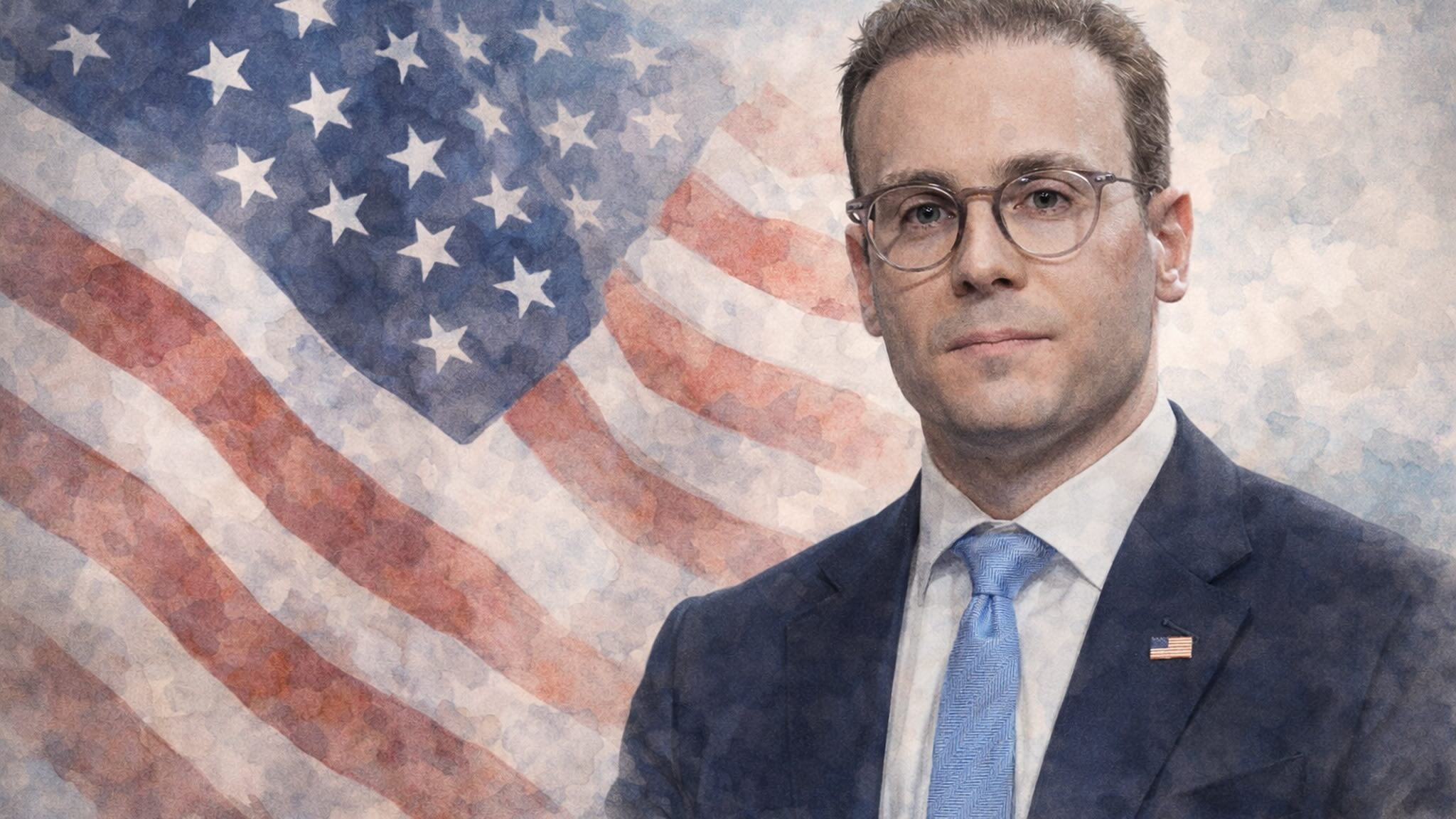
Reps. Adrian Smith (R-Neb.) and Nikki Budzinski (D-Ill.) on Tuesday introduced the Preventing Real-time Exploitation and Deceptive Insider Congressional Trading Act, or PREDICT Act, in the House. The bill would bar members of Congress, the president, the vice president, senior executive branch officials and political appointees – as well as their spouses and dependents – from placing bets on prediction markets.
The proposal targets wagers on the outcomes of political events, policy decisions and other government actions on platforms where users trade contracts tied to real-world events.
Violations would trigger a civil penalty equal to 10% of a contract’s total value and require the surrender of all related profits to the U.S. Treasury. The restrictions would also apply to indirect participation through family accounts.
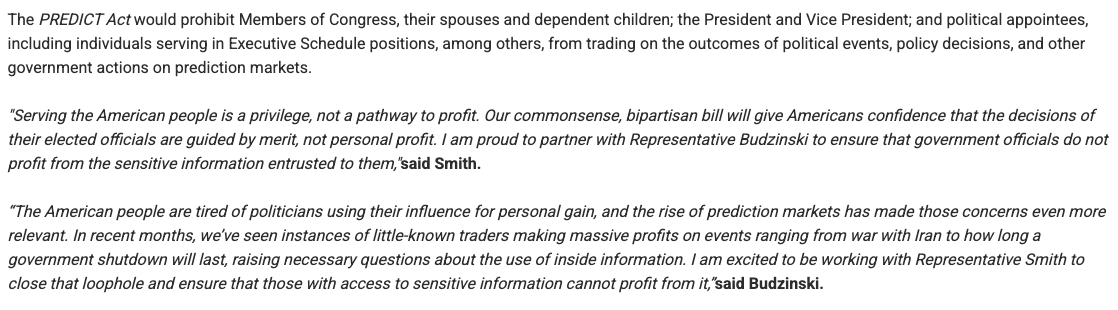
Announcing the measure, Budzinski wrote: “In recent months, we’ve seen instances of little-known traders making massive profits on events ranging from war with Iran to how long a government shutdown will last, raising necessary questions about the use of inside information,” adding that closing loopholes is intended to ensure people with inside knowledge “cannot profit from it.”
Prediction markets have drawn heightened attention in Washington as platforms list contracts tied to elections, legislation, regulatory actions, sports and geopolitical events. Firms such as Kalshi vs Polymarket have expanded their offerings in categories related to politics and public policy, alongside markets that resemble sports betting.
Earlier this month, two Democratic lawmakers introduced the Banning Event Trading on Sensitive Operations and Federal Functions (BETS OFF) Act to limit event contracts linked to national security and government operations. In discussing that bill, Senator Chris Murphy alleged it was likely that traders used “inside information” to place bets on U.S. military actions involving Iran during the Trump administration.
At the state level, attorneys general in 11 states have filed actions against prediction market operators, with two additional states reporting pending cases.
In a separate effort, Reps. John Curtis and Adam Schiff introduced legislation on Monday to bar any CFTC–registered entity from listing contracts that resemble a sports bet or casino-style game. The sponsors contend the CFTC long enforced restrictions on gaming-related contracts and has shifted course through litigation and proposed rulemaking, prompting their bill.
Platforms have responded by tightening participation rules. Polymarket recently tightened insider-trading rules, blocking professional athletes and political candidates from trading on their venues to address conflict-of-interest concerns.
The PREDICT Act focuses on public officials and their households and covers bets tied to political events and government actions-the category that has drawn the most scrutiny in recent months.
The measure now heads into the House process for referral and consideration, where it could be weighed alongside other proposals addressing event-based contracts and the scope of the Commodity Futures Trading Commission’s oversight.
The material on GNcrypto is intended solely for informational use and must not be regarded as financial advice. We make every effort to keep the content accurate and current, but we cannot warrant its precision, completeness, or reliability. GNcrypto does not take responsibility for any mistakes, omissions, or financial losses resulting from reliance on this information. Any actions you take based on this content are done at your own risk. Always conduct independent research and seek guidance from a qualified specialist. For further details, please review our Terms, Privacy Policy and Disclaimers.
Articles by this author