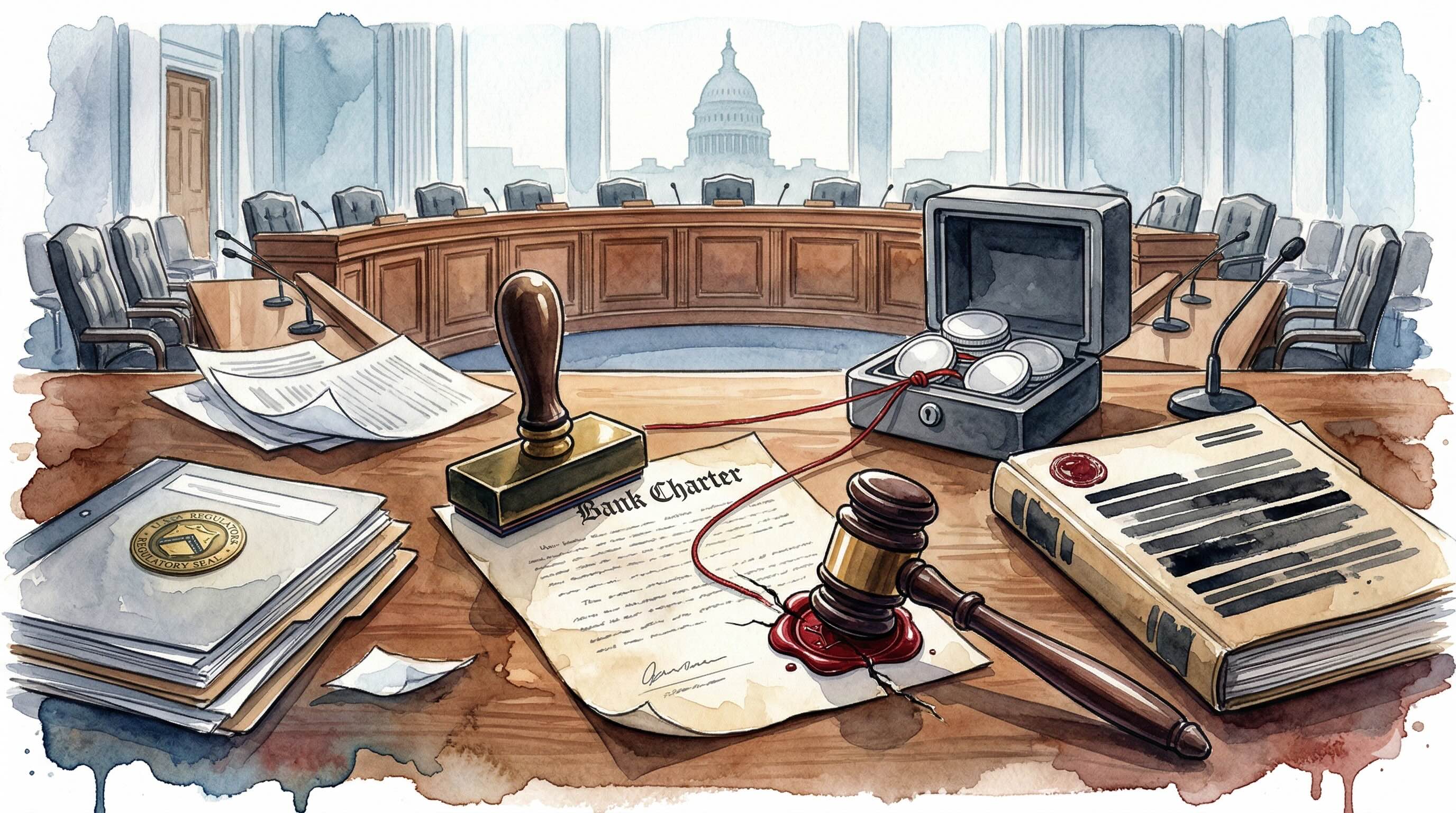
Polish president vetoes crypto bill, citing rights concerns

President Karol Nawrocki rejected the Polish Crypto-Asset Market Act, arguing it overregulates and threatens freedoms. Finance leaders criticized the veto, warning of market chaos and client losses.
Poland’s President Karol Nawrocki vetoed the Crypto-Asset Market Act on Monday, arguing the measure overregulates digital-asset firms and threatens civil and property rights. The bill, introduced in June, had cleared parliament. Senior ministers denounced the veto, warning of disorder and losses for retail clients.
In a statement from the president’s press office, Nawrocki said the bill’s provisions “genuinely threaten the freedoms of Poles, their property, and the stability of the state.” He pointed to the bill’s length and complexity, asserting it would reduce transparency and that neighboring countries such as the Czech Republic, Slovakia and Hungary use simpler approaches.
He singled out a clause enabling authorities to block websites that operate in the crypto market. “Domain blocking laws are opaque and can lead to abuse,” the office noted. Nawrocki also criticized the level of supervisory fees, arguing they could hinder startups and advantage large foreign corporations and banks. “This is a reversal of logic, killing off a competitive market and a serious threat to innovation,” he stated. He added that overregulation risked pushing companies to the Czech Republic, Lithuania or Malta rather than keeping activity and tax payments in Poland.
Finance Minister Andrzej Domański objected on X, claiming “already now 20% of clients are losing their money as a result of abuses in this market,” and contending the president had “chosen chaos” and would bear the consequences. Deputy Prime Minister and Foreign Minister Radosław Sikorski argued the bill was intended to regulate crypto activity, writing, “When the bubble bursts and thousands of Poles lose their savings, at least they will know who to thank.”
Industry advocates welcomed the veto. Politician Tomasz Mentzen had predicted the president would refuse to sign as the bill advanced through parliament. Economist Krzysztof Piech countered that responsibility for prosecuting fraud rests with law enforcement, and pointed to the European Union’s Markets in Crypto-Assets Regulation as the framework set to extend investor protections across all EU member states by July 1, 2026.
MiCA is the EU’s first dedicated rulebook for digital assets. The regulation was proposed in September 2020 by Member of the European Parliament Stefan Berger, adopted in 2023 and signed into law on May 31, 2023. Core licensing and conduct rules began taking effect in 2024, creating a single set of standards for exchanges, trading platforms, wallet providers and custodians across the European Union and European Economic Area. Providers must be authorized, manage risks, protect customers and report activities in a consistent way.
The debate in Poland centers on how to balance consumer protection with market development. Government critics of the veto argue immediate safeguards are needed to curb abuses, while the president’s office maintains that complex national rules and website-blocking powers risk abuse and could push firms to relocate. The office emphasized aligning with regional standards without measures that discourage innovation or burden smaller companies.
The material on GNcrypto is intended solely for informational use and must not be regarded as financial advice. We make every effort to keep the content accurate and current, but we cannot warrant its precision, completeness, or reliability. GNcrypto does not take responsibility for any mistakes, omissions, or financial losses resulting from reliance on this information. Any actions you take based on this content are done at your own risk. Always conduct independent research and seek guidance from a qualified specialist. For further details, please review our Terms, Privacy Policy and Disclaimers.
Articles by this author