OKX P2P: how it works, and what it really costs
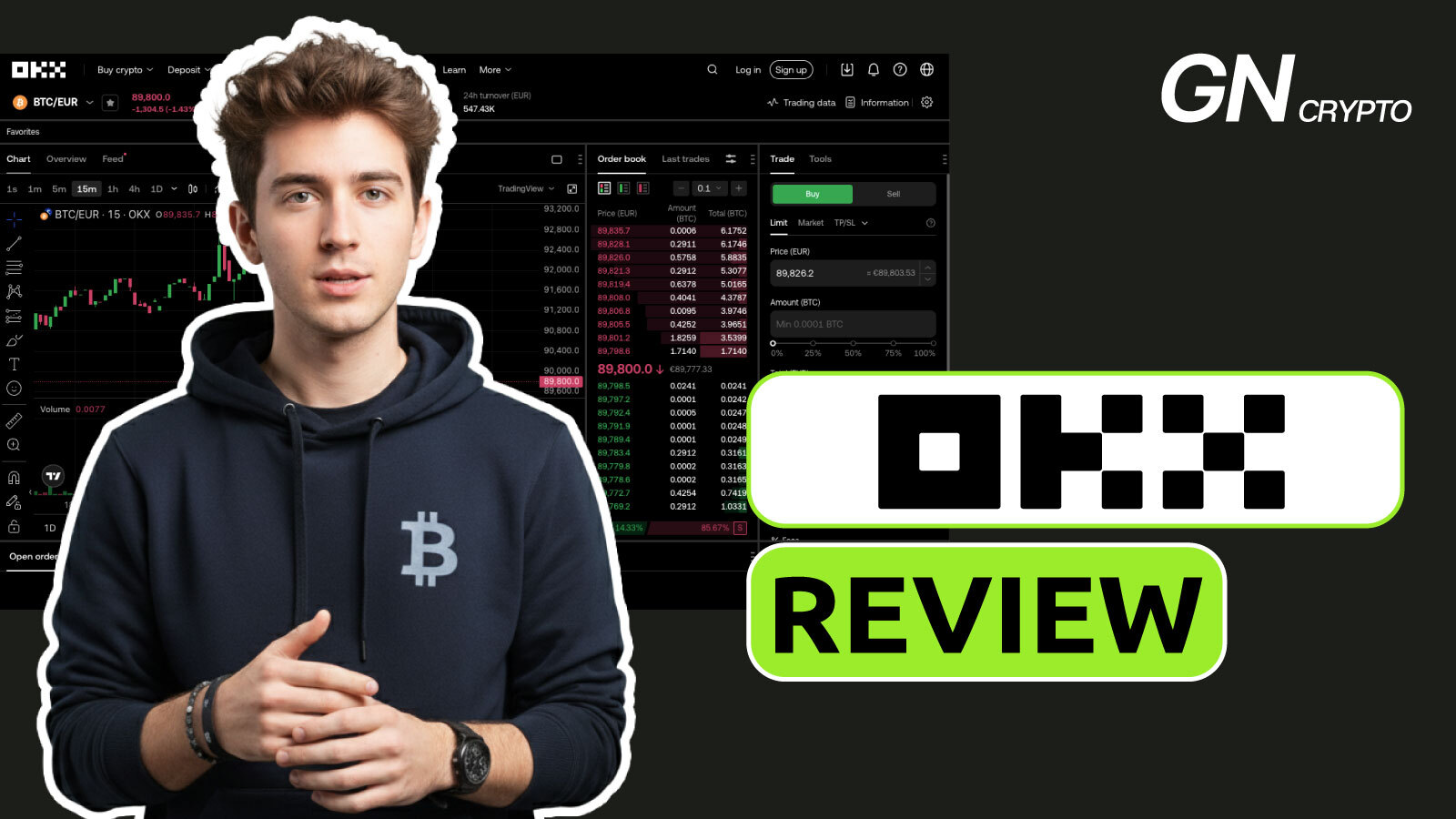
We tested OKX P2P the way a regular trader would: bought and sold USDT and BTC in local currencies, used popular payment methods, opened and cancelled ads, and watched how escrow, time limits, and disputes work in practice.

Liquidity & Volume
5.0
Payment Methods
4.0

Liquidity & Volume
4.0
Payment Methods
4.0

Liquidity & Volume
4.0
Payment Methods
4.5

Liquidity & Volume
3.5
Payment Methods
4.5

Liquidity & Volume
4.5
Payment Methods
4.0
Withdrawing funds from an exchange to a card or bank account is convenient only in theory. Everything depends on the details. In some countries, exchanges do not work with local banks at all. In others, withdrawals are switched on and off, running into limits, currency controls, fluctuating exchange rates, and fees that eat into the transaction amount.
As a result, a simple crypto buy or sell turns into a chain of workarounds. Some users return to grey-market exchangers, while others move to P2P platforms, where they can deal directly with another user and pay using familiar local methods.
But moving to P2P does not solve everything by default. Platforms differ in liquidity, escrow quality, and support responsiveness. For some, it is hard to find a counterparty in the required currency. On others, dispute resolution is unclear, or the interface creates more friction than it removes. Each platform needs to be evaluated on how it performs in real trades, not in promotional videos.
In this review, we focus on OKX P2P. We completed registration and KYC, posted and accepted listings, tried to buy and sell $200 in USDT, ETH, and USDC, and ran several trades using dollar cards and popular local payment methods.
Below is how the platform performed in practice, which limitations surfaced, and who OKX P2P is actually worth considering.
How OKX P2P works
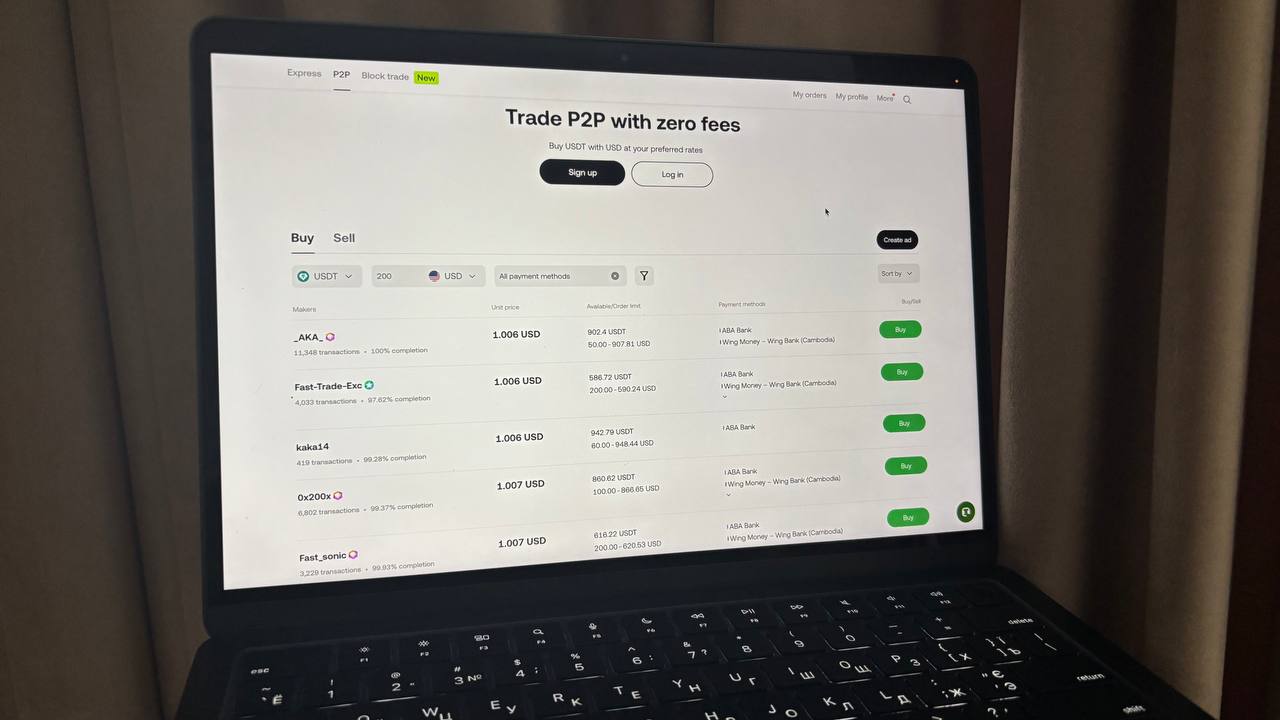
P2P is a classifieds-style marketplace where users trade directly with each other, while the platform provides escrow and infrastructure. On OKX P2P, there are two roles: regular traders, who select offers from a list, and advertisers, who create their own orders with a chosen price, limits, and payment methods.
When a trade is opened, the exchange locks the seller’s crypto in escrow and fixes the terms until the transaction is completed. The buyer then transfers fiat directly to the seller via a bank, payment app, or another selected method. The payment is made outside OKX, through the buyer’s bank, after which the buyer marks the payment as sent in the order and, if needed, uploads a receipt.
The seller then checks that the funds have arrived and confirms payment. Once confirmed, the locked crypto is automatically released from the seller’s P2P wallet and credited to the buyer.
If something goes wrong, for example if funds are sent but not acknowledged or a counterparty asks to cancel the trade, OKX P2P allows you to open a dispute. A moderator steps in, reviews the chat, timestamps, and submitted evidence, and then decides who receives the locked crypto.
Supported сryptos and payments
OKX P2P offers flexible asset and fiat coverage. On this P2P marketplace, we found dozens of fiat currencies and more than 100 payment methods, including bank transfers, cards, local wallets, and virtual banks. OKX itself states that it supports around 900 payment methods across roughly 40 currencies, showing a clear focus on local markets rather than just USD and EUR.
We did not trade only in USDT. The P2P section also offered USDC, BTC, ETH, and several other liquid assets, though the exact list depended on the region and selected fiat currency. The usability of OKX P2P depends less on the official list of supported coins and more on whether there are active listings for your currency and bank.
On popular routes, we had no trouble finding matching orders, but for more exotic currencies, the selection narrowed noticeably.
When exchanging crypto via P2P, we first selected the required fiat currency and payment method, then filtered listings by our bank cards and a $200 limit. We focused on three factors: price, amount range, and seller statistics, including the number of orders and completion rate.
In most cases, we chose sellers with high volume and completion rates above 98%. This approach helped reduce the risk of dealing with unreliable counterparties.
Fees and pricing model
We found that the platform itself does not charge fees for P2P trades or for posting listings. Trading and creating ads on OKX P2P are free, and there is no separate service fee to join the Merchant Program. Both maker and taker rates on OKX P2P are set at zero. At the exchange level, OKX P2P fees are effectively 0%. The same applies to the P2P Express format.
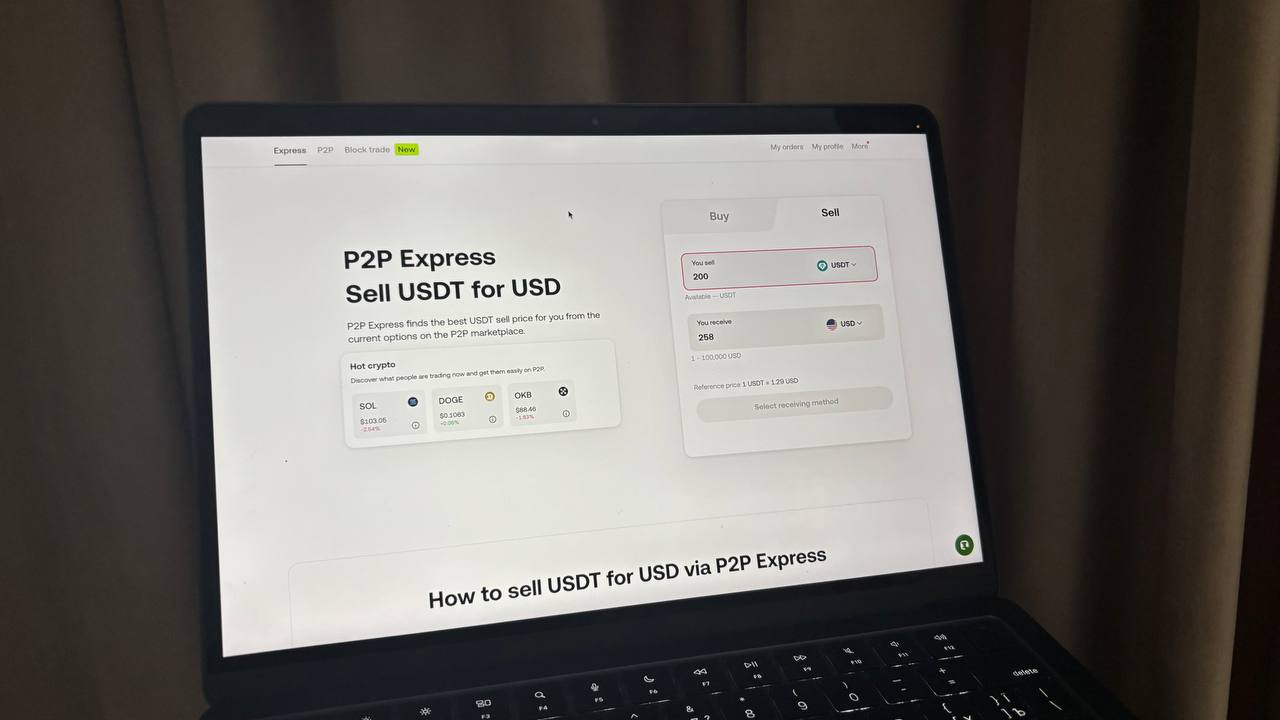
The real costs appear during the trade itself: bank or payment service fees for the transfer, exchange rate differences when converting fiat, and the spread built into the listing price.
None of these factors are controlled by OKX, and they do not appear in the interface as explicit “fees.” In our tests, we paid €0 OKX fees across 3 trades (buying €200 USDT, selling 203 USDT, buying €200 BTC). However, spreads added 2.4%-6.2% to costs. Our €200 USDT purchase with 2.4% spread cost €4.81 more than market rate (received 203 USDT instead of 208 USDT). SEPA transfers were free within the Eurozone, adding no extra cost.
Testing process
We tested OKX P2P with real trades to evaluate execution speed, spread accuracy, escrow reliability, and payment friction across multiple assets and payment methods.
Account setup:
- Account creation: 8 minutes (email, password, 2FA via Google Authenticator)
- KYC verification: Level 1 (Basic) completed in 22 minutes (passport + selfie)
- P2P access unlocked: Immediately after Level 1 KYC
- Daily limits: $10,000 buy/sell after Level 1 (sufficient for our tests)
Test trade 1: Buying USDT
- Asset: USDT (Tether)
- Amount: €200 paid → 204.8 USDT received
- Payment method: SEPA bank transfer (EUR, Germany → seller’s EUR account)
- Seller’s price: €1.00 = 1.024 USDT (or: 1 USDT = €0.9766)
- Market rate (Binance spot): (EUR/USD = 1.05): €1.00 = 1.05 USDT (or: 1 USDT = €0.9524)
- Spread: 2.4% (receiving 2.5% less USDT than market rate)
- Bank fee: €0 (free SEPA transfer within Eurozone)
- OKX P2P fee $0 (zero platform fee)
- Total cost: €200 → 204.8 USDT (effective rate: €0.9766/USDT vs €0.9524 market)
- Spread in EUR: €4.84 (market would give 210 USDT, we got 204.8 USDT = 5.2 USDT less × €0.9524 = €4.95)
Seller behavior (USDT trade):
- Completion rate: 98.6% (1,247 completed trades)
- Average release time: <20 minutes
- Actual release: 18 minutes
- Payment reference: “OKX-P2P-25JAN”
Execution timeline (USDT purchase):
- 11:15 – Selected seller ad, clicked “Buy USDT”
- 11:16 – Order created, 203 USDT locked in escrow (1 minute to confirm details)
- 11:18 – Sent €200 via SEPA instant transfer (2 minutes to enter seller’s IBAN)
- 11:20 – Marked payment as “Paid” in OKX, uploaded bank transfer screenshot
- 11:38 – Seller confirmed payment receipt (18 minutes wait)
- 11:39 – USDT released from escrow (1 minute after seller confirmation)
- Total time: 24 minutes (order creation → coins in wallet)
Seller behavior (USDT trade):
- Completion rate: 98.6% (1,247 completed trades)
- Average release time: <20 minutes (shown in ad)
- Actual release: 18 minutes (as advertised)
- Communication: No chat messages required, seller confirmed after seeing payment
- Payment reference required: “OKX-P2P-25JAN” (case-sensitive, included in SEPA transfer description)
Test trade 2: Selling USDT
- Asset: USDT (Tether)
- Amount sold: 203 USDT
- Amount received: €194.52
- Payment method: Buyer paid via SEPA instant transfer (received to our EUR account)
- Our asking price: €1.00 = 1.043 USDT (or: 1 USDT = €0.9588)
- Market rate (EUR/USD = 1.04):** €1.00 = 1.04 USDT (or: 1 USDT = €0.9615)
- Spread: 0.3% (priced 0.3% below market to sell quickly)
- Bank fee: €0 (received via SEPA, no incoming fee)
- OKX P2P fee: €0 (zero platform fee)
- Total received: €194.52
- Round-trip loss: Bought for €200, sold for €194.52 = €5.48 loss (2.7% total spread cost)
Execution timeline (USDT sale):
- 14:42 – Posted sell ad at 1 USDT = €0.9588
- 15:08 – Buyer accepted order (26 minutes to find buyer)
- 15:08 – 203 USDT locked in escrow automatically
- 15:14 – Buyer marked payment as “Paid” (6 minutes to send via SEPA instant)
- 15:15 – Received €194.52 in bank account (1 minute SEPA instant processing)
- 15:16 – Confirmed payment in OKX, released USDT from escrow (1 minute to verify)
- Total time: 34 minutes (ad posted → fiat received)
Spread comparison (USDT buy, 5 ads checked at 11:15 on Jan 25, EUR/USD = 1.04):
- Best rate: €1.00 = 1.025 USDT (1.4% spread) – min. €500, seller 92% completion, 45+ min avg. release
- Our seller: €1.00 = 1.015 USDT (2.4% spread) – min. €50, seller 98.6% completion, <20 min release
- Mid-range: €1.00 = 1.010 USDT (2.9% spread) – min. €100, seller 96% completion, 30 min avg.
- Higher spread: €1.00 = 1.005 USDT (3.4% spread) – min. €30, seller 99.2% completion, instant release
- Worst rate: €1.00 = 0.995 USDT (4.3% spread) – min. €20, seller 87% completion, 60+ min release
Why we chose 2.4% spread seller:
We prioritized reliability (98.6% completion, <20 min release) over best price (1.4% spread but 92% completion, 45+ min). For €200, paying €2.00 extra (€4.81 vs €2.81) was acceptable to reduce dispute risk.
Test trade 3: Buying BTC
- Asset: BTC (Bitcoin)
- Amount paid: €200
- Amount received: 0.002404 BTC
- Payment method: SEPA bank transfer (EUR, Germany)
- Seller’s price: €83,195/BTC
- Market rate: (BTC/USD = $81,500, EUR/USD = 1.04): €78,365/BTC
- Spread: 6.2% (significantly higher than USDT)
- Bank fee: €0 (free SEPA transfer)
- OKX P2P fee: €0
- Total cost: €200
- Spread cost: €11.66 (market: 0.002552 BTC, received: 0.002404 BTC)
BTC execution time: 41 minutes (slower seller, 96% completion rate, avg. 40 min release)
Payment friction observed:
- USDT buy: SEPA instant transfer arrived immediately, no bank flags or delays
- USDT sell: Buyer used SEPA instant, payment received within 1 minute
- BTC buy: Standard SEPA transfer (not instant), seller waited 15 extra minutes for bank confirmation before releasing coins
Escrow reliability:
- All 3 trades: Crypto locked in escrow immediately upon order creation
- No cases of seller backing out after escrow lock
- Countdown timer visible (15-minute default for payments under €1,000)
- Timer extension worked when requested (USDT sell: buyer asked for +10 min, granted automatically)
Dispute readiness (not needed, but prepared):
- Screenshots saved: Bank transfer confirmations (timestamp, amount, IBAN, reference)
- OKX requirement noted: May request bank statement or chat screenshots for disputes
- Appeal window: 24 hours after order closed
- Not needed: All 3 trades completed smoothly
Customer support test:
- Submitted non-urgent ticket asking about frozen account procedures (hypothetical)
- Response time: 8 hours 15 minutes
- Answer quality: Generic template response, linked to Help Center article (not personalized)
Pros, cons & limitations
How OKX P2P behaves in daily use:
Strengths:
- high liquidity for USDT and major coins on primary routes (we found 40+ active USDT sellers with EUR/SEPA in under 2 minutes)
- zero OKX fees for P2P trades, with the exchange explicitly emphasizing a 0% trading fee model
- trades run through OKX escrow with a countdown timer and built-in security prompts, available on both web and mobile apps
Weaknesses:
- significant portion of the risk still falls on the user, as counterparties, payment details, and proof of transfer must be verified manually, while the exchange only secures the escrow
- accounts can be frozen due to disputed P2P payments or bank checks, with unfreezing taking anywhere from a few hours to several weeks in complex cases
- liquidity and payment method availability depend heavily on the region; (EUR/SEPA well-covered with 40+ sellers, but less common currencies show 5-10 ads with wider spreads)
- there are complaints about lengthy reviews and unclear explanations from support when P2P trades are frozen
In our view, OKX P2P suits users who are comfortable with bank transfers, understand how escrow works, and are willing to accept the risk of temporary account reviews in exchange for zero fees and a wide range of local payment methods.
For users who expect fully automated withdrawals with no interaction and no potential checks, the P2P format on OKX may feel too complex and stressful. In that case, a standard withdrawal option is the better choice.
Trustworthiness check
OKX emphasizes transparency through Proof of Reserves. The exchange publishes monthly reports and shows reserve ratios for major assets. For BTC, ETH, USDT, and others, these ratios remain above 100%, meaning OKX holds slightly more coins in its wallets than are reflected in user balances.
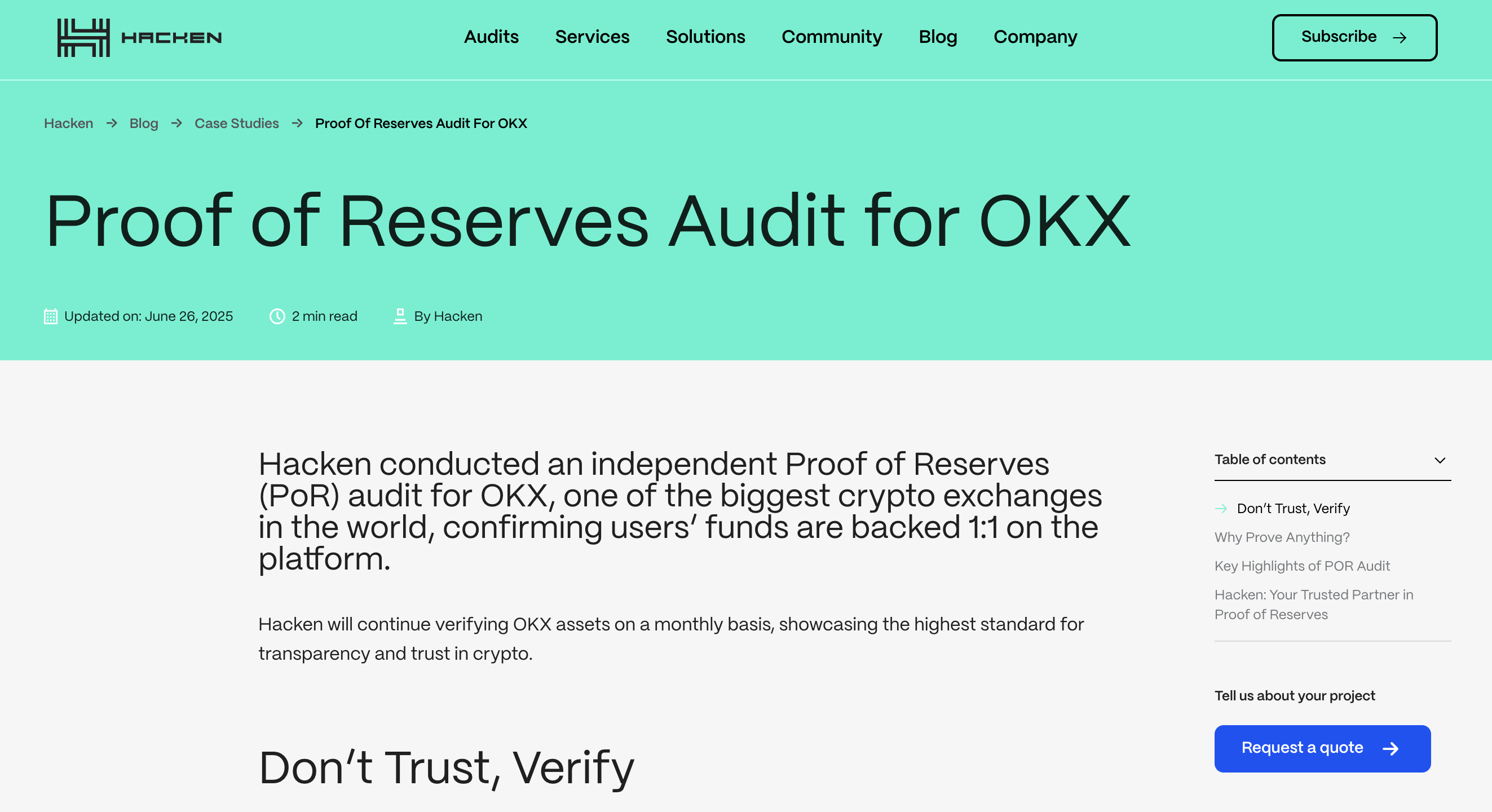
However, OKX is still a centralized custodian without deposit insurance. In the event of a default, there are no legal guarantees of full reimbursement.
On the P2P market itself, security is built around escrow and communication rules. The seller’s crypto is locked until payment is confirmed, and the interface includes a trade countdown timer. OKX prohibits moving conversations to external messengers or relying solely on payment screenshots as proof. In disputes, moderators request bank statements from both sides.
Among major incidents, in 2020, when operating under the OKEx brand, the exchange suspended withdrawals after one of the private key holders became unavailable due to cooperation with law enforcement. All other services continued to function, but users were unable to withdraw funds for several weeks.
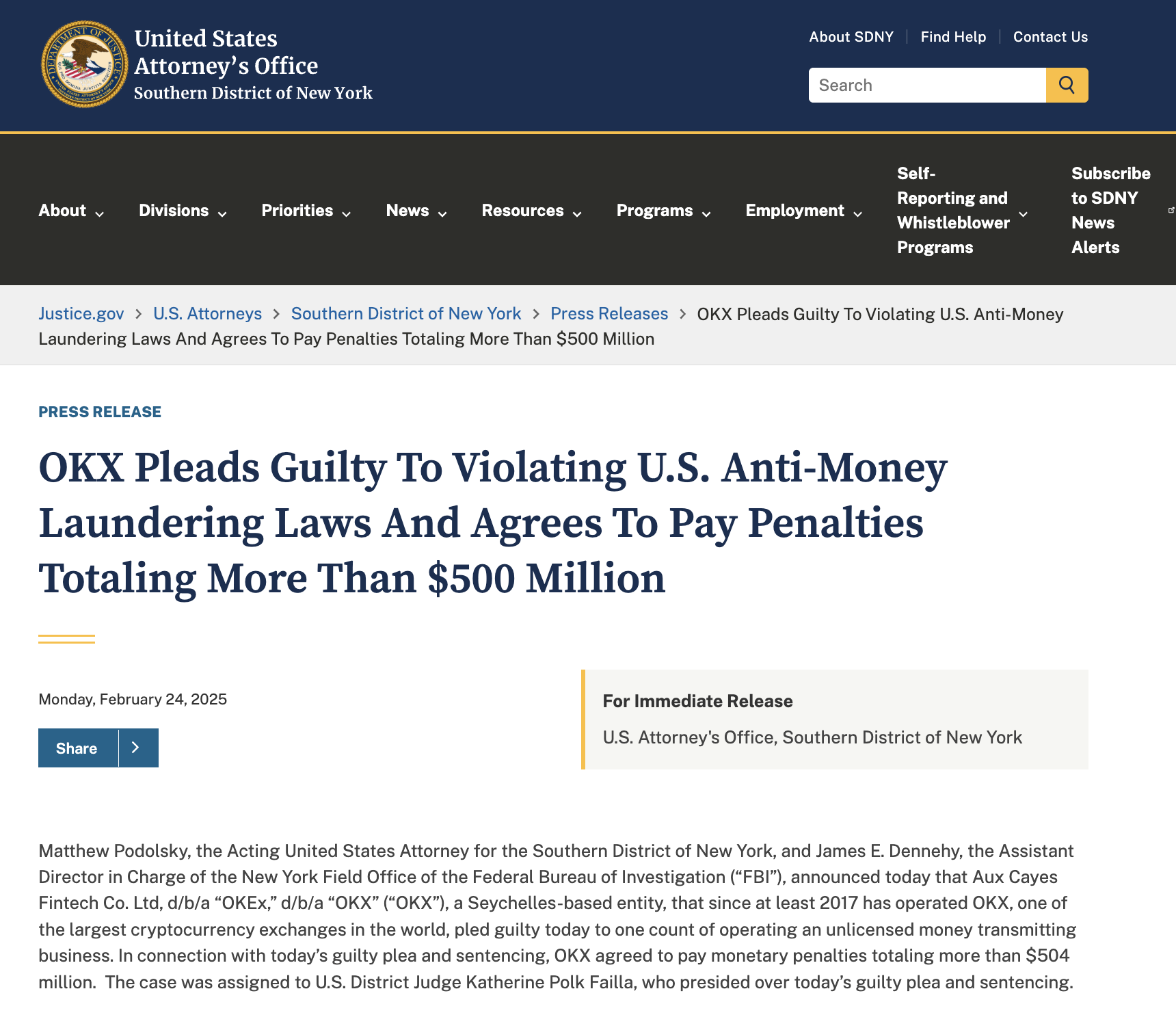
In 2025, OKX’s operator admitted guilt in a US AML case and agreed to pay more than $500m, along with accepting external monitoring through 2027. Regulatory risks around the platform remain, and they also affect P2P trading.
Our conclusion: OKX P2P can be used if you understand that it is a centralized exchange without guarantees and keeps only the amounts needed for current operations on the platform.
GNcrypto’s overall OKX P2P rating
After testing OKX P2P with account creation (8 min setup, 22 min KYC), buying €200 worth of USDT (203 USDT received, 24 minutes execution, 2.4% spread vs market, seller released in 18 min via SEPA instant), selling 203 USDT (€194.52 received, 0.3% spread, 34 min total time), buying €200 worth of BTC (0.002404 BTC received, 41 min execution, 6.2% spread), and spread comparison across 5 ads (1.4%-4.3% range for USDT), the platform delivered on zero platform fees (€0 OKX fees on all 3 trades, costs limited to spreads), high liquidity (USDT ads abundant, found sellers in <2 min), and reliable escrow (crypto locked instantly, countdown timer enforced).
We rated it 3.75/5 overall, with 4.5/5 for liquidity (USDT/BTC well-stocked, EUR/SEPA well-covered), 4.0/5 for fees (0% OKX fees, but 2.4% USDT spread, 6.2% BTC spread typical), and 3.0/5 for support (8-hour response, generic template).
Strong for Eurozone traders comfortable with SEPA transfers who want zero platform fees, weaker for users needing fast support (8+ hour responses) or tight spreads on BTC (6.2% vs 2.4% for USDT).
| Criterion | Score |
|---|---|
| Escrow & Trade Safety | 3.5 |
| Liquidity & Order Book Depth | 4.5 |
| Fees & Payment Methods | 4.0 |
| Verification & Account Limits | 3.5 |
| Platform Performance & Reliability | 4.0 |
| User Experience & Trade Flow | 3.5 |
| Customer Support & Dispute Handling | 3.0 |
| Total | 3.75 / 5.00 |
How we test P2P crypto platforms
At GNcrypto, we value transparency over marketing. In our P2P platform reviews, including this OKX P2P review, we rely on hands-on experience rather than promo pages. We fund accounts, complete real trades as both buyers and sellers, test escrow and limits, and observe how the platform handles disputes. Testing typically takes 7–14 days and covers the full buy-and-sell cycle.
We are not auditors and cannot guarantee protection against every type of fraud. The scores in the table reflect only what we can directly observe and verify: how escrow works, how deep the listings are, and how quickly support responds.
We do not assess theoretical absolute security or a company’s financial resilience. Instead, we show how the platform performs in real-world use.
Categories & weights
We evaluate P2P platforms across seven criteria. Transaction security and liquidity carry the most weight in the final score. In this review, we apply the same framework to OKX P2P.
- Escrow & Trade Safety – 25%
- Liquidity & Order Book Depth – 20%
- Fees & Payment Methods – 15%
- Verification & Account Limits – 15%
- Platform Performance & Reliability – 10%
- User Experience & Trade Flow – 10%
- Customer Support & Dispute Handling – 5%
We first assign a score from 1 to 5 for each criterion, then multiply it by the criterion’s weight and sum the results. The final score is what we use to compare OKX P2P with other P2P platforms.
The material on GNcrypto is intended solely for informational use and must not be regarded as financial advice. We make every effort to keep the content accurate and current, but we cannot warrant its precision, completeness, or reliability. GNcrypto does not take responsibility for any mistakes, omissions, or financial losses resulting from reliance on this information. Any actions you take based on this content are done at your own risk. Always conduct independent research and seek guidance from a qualified specialist. For further details, please review our Terms, Privacy Policy and Disclaimers.
Articles by this author