Bitcoin mining in China: alive despite bans

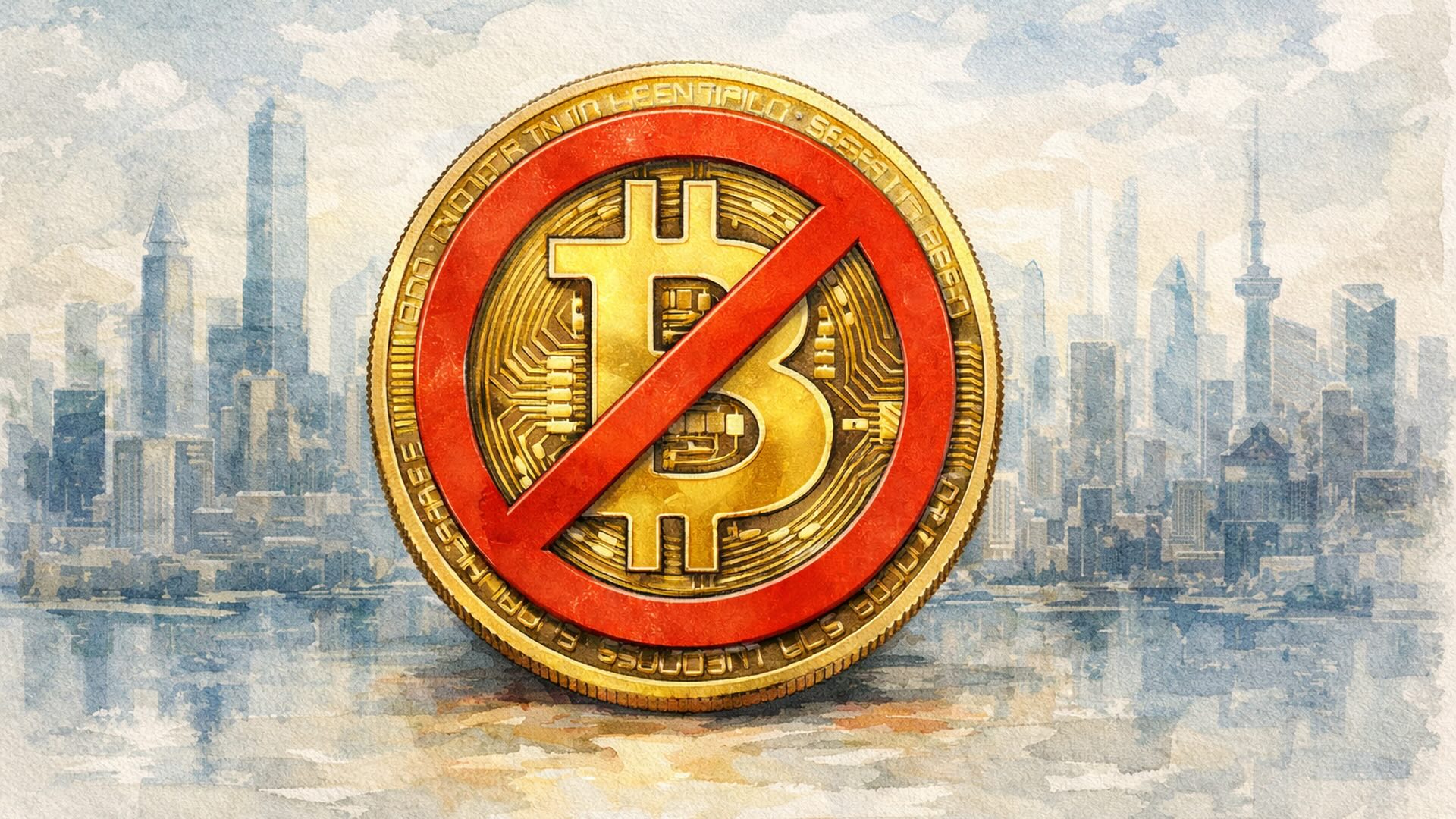
China officially banned crypto mining and trading four years ago. On paper, the industry is banned. However, hashrate figures and equipment sales suggest that China is now among the top three countries by Bitcoin mining.
The puzzle is simple: the world has entered a race for computing power for artificial intelligence, and all the accompanying infrastructure (energy, data centers, cooling systems, sites near substations) is needed for both AI and Bitcoin.
Thus, China, which once built huge data centers for mining, can now use this resource in a “three-in-one” format: earn on crypto, serve domestic AI needs and help allies get around sanctions.
How China is taking mining back
After the sweeping 2021 ban, many assumed Chinese mining was history. Farms were moving en masse to the United States, Canada, Kazakhstan and the Middle East. But a few years later, data from analysts and researchers show that mining in China looks like Schrödinger’s cat: de jure it does not exist, yet de facto it keeps gaining strength. China is now among the top three countries by Bitcoin mining hashrate, but in official government statistics this activity is nowhere to be found.
On the ground, the story is much more down to earth. In power-rich regions like Xinjiang or Inner Mongolia there is still cheap electricity and infrastructure from older data centers. Some sites are officially repurposed for cloud services and data storage, while others keep Bitcoin mining under the label of entirely legal server hosting.
The ban is respected only as long as it does not get in the way of profit.
A separate part of this story is China’s hardware industry. The world’s largest mining company, Bitmain, and other manufacturers like Canaan have spent a decade building a global market for ASIC chips for Bitcoin. Bitmain founder Jihan Wu turned mining from a hobby for enthusiasts into heavy industry with factories, contract farms and mass-produced device lineups.
Today this hardware ecosystem sits at the crossroads of two trends. On the one hand, demand for mining grows along with the price of BTC. On the other hand, the same sites that used to host mining farms are now being rebuilt into clusters for artificial intelligence. In practice, any large farm is already almost a data center. The land is there, the power lines are there, the cooling and logistics are there. All that is left is to swap part of the hardware and reconfigure the network.
This shift is easiest to see in the United States, where big mining companies openly talk about moving to a business model based on supplying computing power for AI. China watches its main technological rival turn yesterday’s mining farms into AI centers and is unlikely to stay a bystander. Keeping its own mining capacity, even in the shadows, gives Beijing a chance to quickly redeploy these resources to AI tasks when the political timing looks right.
Bitcoin as geopolitics: why China’s mining push is a risky story
There are several strong reasons behind the renewed growth of Chinese mining.
- Mining is profitable again
As long as Bitcoin prices stay high and electricity in some regions is extremely cheap, shutting down such a business makes little sense. Even if part of the income flows through the shadows, this money still supports jobs, keeps power plants busy and brings tax revenue through adjacent industries.
- Economic rivalry with the United States
Washington and Beijing are arguing not only over whose AI models will be smarter, but also over who will have more “muscle” behind those models. The real competition is about megawatts, data centers and chips. American firms are actively buying up former mining sites and turning them into data centers for AI workloads. For China, following a similar path within its own ecosystem looks natural.
Control over Bitmain, Canaan and other hardware makers puts China in a special position. On one side, the country holds a significant share of the global hashrate market and mining device supply. On the other, the same skills and production chains can be used to build equipment for artificial intelligence. This is already a battle for the backbone of the future digital economy.
- Sanctions and crypto-based payments
Since 2022, Russia has been gradually legalizing the use of digital assets in foreign trade. At the same time, the country is building up “shadow” mining capacity, especially in regions with cheap electricity. Crypto is used to bypass sanctions, pay for imports and move capital out of the country.
A similar pattern can be seen in other sanctioned economies, including Iran. Every year, tens of billions of dollars tied to such countries move through crypto wallets, exchanges and mixers. This is only the visible part of the iceberg that analysts can map using open blockchain data.
In this context, China looks like a natural infrastructure supplier. It manufactures the equipment, can host farms at home, and can also sell hardware to partners and help them keep it running. Formally, Beijing keeps its distance from any specific circumvention schemes. In practice, it strengthens ties with states that no longer feel comfortable inside the dollar system and are looking for alternative payment channels.
For China, it is important to keep the option to say at any moment that mining is banned and that authorities are fighting violators. From time to time, there are real crackdowns and some farms are shut down. But the industry is never wiped out completely. It continues to live in the shadows and slowly turns into a tool of long-term strategy.
The more national economies depend on AI and digital services, the more valuable control over “computing factories” and energy becomes. China today is not just breaking its own mining ban. It is deliberately keeping and expanding an asset that generates profit, strengthens its hand in the tech race with the United States and opens extra room for cooperation with sanctioned partners, including Russia.
The material on GNcrypto is intended solely for informational use and must not be regarded as financial advice. We make every effort to keep the content accurate and current, but we cannot warrant its precision, completeness, or reliability. GNcrypto does not take responsibility for any mistakes, omissions, or financial losses resulting from reliance on this information. Any actions you take based on this content are done at your own risk. Always conduct independent research and seek guidance from a qualified specialist. For further details, please review our Terms, Privacy Policy and Disclaimers.
Articles by this author