MetaMask Bitcoin wallet review: features, fees and supported networks
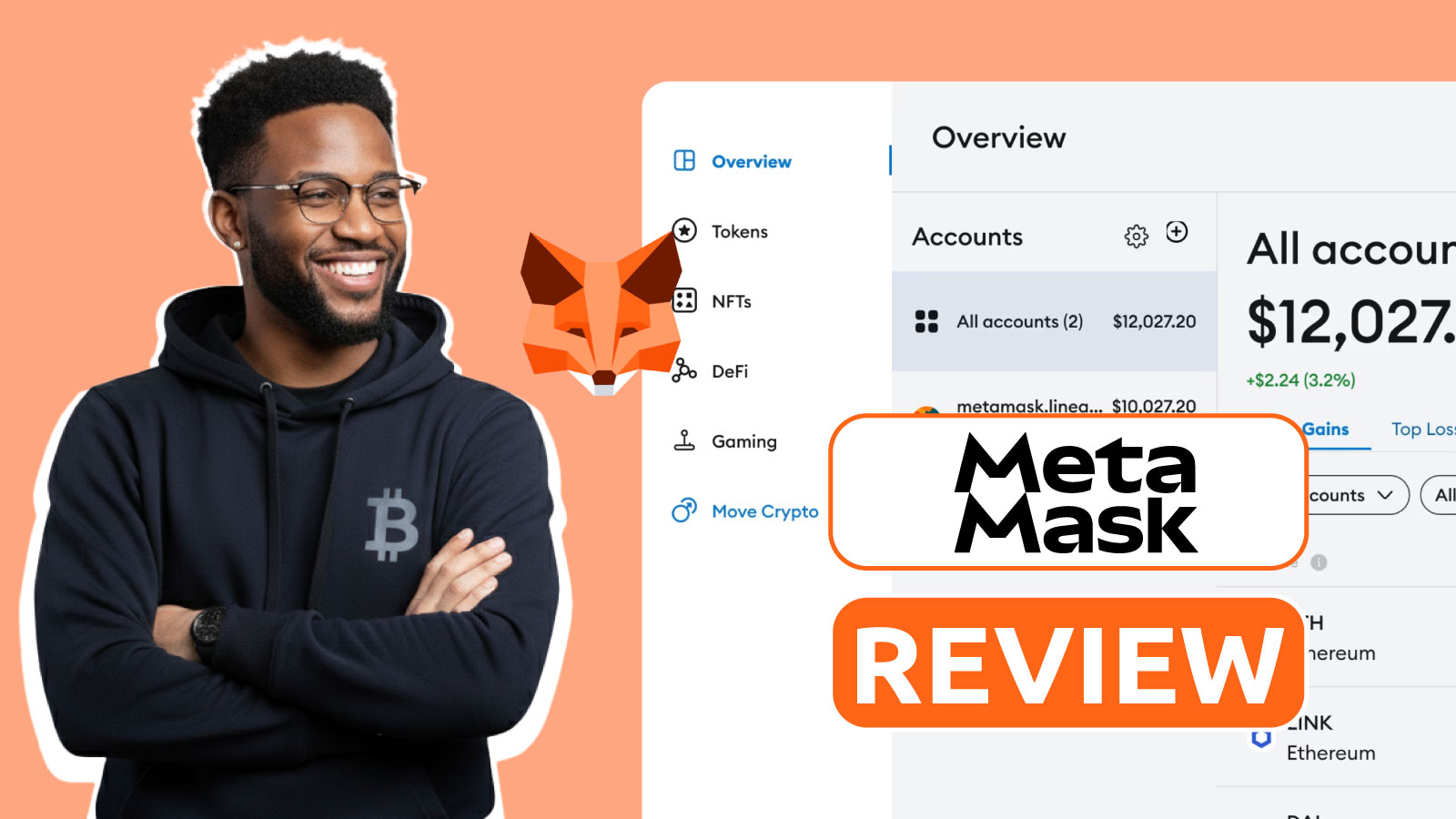
We ran a hands-on test and looked closely at two things. First, how MetaMask reduces the chance of user error through warnings and action previews. Second, where the risk still sits with the user, for example when granting permissions (approvals), signing transactions, and choosing an RPC, especially on custom networks.
Even people outside of crypto have likely heard of MetaMask. And for anyone who has used DeFi, this wallet is often the “first experience”: install the extension, connect to a dApp, sign a transaction, receive tokens.
At the same time, MetaMask draws plenty of debate around security. The key thing to remember is that no matter how convenient a wallet is, it cannot protect your funds if you approve transactions or permissions on autopilot.
What MetaMask is
MetaMask’s story mirrors the broader evolution of Web3. The project launched in 2016, created by Aaron Davis and Dan Finlay with a clear goal: make it easier to use Ethereum without forcing everyday users to run a full node. Back then, the entry barrier to crypto was very high, and MetaMask’s browser-extension format helped set the standard for how people connect to decentralized apps (dApps).
What started as an Ethereum token wallet evolved into a multi-chain hub by 2024. Out of the box, MetaMask supports networks such as Ethereum, Linea, Base, Polygon, BNB Chain, Arbitrum, Optimism, Avalanche (C-Chain), zkSync Era, and Sei.
For this MetaMask cryptocurrency wallet review, we focused on what you can actually verify in the interface during install and first-run setup.
For our test, we used two forms of the product: a browser extension for desktop browsers and the mobile app. There is no standalone “desktop app” in the usual sense; MetaMask runs inside your browser on a computer.
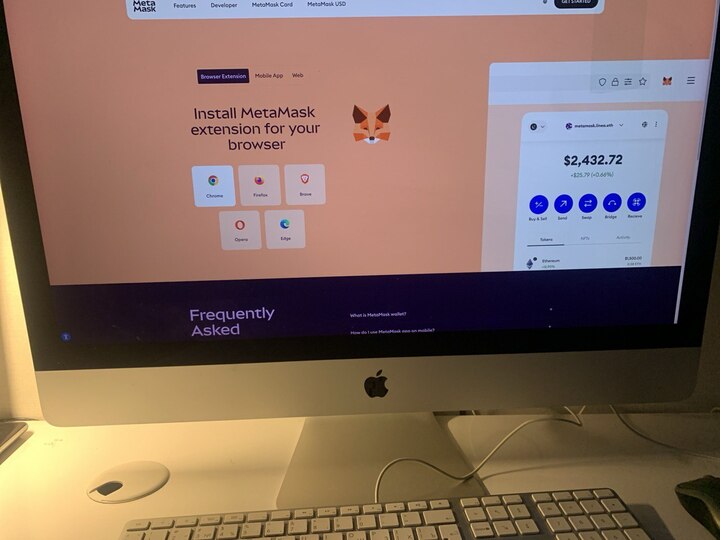
The installation flow was straightforward. On desktop, we started from the official download page, then followed the link into the extension store for the specific browser. In our run, the extension installed and worked in Chrome, Firefox, and Opera. In terms of system requirements, you essentially need a modern computer with an up-to-date browser that allows extensions. On managed or corporate devices, that permission can be restricted by policy.
On a phone, MetaMask installs like a normal app from the App Store or Google Play. Before installing, we checked the store requirements: the App Store lists iOS 15.1 or newer. On Android, requirements depend on the specific Google Play build and device compatibility, but in our test both install and first launch were smooth.
After installation, we ran both standard onboarding paths: creating a new wallet and importing an existing one.
When creating a wallet, the app walks you through the Secret Recovery Phrase (SRP) flow, then asks you to set a password and enables additional protection options depending on the platform.
In day-to-day use, MetaMask feels like a “universal interface” for EVM networks. In our test, that showed up in the small things: account structure, permission management, a consistent confirmation flow, and easy access to network settings, including adding custom RPCs. If you actively use multiple EVM networks, this approach saves time because you do not have to relearn different interfaces.
We also checked how the wallet communicates responsibility around the SRP and what it warns you about upfront. MetaMask does not guarantee account recovery if you lose your SRP, and phishing and fake extensions remain the biggest practical risks.
Web3 & DeFi connectivity: dApps, NFTs, and signing
The second part of our MetaMask Bitcoin wallet review focused on everyday Web3 scenarios. We documented how the wallet behaves when connecting to dApps, handling NFTs, and signing actions, which is where users most often make mistakes. MetaMask connected to dApps through standard connection requests, and then we checked how readable the signing and permission screens were. The most practical quality check here is simple: is it clear what you are approving, and are the warnings strong enough to stop an automatic tap on “Confirm”?
In our test, the permission flow was one of MetaMask’s stronger points. The interface tries to separate message signatures from on-chain transactions and highlights the moments when you are granting a smart contract access to tokens. The risk, however, is still real. If you grant an overly broad approval, subsequent spending within that approval may not require additional confirmation. That is why we assessed not just the UI, but how effectively MetaMask helps you spot potentially risky actions before you sign.
We also tested built-in swaps as the default path, meaning you do not leave the wallet for a third-party aggregator. In the MetaMask interface, the pricing model was transparent: during our test, the swap fee displayed as 0.875%, plus network gas. This matters for real-world costs because the final price is not just gas, and the wallet should make that obvious before you approve.
For NFTs, MetaMask behaved more like a basic showcase than a standalone product. Viewing, grouping, and displaying items worked well for day-to-day use. We treated NFTs as a higher-risk area on purpose because spam airdrops and phishing links are common, so we paid close attention to how the wallet helps you avoid interacting with suspicious content.
Supported networks & tokens: what we found testing MetaMask assets
The biggest advantage we saw in MetaMask is its flexibility across networks. For the EVM ecosystem, it remains a solid home base: you can work with Ethereum and L2s, add custom networks via RPC, switch between them, and view assets within the selected network.
We also tested MetaMask with a mixed portfolio. For EVM assets, the logic is predictable: tokens are shown per network, and asset discovery depends on whether the network and RPC return data correctly. The main limitation is practical rather than theoretical: if an RPC is unstable or misconfigured, balances may appear as zero or update with delays.
Bitcoin is a specific focus in the brief. In our test flow, we treated MetaMask as a multi-chain wallet: EVM by default, plus Bitcoin as a separate track. We checked basic readiness: create and import an account, see balances, run a standard send, and understand fees before confirming. For advanced Bitcoin workflows (fine-grained UTXO control and privacy tooling), this is not a replacement for specialized BTC wallets, but for a multi-chain wallet the baseline functionality was sufficient.
At the summary level, MetaMask wallet reviews for networks and tokens come down to a trade-off. MetaMask is convenient when you need EVM compatibility and the option to add non-standard networks. But the more you rely on custom RPC endpoints and niche chains, the higher the cost of mistakes becomes, as verifying addresses, approvals, and fees falls on you.
Trustworthiness check: lawsuits and incidents tied to MetaMask
Beyond UX and feature testing, we also reviewed public legal and compliance developments connected to MetaMask and its parent company, Consensys. This is a quick snapshot of where the wallet and its services have drawn regulatory scrutiny or been pulled into incidents.
- In June 2024, the U.S. Securities and Exchange Commission (SEC) filed a lawsuit against Consensys, raising claims related to MetaMask Swaps and MetaMask Staking, including alleged broker-registration violations.
- In April 2024, Consensys filed a preemptive lawsuit against the SEC in federal court in Texas, seeking clarity on the regulatory approach and how it could apply to MetaMask. The case was heard in the Northern District of Texas and was dismissed in September 2024.
- In February 2025, Consensys publicly announced an agreement with the SEC under which the MetaMask-related case would be closed upon Commission approval and final court settlement.
- MetaMask and Infura periodically run into access restrictions tied to compliance and sanctioned jurisdictions. MetaMask routes through Infura by default, and Infura is not available in certain regions.
- MetaMask warned iOS users about phishing risks related to iCloud backups, where attackers try to take over an iCloud account and then access encrypted wallet data.
Overall, MetaMask reads as a mature product that still attracts regulatory attention and remains a target for phishing campaigns.
Our practical takeaway is simple: install only through official channels, lock down phone and cloud accounts, and treat approvals as a high-risk area.
Pros and cons of using MetaMask
To sum things up, here are the most important strengths and weaknesses we saw, so readers can make an informed decision with the trade-offs in mind.
Strengths:
- Fast setup and a clear start, on desktop via the browser extension and on mobile via the app
- Strong EVM compatibility, easy connections to most dApps, and a consistent confirmation flow
- Ability to add custom networks via RPC for niche ecosystems
- Extensibility via Snaps, allowing non-standard features without switching wallets
- Signing previews and warnings that help prevent “blind” confirmations, especially for approvals
- Transaction Shield service that provides transaction protection up to $10,000 per month and priority support if a compromise is suspected
Weaknesses:
- High user-responsibility risk around approvals and signing
- Additional MetaMask Swaps fee of 0.875% on top of standard network gas
- Reliance on RPC providers for custom networks
- No standalone desktop app, extension-only on desktop
- Limited fit for advanced workflows outside EVM, including deeper Bitcoin needs
- No built-in 2FA
- Reliance on Infura and occasional balance refresh delays during peak load
In our view, MetaMask covers basic to mid-level Web3 tasks in the EVM ecosystem well and offers a lot of flexibility across networks. It does not reduce the responsibility around signing and approvals to a “safe-by-default” level, so user discipline is still the deciding factor.
GNcrypto’s overall MetaMask rating
After our test, MetaMask feels like the default EVM wallet that has matured into a practical, everyday Web3 tool across multiple networks. Setup is fast on both the browser extension and mobile, the dApp connection flow is consistent, and the signing and approval screens add enough context to reduce “click-through” mistakes. We rated it highly for EVM compatibility and day-to-day usability, but knocked it down for the added swap fee on MetaMask Swaps, the reliance on RPC quality in custom networks, and the fact that broader non-EVM needs can still push you toward a second wallet.
| Criteria | Rating (out of 5) |
|---|---|
| Security & Key Management | 4 |
| Supported Assets & Networks | 5 |
| Transaction Costs & Speed | 3 |
| User Experience & Interface | 5 |
| DeFi & dApp Integration | 5 |
| Recovery & Backup Systems | 5 |
| Customer Support & Documentation | 5 |
| Total Score | 4.6 |
How we test hot crypto wallets
At GNcrypto, we put transparency first when evaluating hot cryptocurrency wallets. Our reviews are based on hands-on testing and thorough analysis across all key dimensions that matter for self-custody and daily crypto use.
We do not audit wallet code or guarantee security against all attack vectors. Instead, our scores reflect usability, feature completeness, and observable security practices. We do not accept payment for ratings or modify scores based on partnerships.
Categories & weights
We rate hot wallets on seven criteria. Security and Asset Support are weighted heaviest because a wallet that isn’t safe or can’t hold your coins is useless, regardless of how pretty the UI is.
- Security & Key Management – 25%
- Supported Assets & Networks – 20%
- Transaction Costs & Speed – 15%
- User Experience & Interface – 15%
- DeFi & dApp Integration – 10%
- Recovery & Backup Systems – 10%
- Customer Support & Documentation – 5%
The material on GNcrypto is intended solely for informational use and must not be regarded as financial advice. We make every effort to keep the content accurate and current, but we cannot warrant its precision, completeness, or reliability. GNcrypto does not take responsibility for any mistakes, omissions, or financial losses resulting from reliance on this information. Any actions you take based on this content are done at your own risk. Always conduct independent research and seek guidance from a qualified specialist. For further details, please review our Terms, Privacy Policy and Disclaimers.
Articles by this author