LocalCoinSwap reviews 2026: non-custodial P2P escrow, fees, and safer trading tips
LocalCoinSwap is a P2P crypto marketplace with a non-custodial trading flow. In this review, we show how to check coins and payment methods in your region, how fees appear in real offers, and what to do to reduce scam risk before you click Paid.

Liquidity & Volume
5.0
Payment Methods
4.0

Liquidity & Volume
4.0
Payment Methods
4.0

Liquidity & Volume
4.0
Payment Methods
4.5

Liquidity & Volume
3.5
Payment Methods
4.5

Liquidity & Volume
3.5
Payment Methods
3.5
LocalCoinSwap is a peer-to-peer platform where you exchange fiat for crypto with other users, while the platform provides an escrow-style trade flow and a dispute process. In this guide, we focus on practical steps: how to confirm your coin and payment method have enough active offers, where the real costs come from, and how to choose safer counterparties. Based on our methodology, we rate LocalCoinSwap 3.5/5. P2P always involves counterparty risk; our score reflects observable mechanics, not a guarantee.
What LocalCoinSwap is
The first mindset shift for beginners is that this is not a classic exchange order book. You are not placing a market order into a pool of liquidity. Instead, you choose a specific person’s offer with a specific price, limits, and payment method, then complete the deal under the platform rules. Because offers are local, your experience can look great in one country and feel empty in another. In this LocalCoinSwap review, we focus on what the non-custodial direction means in practice for a first P2P trade.
The platform has moved toward a model where trades run without the company holding your crypto the same way a custodial exchange would. We think that can feel reassuring if your main fear is leaving money on a platform. At the same time, it comes with a trade-off: you still need to be careful with access, backups, and the exact steps of a P2P deal. Non-custodial does not mean risk-free, it means responsibility shifts more to the user.
Who we could recommend it for: first-time P2P buyers who want to turn local money into stablecoins like USDT, especially if mainstream exchanges are awkward in their region. It can also fit users who prefer the idea of not keeping an idle balance on a centralized platform longer than necessary.
Who may not enjoy it: traders who expect predictable depth and tight pricing at any hour, or users who want to run high volume as a merchant from day one.
Supported cryptos and payments
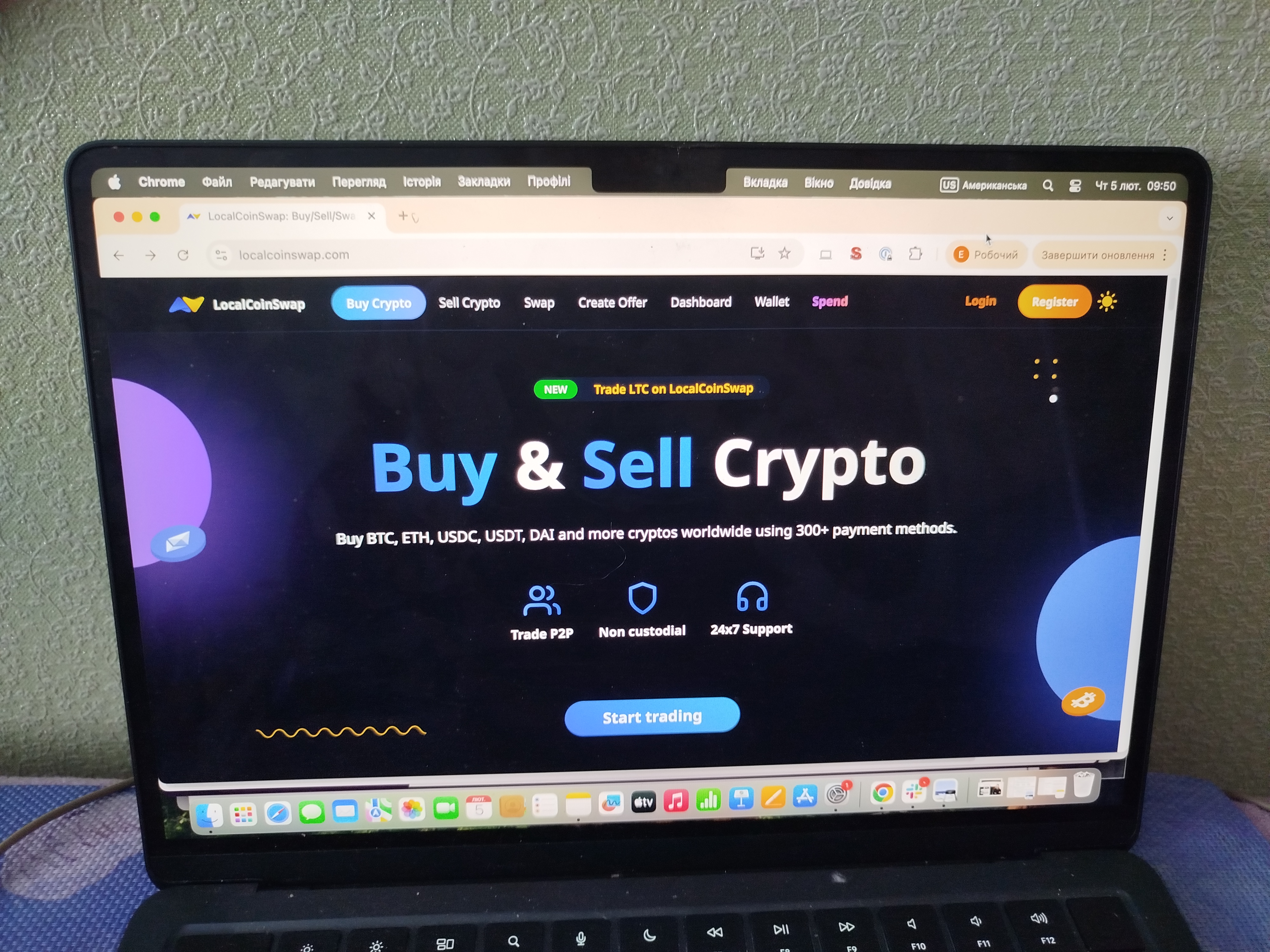
For most beginners, the question is simple: can I buy a familiar coin like USDT or BTC in my currency, using a payment method I already trust. LocalCoinSwap can work well for that goal because it is built around payment diversity, but the practical outcome depends on your local market.
On the crypto side, most new users end up gravitating to stablecoins and majors. USDT and USDC are common choices for “park value and move on,” while BTC is usually the next most requested coin. What matters more than the token list is whether there are active offers for the coin you want, in the fiat you use, with the payment method you can actually send.
A quick check we would do before committing to a platform is straightforward:
- Set your fiat currency.
- Filter by your exact payment method.
- Scan how many active offers exist, what limits they have, and how far prices sit from a reliable spot reference.
If you only see a few offers, spreads tend to widen and the best prices disappear quickly.
Fees are where many LocalCoinSwap reviews can be misleading if they only quote a single number. LocalCoinSwap states that users who create offers pay a 1% fee on completed trades. In our view, that matters most if you plan to act like a merchant and post ads regularly, because the fee often gets baked into the offer price. If you are simply taking existing offers, you usually feel the cost through the spread plus whatever your bank or payment app charges.
One small detail worth checking on the fee page is withdrawal conditions by network. For example, the platform notes a daily free withdrawal for USDT on TRC20, which can matter if you move small amounts often.
Finally, set realistic expectations around verification. Even if onboarding feels light, verification can be requested in specific cases, such as disputes or suspicious activity, so we would not assume a no-questions-asked experience forever.
How non-custodial escrow works
Escrow is the feature that makes P2P trading safer than sending money to a stranger and hoping for the best. In plain terms, the crypto for the deal is reserved under an escrow flow while you complete the fiat payment, and it should only be released once the trade conditions are met.
With a non-custodial approach, the goal is to avoid the platform holding user funds like a traditional exchange. For beginners, the key point is not the technical implementation, it is the habit: follow the in-trade rules exactly, keep the whole conversation on the platform, and do not improvise when a counterparty asks for a shortcut.
A simple first trade checklist we would follow on LocalCoinSwap P2P:
- Choose a counterparty with strong completion signals and real trade history.
- Read the offer terms before paying, including bank name, required memo, and time limits.
- Pay only to the account details shown inside the trade, not to new details sent in chat.
- Mark payment as sent and keep proof, such as a receipt or bank confirmation.
- Stay in the in-trade chat until the crypto is released.
- If you are selling, confirm the money arrived in your account before you release crypto.
If something goes wrong, use the dispute process inside the trade. We think the best way to protect yourself is to make evidence easy: screenshots, timestamps, and clear payment confirmation that matches the offer terms. Depending on the payment method and the situation, you may also be asked for additional verification, which is why it is smart to keep your account details consistent.
The most common beginner mistakes are avoidable. People pay to the wrong details, trust a screenshot instead of a real account credit, accept third-party payments, or move the deal to Telegram or WhatsApp. In our view, most P2P losses happen in these side channels, not in the official escrow flow.
Pros and cons
We think LocalCoinSwap is most attractive when you want a simple outcome: buy or sell crypto using payment methods that actually work in your country, without treating the platform as a long-term place to store funds.
Strengths:
- Non-custodial orientation: if your biggest worry is leaving assets on a custodial exchange, the platform direction can feel reassuring because trades are designed around user control rather than a classic deposit model.
- Payment method variety: if you rely on local rails, the marketplace approach can help you find offers that match your bank or e-wallet, especially in regions where standard fiat ramps are limited.
- Taker-friendly feel for first buys: if you simply pick an existing offer, your cost usually shows up in the offer price and payment charges, not in an extra platform fee line item.
Weaknesses:
- Merchant economics can be tight: if you plan to create offers and run volume, competing on price can compress margins fast, especially in crowded markets.
- Liquidity is uneven by fiat and country: some markets have plenty of offers, others are thin, which can widen spreads and reduce flexibility on trade size.
- Disputes can lock up time: when a trade gets stuck, funds may sit in the trade flow while support reviews evidence.
Trustworthiness check
We think trust is earned through clear disclosures, how a platform handles operational changes, and whether users are warned early when access or rules shift. Below are notable public notices and product changes worth considering before you rely on LocalCoinSwap for repeated P2P trading.
- March 2023 investor alert (FSC Mauritius): the Financial Services Commission of Mauritius published an alert stating that LocalCoinSwap was not licensed or regulated by the FSC for virtual asset activities. Practical takeaway: do not assume local regulatory cover. Start with small trades and keep clean records of payments and chat logs.
- February 2023 transition to 100% non-custodial trading: the platform announced it was moving to fully non-custodial trading. Practical takeaway: make sure you know how to export private keys and keep backups before you depend on the service.
- October 2025 services ending in India: LocalCoinSwap announced it would stop serving users in India, with an IP geoblock date. Practical takeaway: country availability can change quickly, so avoid keeping long-term balances and always have a withdrawal plan.
- November 2025 UK service pause and migration notices: the team announced a temporary pause and advised UK users to finalize trades, export keys, and download records. Practical takeaway: treat access changes as a real risk even in non-custodial models.
- February 2023 delisting notice during the non-custodial transition: the team said some assets would be removed as part of the migration, with Dash cited as one example. Practical takeaway: always confirm the current coin and network availability before opening a trade.
- KYC may be requested in disputes: the terms and support guidance indicate verification can be required in specific cases, including disputes or suspicious activity. Practical takeaway: if you use higher risk payment methods, be ready to provide evidence and possibly complete verification.
GNcrypto’s overall LocalCoinSwap rating
| Criterion | Score (out of 5) |
|---|---|
| Escrow & Trade Safety | 3.8 |
| Liquidity & Order Book Depth | 3.2 |
| Fees & Payment Methods | 3.7 |
| Verification & Account Limits | 3.4 |
| Platform Performance & Reliability | 3.7 |
| User Experience & Trade Flow | 3.6 |
| Customer Support & Dispute Handling | 3.1 |
| Total | 3.5 / 5 |
Methodology – why you should trust us
We rate P2P crypto trading platforms using a weighted seven-category model and convert the results into a 1.0 to 5.0 score shown as a weighted average. Our focus is practical: can you find real offers in your region, understand the true cost of a trade, and complete the deal safely when money moves between strangers.
We combine public sources such as fee disclosures, help center articles, trading rules, and supported payment methods with hands-on testing using real funds. In our testing flow, we create an account, review verification requirements, browse order books for major coins, and execute small P2P trades as both buyer and seller to observe escrow behavior, release timing, and the support path when a trade gets stuck.
We do not audit platform solvency, and we do not promise safety from every scam or regulatory coverage in every jurisdiction. These scores reflect observable platform mechanics and usability today.
Categories and weights
- Escrow and trade safety – 25%
- Liquidity and order book depth – 20%
- Fees and payment methods – 15%
- Verification and account limits – 15%
- Platform performance and reliability – 10%
- User experience and trade flow – 10%
- Customer support and dispute handling – 5%
The material on GNcrypto is intended solely for informational use and must not be regarded as financial advice. We make every effort to keep the content accurate and current, but we cannot warrant its precision, completeness, or reliability. GNcrypto does not take responsibility for any mistakes, omissions, or financial losses resulting from reliance on this information. Any actions you take based on this content are done at your own risk. Always conduct independent research and seek guidance from a qualified specialist. For further details, please review our Terms, Privacy Policy and Disclaimers.
Articles by this author