Kalshi sued in California over Khamenei market payout
Class action alleges Kalshi used a death carveout to pay last traded price on a Khamenei market, not $1 per Yes share; plaintiffs seek compensatory and punitive damages in federal court.
Kalshi is facing a class action in the U.S. District Court for the Central District of California over how it resolved a market tied to Iranian Supreme Leader Ayatollah Ali Khamenei’s exit. The suit alleges the exchange applied a “death carveout” that paid the last traded price instead of $1 per “Yes” contract after reports on Feb. 28 that Khamenei had died, with the market due to resolve by March 1.
The complaint targets the “Ali Khamenei out as Supreme Leader?” market and cites its rule that if the Supreme Leader left office “solely because they have died,” settlement would be based on the last traded price. Plaintiffs contend the clause was not prominent when they entered trades and argue a reported death before the deadline should have resulted in full $1 “Yes” payouts.
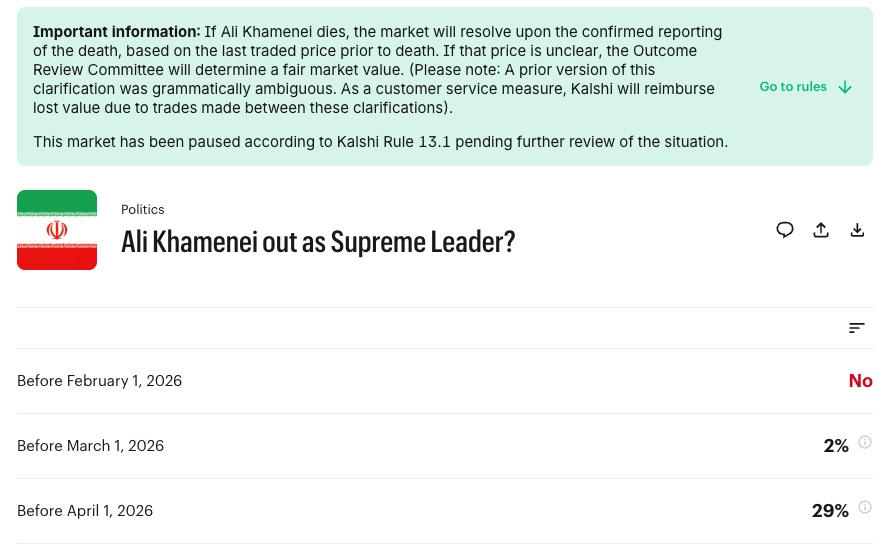
Named plaintiffs Risch and Gliksman assert they, along with other customers, received amounts below contract value. The filing lists their combined positions at about $259.84 in a market that saw more than $54 million in trading volume. They seek damages equal to $1 per “Yes” share and punitive damages.
On Feb. 28, co-founder and Kalshi CEO Tarek Mansour defended the decision on X, saying Kalshi does not list markets that are directly about a person’s death. When a market could involve a death, he said the company writes rules to prevent traders from profiting from that outcome, which is what it applied here.
In a March 6 post responding to the lawsuit, Mansour said Kalshi was on solid legal and ethical footing, stressing that the exchange followed its market rules and that those rules clearly said a death would not resolve the market to “Yes.” He added the rules were designed to prevent a “death market” where traders profit from a death, and said the company made no money on the market.
Mansour also indicated Kalshi reimbursed all fees and net losses tied to the market and that “no trader lost money,” while noting the firm can improve how it presents market rules to users.
The case centers on market rules in event contracts amid growing interest in prediction markets. Kalshi recently raised funds at an $11 billion valuation.
The material on GNcrypto is intended solely for informational use and must not be regarded as financial advice. We make every effort to keep the content accurate and current, but we cannot warrant its precision, completeness, or reliability. GNcrypto does not take responsibility for any mistakes, omissions, or financial losses resulting from reliance on this information. Any actions you take based on this content are done at your own risk. Always conduct independent research and seek guidance from a qualified specialist. For further details, please review our Terms, Privacy Policy and Disclaimers.
Articles by this author