Kadena shuts down, leaving the network to the community

Kadena, once touted as a scalable alternative to Ethereum and Bitcoin, has announced it is ending all business operations and dissolving the organization.
According to a statement on X, the team can no longer sustain active development or corporate management due to unfavorable market conditions.
Despite the shutdown, the Kadena network will remain online. The company noted that the blockchain is supported by independent miners and developers. It also released a software update that allows nodes to operate without the founders’ involvement.
More than 566 million KDA will continue to be distributed as mining rewards until 2139, while 83.7 million tokens will gradually unlock by 2029.
News of the closure sent KDA tumbling over 60%, falling below $0.09 and erasing nearly all gains from the past five years. Trading volume surged 1,200% to $87.5 million.
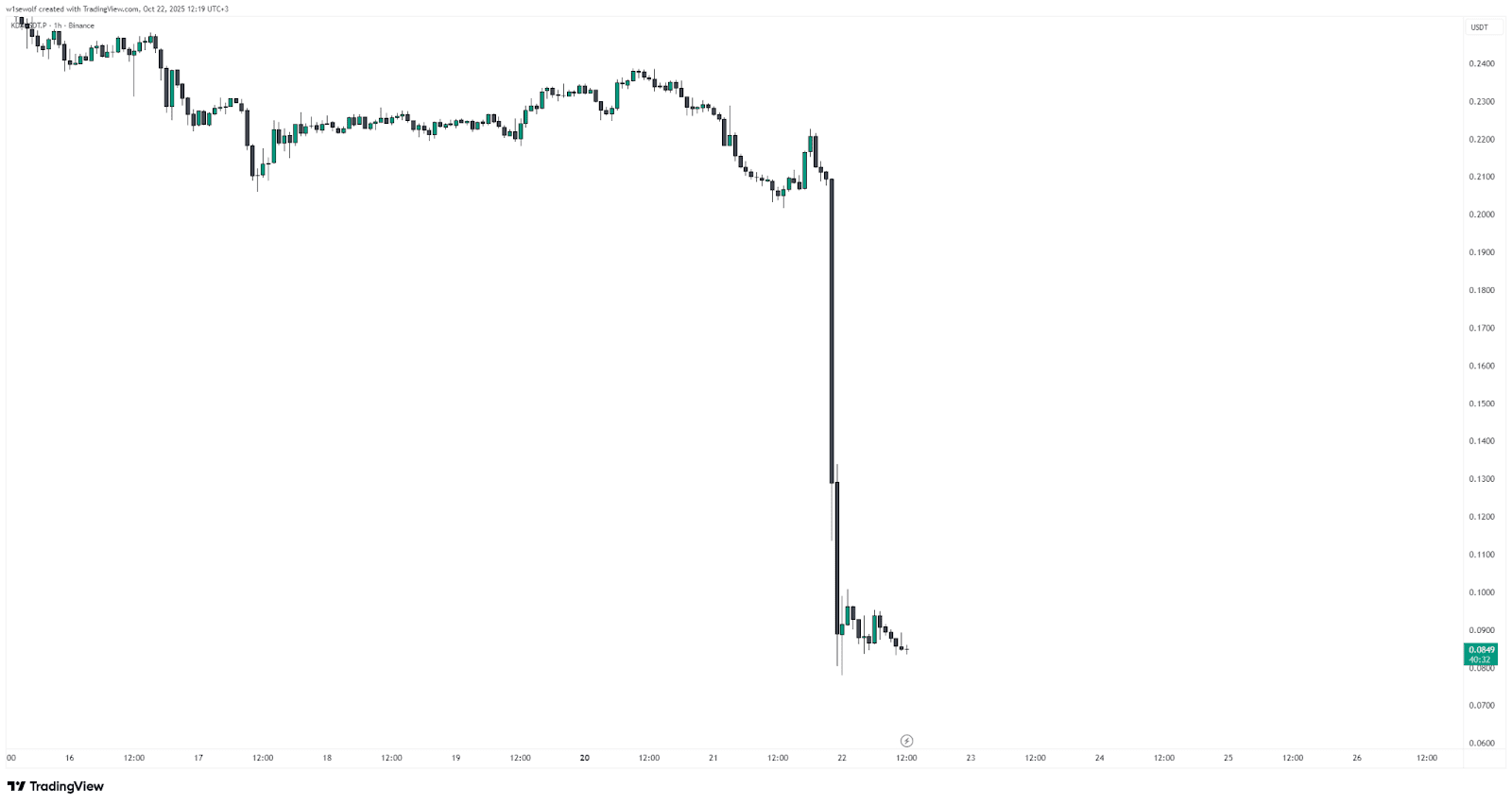
The price of KDA fell by more than 60%. Source: tradingview.com
The shutdown sparked a wave of backlash from the community. Kaddex, a decentralized exchange built on the Kadena network, announced plans to file a class-action lawsuit against the project’s leadership, accusing it of negligence and mismanagement of investor funds. Representatives said they have already begun gathering participants and hiring legal counsel to organize the case.
Kaddex claims to possess full documentation, including materials for individual lawsuits against Kadena’s directors. The company said it intends to defend its rights and hold former management accountable for the token’s collapse, which caused millions in user losses.
Founded in 2019 by former JPMorgan engineers Stuart Popejoy and Will Martino, Kadena introduced a “braided” multi-chain architecture that combined Proof-of-Work with smart contracts – a rare innovation at the time. In 2021, Kadena’s market capitalization hit $25 billion, but developer activity later declined, and the project struggled to compete with newer Layer-1 networks.
Now Kadena’s future rests with its community. Project reps added that the shift to decentralized governance will test whether a PoW network can survive without a central team, sustained only by miners and dedicated supporters.