Jan Ludovicus van der Velde: the path from technology to crypto

Jan Ludovicus van der Velde, also known as JL van der Velde, is the CEO of Bitfinex, one of the longest-running cryptocurrency exchanges. With a strong background in technology and global business, he has helped build professional crypto trading infrastructure and previously led Tether during the growth of USDT, playing a key role in shaping market liquidity and exchange operations.
Career beginnings
Jean‑Louis van der Velde hails from the Netherlands but has spent the majority of his career in Asia. In 1985, he relocated to Taiwan, where he studied Chinese language and technology at National Taiwan Normal University. After graduating, he chose to remain in the region and embarked on a career in the technology sector.

Before entering the cryptocurrency industry, van der Velde spent over 30 years working in technology and international business. He was involved in founding and managing several IT startups across Asia and worked on the development of software and hardware, video technologies, IPTV, and embedded systems. His experience extended beyond technological solutions to include managing global projects and international business, equipping him for the complexities of the cryptocurrency market.
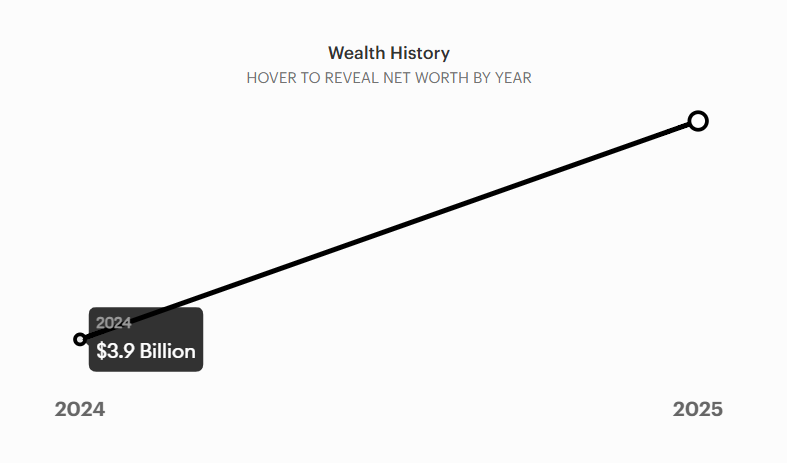
According to Forbes, Bitfinex CEO Jean‑Louis van der Velde’s net worth was estimated at approximately $3.9 billion in 2024 and surged to around $9.5 billion in 2025, underscoring the extent of his influence on the global cryptocurrency market through Bitfinex and Tether.
Leadership at Tether
For many years, he served as CEO of Tether, overseeing the company’s strategic direction and the development of USDT. Under his leadership, USDT became the world’s most widely used stablecoin, employed across the majority of cryptocurrency exchanges and serving as a key liquidity tool for professional traders and institutional investors.
Van der Velde Bitfinex CEO played an active role in shaping Tether’s corporate structure and managing relationships with banks, partners, and regulators. His decisions helped integrate USDT into the Bitfinex ecosystem and other platforms, laying the foundation for large-scale trading and stable market usage of the stablecoin.
At the same time, Tether has frequently been the subject of media and analytical scrutiny over questions regarding the transparency of the reserves backing USDT. Despite criticism and heightened regulatory attention, van der Velde maintained strategic control, minimizing public exposure while focusing on company management and resilience. He rarely gave interviews, preferring to work “behind the scenes,” overseeing operations and ensuring the long-term stability of both USDT and the surrounding ecosystem.
In October 2023, Tether announced a change in leadership: Paolo Ardoino, formerly the Chief Technology Officer, was appointed as the new CEO. Van der Velde transitioned into an advisory role, continuing to focus on Bitfinex and strategic initiatives related to the development of cryptocurrency infrastructure and the ongoing support of the USDT ecosystem.
Paolo is extremely well-suited to lead Tether into this exciting new era,
said Jean-Louis van der Velde.
Although Jean‑Louis van der Velde plays a pivotal role in the development of Bitfinex and Tether, he maintains a low public profile and rarely speaks publicly, unlike many CEOs of major crypto exchanges and technology companies. He previously had a Twitter account but deleted it following discussions surrounding the transparency of Tether’s reserves.
CEO of Bitfinex
Jean‑Louis van der Velde joined Bitfinex in 2013, assuming the role of CEO at an early stage of the exchange’s development. By that time, he already had extensive experience in technology, corporate management, and complex infrastructure. This background enabled him to enter the crypto market not as a public-facing figure but as an executive and systems architect of the business.
Under his leadership, Bitfinex positioned itself primarily as a venue for active and professional market participants, prioritizing deep liquidity, advanced trading tools, and technical stability rather than mass-market accessibility. This approach extended to the development of its derivatives business, with leveraged and derivative products added gradually to meet professional trading demand and comply with regulatory requirements.
In his management style, CEO Bitfinex maintains a private and low-profile approach. He rarely appears in the media, avoids making bold promises, and does not cultivate a personal brand. Instead, he focuses on internal management, technology, compliance, and the company’s long-term resilience.
Transparency concerns and public criticism
As CEO of Bitfinex and Tether, Jean‑Louis van der Velde faced criticism primarily for his low public profile and limited engagement with investors and the media. His infrequent interviews and minimal public presence reinforced perceptions of opaque management processes and limited transparency within the corporate structure. Additional concerns arose due to the overlapping management of Bitfinex and Tether, which created a perception within the community of potential conflicts of interest and influence over USDT operations in the crypto market. These issues were frequently discussed in crypto media, analytical articles, and professional forums, particularly during periods of high market volatility and regulatory scrutiny.
Van der Velde was also criticized in connection with regulatory reviews and legal disputes, including investigations by the NYAG and settlements with U.S. regulators. The claims primarily concerned financial transparency and corporate governance, including collateral management, liquidity, and disclosure of USDT reserves. Although the legal actions were formally directed at the companies rather than him personally, media outlets repeatedly associated his name with these matters. Representatives of Tether publicly stated that some reports, including coverage by the Financial Times, contained selective interpretations of events, portraying civil settlements as indicative of systemic violations – claims that the company denied.
Interestingly, some even questioned whether van der Velde actually exists. Some Twitter users jokingly asked, “Has anyone actually seen or met the CEO of Bitfinex?” While clearly an exaggeration, it reflects his low-profile and private approach to public life.
Industry influence
Jean‑Louis van der Velde’s influence on the cryptocurrency industry is difficult to measure through public statements, but it is clearly evident in the products and infrastructure he has helped build. Through Bitfinex and Tether, he has been at the center of key processes shaping the crypto market.
As Bitfinex CEO, JL van der Velde played a crucial role in shaping the professional trading landscape for cryptocurrency exchanges. Bitfinex became one of the first platforms where cryptocurrencies could be traded with deep liquidity, margin instruments, and sophisticated trading logic. This approach set standards that were later adopted by other major exchanges.
His role at Tether is directly tied to the widespread adoption of stablecoins. USDT became a primary instrument for settlements and liquidity storage in the crypto market, with Bitfinex serving as one of its key venues of use. This integration connected exchange trading, stablecoins, and global crypto markets into a unified infrastructure.
Van der Velde’s impact also extends to the development of exchange innovations. Under his leadership, Bitfinex introduced new trading products, derivatives, and proprietary technological solutions, remaining one of the most technically advanced platforms in the industry. The company emphasized functionality and resilience over flashy marketing, reinforcing its reputation for robust and reliable operations.
The material on GNcrypto is intended solely for informational use and must not be regarded as financial advice. We make every effort to keep the content accurate and current, but we cannot warrant its precision, completeness, or reliability. GNcrypto does not take responsibility for any mistakes, omissions, or financial losses resulting from reliance on this information. Any actions you take based on this content are done at your own risk. Always conduct independent research and seek guidance from a qualified specialist. For further details, please review our Terms, Privacy Policy and Disclaimers.
Articles by this author