Iran oil spike may hurt Bitcoin miners through BTC price, not power bills: Hashrate Index

Hashrate Index finds Iran-linked oil spikes weigh on miner revenue more than power bills; only 8%–10% of global hashrate sits in oil-tied electricity markets.
Oil shocks tied to the conflict with Iran are more likely to hit Bitcoin miners through price than through power costs, according to new analysis from Luxor Technology’s Hashrate Index. The review followed coordinated U.S. and Israeli strikes on Iranian targets that pushed Brent crude above $100 per barrel.
The report assessed how a geopolitical shock to energy supply affects mining economics after tanker traffic through the Strait of Hormuz was disrupted. About 20% of global oil typically moves through the strait. Brent rose from roughly $60 to over $100 before easing to around $90, with trading also occurring on decentralized derivatives platforms outside regular hours.
Using figures from the Cambridge Centre for Alternative Finance and the Bitcoin Mining Council, the analysis notes that more than half of the Bitcoin network draws power from non-fossil sources. Crude oil as a direct fuel for mining is described as “essentially a rounding error,” the researchers wrote.
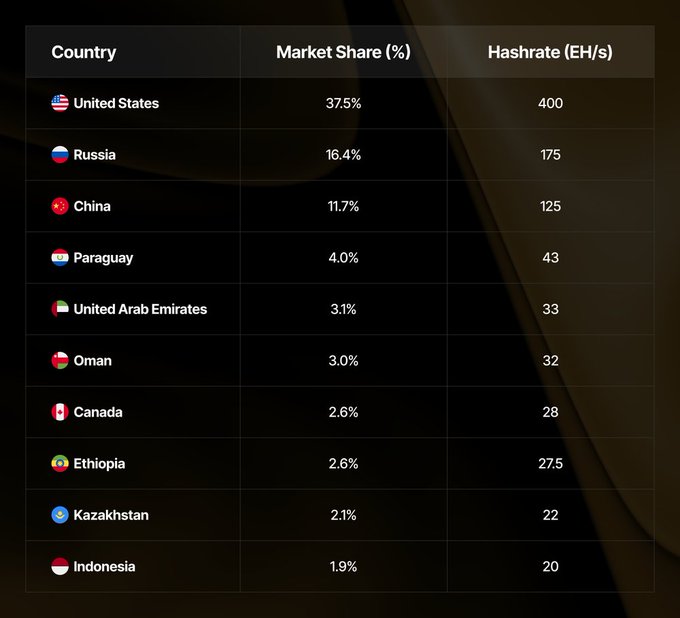
Hashrate Index estimates that about 90% of global computing power operates in electricity markets with little correlation to crude prices. The United States, Russia, and China account for the largest portions of hashrate, followed by Paraguay, the United Arab Emirates, Oman, Canada, Ethiopia, and Kazakhstan. These markets rely mainly on natural gas, coal, hydro, or geothermal generation, which limits direct pass-through from oil to power bills.
Only a small share of the network sits in oil-sensitive power systems. Gulf states, including the UAE and Oman, account for around 6% of global hashrate, where electricity pricing more closely tracks crude. Adding exposure from Iran, Kuwait, Qatar, and Libya brings the crude-linked share to roughly 8%–10%.
Where a link exists, it tends to be weak and delayed. In the United States, industrial electricity tariffs often change slowly due to utility rate-setting cycles, muting any immediate effect from oil spikes on miners’ operating costs.
The analysis points to miner revenue as the larger pressure point. Higher oil prices can lift inflation expectations and influence interest-rate views, conditions that can steer investors toward lower-risk assets and away from Bitcoin. When Bitcoin declines, miner revenue per unit of computing power, known as hashprice, falls.
That pattern appeared earlier this year. Hashprice dropped to a record low of $27.89 per PH/s/day in February after Bitcoin fell 23.8% from about $78,000 to $65,000. Over the past year, Bitcoin mining operations that hedged revenue with rolling USD-denominated hashrate forwards outperformed unhedged, or spot, mining by up to 8.2%, according to the report.
Market participants remain focused on macro signals tied to the conflict. Per Wenny Cai, chief operating officer at SynFutures, tensions in the Middle East briefly strengthened the U.S. dollar, creating a short-term headwind for risk assets. Cai also pointed to supportive global liquidity and an extended Federal Reserve easing cycle, with Bitcoin trading above $71,000 during a period of spot ETF inflows and lower exchange balances.
The study also notes that decentralized trading infrastructure has given market participants more venues to manage exposure when traditional commodity markets are closed.
The material on GNcrypto is intended solely for informational use and must not be regarded as financial advice. We make every effort to keep the content accurate and current, but we cannot warrant its precision, completeness, or reliability. GNcrypto does not take responsibility for any mistakes, omissions, or financial losses resulting from reliance on this information. Any actions you take based on this content are done at your own risk. Always conduct independent research and seek guidance from a qualified specialist. For further details, please review our Terms, Privacy Policy and Disclaimers.
Articles by this author