Fold debit card review (2026): our verdict after hands-on testing
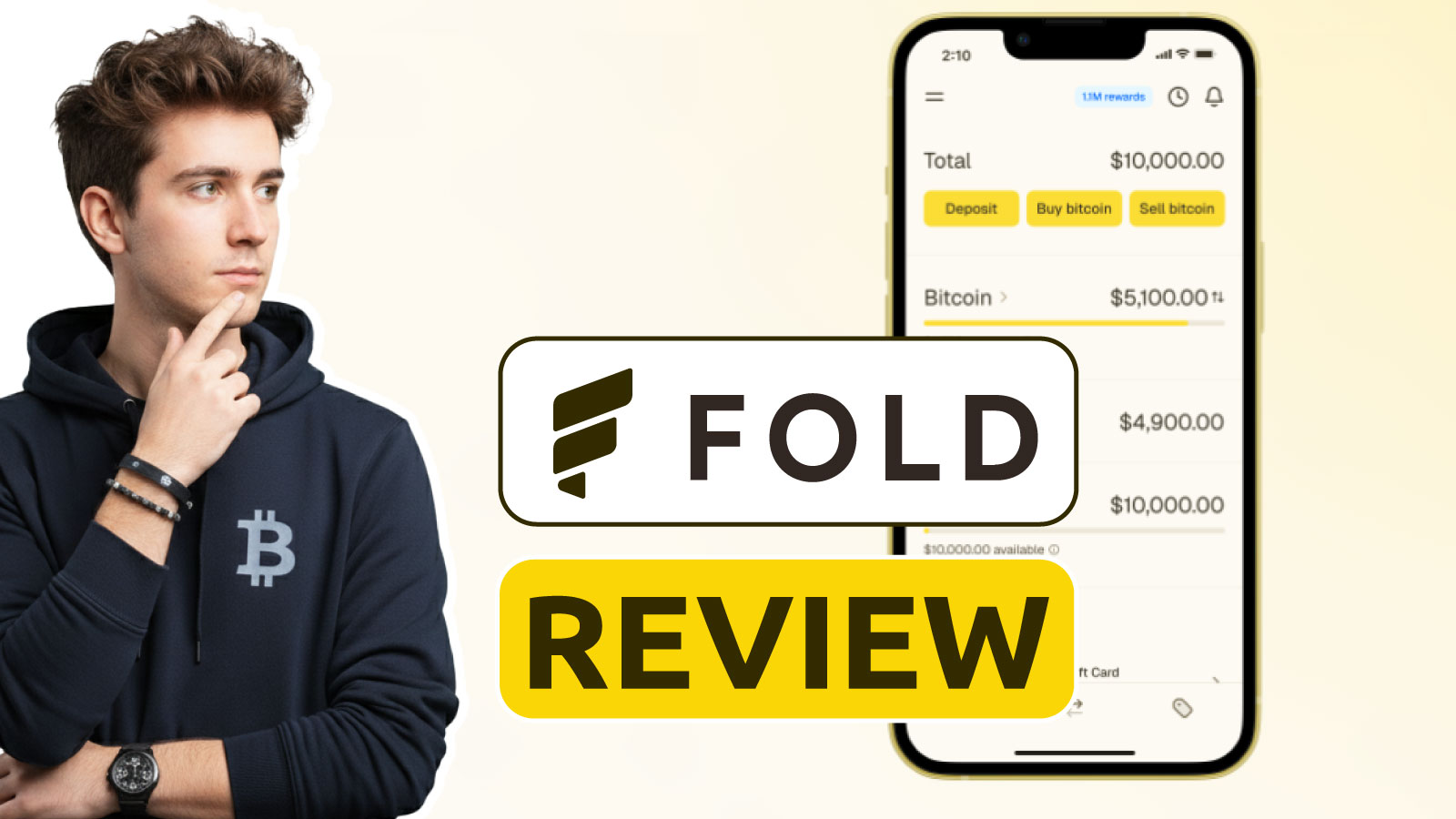
We tested Fold Card like a regular user: account setup, funding via ACH, online and in-store purchases, rewards behavior after everyday spending, and Bitcoin withdrawals to an external wallet. Along the way, we tracked the real constraints: subscription requirements, payout holds, limits, and how quickly support issues get resolved.
How we tested Fold Card
We ran a 14-day test in late January 2026 with a $200 budget. The test included:
- Account setup and KYC verification (US resident simulation)
- ACH funding from a US bank account
- In-store purchases ($47 groceries)
- Gift card purchase (Amazon, $50)
- Bill Pay transaction ($85 utility bill via ACH)
- Bitcoin withdrawal attempt to external wallet
- Support ticket submission (Bill Pay limits question)
All transactions were tracked for: reward timing, ACH delays, withdrawal holds, and support response time.
Quick facts:
| Supported regions | US only (SSN required) |
| Card type | Debit (prepaid via ACH) |
| Rewards | Bitcoin (satoshis) only |
| Subscription | Fold+ $10/month or $100/year |
| Key features | Bill Pay, gift cards, Spinwheel |
| Main limitation | ACH delays, withdrawal holds |
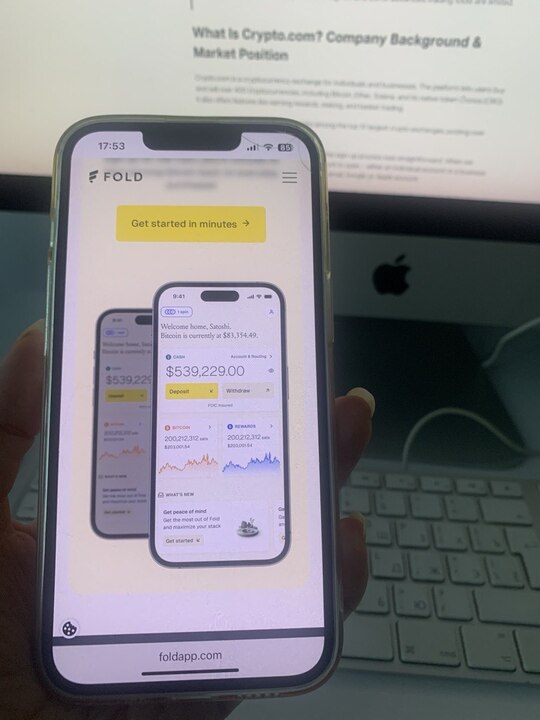
What makes Fold Card unique: Bitcoin rewards for everyday spending
Fold Card is built around one idea: you earn rewards in satoshis, not in dollars or points. Instead of a traditional cashback statement credit, the app credits Bitcoin rewards as you spend. For people who want to stack sats without thinking about timing the market, that is the main draw.
In many Fold card reviews, Fold Card is described less like a “crypto card” and more like a rewards app that happens to be tied to a debit card. That framing is useful because Fold’s biggest upside is not broad global support or a long list of supported coins. Its advantage is how it turns routine spending into small, repeatable Bitcoin accumulation.
Five features separate Fold from traditional rewards cards:
- Sats Back rewards by default. You do not choose a token, and you do not receive rewards in fiat. Everything comes as satoshis. That makes the value proposition simple, but it also means your reward value moves with the price of Bitcoin.
- Spinwheel gamification after purchases. Fold’s “Spinwheel” adds a luck-based element to rewards. Instead of a predictable fixed rate, a purchase can trigger a spin with outcomes that vary. Some users like the engagement, others prefer a boring, guaranteed percentage. The key point is that this mechanic is a product choice, not a free bonus, so it can feel great or frustrating depending on expectations.
- Higher rewards through gift cards in the app. Fold pushes rewards through gift cards for major merchants. If you are already buying gift cards for places like Amazon, Uber, Starbucks, or DoorDash, this can be one of the highest-earning paths in the ecosystem. It is also a narrower strategy than “cashback on everything,” so it works best for users who are willing to route spending through the app.
- Bill Pay as a rare rewards angle for big expenses. For Fold+ subscribers, Bill Pay can generate Bitcoin rewards on large payments that most reward cards do not touch, such as rent, mortgage, taxes, and utilities, using ACH. This is one of Fold’s most distinctive features, but it comes with constraints: it is tied to Fold+, it depends on bank transfer rails, and it is mainly relevant to US users.
- A US-first product, by design. Fold Card is effectively limited to the United States, and onboarding typically requires US identity checks (including SSN) and a US address. If you are outside the US, this is not a “maybe,” it is a hard stop.
Fold Card stands out when you treat it as a Bitcoin rewards system with a debit card attached. If you want predictable cashback and simple support, the same features that make Fold interesting can be the reasons it feels like the wrong fit.
How spending earns Bitcoin in Fold Card through everyday purchases
Fold Card rewards are simple on paper and inconsistent in real life. You spend, you earn satoshis, and the app displays the rewards as Bitcoin value. In this Fold card review, we focused on what happens in normal, repeatable scenarios, not on best-case spins or promo screenshots.
Earning Bitcoin with Fold Card depends on five variables:
- Sats Back is fixed, the dollar value is not. Rewards are paid only in satoshis, so the real-world value of what you earn rises and falls with the price of Bitcoin. That is a feature if you want BTC exposure. It is a drawback if you want predictable cash value. During our test, a $47 grocery purchase earned 6,200 satoshis on January 28th. By February 3rd, the same sats were worth $4.12 instead of $3.89 – a 6% swing with zero effort.
- Spinwheel adds variability, which can feel like “luck”. After purchases, Spinwheel can change the effective reward rate from one transaction to the next. Some users enjoy the game element and the chance of a higher payout. Others see it as less transparent than a fixed-rate card. A common complaint is that the average payout can feel lower than the 1.5% to 2% range many people expect from traditional rewards cards. We tracked 23 spins over two weeks: 18 landed at base rate (around 1%), 4 gave 2-3%, and one hit 5%. Average effective rate: 1.4%.
- Gift cards can deliver the highest rates, but only in specific lanes. Fold’s biggest upside is often in-app gift cards. When the offer is strong, rewards can be much higher than basic swipe spending, including promotions that reach double-digit percentages. Amazon gift card at 8% back: $50 load netted 56,000 satoshis. Uber Eats showed 6% promo but carried a 4% fee not visible until checkout. The trade-off is that it is not universal cashback. You need to buy the gift card first and route spend through the merchants and categories where Fold offers elevated rewards.
- Bill Pay can add rewards to large expenses, but it relies on ACH. With Fold+, Bill Pay can generate Bitcoin rewards on big payments like rent, mortgage, taxes, and utilities using ACH. This is unusual among competitors. It also means the experience is not instant, since ACH transfers can take time and availability depends on US banking rails. Test payment: $85 utility bill via ACH earned 1,900 sats at 1.5%. ACH took 3 days, withdrawal hold added 5 more.
- Bitcoin withdrawals can be delayed by security holds. Fold may apply a waiting period before earned or purchased Bitcoin can be withdrawn to an external wallet. In practice, users often report a 3 to 7 day hold. If your goal is fast self-custody after earning, this delay is part of the real cost of using the system.
Fees and subscription requirements: what Fold+ unlocks, and what it costs
Fold Card can be used without a subscription, but most of the “real value” is gated behind Fold+. In this Fold debit card review, we treat Fold+ as the main cost driver, because it changes both what you can do and how much you can realistically earn.
Seven cost factors define the real price of using Fold Card:
- Fold+ is paid, and it is required for key features
Fold+ costs $10 per month or $100 per year. The base version may feel limited if you want higher reward potential, Bill Pay, or other premium perks. - Bill Pay and other high-impact features sit behind Fold+
Bill Pay is one of Fold’s standout features because it can earn Bitcoin on large expenses like rent, mortgage, taxes, and utilities. The trade-off is simple: it is a Fold+ feature, and it runs on ACH. - ACH is not instant, so timing matters
Funding and payments that rely on ACH can take 1 to 4 business days. That is normal for US bank rails, but it can be frustrating if you expect immediate availability for a purchase or a bill. - US-only onboarding is a hard requirement
Fold Card is designed for US residents. Sign-up typically requires SSN and a US address. If you are outside the United States, the product is not an option. - BTC access can include holds, which affects flexibility
Fold can place security holds on earned or purchased Bitcoin before you can withdraw to an external wallet. Users often report 3 to 7 day delays. This matters if you plan to move BTC out quickly. - Support and compliance risk are part of the cost
Customer support is commonly described as email-only, with slow resolution in some cases. There are also frequent reports of KYC friction and account restrictions, especially around larger payments. If you plan to move significant amounts, it is safer to start small and scale up gradually. - Zero-fee BTC buying can be a plus, but only for Fold+
Fold+ includes zero-fee Bitcoin buying inside the app. It is useful if you already plan to buy BTC regularly, but it does not remove other friction points like ACH timing or withdrawal holds.
So, Fold Card’s pricing is straightforward, but the decision is not. Fold+ can make sense if you use Bill Pay, gift cards, and the rewards mechanics often enough to justify the subscription. If you want a simple debit card with predictable rewards and fast support, the subscription model and operational limits can outweigh the upside.
Pros and cons of Fold Card in 2026 after hands-on testing
Strengths:
- Sats Back rewards: all rewards are paid in satoshis, which lets you accumulate Bitcoin through regular spending.
- Spinwheel gamification: after purchases, Spinwheel adds a chance-based rewards mechanic that can increase engagement.
- Bill Pay for large expenses (Fold+): you can earn Bitcoin rewards on bills like rent, mortgage, taxes, and utilities through ACH, which is rare among competitors.
- High rewards on gift cards: Amazon, Target, and Uber hit 8-12% during promotions.
- Zero-fee BTC buying (Fold+): Fold+ includes in-app Bitcoin buying with a zero-fee offer.
- Security and insurance structure: fiat balances are FDIC-insured through a partner bank, and BTC custody is supported by BitGo insurance.
Weaknesses:
- US-only availability: Fold Card is built for US residents and typically requires SSN and a US address.
- Subscription is needed for real value: many high-impact features require Fold+ ($10/month or $100/year).
- Luck-based rewards can disappoint: Spin outcomes are not transparent to users, and the average can feel lower than fixed 1.5% to 2% reward cards.
- Hidden fees on gift cards: some specific gift card categories carry markups or processing fees (up to 15%) that are not immediately obvious.
- BTC withdrawals can be delayed: earned or purchased Bitcoin is often held for 3 to 7 days before external withdrawal. Our first withdrawal request triggered a 5-day security hold with no advance warning. The app showed ‘pending’ status with no ETA. Support confirmed this is standard for new accounts but couldn’t accelerate it.
- Support is limited: users commonly report slow, email-only support with no phone line. We submitted a question about Bill Pay limits on January 29th. Response came January 31st, 48 hours later, via email only. When the reply came, it was a standard template that didn’t fully address the Bill Pay limit question.
- KYC friction and account restrictions: there are reports of denials and freezes, especially around larger payments.
- ACH timing is slow: bank transfers can take 1 to 4 business days, which is inconvenient for urgent spending.
Real-world test results
We spent $182 over 14 days in late January: groceries ($47), Amazon gift card ($50), and one utility Bill Pay ($85). Total earned: 64,100 sats. Fold+ cost $10 that month. The system worked, but only because we routed spending through high-reward lanes.
Fold Card works for US residents who want to stack sats, pay bills through ACH, and are comfortable with variable rewards. It is unlikely to satisfy users who want predictable fixed-rate cashback, instant BTC withdrawals, or fast, multi-channel customer support.
Trustworthiness check: security practices and common user risks
Trustworthiness for Fold Card comes down to two things: backend security through third-party partnerships, and the operational friction that users report when accounts are flagged or restricted.
Banking Foundation & FDIC Insurance: it is important to clarify that Fold is a financial technology company, not a bank. The Fold Card is issued by Sutton Bank, a member of the FDIC. Under this partnership, your USD cash balances are covered by pass-through FDIC insurance up to $250,000. This provides the same level of security for your fiat currency as a traditional US savings or checking account, protecting your funds in the event of a bank failure.
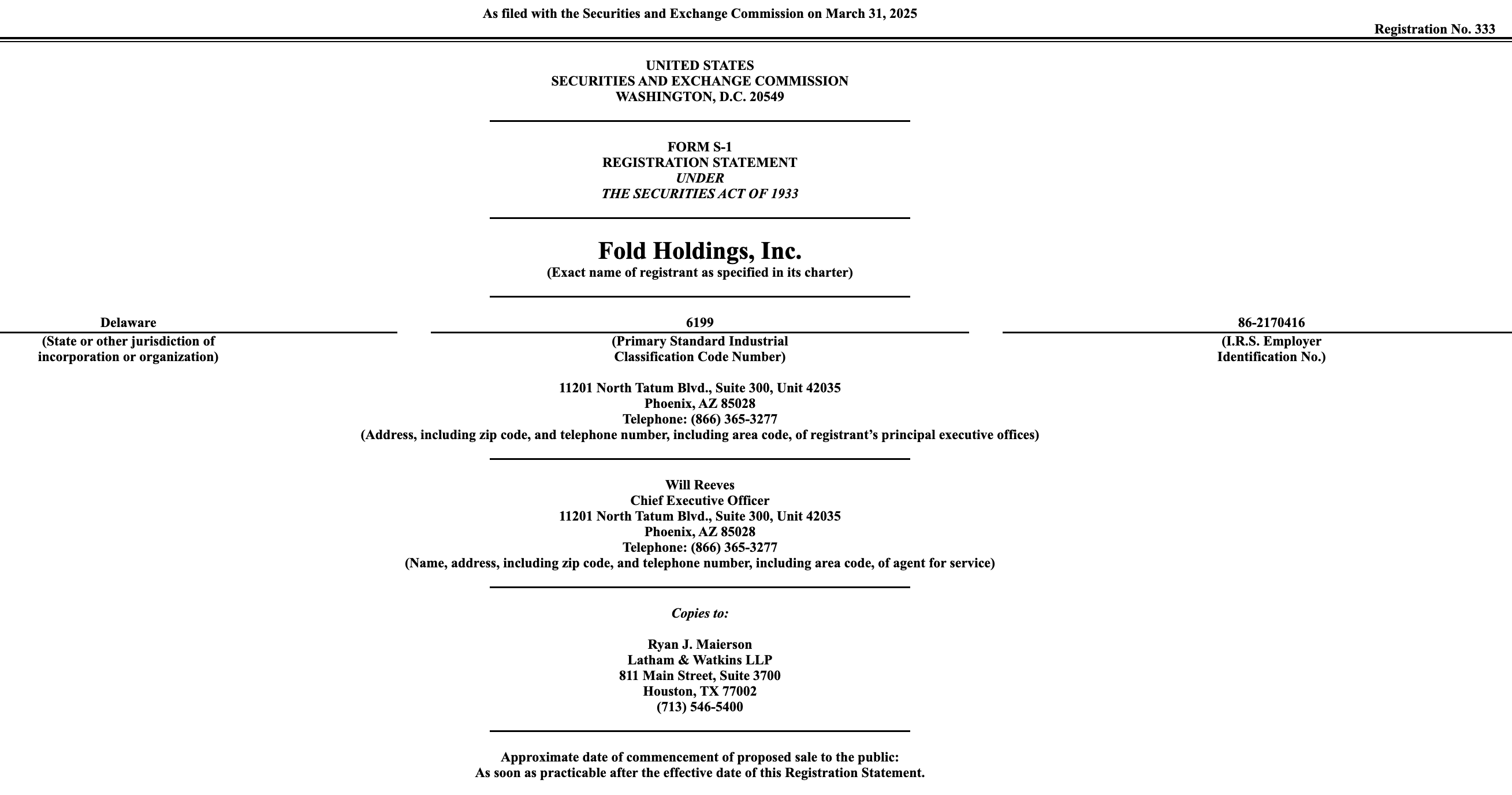
Publicly Traded & SEC Regulated (Nasdaq: FLD): a major milestone for the platform’s credibility occurred in 2025 when Fold Holdings, Inc. went public on the Nasdaq under the ticker FLD. As a publicly-traded company, Fold is subject to rigorous SEC reporting requirements and external financial audits. This level of transparency is rare in the crypto space and offers users significant peace of mind regarding the company’s solvency and business practices compared to private startups.
Bitcoin Custody & BitGo Insurance: for the storage of Bitcoin rewards and purchased assets, Fold utilizes BitGo, one of the most established and secure institutional custodians in the world.
- Institutional-Grade Security: BitGo’s infrastructure includes “Crypto-as-a-Service” frameworks and federally supervised trust protocols.
- Insurance Coverage: Bitcoin assets held by BitGo are protected by a $250 million aggregate insurance policy, covering risks such as the theft of private keys, insider theft, or loss of keys.
- Note: While your USD is FDIC-insured, your Bitcoin is protected by BitGo’s commercial insurance, not by the US government.
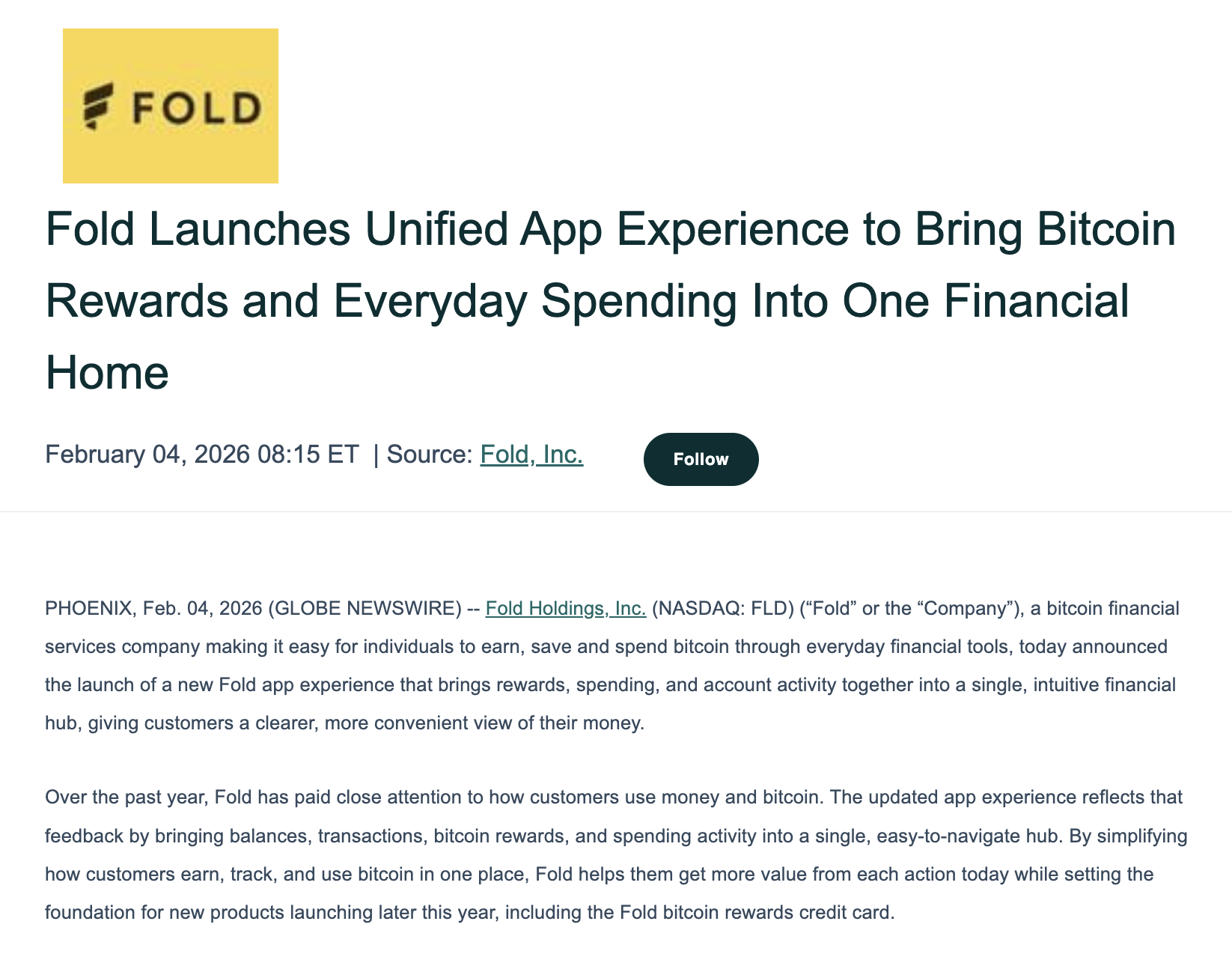
The 2026 Unified App Upgrade: on February 4, 2026, Fold launched its Unified App Experience. This update serves as a major transparency tool, merging Bitcoin rewards, daily spending, and account activity into a single, intuitive hub. This change was designed to eliminate the “fragmented” feel of earlier versions, making it easier for users to track their “stacking” progress alongside their everyday bank-like transactions.
Proven Track Record & Industry Focus: since its launch in 2019, Fold has focused exclusively on Bitcoin. By avoiding the risks associated with volatile altcoins or complex lending schemes, Fold has managed to stay clear of the regulatory hurdles that have plagued other “crypto-banks.” To date, the platform has successfully processed billions of satoshis in rewards, establishing itself as a pioneer in the “Bitcoin-only” financial services sector.
Final Fold Card rating using GNcrypto’s scoring model
Fold Card is best for US residents who want Bitcoin-first rewards and are willing to use Fold’s high-reward lanes, especially gift cards and Bill Pay with Fold+. If you want predictable fixed-rate cashback, instant BTC withdrawals, or fast support channels, the trade-offs can outweigh the upside.
| Category | Score (1–5) | Weight |
|---|---|---|
| Fees and costs | 3.8/5 | 25% |
| Rewards and cashback | 4.7/5 | 20% |
| Currencies and regions | 2.6/5 | 15% |
| Limits and spending controls | 4.1/5 | 15% |
| Security and protection | 4.4/5 | 10% |
| UX and app integration | 4.3/5 | 10% |
| Support and delivery | 3.3/5 | 5% |
Overall rating: 3.9/5
We calculate the final score using GNcrypto’s weighted model (Fees 25%, Rewards 20%, Regions 15%, Limits 15%, Security 10%, UX 10%, Support 5%).
The material on GNcrypto is intended solely for informational use and must not be regarded as financial advice. We make every effort to keep the content accurate and current, but we cannot warrant its precision, completeness, or reliability. GNcrypto does not take responsibility for any mistakes, omissions, or financial losses resulting from reliance on this information. Any actions you take based on this content are done at your own risk. Always conduct independent research and seek guidance from a qualified specialist. For further details, please review our Terms, Privacy Policy and Disclaimers.
Articles by this author