Fed researchers propose using Kalshi to gauge rate odds
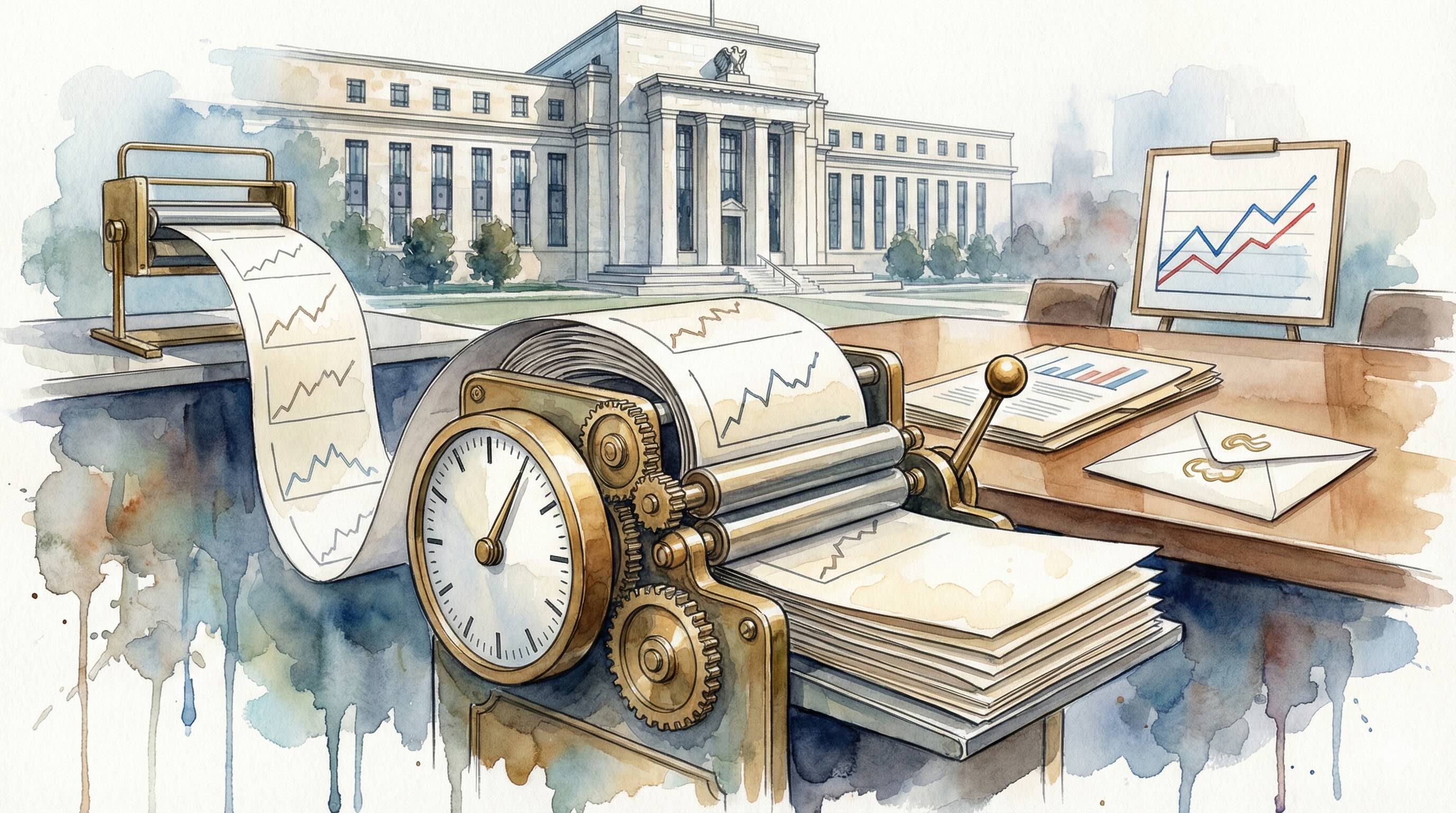
A Feb. 12 staff paper says Kalshi prediction markets track Fed rate expectations in real time and should be used to build risk-neutral probabilities for specific FOMC meetings.
A new staff paper released Feb. 12 argues that prediction market data from Kalshi can inform Federal Open Market Committee interest-rate decisions by providing a faster read on market expectations than surveys and financial derivatives.
The paper, titled “Kalshi and the Rise of Macro Markets,” was written by Federal Reserve Board principal economist Anthony Diercks, Federal Reserve research assistant Jared Dean Katz, and Johns Hopkins research associate Jonathan Wright.
“Managing expectations is central to modern macroeconomic policy. Yet the tools that are often relied upon — surveys and financial derivatives — have many drawbacks,” the paper states. It adds that Kalshi can capture market “beliefs directly and in real time.”
The authors propose using Kalshi prices to construct risk-neutral probability density functions that map possible outcomes for the federal funds rate at specific FOMC meetings and their likelihoods. “Overall, we argue that Kalshi should be used to provide risk-neutral [probability density functions] concerning FOMC decisions at specific meetings,” they write, adding that the current benchmark is “too far removed from the monetary policy interest rate decision.”
One focus is Kalshi’s intraday dynamics. The paper points to a recent episode when the implied chance of a July rate cut rose to 25% after remarks by Governors Christopher Waller and Michelle Bowman, then fell after a stronger-than-expected June employment report. These probabilities, the authors note, “respond sharply and sensibly to major developments,” and Kalshi “provides the fastest-updating distributions currently available for many key macroeconomic indicators.”
Kalshi lists markets tied to policy-relevant data including the consumer price index, nonfarm payrolls, gross domestic product growth, and gasoline prices. The study notes that these contracts are linked to defined outcomes and settle soon after official releases.
The paper states that its findings are intended to stimulate discussion and do not represent the views of the Federal Reserve or set policy. Staff research papers are preliminary materials and have no direct impact on central bank decisions.
Prediction markets drew growing interest in 2025, with monthly trading volumes often exceeding $10 billion, according to industry figures. Platforms such as Kalshi and Polymarket have expanded retail-facing offerings in recent months, while some state regulators have sought to limit certain event contracts.
As we covered previously, Ethereum co-founder Vitalik Buterin said prediction markets have over-converged on short-term speculative products and gambling-style markets, and should evolve into hedging tools for consumers and businesses managing price risks, including inflation-driven expenses.
In an X post, he proposed pairing onchain prediction markets with large-language models to build price indices across spending categories and regions and list markets on each. He outlined users running a local AI model to assemble a basket of shares for “N” days of expected expenses to offset higher living costs, while holding other assets for growth.
The material on GNcrypto is intended solely for informational use and must not be regarded as financial advice. We make every effort to keep the content accurate and current, but we cannot warrant its precision, completeness, or reliability. GNcrypto does not take responsibility for any mistakes, omissions, or financial losses resulting from reliance on this information. Any actions you take based on this content are done at your own risk. Always conduct independent research and seek guidance from a qualified specialist. For further details, please review our Terms, Privacy Policy and Disclaimers.
Articles by this author