MetaMask vs Exodus wallet: the 2026 showdown
We pitted the “skeleton key” of Web3 (MetaMask) against the “walled garden” of portfolio management (Exodus). While Exodus wins on aesthetics, our hands-on testing reveals its convenience comes with a steep price tag in swap fees. Here is the data-driven verdict on costs, security, and utility.
Comparing MetaMask and Exodus is like comparing a socket wrench to a Swiss Army knife. They both technically “fix things” (store crypto), but they are built for entirely different users.
MetaMask is the raw infrastructure of the decentralized web. It is a browser extension first and a wallet second. It feels like a developer tool because, largely, it still is. It assumes you know what a “chain ID” is and that you check your own gas limits.
Exodus, conversely, is a consumer product. It hides the messy plumbing of blockchain behind a sleek interface. It doesn’t want you to worry about networks; it just wants you to see your balance grow in a beautifully rendered chart.
At GNcrypto, we don’t care about the marketing. We care about the trade-offs. Our team loaded both with ETH and SOL to test the friction of daily use. We found that while MetaMask lets you access the bleeding edge of DeFi, Exodus charges a significant premium for its safety rails.
MetaMask vs Exodus at a glance
| Category | MetaMask | Exodus | Winner |
|---|---|---|---|
| Overall GNcrypto rating | 4.6 / 5 | 4.2 / 5 | MetaMask (overall) |
| Supported Chains (Native) | EVM + Bitcoin (Beta) | 50+ (BTC, SOL, XMR, etc.) | Exodus |
| Security & Key Management | 4 / 5 | 4 / 5 | Draw (MetaMask open-source, Exodus regulated) |
| Supported Assets & Networks | 5 / 5 | 5 / 5 | Exodus |
| Transaction Costs & Speed | 3 / 5 | 3 / 5 | MetaMask |
| User Experience & Interface | 5 / 5 | 5 / 5 | Exodus |
| DeFi & dApp Integration | 5 / 5 | 4 / 5 | MetaMask |
| Recovery & Backup Systems | 5 / 5 | 4 / 5 | MetaMask |
| Customer Support & Documentation | 5 / 5 | 4.5 / 5 | MetaMask |
Asset support & swaps
This is where the philosophical divide between the two wallets becomes most apparent. One tries to be a “universal remote” for everything, while the other is a specialized tool for the Ethereum ecosystem that recently learned a new trick.
Asset coverage – the “showroom” vs the “workbench”
Exodus is a true omnichain wallet. Out of the box, it natively supports 50+ Layer-1 blockchains, including Bitcoin (BTC), Solana (SOL), Monero (XMR), and Cardano (ADA). It treats every chain equally. Your Bitcoin sits right next to your Solana NFT in a unified, beautiful interface. You don’t need to “add networks” or fiddle with RPC settings; the wallet just works. Moreover, it is one of the few user-friendly wallets to support privacy coins like Monero, which are often excluded by competitors due to compliance fears.
On the other hand, MetaMask is an EVM (Ethereum Virtual Machine) specialist at heart. Its core DNA is Ethereum, Base, Arbitrum, Optimism, and Polygon. While historically EVM-only, MetaMask rolled out native Bitcoin support in late 2025. This means you can now hold BTC without third-party “Snaps,” but the experience still feels like a secondary track compared to its polished Ethereum flows.
However, for anything outside the EVM/Bitcoin duality (like Solana or Cosmos), you are dependent on installing “Snaps” (plugins). It works, but it feels like adding aftermarket parts to a car rather than a factory feature.
Winner for HODLers: Exodus. If you have a diverse bag (BTC, SOL, XMR), it is the superior viewing gallery.
The swap – a 0.8% fee vs a 5% spread
Both wallets want you to swap tokens inside their app because that is how they make money. But the price difference is staggering when you compare Metamask wallet vs Exodus.
MetaMask acts as an aggregator. It scans DEXs (like Uniswap, 1inch) to find you a quote and adds a transparent 0.875% service fee on top. You see exactly what you are paying. And if you don’t like the fee, you can simply connect your wallet to Uniswap directly and pay 0% (gas only).
Exodus uses a backend integration with third-party providers (like ChangeNOW or similar API services). There is no fixed fee. Instead, you pay a “spread.” In our 2026 testing, this spread ranged from 2% to 5%, depending on volatility. On a $1,000 trade, MetaMask charges you ~$8.75. Exodus might charge you anywhere from $20 to $50.
Winner for traders: MetaMask. The ability to bypass the wallet fee by connecting directly to a DEX makes it infinitely cheaper for active users. Exodus is strictly for emergency rebalancing.
Security & self-custody – the black box vs the open book
When you strip away the branding, both wallets share the same fundamental “self-custody” architecture: you own the 12-word Secret Recovery Phrase (SRP), and if you lose it, support cannot save you. However, their approach to how they secure that key differs radically, offering a choice between corporate trust and open verification.
MetaMask operates on the “open book” philosophy. Its code is largely open-source, allowing security researchers to audit the repository constantly. This aligns with the “Don’t Trust, Verify” ethos of crypto, but it places the burden of vigilance on the community. In contrast, Exodus is a “black box.” The core wallet code is proprietary and closed-source, meaning you cannot verify how your private keys are generated or if the random number generator is truly random. You are forced to trust the company’s developers.
To mitigate this opacity, Exodus leverages its status as a publicly traded, SEC-reporting company (NYSE American: EXOD). While a stock ticker doesn’t fix code, it provides a layer of legal accountability and corporate transparency that anonymous dev teams lack. Exodus has maintained a clean record since 2015 without a centralized platform breach, which is a significant stress test for a closed system.
For significant holdings, a hot wallet is merely a verified viewer for a cold storage device. This is a thing to consider in the rating of Exodus wallet vs Metamask review.
- Exodus has taken a “monogamous” approach, optimizing its interface exclusively for Trezor devices. This integration is widely considered the best in the industry; it allows you to visualize your cold storage portfolio with Exodus’s high-end UI while keeping keys offline.
- MetaMask takes a “polyamorous” one. It connects to almost everything – Ledger, Trezor, Lattice, Keystone, and AirGap. While this flexibility makes it the universal standard for hardware wallet users, the connection process is often clunkier, relying on browser bridges that can break with updates.
The biggest risk for a MetaMask user is “blind signing.” Because it is the gateway to DeFi, users constantly approve permissions for smart contracts. If you click “Confirm” on a malicious drainer script, your hardware wallet won’t save you. MetaMask has added transaction previews and “Transaction Shield” services to mitigate this, but the risk remains high.
Exodus users face a different threat. Since they rarely connect to dApps, they are less likely to sign a bad contract but more likely to fall for social engineering. The popularity of the brand means fake “Exodus Support” bots and cloned apps are rampant. The security failure here is usually the user downloading the wrong software, not the software failing the user.
Winner: Tie. MetaMask is the superior choice for users who demand open-source transparency and flexibility with multiple hardware brands. Exodus is the safer, more polished choice for Trezor owners who want a “plug-and-play” cold storage experience without managing complex browser bridges.
Ease of use – the engineer vs the designer
When comparing the Metamask vs Exodus wallet experience, you are essentially choosing between a raw utility tool and a polished consumer product. One assumes you want to control the engine; the other just wants to give you a smooth ride.
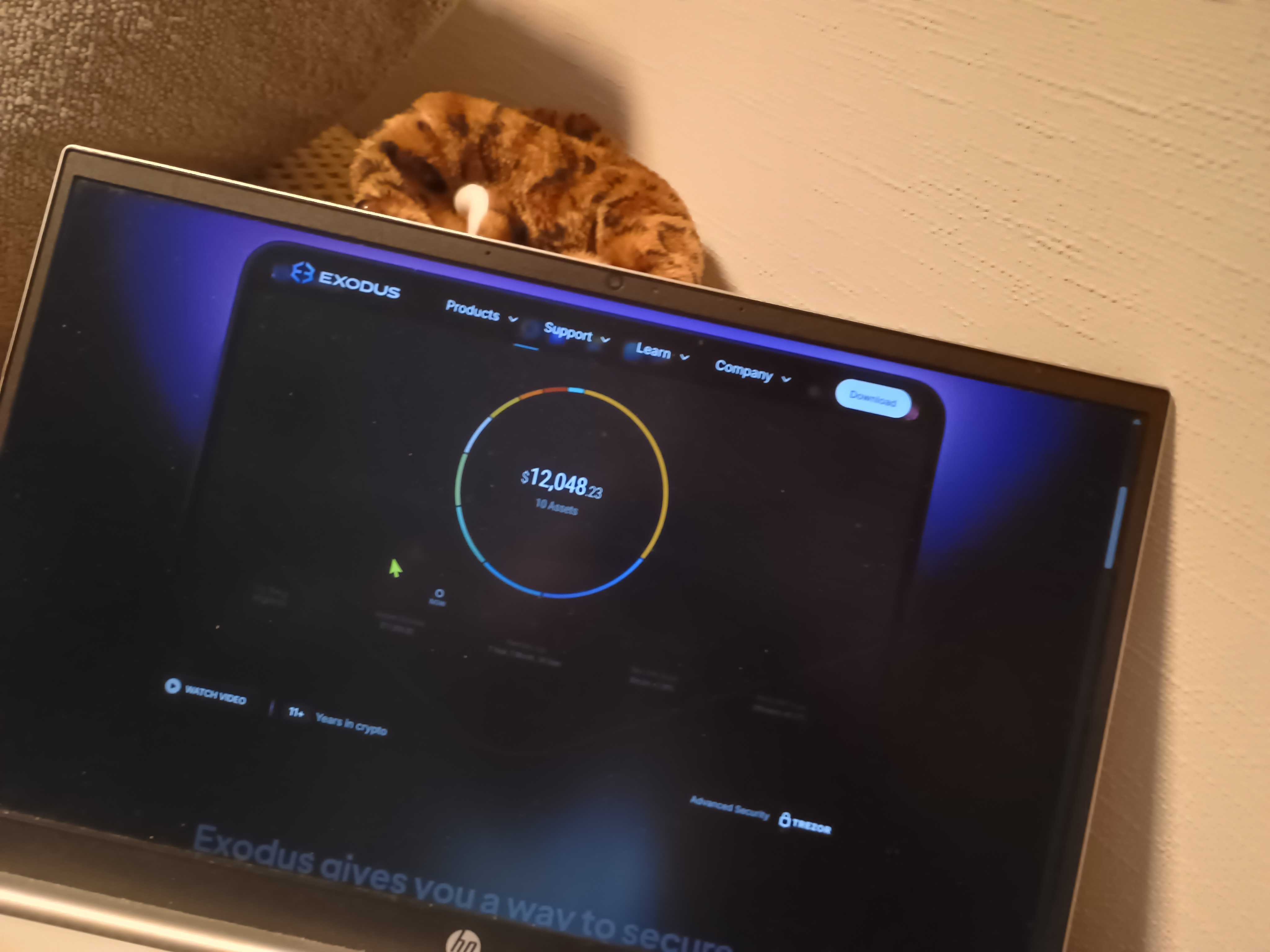
- “Don’t Make Me Think” – Exodus is widely considered the gold standard for onboarding. From the moment you launch it, the “crypto” part is abstracted away. There is no account creation, no email verification, and no immediate demand to understand complex network settings. The interface is dominated by visual feedback – colorful donut charts, clear asset icons, and fiat values that update in real-time. Technical jargon like “gwei,” “nonce,” or “UTXO” is deliberately hidden behind “Advanced” tabs. For a beginner who just wants to buy $50 of Bitcoin and watch it grow, this reduces anxiety significantly. The synchronization between desktop and mobile is also seamless, relying on a simple QR code scan rather than a complex cloud login.
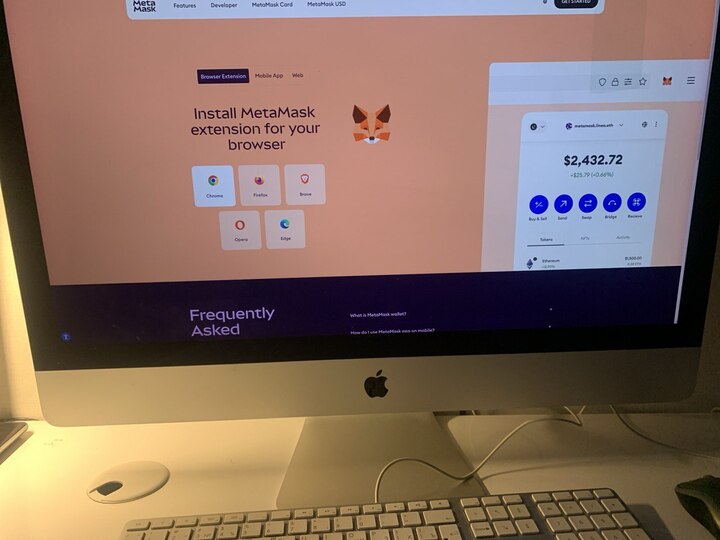
- The “Learning Curve” – MetaMask, by contrast, feels like a developer environment. While the 2026 onboarding flow has improved, it still presents you with more friction upfront. You are interacting with a browser extension, which can feel less permanent and secure to a novice than a dedicated desktop application. The learning curve hits when you try to do anything beyond holding ETH. Adding a custom network (like a new Layer-2) or importing a custom token often requires manual inputs or interaction with third-party sites like Chainlist. While this gives you immense power to connect to the bleeding edge of Web3, it also provides ample opportunity for a beginner to get confused or make a mistake.
Our verdict: If you want to use crypto applications (DeFi, gaming), the friction of MetaMask is the price of admission. But if you simply want to hold crypto with zero stress, Exodus provides a far superior user experience.
MetaMask vs Exodus – which should you choose?
If you live in DeFi and use dApps daily
Choose: MetaMask
For users who need to mint NFTs, farm yield on Aave, or trade on Uniswap, MetaMask is the only viable choice. It is the universal passport to the Web3 ecosystem. While the interface is utilitarian, it allows you to bypass the high fees of in-wallet swaps by connecting directly to external DEX aggregators. If your daily routine involves signing smart contracts or jumping between Layer-2 networks like Base and Arbitrum, MetaMask provides the raw utility you need.
If you are a “buy and hold” investor with a diverse portfolio
Choose: Exodus
If your primary goal is to accumulate assets and watch them grow, Exodus is the superior experience. Unlike MetaMask, which treats Bitcoin as a second-class citizen (requiring plugins), Exodus natively supports Bitcoin, Monero, and Solana in a unified, beautiful dashboard. It removes the technical friction of RPCs and chain IDs, offering a stress-free “showcase” for your portfolio. For Trezor owners, it also offers the best interface for viewing cold storage funds without dealing with clunky manufacturer software.
Methodology – why you should trust us
At GNcrypto, we put transparency first when evaluating hot cryptocurrency wallets. Our reviews are based on hands-on testing and thorough analysis across all key dimensions that matter for self-custody and daily crypto use.
We do not audit wallet code or guarantee security against all attack vectors. Instead, our scores reflect usability, feature completeness, and observable security practices. We do not accept payment for ratings or modify scores based on partnerships.
Categories & weights
We rate hot wallets on seven criteria. Security and Asset Support are weighted heaviest because a wallet that isn’t safe or can’t hold your coins is useless, regardless of how pretty the UI is.
- Security & Key Management – 25%
- Supported Assets & Networks – 20%
- Transaction Costs & Speed – 15%
- User Experience & Interface – 15%
- DeFi & dApp Integration – 10%
- Recovery & Backup Systems – 10%
- Customer Support & Documentation – 5%
The material on GNcrypto is intended solely for informational use and must not be regarded as financial advice. We make every effort to keep the content accurate and current, but we cannot warrant its precision, completeness, or reliability. GNcrypto does not take responsibility for any mistakes, omissions, or financial losses resulting from reliance on this information. Any actions you take based on this content are done at your own risk. Always conduct independent research and seek guidance from a qualified specialist. For further details, please review our Terms, Privacy Policy and Disclaimers.
Articles by this author