Buterin plans seven forks to speed Ethereum, go quantum-safe
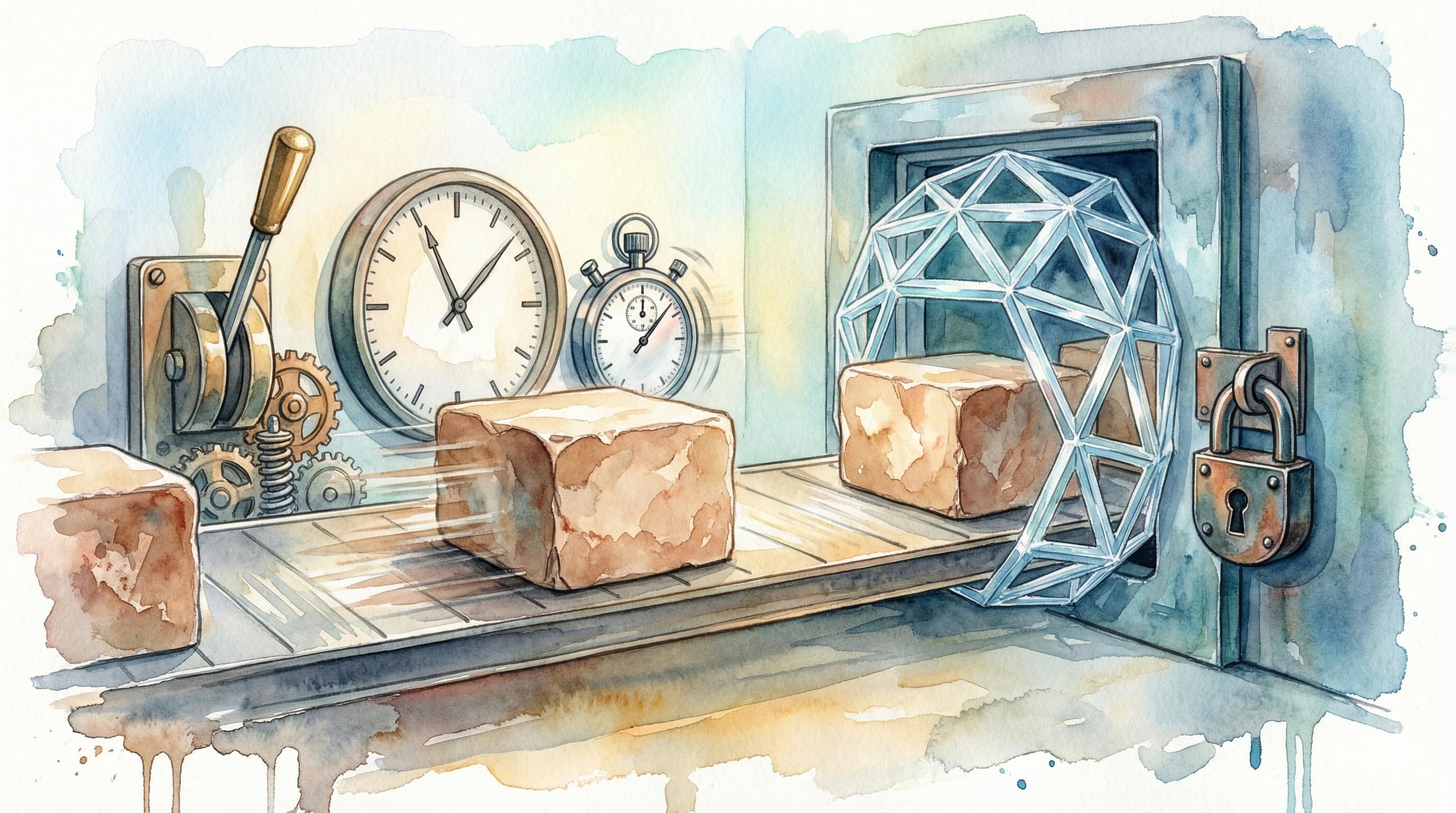
Ethereum co-founder Vitalik Buterin set out a four-year roadmap to cut slot time from 12s toward 2s and target 6-16s finality, pairing network upgrades with a shift to post-quantum signatures across seven planned forks.
Ethereum co-founder Vitalik Buterin on Thursday outlined a four-year plan to shrink the network’s block slot time from 12 seconds toward 2 seconds and to bring transaction finality down to between 6 and 16 seconds. The roadmap pairs performance gains with a shift to post-quantum cryptography and a series of seven network forks.
Buterin expanded on Strawmap, a visual public roadmap from the Ethereum Foundation’s Protocol team. Fast-slot work, he noted, sits separately from other streams. In his words, “Fast slots are off in their own lane at the top of the roadmap, and do not really seem to connect to anything,” and most other items are “pretty independent of the slot time.”
Slot time is the interval to produce a new block, roughly 12 seconds today. Finality is the point at which a transaction becomes mathematically irreversible, currently about 16 minutes. The plan aims to treat these as distinct levers. “The goal is to decouple slots and finality, to allow us to reason about both separately,” he wrote.
On block production, Buterin expects incremental cuts that roughly follow a square-root-of-two path: 12, 8, 6, 4, then 2 seconds. He pointed to peer-to-peer networking upgrades-such as sharing new blocks and data without repeated downloads-to speed propagation and reduce delays, making shorter slots feasible “with no security tradeoffs.”
For confirmations, he proposed replacing the current mechanism with a cleaner, simpler design that also hardens the network against future quantum computers. The core change involves switching the protocol’s signatures to post-quantum, hash-based schemes. Because this overhaul touches many components, he described it as a “very invasive set of changes,” with the largest shifts in each area bundled with the cryptography switch.
Sequencing the work this way could make block production quantum-resistant before the finality layer is updated. Buterin noted a path where, if practical quantum machines arrive early, “we lose the finality guarantee, but the chain keeps chugging along.”
He summarized the destination as a “cleaner, simpler, quantum-resistant, prover-friendly, end-to-end formally-verified alternative,” achieved through a component-by-component replacement of slot structure and consensus.
The timeline spans four years, with seven forks planned roughly every six months to deliver the upgrades. Two of those, Glamsterdam and Hegotá, are already confirmed and scheduled for later this year.
The roadmap separates fast-slot work from the finality redesign and relies on continued networking improvements to keep blocks reaching validators quickly without raising reorganization risk. The changes are intended to cut user wait times for inclusion and confirmation while maintaining security during the transition.
As we reported earlier, the Ethereum Foundation outlined protocol priorities for 2026: faster transactions, higher gas limits, improved cross-network interoperability, and long-term preparation for quantum-era threats. Over the past year, the community lifted the gas limit from 30 million to 60 million, and the Pectra and Fusaka upgrades increased network throughput.
The material on GNcrypto is intended solely for informational use and must not be regarded as financial advice. We make every effort to keep the content accurate and current, but we cannot warrant its precision, completeness, or reliability. GNcrypto does not take responsibility for any mistakes, omissions, or financial losses resulting from reliance on this information. Any actions you take based on this content are done at your own risk. Always conduct independent research and seek guidance from a qualified specialist. For further details, please review our Terms, Privacy Policy and Disclaimers.
Articles by this author