US justice department finalizes $400 million forfeiture tied to Helix darknet mixer

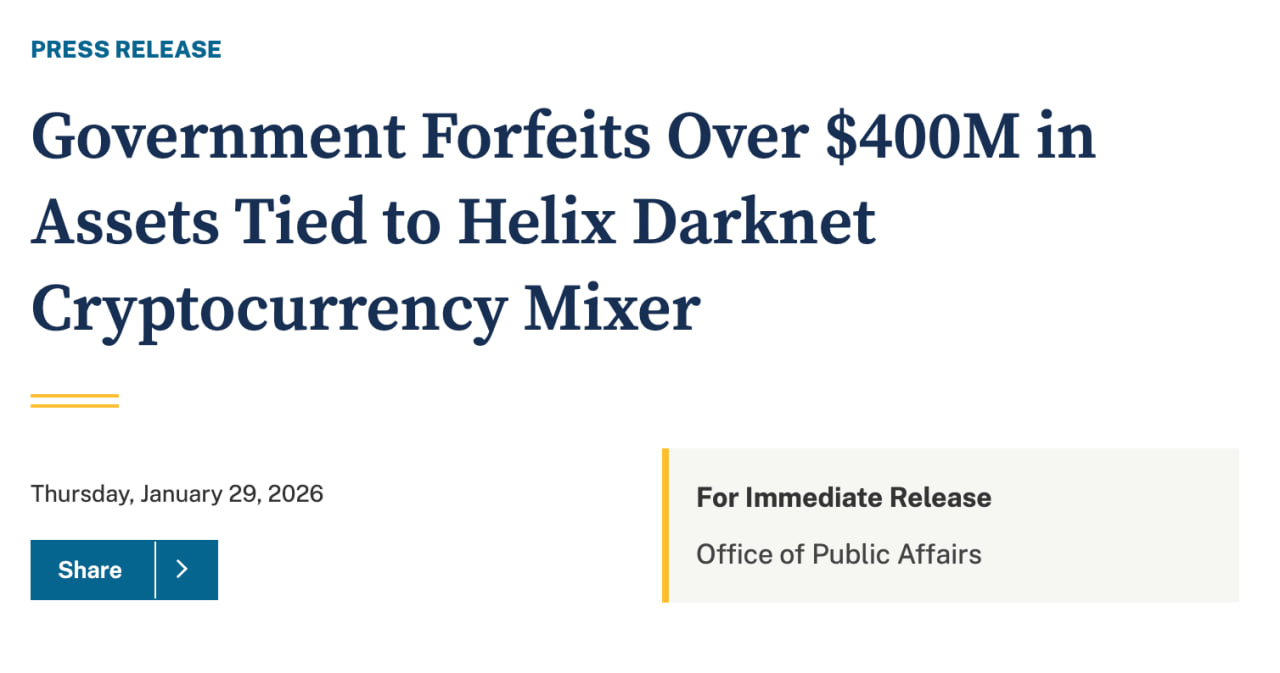
The U.S. Department of Justice has finalized the forfeiture of more than $400 million in assets linked to the Helix darknet mixer, which processed over 354,000 BTC to obscure the origin of funds.
The U.S. Department of Justice announced the final court approval of the forfeiture of more than $400 million in assets connected to Helix–a darknet crypto mixer that prosecutors say played a central role in laundering funds from illegal online marketplaces. Under the court order, the government now holds legal title to the cryptocurrency, real estate, and financial accounts seized in the case.
According to DOJ estimates, Helix processed at least 354,468 BTC between 2014 and 2017–roughly $300 million at the time. Most users relied on the mixer to hide the origins of illicit proceeds, including funds tied to darknet market activity.
Helix operator Larry Dean Harmon pled guilty in 2021 to conspiracy to launder money. In 2024, he was sentenced to three years in prison followed by supervised release.
The Helix case has intensified scrutiny of crypto mixers, which remain the subject of ongoing debate in both policy and industry circles. Lawmakers and market participants continue to disagree on how to regulate tools that can provide user privacy while also enabling evasion of oversight.
The investigation also intersects with other high-profile cases involving developers of privacy-focused crypto technologies. In December, President Donald Trump said he was considering a pardon for Keonne Rodriguez, cofounder of Samourai Wallet, who was convicted of money laundering and unlawful money transmission. Rodriguez received a five-year sentence in November.
Attention is also focused on the trial of Roman Storm, a Tornado Cash developer found guilty of money laundering and sanctions violations. Ethereum cofounder Vitalik Buterin publicly supported Storm, arguing that privacy tools should not be criminalized merely for existing. Storm is awaiting sentencing and faces up to five years in prison.
The Helix forfeiture underscores the government’s willingness to tighten oversight of infrastructure that facilitates the concealment of crypto asset origins. The DOJ’s action may set a precedent for future regulation of mixers and other privacy-enhancing transaction tools.
The material on GNcrypto is intended solely for informational use and must not be regarded as financial advice. We make every effort to keep the content accurate and current, but we cannot warrant its precision, completeness, or reliability. GNcrypto does not take responsibility for any mistakes, omissions, or financial losses resulting from reliance on this information. Any actions you take based on this content are done at your own risk. Always conduct independent research and seek guidance from a qualified specialist. For further details, please review our Terms, Privacy Policy and Disclaimers.
Articles by this author