Chainalysis: use of crypto in human-trafficking networks rose 85%

Chainalysis recorded an 85% rise in crypto payments linked to human-trafficking networks, but stresses that blockchain transparency is helping investigators identify activity and strengthen law-enforcement efforts.
Chainalysis has reported a sharp increase in cryptocurrency flows tied to human-trafficking networks: transactions sent to suspicious services rose 85% in 2025. According to the analysis, these networks – largely based in Southeast Asia – received “hundreds of millions of dollars” through a cluster of services overlapping with scam compounds, online casinos, and Chinese money-laundering operations.
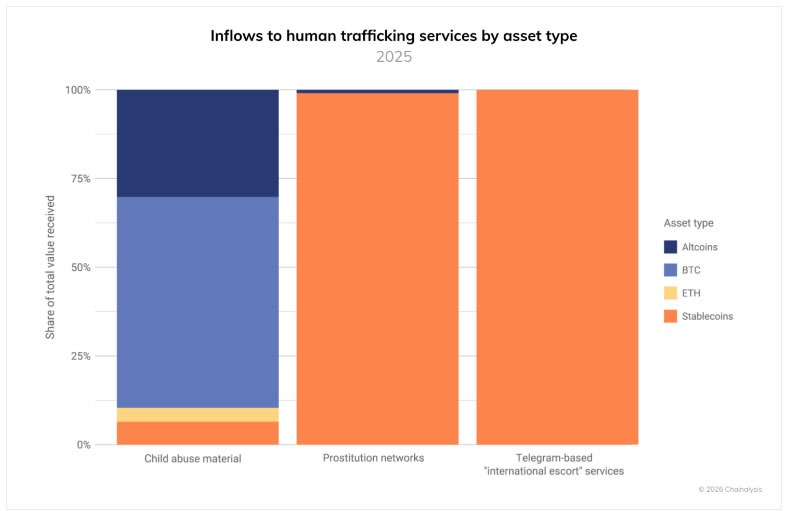
Researchers note that the identified activity spans Telegram services for international escort networks, employment agencies involved in kidnapping and forced labor in scam compounds, as well as prostitution and the distribution of child sexual-abuse material. The mix of assets varies, but stablecoins are the primary payment method for escort and prostitution schemes. This reflects the growing role of USDT and other stablecoins in the shadow economy, where liquidity and rapid cross-border movement are essential.
Despite the rise in volumes, Chainalysis emphasizes that blockchain transparency enables far more effective law-enforcement action. Unlike cash, crypto transactions leave an immutable record, allowing investigators to build network graphs, identify behavioral patterns, and map strategic choke points – exchanges, conversion hubs, and on-chain marketplaces. According to the firm, these tools create “unique opportunities” for intervention that traditional methods cannot replicate.
The report highlights several red flags that can help identify trafficking operations: recurring large transfers to labor-recruitment agencies, wallet clusters interacting with multiple categories of illicit services, and repeated patterns of stablecoin conversion. Chainalysis urges heightened monitoring in these risk zones, especially as criminal networks continue to expand their operational infrastructure.
Law enforcement has already achieved notable breakthroughs. One example is the takedown by German authorities of a major platform distributing child-exploitation material, where blockchain analytics played a decisive role in the investigation.
Chainalysis concludes that although the growth of crypto use in trafficking networks is alarming, it simultaneously opens new avenues for disruption. The transparency of blockchain activity makes criminal operations more visible and enables coordinated transnational investigations on a scale that was impossible in the era of cash-based payments.
The material on GNcrypto is intended solely for informational use and must not be regarded as financial advice. We make every effort to keep the content accurate and current, but we cannot warrant its precision, completeness, or reliability. GNcrypto does not take responsibility for any mistakes, omissions, or financial losses resulting from reliance on this information. Any actions you take based on this content are done at your own risk. Always conduct independent research and seek guidance from a qualified specialist. For further details, please review our Terms, Privacy Policy and Disclaimers.
Articles by this author