Pompliano links Bitcoin outlook to inflation and dollar
Bitcoin entrepreneur Anthony Pompliano said that investors are being “tested” as US inflation eases, arguing Bitcoin long-term case rests on its finite supply and the risk of renewed money creation, even as near-term macro forces and softening price pressure reshape how traders value the asset against the US dollar.
Pompliano, speaking in a television interview, framed the current market as a period where Bitcoin’s inflation-hedge narrative is less visible day to day, forcing holders to reassess conviction. “Can you hold an asset when there is not high inflation in your face on a day-to-day basis?” he said, adding that Bitcoin’s proposition remains tied to scarcity and what happens if money is printed again.
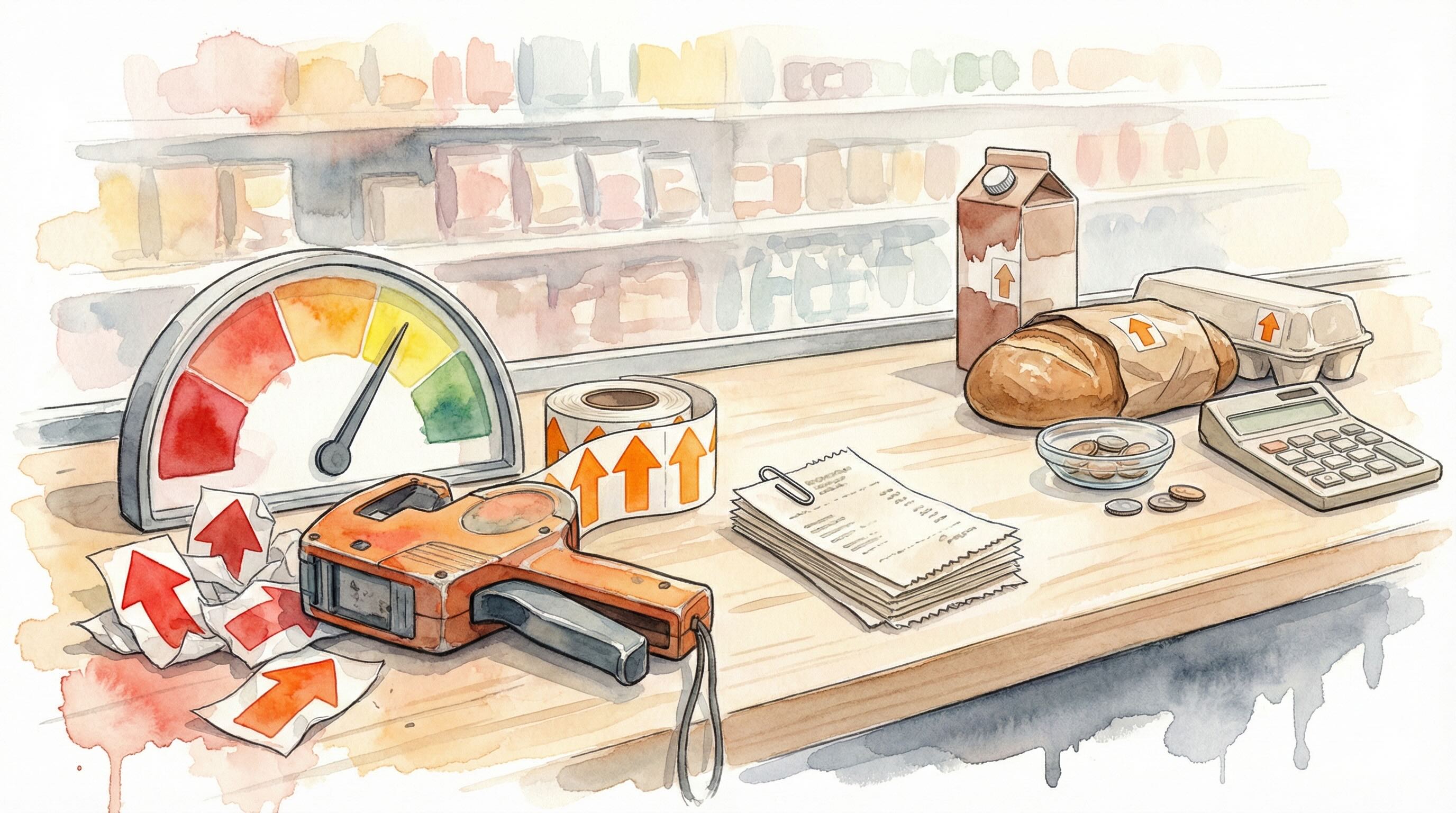
His comments arrived as the latest US inflation reading showed headline consumer prices rising 0.2% in January, with annual CPI inflation slowing to 2.4% from 2.7% in December, while core inflation increased 0.3% on the month. That cooling print has been a key input into rates pricing, with traders adjusting expectations for when the Federal Reserve could begin easing. Pompliano argued the market could see “deflationary-type forces” in the short term, which he said could coincide with calls to cut interest rates and expand the money supply. He described a scenario where dollar devaluation is less obvious initially because softer pricing trends can “cover up” the impact, calling it a “monetary slingshot.”
Currency moves have been part of the backdrop he pointed to. The US dollar’s recent weakness has shown up in dollar-index measures, which were near the high-96 level in mid-February and down by a little over 2% over roughly the prior month, according to market data cited alongside the interview coverage.
In crypto markets, the tone around Bitcoin has also turned notably risk-sensitive. The Crypto Fear & Greed Index posted an “Extreme Fear” reading of 9 in a recent update highlighted alongside the interview recap, signaling fragile sentiment after a sharp drawdown.
Bitcoin was quoted around $68,850 at the time of publication in the interview write-up, with the same coverage noting a steep decline over the prior month. The move underscores the tension Pompliano described: inflation pressure has eased on the surface, but Bitcoin’s price action has remained volatile and sensitive to shifts in growth expectations and financial conditions.
The inflation print itself carried mixed signals for markets. Reuters noted that while the headline CPI rise was modest and driven partly by lower gasoline prices and easing rental inflation, several service categories pushed core inflation higher, and economists cited risks that inflation could stay sticky in early 2026 amid factors including tariffs and a weaker dollar.
That debate matters for Bitcoin because rates expectations influence risk appetite and liquidity across asset classes. In the same post-CPI context, Reuters reported that US rate futures increased the odds of a June Fed cut after the softer inflation data, highlighting how quickly policy expectations can shift with each major print.
Pompliano’s framing also leaned on Bitcoin’s supply constraint. He reiterated that Bitcoin and gold are “great long-term” assets and emphasized Bitcoin’s finite issuance as central to its store-of-value pitch. That argument has long been used to position Bitcoin as protection against currency debasement, particularly during periods when policymakers are expanding balance sheets or when real yields fall.
At the same time, the macro setting he described suggests a different kind of challenge for holders: if disinflation and slower growth become the dominant narrative, markets can rotate away from high-volatility exposures even if long-term debasement fears persist. Reuters’ CPI report stressed that the Federal Reserve is still expected to be cautious about cutting too soon, even as the headline inflation rate cools, which keeps attention on real yields and the path of financial conditions.
For now, Pompliano’s message to investors was that the macro environment can drive sharp, short-term swings before the longer-term scarcity thesis reasserts itself. Whether that plays out will hinge on the next sequence of inflation prints, how quickly rate-cut expectations firm up, and how markets price the balance between cooling inflation and the risk of renewed policy easing later in the cycle.
The material on GNcrypto is intended solely for informational use and must not be regarded as financial advice. We make every effort to keep the content accurate and current, but we cannot warrant its precision, completeness, or reliability. GNcrypto does not take responsibility for any mistakes, omissions, or financial losses resulting from reliance on this information. Any actions you take based on this content are done at your own risk. Always conduct independent research and seek guidance from a qualified specialist. For further details, please review our Terms, Privacy Policy and Disclaimers.
Articles by this author